Side-by-Side IQ Profile: Giant Schnauzer vs. Toy Poodle
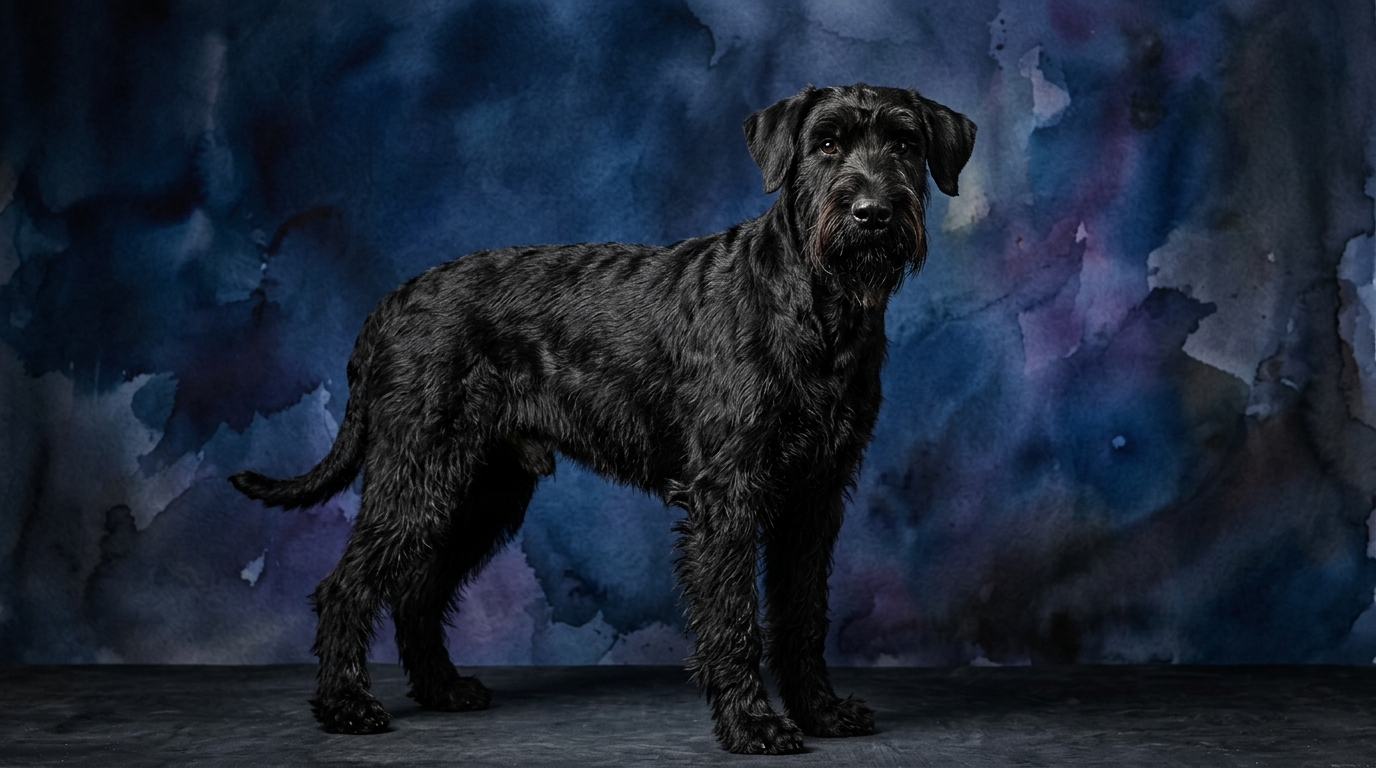
At The Cosmic Pet Pet IQ Lab, we dissect canine cognition across five key dimensions. The Giant Schnauzer, a robust Working breed, registers a Coren rank of #28, reflecting a solid foundation in trainable intelligence. Their problem-solving capacity sits at a 4/5, indicating a methodical approach to obstacles, often requiring persistence and an understanding of physical mechanics. Training speed for a Giant Schnauzer is also a 4/5, suggesting they grasp new commands and routines with efficiency, though perhaps requiring more repetitions than some. Social intelligence is rated 3/5, meaning they interpret human cues and canine interactions adequately but might not always be the most nuanced communicators. Their instinctive drive, at 3/5, speaks to a purposeful motivation, often tied to guarding or working roles, rather than a generalized high prey drive. Memory for the Giant Schnauzer is a strong 4/5, enabling them to retain complex sequences and recall past experiences reliably.
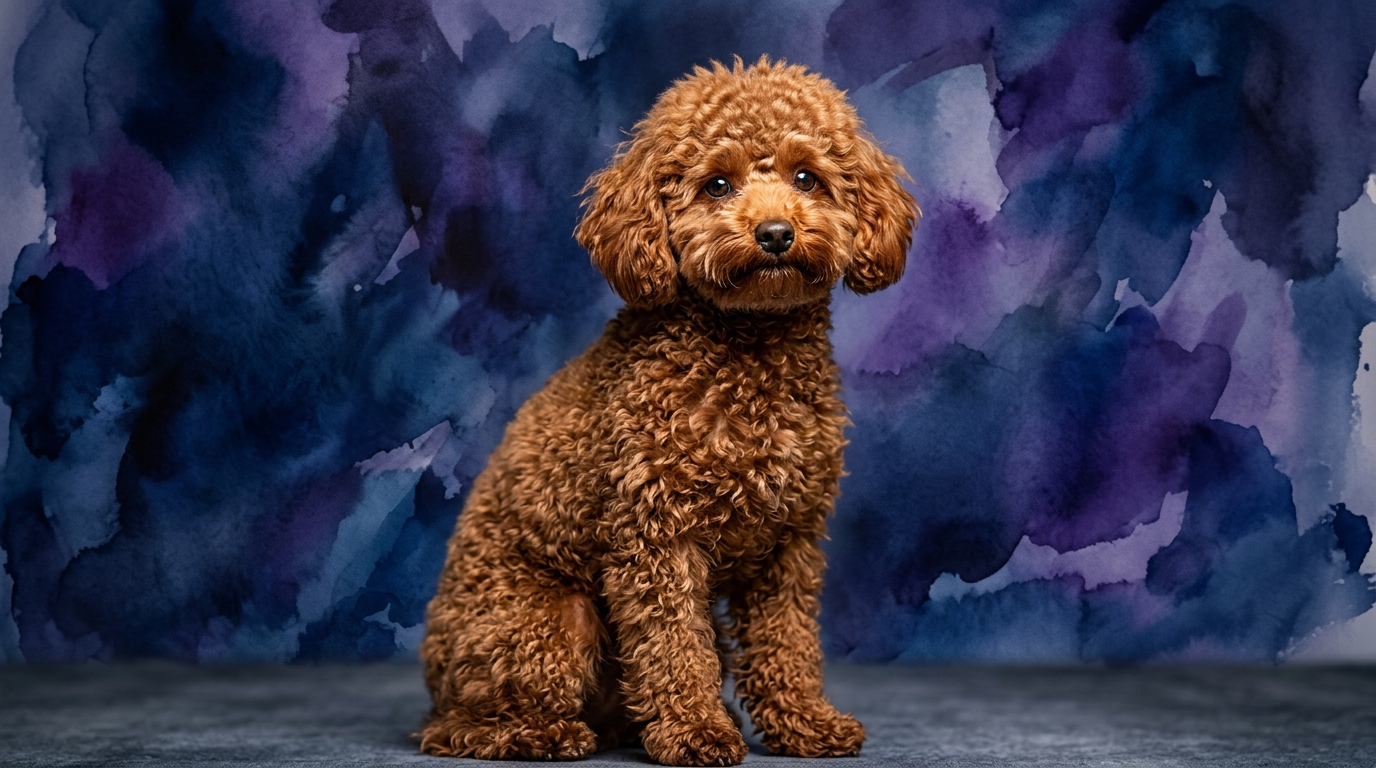
In stark contrast, the Toy Poodle, a refined member of the Toy group, boasts an impressive Coren rank of #2, placing them among the top echelons of canine intellect. Their problem-solving ability scores a perfect 5/5, signifying an exceptional capacity to navigate complex puzzles, adapt to new situations, and devise novel solutions quickly. Training speed is equally outstanding at 5/5; Toy Poodles often pick up new behaviors with astonishing rapidity, making them a joy for advanced obedience or trick training. Social intelligence matches the Giant Schnauzer at 3/5, suggesting they possess a similar foundational understanding of social dynamics. Their instinctive drive also scores 3/5, indicating a moderate level of inherent motivation that can be channeled effectively. Where the Toy Poodle truly shines again is in memory, achieving a 5/5 score, which means they can recall vast amounts of information, intricate sequences, and specific events with remarkable precision over long periods.
Where the Giant Schnauzer Wins Cognitively
While the Toy Poodle often outpaces in raw processing speed, the Giant Schnauzer's cognitive strengths lie in their application of intelligence, particularly their unwavering focus and physical fortitude integrated with mental tasks. Their 4/5 problem-solving, coupled with their inherent working breed characteristics, translates into a resilience and determination in tackling real-world challenges. For instance, a Giant Schnauzer might excel at tasks requiring sustained effort, such as methodically searching a large area or consistently performing complex protection work, where a momentary lapse in attention could be detrimental. Their memory, also a robust 4/5, supports this by allowing them to reliably recall extensive patrol routes or intricate multi-step commands over extended periods, even under pressure. This breed's intellect manifests as a steadfast and practical understanding of their environment and purpose, rather than purely abstract reasoning, making them exceptional at tasks requiring both mental and physical endurance.
The Giant Schnauzer's strength in instinctive drive, at 3/5, while matching the Poodle's, is often channeled into specific, goal-oriented behaviors rooted in their heritage. This can manifest as a deep-seated motivation for guarding, herding, or police work, where their cognitive abilities are directed towards a tangible outcome. Their intelligence is less about rapid-fire learning and more about a deep, enduring comprehension of their role and the consistent execution of associated tasks. They demonstrate a persistent cognitive engagement when presented with a job, often displaying an impressive ability to learn through repetition and experience, solidifying their understanding of complex operational procedures. This blend of mental robustness and physical capability allows them to 'win' in scenarios demanding sustained, purposeful cognitive effort in demanding environments.
Where the Toy Poodle Wins Cognitively
The Toy Poodle's cognitive superiority is evident in several key areas, particularly their unparalleled speed of acquisition and abstract problem-solving. Their perfect 5/5 scores in both problem-solving and training speed signify a mind that processes information with incredible efficiency and adapts to new stimuli almost instantaneously. This means a Toy Poodle can often learn a new trick or command in significantly fewer repetitions than many other breeds, sometimes grasping concepts after only a handful of attempts. Their problem-solving prowess allows them to quickly assess novel situations, understand cause-and-effect relationships, and independently devise solutions, whether it's figuring out how to open a complex treat puzzle or navigating an unfamiliar environment with ease. This agility of thought makes them exceptionally versatile in competitive dog sports like obedience, agility, or rally, where rapid learning and intricate sequences are paramount.
Furthermore, the Toy Poodle's 5/5 memory score grants them an extraordinary capacity for retention. They can recall a vast repertoire of commands, intricate routines, and specific experiences with remarkable accuracy over extended periods. This cognitive trait is invaluable for owners who enjoy teaching their dogs a wide array of behaviors, as the Poodle will reliably remember even rarely practiced cues. Their aptitude for abstract thought, combined with their superior memory, enables them to generalize learned concepts to new contexts, demonstrating a depth of understanding beyond rote memorization. This makes them adept at tasks requiring inference and flexible application of knowledge, allowing them to excel in areas where other breeds might struggle with adapting a learned behavior to a slightly different scenario.
Which is Easier to Train and Why?
Based on The Cosmic Pet Pet IQ Lab's metrics, the Toy Poodle is unequivocally easier to train than the Giant Schnauzer. The Toy Poodle's training speed rating of 5/5, compared to the Giant Schnauzer's 4/5, is a significant differentiator. This isn't just a marginal difference; a 5/5 indicates an almost immediate grasp of new commands and concepts, often requiring minimal repetition for mastery. For example, a Toy Poodle might learn to 'stay' perfectly after just a few short sessions, understanding the concept quickly and applying it consistently. This rapid comprehension means training sessions can be shorter, more engaging, and incredibly productive, making the learning process a highly rewarding experience for both dog and owner.
The Giant Schnauzer, while still a capable learner at 4/5, typically requires more consistent repetition and a more structured approach to solidify new behaviors. Their learning process is often more deliberate, building understanding over time rather than through instant acquisition. For instance, teaching a Giant Schnauzer a complex agility course might involve more guided repetitions and breaking down the sequence into smaller, manageable steps, whereas a Toy Poodle might piece together larger segments more quickly. This behavioral difference stems from the Poodle's superior problem-solving (5/5 vs. 4/5) and memory (5/5 vs. 4/5), which allow them to process and retain information with greater efficiency, translating directly into an accelerated training curve. Owners seeking a dog that picks up new skills with remarkable speed will find the Toy Poodle’s cognitive profile more aligned with their goals.
Which Suits Active Owners vs. Relaxed Owners?
For active owners seeking a canine partner for demanding activities, the Giant Schnauzer presents a compelling choice. While their training speed is slightly lower, their robust physical presence, combined with their 4/5 problem-solving and 4/5 memory, makes them excellent candidates for advanced obedience, protection sports, or strenuous outdoor adventures. Their instinctive drive, rated 3/5, is often channeled into purposeful work, meaning they thrive with a 'job' that engages both their body and mind. An active owner can leverage the Giant Schnauzer's cognitive persistence and physical stamina for activities like hiking long distances, participating in search and rescue training, or excelling in Schutzhund, where their mental acuity and physical prowess are equally challenged. They appreciate consistent structure and benefit from owners who can provide ample mental stimulation alongside vigorous exercise, making them a match for an owner with a dedicated, active lifestyle.
Conversely, the Toy Poodle is an exceptional fit for owners who appreciate mental engagement more than intense physical exertion, though they certainly enjoy playtime. Their 5/5 problem-solving, 5/5 training speed, and 5/5 memory mean they crave mental challenges and excel at learning new tricks, puzzle toys, and complex obedience routines within the comfort of a home or a local park. While they need regular walks and play, their physical exercise requirements are moderate compared to a Giant Schnauzer. Their intelligence truly shines in activities like canine freestyle, trick training, or even simply learning an extensive vocabulary, which can be done in more relaxed settings. A relaxed owner who enjoys engaging their dog's mind through interactive games, consistent positive reinforcement, and a comfortable home environment will find the Toy Poodle's cognitive profile perfectly suited to their lifestyle, making them a delightful companion for intellectual companionship without the need for extreme physical demands.
The Verdict
Choose the Giant Schnauzer if you're an active owner seeking a steadfast, physically capable partner for working roles, robust outdoor adventures, or advanced protection training, valuing their persistent problem-solving and reliable memory in demanding scenarios.
Opt for the Toy Poodle if you're an owner who prioritizes rapid learning, exceptional problem-solving, and a dog that excels in intricate mental challenges and advanced obedience within a less physically strenuous lifestyle.
🧠 Find Your Pet's IQ Score
Our Pet IQ Lab assessment covers 25+ tests across 5 cognitive dimensions — personalized to your breed.
Take the Full IQ Test →Frequently Asked Questions
Do Giant Schnauzers make good family dogs despite their working background?
Yes, with proper socialization and training, Giant Schnauzers can be devoted family members. Their 3/5 social intelligence means they form strong bonds with their immediate family, though they may be reserved with strangers, requiring consistent exposure to varied people and environments from a young age.
Are Toy Poodles prone to 'small dog syndrome' due to their high intelligence?
No, 'small dog syndrome' is a behavioral issue stemming from lack of training and socialization, not intelligence. A Toy Poodle's 5/5 problem-solving and training speed mean they are actually highly receptive to learning appropriate behaviors, making them less prone to such issues when properly managed and consistently guided.
How much mental stimulation do these breeds need daily?
Both breeds require significant daily mental stimulation due to their cognitive capacities. The Toy Poodle, with its 5/5 problem-solving and memory, thrives on daily puzzle toys, trick training, and novel learning experiences. The Giant Schnauzer, with 4/5 in these areas, benefits from consistent training sessions, engaging 'jobs,' and opportunities to work through challenges, ensuring their active minds remain engaged.