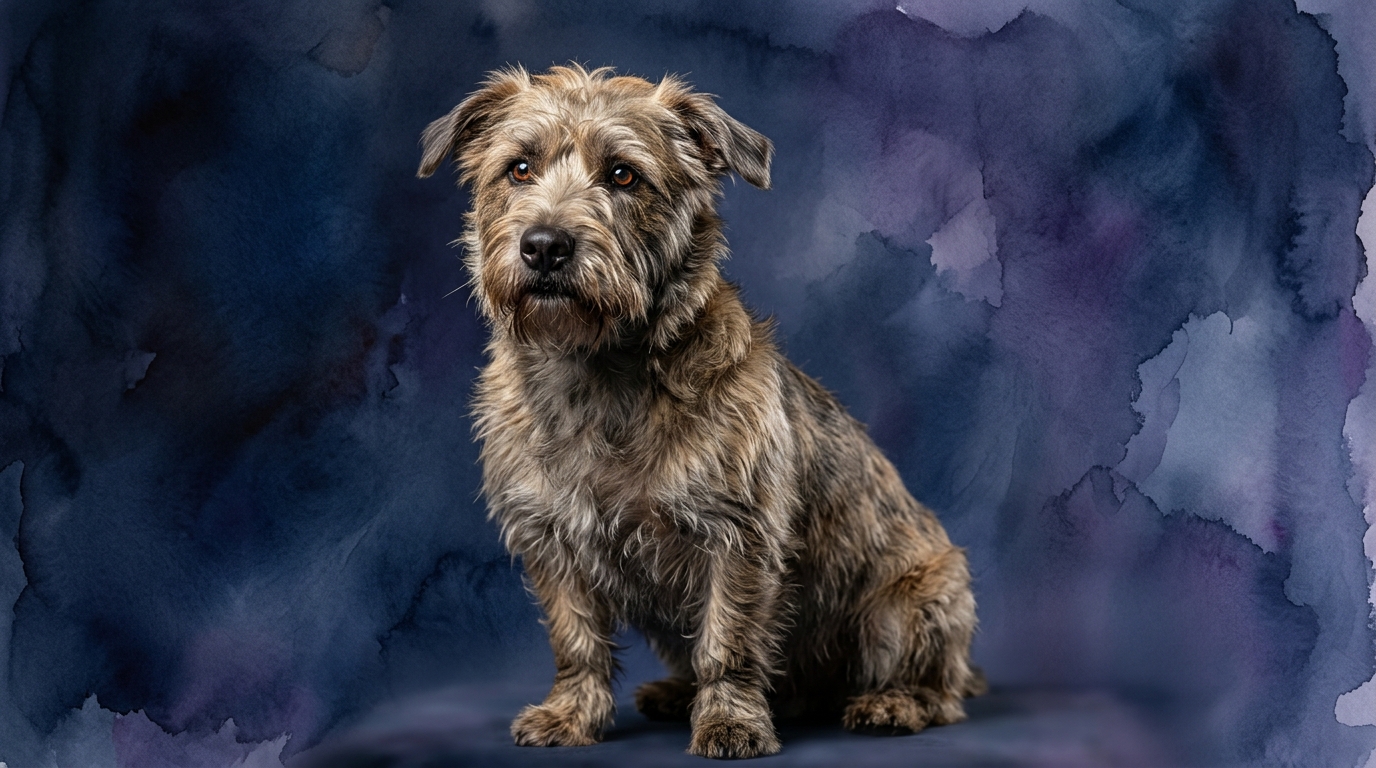

Side-by-Side IQ Profile: Glen of Imaal Terrier vs Basset Hound
While both the Glen of Imaal Terrier and the Basset Hound exhibit a consistent 3/5 across all five cognitive dimensions, their breed-specific histories profoundly influence how these scores manifest in their daily lives and problem-solving approaches.
**Glen of Imaal Terrier**
**Problem Solving (3/5):** Glens approach challenges with determined, often physical, tenacity. Their problem-solving involves accessing small prey or navigating complex underground spaces, employing a blend of force and clever maneuvering. They are adept at finding ways around obstacles, particularly for a perceived "job."
**Training Speed (3/5):** While capable of learning, the Glen's independent spirit means they aren't always eager to comply. Their training speed is moderate, requiring consistent, patient, and engaging methods to overcome terrier stubbornness and focus attention.
**Social Intelligence (3/5):** Glens exhibit moderate social intelligence. They are affectionate and loyal within their family, but their terrier nature might make them reserved or assertive with strangers, requiring careful socialization.
**Instinctive Drive (3/5):** The Glen possesses a robust instinctive drive centered around hunting and digging. This manifests as keen interest in small creatures and a profound desire to excavate, reflecting their historical role. Their instincts are powerful motivators.
**Memory (3/5):** Glens display solid memory, recalling training cues, routines, and locations of interesting scents or "prey" with good retention. They remember both positive and negative experiences, influencing future responses.
**Basset Hound**
**Problem Solving (3/5):** The Basset's problem-solving links to extraordinary olfactory capabilities. They excel at deciphering complex scent trails, navigating varied terrain to follow specific odors. Their "problems" are often about persistent tracking rather than object manipulation.
**Training Speed (3/5):** Bassets learn at a moderate pace, but training is challenged by their singular focus on scent. Once a captivating smell is detected, their ability to respond to commands diminishes, making consistent recall an ongoing endeavor demanding patience and high-value rewards.
**Social Intelligence (3/5):** Bassets generally possess gentle and amiable social intelligence. They are often good-natured with family, strangers, and other pets, though they can be somewhat aloof. Their social interactions tend to be calm and tolerant.
**Instinctive Drive (3/5):** The Basset's instinctive drive is overwhelmingly dominated by their scenting ability. Their powerful nose compels them to track, follow trails, and investigate every interesting odor. This drive often dictates behavior, making them excellent scent hounds but sometimes oblivious to human calls.
**Memory (3/5):** Bassets have good memory for routines, familiar people, and especially for scent profiles. They can recall specific odors and locations. They remember training, but their instinctual drive can often override learned responses.
Where the Glen of Imaal Terrier Wins Cognitively
The Glen of Imaal Terrier demonstrates a cognitive edge in adaptive problem-solving that requires physical engagement and immediate decision-making. Their terrier roots instilled a drive to independently assess and overcome physical barriers, such as digging under fences or finding innovative ways to reach a hidden toy, showcasing a practical, hands-on intellect. This breed's tenacity means they will often persist in a task until a solution is found, even if it involves trial and error or a bit of canine ingenuity in manipulating objects.
Where the Basset Hound Wins Cognitively
The Basset Hound excels in a specialized form of cognitive processing: sophisticated scent discrimination and sustained focus on a single sensory input. Their ability to follow faint, complex scent trails over long distances, ignoring myriad distractions, represents an unparalleled form of sustained cognitive effort. This breed's intellect lies in its capacity for deep, methodical information processing through olfaction, allowing them to construct an intricate mental map of their environment based purely on smell.
Which is Easier to Train and Why
Neither breed is effortlessly trainable, both scoring 3/5 in training speed, yet their challenges stem from different behavioral roots. The Glen of Imaal Terrier, with its terrier independence, requires a trainer who can leverage its strong prey drive into cooperative tasks, responding best to positive reinforcement and engaging activities. Its occasional stubbornness means consistency is paramount, but once motivated, it can be quite focused.
The Basset Hound, conversely, presents a training challenge due to its profound, single-minded focus on scent. Once a Basset locks onto an interesting smell, all other external stimuli, including human commands, often fade into irrelevance. This makes recall particularly difficult and requires extensive, patient training with high-value rewards to compete with their natural olfactory obsession. Therefore, while both require dedication, the Basset's innate drive can make consistent, reliable obedience more challenging to achieve in real-world scenarios compared to the Glen's more generalized terrier stubbornness.
Suitability for Active vs. Relaxed Owners
For active owners who appreciate a spirited demeanor and engaging mental and physical challenges, the Glen of Imaal Terrier is often a fitting choice. Their moderate energy, coupled with their cognitive drive for exploration, means they thrive on varied activities like earthdog trials or long, interesting walks where they can investigate. They require owners who can channel their instinctive drives constructively.
Conversely, the Basset Hound suits relaxed owners who appreciate a sedate pace and a companion content with leisurely strolls and lounge time. While needing moderate exercise, their activity is dictated by their nose, preferring to amble and sniff. Their calm, tolerant nature makes them excellent companions for those seeking a less demanding, yet affectionate, presence.
The Verdict
Choose the Glen of Imaal Terrier if you seek a tenacious, engaging companion who thrives on practical problem-solving and spirited activity, ready to channel their independent spirit into focused tasks.
Opt for the Basset Hound if your lifestyle is more relaxed, valuing a gentle, amiable presence whose deep cognitive strength lies in its unparalleled ability to interpret the world through scent.
🧠 Find Your Pet's IQ Score
Our Pet IQ Lab assessment covers 25+ tests across 5 cognitive dimensions — personalized to your breed.
Take the Full IQ Test →Frequently Asked Questions
Do Glen of Imaal Terriers bark a lot?
Glen of Imaal Terriers can be vocal, particularly when alerting their owners to perceived threats or interesting stimuli, reflecting their terrier watchfulness. However, with consistent training, their tendency to bark can be managed effectively, ensuring it remains an appropriate form of communication rather than excessive noise.
Are Basset Hounds good with children?
Basset Hounds are generally known for their patient, tolerant, and gentle nature, making them typically good companions for children. Their laid-back disposition means they are often unfazed by the commotion of a busy household, though all interactions between dogs and children should always be supervised.
How much exercise does a Glen of Imaal Terrier need daily?
Glen of Imaal Terriers require moderate daily exercise, typically 30-60 minutes of varied activity, including walks, playtime, and mental stimulation. This helps keep them physically fit and mentally engaged, preventing boredom and channeling their natural terrier energy constructively.