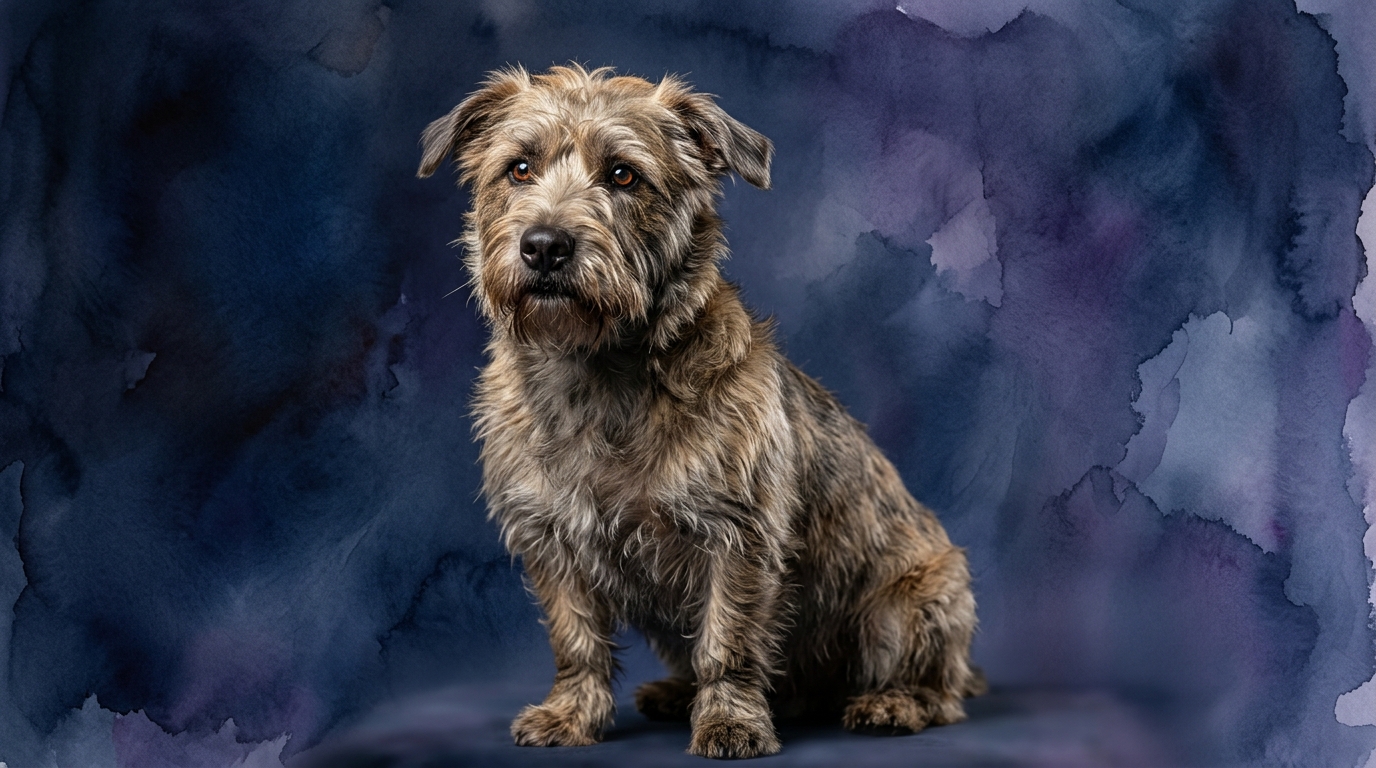
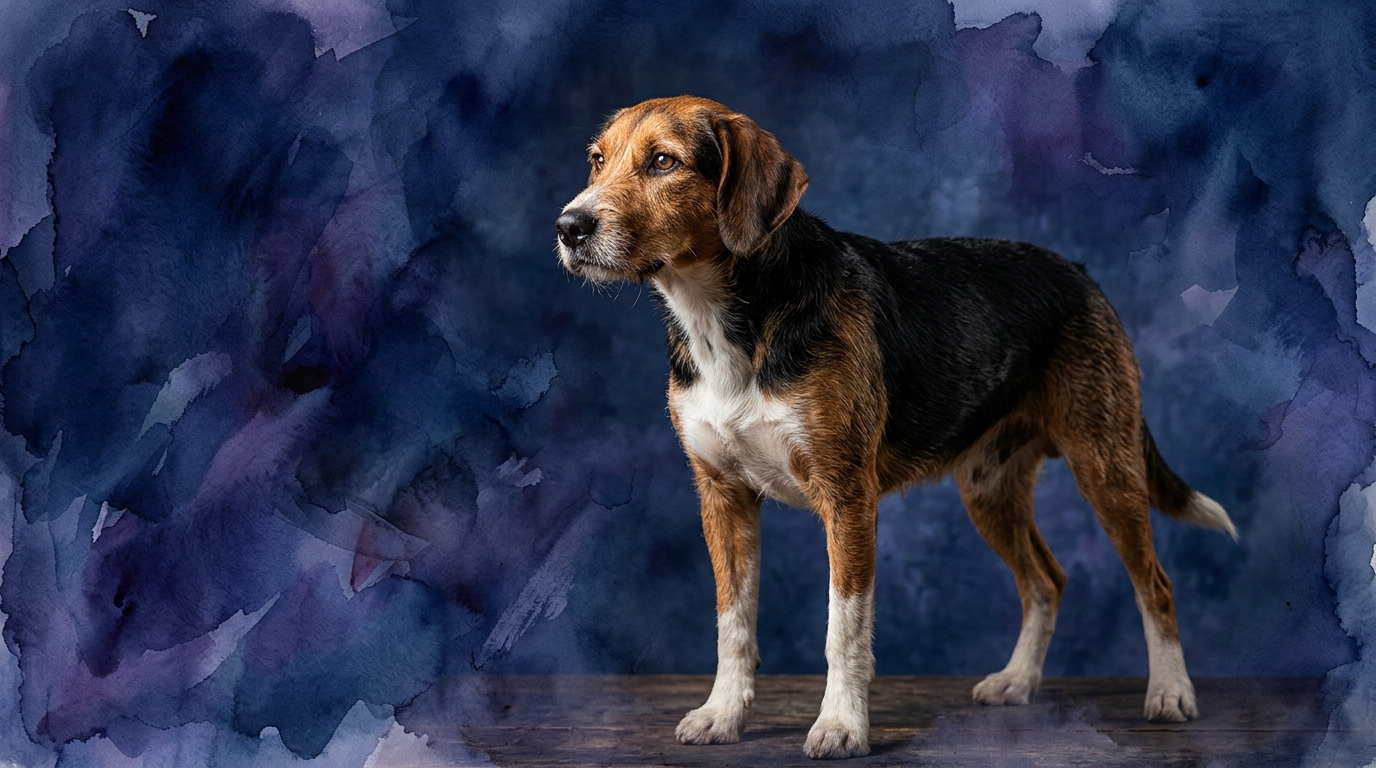
Side-by-Side IQ Profile: Unpacking Identical Scores
At The Cosmic Pet Pet IQ Lab, both the Glen of Imaal Terrier and the Harrier register a uniform 3/5 across all five measured cognitive dimensions. While this numerical parity might suggest identical minds, a closer look through the lens of their breed groups — Terrier and Hound — reveals unique manifestations of these scores. For the Glen of Imaal Terrier, a Problem Solving score of 3/5 often translates to an independent, tenacious approach to overcoming physical obstacles, such as navigating complex underground tunnels or outsmarting vermin. This isn't about grand strategy, but rather persistent, focused effort on a specific, often tangible, challenge.
Conversely, the Harrier's 3/5 in Problem Solving typically manifests in its ability to decipher intricate scent trails, collaborating with a pack to follow a convoluted path over varying terrain. Their problem-solving is less about individual physical manipulation and more about sensory interpretation and sustained, collective pursuit. Training Speed at 3/5 for the Glen often means they can grasp commands with moderate repetition, but their terrier independence can introduce a 'what's in it for me?' pause, requiring engaging motivation. For the Harrier, a 3/5 in Training Speed means they can learn quickly, especially when it aligns with their natural drives or pack dynamic, but their powerful scent focus can easily distract them from human-centric lessons.
Social Intelligence, also at 3/5, presents differently. A Glen of Imaal Terrier typically forms strong bonds with their immediate family, displaying a discerning social awareness that can lead to reserved interactions with strangers or other unfamiliar dogs. Their social interactions are often precise and intentional. The Harrier, on the other hand, with its pack-oriented heritage, tends to exhibit a broader, more gregarious social intelligence, generally welcoming new people and dogs with an open, if sometimes boisterous, demeanor. Their social cues are often geared towards group cohesion.
Instinctive Drive at 3/5 for the Glen of Imaal Terrier is rooted deeply in its badger-hunting past, manifesting as a resolute prey drive, a persistent digging impulse, and a bold, sometimes confrontational, attitude. This drive is often singular and intense. The Harrier's 3/5 Instinctive Drive is overwhelmingly dominated by its olfactory prowess and endurance; their innate desire to track, follow scent, and run for extended periods is paramount, making them highly motivated by the thrill of the chase. Their drive is about sustained pursuit over distance.
Finally, Memory at 3/5 for the Glen means they retain routines, learned commands, and familiar faces well, often demonstrating a good recollection of past experiences and training sessions. They remember what worked and what didn't in their problem-solving endeavors. The Harrier's 3/5 Memory often shines in its ability to recall scent patterns, intricate routes, and the dynamics of its pack. They are adept at remembering where a trail led or the specific sequence of a hunting exercise, demonstrating a memory tuned to their primary function.
Where the Glen of Imaal Terrier Excels Cognitively
The Glen of Imaal Terrier's cognitive strengths lie in their independent, focused determination when faced with specific, often physical, challenges. Their terrier heritage grants them a distinct advantage in tasks requiring sustained individual effort and a degree of stubborn ingenuity. For instance, in a novel problem-solving scenario that requires manipulating objects or navigating a confined space to retrieve a reward, a Glen might display superior perseverance compared to a Harrier. Their intrinsic drive to 'get the job done,' often alone, means they can apply a singular cognitive focus to tasks that don't involve expansive sensory input like scent trails.
Furthermore, their moderate social intelligence, while not as broadly gregarious as a Harrier's, allows for a more nuanced understanding of their immediate human family's emotions and routines. This can translate into a precise responsiveness to subtle household cues, making them adept at fitting into a structured domestic environment with specific expectations. Their memory, while not photographic, is particularly effective for remembering the 'how-to' of previous successful (or unsuccessful) attempts at problem-solving, allowing them to refine their methods with experience rather than relying on instinct alone.
Where the Harrier Excels Cognitively
The Harrier's cognitive prowess truly shines in domains requiring sustained sensory processing, endurance, and collaborative effort. Their primary strength is their unparalleled ability to interpret and follow complex scent information, a task that demands sophisticated cognitive mapping and long-term focus. In any challenge involving tracking, discrimination of scents, or navigating expansive outdoor environments using olfactory cues, the Harrier's capabilities are profound. Their problem-solving isn't about brute force or individual manipulation, but about intricate sensory analysis and persistent, methodical pursuit over distance.
Their pack-oriented social intelligence gives them an edge in group dynamics, making them naturally adept at understanding and responding to the actions of other dogs or a human 'pack leader.' This translates into a capacity for coordinated effort and a generally more amiable disposition towards social integration. Their memory is particularly tuned to environmental details relevant to their hunting role, allowing them to recall specific terrain features, wind patterns, and the location of previous scent finds, creating a rich cognitive map of their hunting grounds. This sustained, multi-sensory processing over long periods is a hallmark of their cognitive profile.
Which is Easier to Train and Why
Assessing ease of training between these two breeds requires understanding their core motivations and historical roles. The Glen of Imaal Terrier, with its terrier independence and instinct to work alone, can present a moderate challenge. Their 3/5 Training Speed means they learn, but their desire to please is often secondary to their own objectives or what they perceive as rewarding. Training a Glen demands creativity, consistent positive reinforcement, and short, engaging sessions to maintain their interest. Their stubborn streak means they might choose to ignore a command if a more compelling activity (like investigating a suspicious scent or digging) presents itself. Building a strong bond and demonstrating clear, fair leadership is crucial to overcoming their inherent self-reliance.
The Harrier, while possessing the same 3/5 Training Speed, often responds well to training that taps into their pack drive and desire for activity. They are generally eager to please their 'pack' and can be highly motivated by praise and the opportunity to run or engage their nose. However, their powerful instinctive drive to follow a scent can be an overriding force, making recall particularly challenging in distracting environments. Once a Harrier locks onto a scent, their cognitive focus narrows almost exclusively to that pursuit, making it difficult for human commands to penetrate. Therefore, while they might pick up basic commands readily, achieving reliable off-leash control requires immense consistency, strong positive reinforcement, and often, specialized scent-based training to redirect their focus.
Which Suits Active Owners vs. Relaxed Owners
For owners with a more relaxed lifestyle, the Glen of Imaal Terrier generally presents a more suitable companion. While they require regular walks and mental stimulation to prevent boredom and destructive behaviors, their exercise needs are typically moderate compared to a Harrier. A Glen can be content with a couple of brisk walks daily, coupled with indoor puzzle toys or short training sessions. Their independent nature also means they are often content to nap at their owner's feet or entertain themselves quietly, provided their basic needs for activity and engagement have been met. They are not typically dogs that demand constant, high-intensity physical output, making them a good fit for someone who enjoys activity but isn't seeking an extreme exercise partner.
Conversely, the Harrier is unequivocally suited for active owners. Their heritage as a hunting hound means they possess boundless stamina and a profound need for extensive physical exercise and mental engagement centered around their olfactory capabilities. A Harrier thrives on long runs, hikes, and opportunities for scent work or tracking. They are not content with short walks around the block; they require sustained, vigorous activity for at least an hour or two daily, ideally more. An under-exercised Harrier can become restless, vocal, and potentially destructive, channeling their immense energy into undesirable behaviors. They are an ideal companion for runners, hikers, or individuals who enjoy participating in dog sports like agility or scent work, and who can integrate their dog into a consistently active lifestyle.
The Verdict
Choose the Glen of Imaal Terrier if you appreciate a tenacious, independent canine companion with moderate exercise needs and a discerning social intelligence, fitting well into a structured home life. They thrive with owners who enjoy focused mental games and can appreciate a dog with a strong, self-reliant character.
Opt for the Harrier if you lead a highly active lifestyle and seek an energetic, gregarious dog with an insatiable drive for scent work and long-distance physical activity. They are best suited for owners who can provide extensive daily exercise and enjoy engaging in outdoor adventures with their canine partner.
🧠 Find Your Pet's IQ Score
Our Pet IQ Lab assessment covers 25+ tests across 5 cognitive dimensions — personalized to your breed.
Take the Full IQ Test →Frequently Asked Questions
Do Glen of Imaal Terriers get along with other pets?
Glen of Imaal Terriers can coexist peacefully with other pets, especially if raised together from a young age. However, their strong prey drive means small, fast-moving animals like rodents or birds might trigger their hunting instincts, requiring careful supervision and training.
Are Harriers good family dogs?
Harriers can be wonderful family dogs, known for their generally friendly and tolerant nature, especially with children. Their pack mentality often makes them enjoy being part of a large household, though their high energy requires consistent management to ensure harmonious living.
Which breed is more prone to barking?
Harriers, as hounds, are generally more prone to baying and barking, especially when tracking a scent or when under-exercised and bored. Glen of Imaal Terriers can also be vocal, particularly when alerting to perceived threats or expressing their opinions, but typically less consistently than a Harrier.