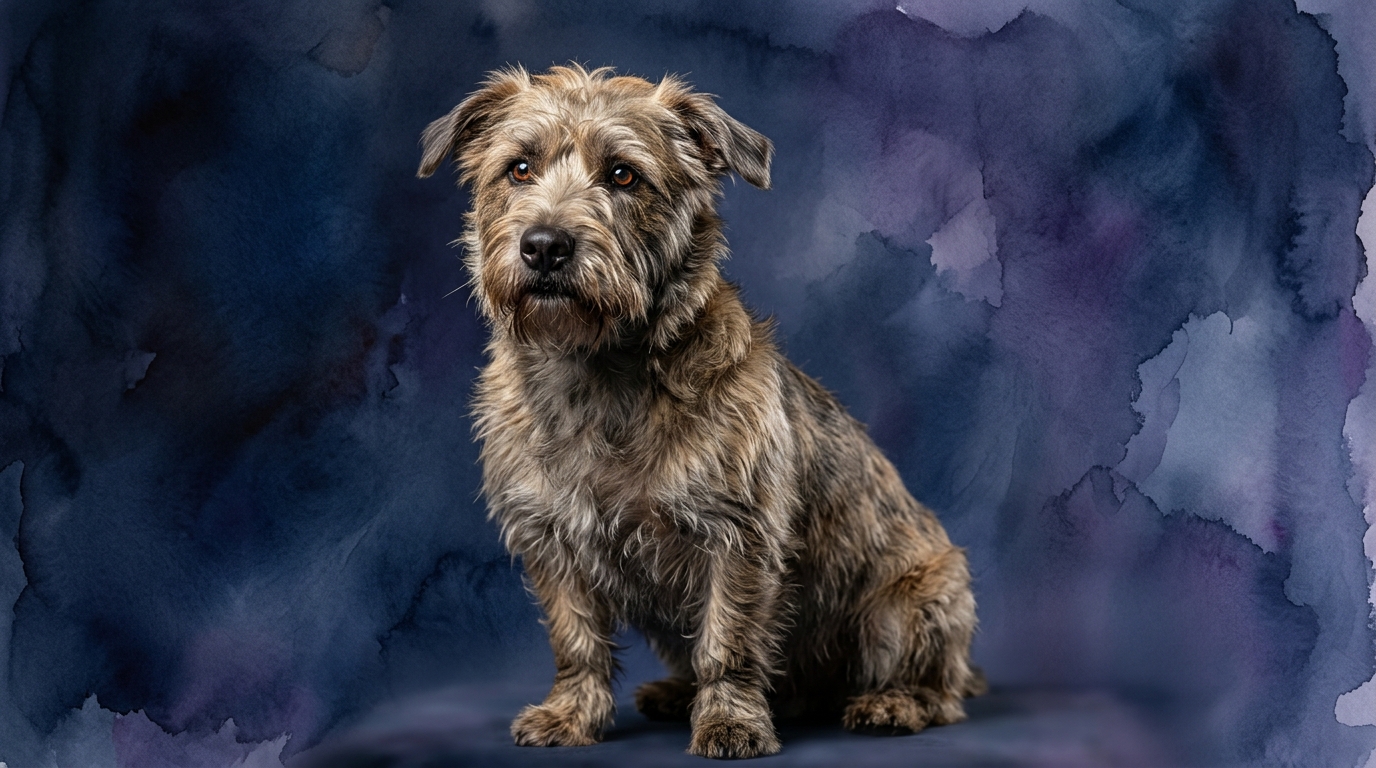
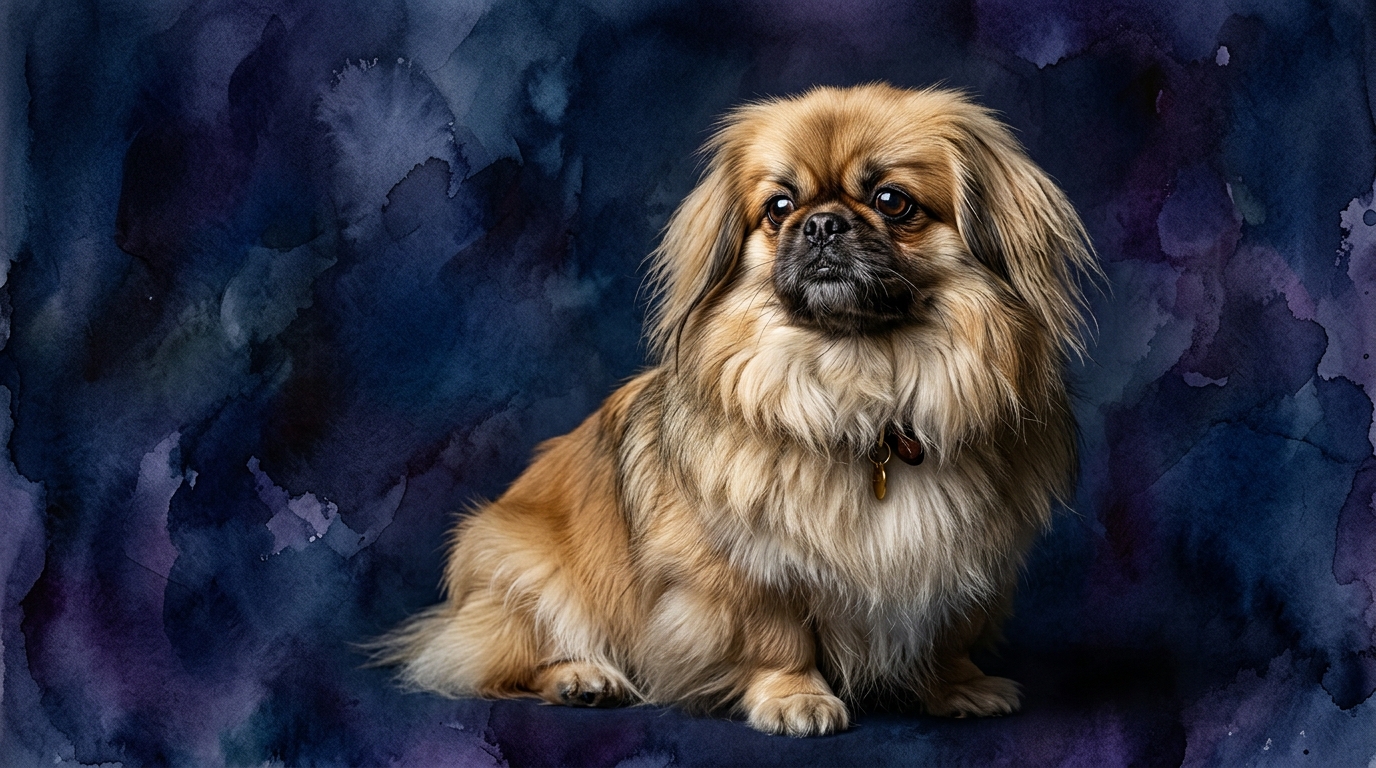
Side-by-Side IQ Profile: Unpacking Identical Scores
Both the Glen of Imaal Terrier, a robust working terrier, and the Pekingese, an ancient regal companion, register a consistent 3 out of 5 across problem-solving, training speed, social intelligence, instinctive drive, and memory. This score suggests a solid, adaptable intelligence, capable of learning and navigating their environments effectively, though perhaps not with the lightning-fast acquisition or complex abstract reasoning seen in top-tier working breeds. For the Glen, these scores reflect an independent thinker capable of tackling physical challenges, while for the Pekingese, they speak to a subtle cunning and keen observation of human behavior.
When we consider Problem Solving at 3/5, a Glen of Imaal Terrier might apply this to figuring out how to bypass an obstacle to reach a perceived 'prey' item, or strategizing the best route through dense undergrowth. Their solutions are often practical, physically oriented, and driven by an innate purpose. The Pekingese, conversely, might demonstrate 3/5 problem-solving by devising intricate ways to secure a favored spot on the sofa, manipulate a human for an extra treat, or strategically avoid an unwanted interaction. Their problem-solving is often socially nuanced and comfort-driven, focusing on their immediate domestic environment.
Training Speed at 3/5 for the Glen means they are certainly capable of learning commands and routines, but their strong will and independent nature, honed by generations of solitary work, can mean they weigh the value of cooperation against their own desires. Consistency and engaging, positive reinforcement are crucial to tap into this capacity. For the Pekingese, a 3/5 training speed suggests they grasp concepts readily, but their regal disposition and selective hearing mean they often choose whether or not to comply. They learn quickly what benefits them and may only perform if adequately motivated by comfort, food, or affection, making their 'training speed' more about negotiation than rote memorization.
Social Intelligence at 3/5 in the Glen of Imaal Terrier manifests as a clear understanding of pack dynamics within their family unit and a cautious, discerning approach to strangers or other animals. They read intentions well and can be protective, discerning friend from foe with a quiet confidence. The Pekingese's 3/5 social intelligence is deeply intertwined with their human companions; they are exceptionally attuned to subtle shifts in human mood, routine, and preferences, often appearing to anticipate needs or desires. While they may be aloof with outsiders, their bond with their chosen family is profound, and they excel at navigating complex household relationships.
Instinctive Drive at 3/5 for the Glen is powerfully expressed through their inherent terrier traits: a strong urge to dig, chase, and explore. This drive is a fundamental part of their being, guiding much of their curiosity and energy. They have a deep-seated desire to investigate scents and potential burrows. The Pekingese's 3/5 instinctive drive, while less physically demanding, is equally potent. It often revolves around guarding their favored people and territory with a surprising tenacity, as well as a strong drive for comfort, warmth, and proximity to their human companions. Their instincts are geared towards self-preservation and securing their place within the domestic hierarchy.
Finally, Memory at 3/5 for the Glen means they retain learned behaviors, routes, and the locations of interesting smells or past 'prey' encounters effectively. They remember training cues and routines, especially if they are consistently reinforced and tied to a positive outcome. The Pekingese also possesses a 3/5 memory, recalling specific routines, the precise times for meals or walks, and the particular habits of each family member. They remember who gives the best belly rubs, where the sunniest nap spots are, and any past transgressions that might have led to an unfavorable outcome for them, allowing them to adapt their strategies for maximum comfort and benefit.
Where the Glen of Imaal Terrier Wins Cognitively
While both breeds share identical raw scores, the Glen of Imaal Terrier's cognitive strengths shine particularly bright in scenarios demanding independent thought and physical application. Their 3/5 problem-solving often involves navigating complex outdoor environments, whether it’s finding a way around a fence or figuring out how to extract a toy from a tight space. This is a dog that's been bred to work largely on its own, making quick decisions underground or in dense cover without constant human direction. Their instinctive drive to explore and investigate gives them an edge in tasks requiring persistence and self-direction.
The Glen's memory, at 3/5, is particularly adept at recalling spatial information and task sequences related to their working heritage. They remember where they buried a prized bone, or the specific path taken during a successful hunt. This spatial memory, combined with their problem-solving and instinctive drive, makes them surprisingly resourceful in practical, tangible situations, such as scent work or agility courses that demand independent navigation and sequential memory of obstacles.
Where the Pekingese Wins Cognitively
The Pekingese's cognitive prowess, while also rated 3/5, excels in the realm of social and emotional intelligence, particularly within a human-centric environment. Their 3/5 social intelligence allows them to read human body language and vocal tones with remarkable accuracy, often anticipating their owner's needs or moods before any explicit cues are given. This makes them exceptionally intuitive companions, capable of offering comfort or demanding attention through subtle signals that a less socially astute breed might miss.
Their problem-solving at 3/5 is often applied to social engineering within the home. A Pekingese can quickly learn which family member is most susceptible to their charms for an extra treat, or how to strategically position themselves for maximum affection and comfort. Their memory, also 3/5, is excellent for recalling complex social routines and the individual quirks of their human family, allowing them to navigate household dynamics with a sophisticated understanding that belies their small stature. This subtle manipulation and keen awareness of their social landscape are where the Pekingese truly demonstrates its unique cognitive strengths.
Which is Easier to Train and Why
Despite both breeds scoring 3/5 for training speed, the practical experience of training a Glen of Imaal Terrier versus a Pekingese can differ significantly. The Glen's independent nature and strong instinctive drive mean that training often requires immense patience, consistency, and a deep understanding of what motivates a terrier. They are not inherently eager to please in the way some retriever breeds are; instead, they respond best to engaging, reward-based methods that tap into their natural curiosity and drive. Their focus can be easily diverted by interesting smells or the prospect of a chase, requiring an owner who can make training more compelling than the environment's distractions.
The Pekingese, while capable of learning quickly, presents a different training challenge. Their regal self-importance and inherent stubbornness can make them seem less trainable. A Pekingese often learns what you want but then decides if it's worth their effort to comply. Their training speed is hampered not by a lack of understanding, but by a strong personal preference and a 'what's in it for me?' attitude. An owner must find powerful motivators – often high-value treats or comfortable lap time – to convince a Pekingese that performing a command is in their best interest. Their social intelligence allows them to understand human expectations, but their independent spirit often dictates whether those expectations are met.
Which Suits Active Owners vs. Relaxed Owners
The Glen of Imaal Terrier, with its historical role as a working dog, typically thrives with active owners who enjoy outdoor adventures and can provide consistent mental and physical stimulation. Their 3/5 instinctive drive for digging and exploring means they need outlets for these natural behaviors, whether it's structured scent work, agility, or simply long, varied walks in interesting environments. Owners who appreciate a tenacious, independent spirit and are willing to engage in robust training and activities will find a fulfilling companion in the Glen. They are not content to be mere couch potatoes, and their cognitive abilities are best expressed when given tasks to solve and places to explore.
The Pekingese, conversely, is an ideal match for more relaxed owners who appreciate a devoted, yet self-possessed, companion. While they enjoy short walks and playtime, their primary focus is often on comfort and companionship within the home. Their keen social intelligence makes them excellent observers and deeply connected to their family, but their physical needs are minimal compared to a working terrier. Owners who enjoy quiet evenings, close companionship, and can appreciate a dog with a strong personality and discerning tastes will find the Pekingese a perfectly suited companion. Their mental stimulation often comes from observing and interacting with their human family, rather than through strenuous physical activity.
The Verdict
Choose a Glen of Imaal Terrier if you are an active owner seeking a tenacious, independent companion for outdoor activities and engaging training challenges, and you appreciate a dog that thinks for itself.
Opt for a Pekingese if you prefer a devoted, perceptive, and somewhat regal companion who thrives in a relaxed indoor environment and excels at subtle social interactions, requiring less strenuous exercise.
🧠 Find Your Pet's IQ Score
Our Pet IQ Lab assessment covers 25+ tests across 5 cognitive dimensions — personalized to your breed.
Take the Full IQ Test →Frequently Asked Questions
Do Glen of Imaal Terriers get along well with other pets?
Glen of Imaal Terriers, with their strong instinctive drive, can be assertive with other dogs and may view smaller pets as prey. Early socialization is crucial, and while they can coexist with cats or other dogs if raised together, their terrier instincts mean careful introductions and supervision are always advisable.
Are Pekingese good with children?
Pekingese can be good with older, respectful children who understand how to interact gently with a small dog. They tend to prefer calm environments and may not tolerate rough play, so they are generally better suited to homes with older children or adults who can respect their need for personal space and quiet.
How much grooming does each breed require?
The Glen of Imaal Terrier has a wiry coat that requires weekly brushing and occasional hand-stripping to maintain its texture and health, with minimal shedding. The Pekingese has a long, flowing double coat that demands significant daily grooming to prevent mats and tangles, especially around their mane and feathering, making it a high-maintenance grooming breed.