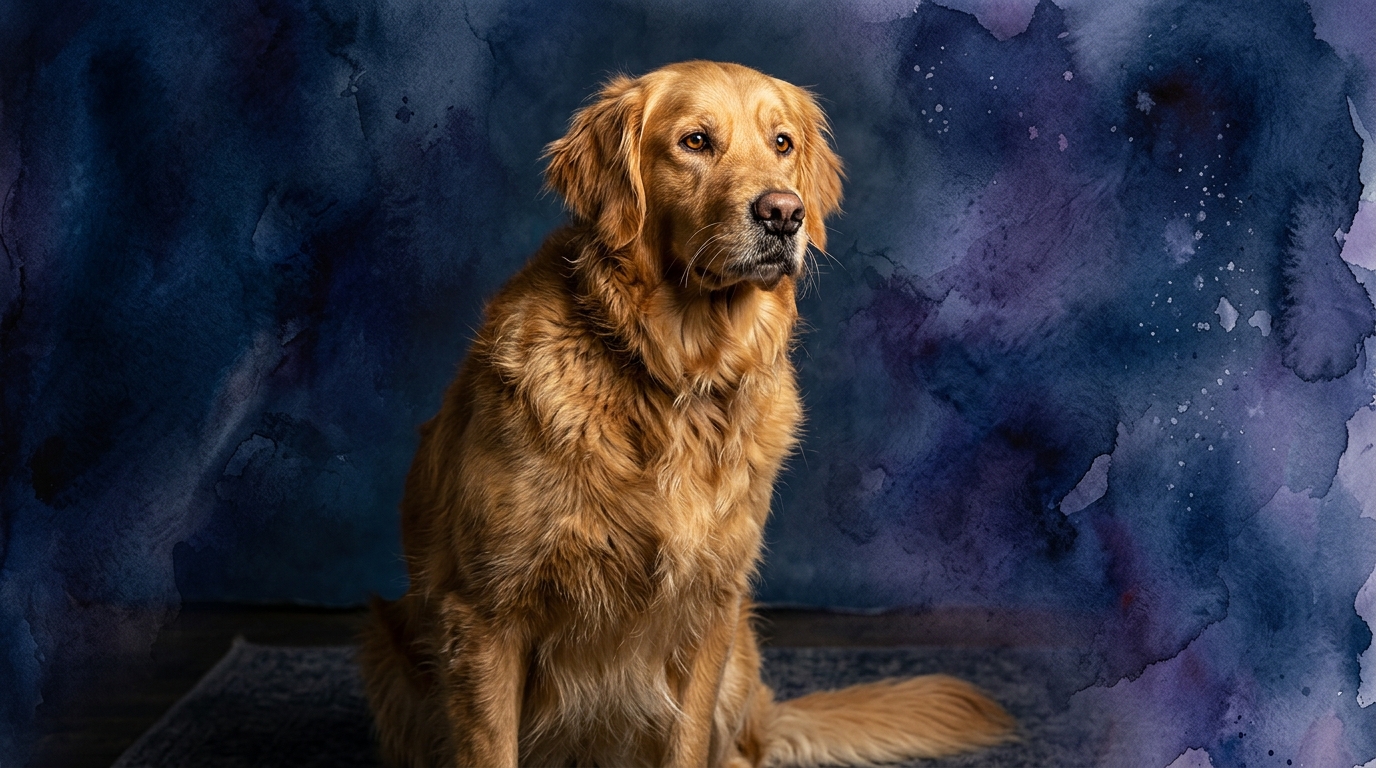
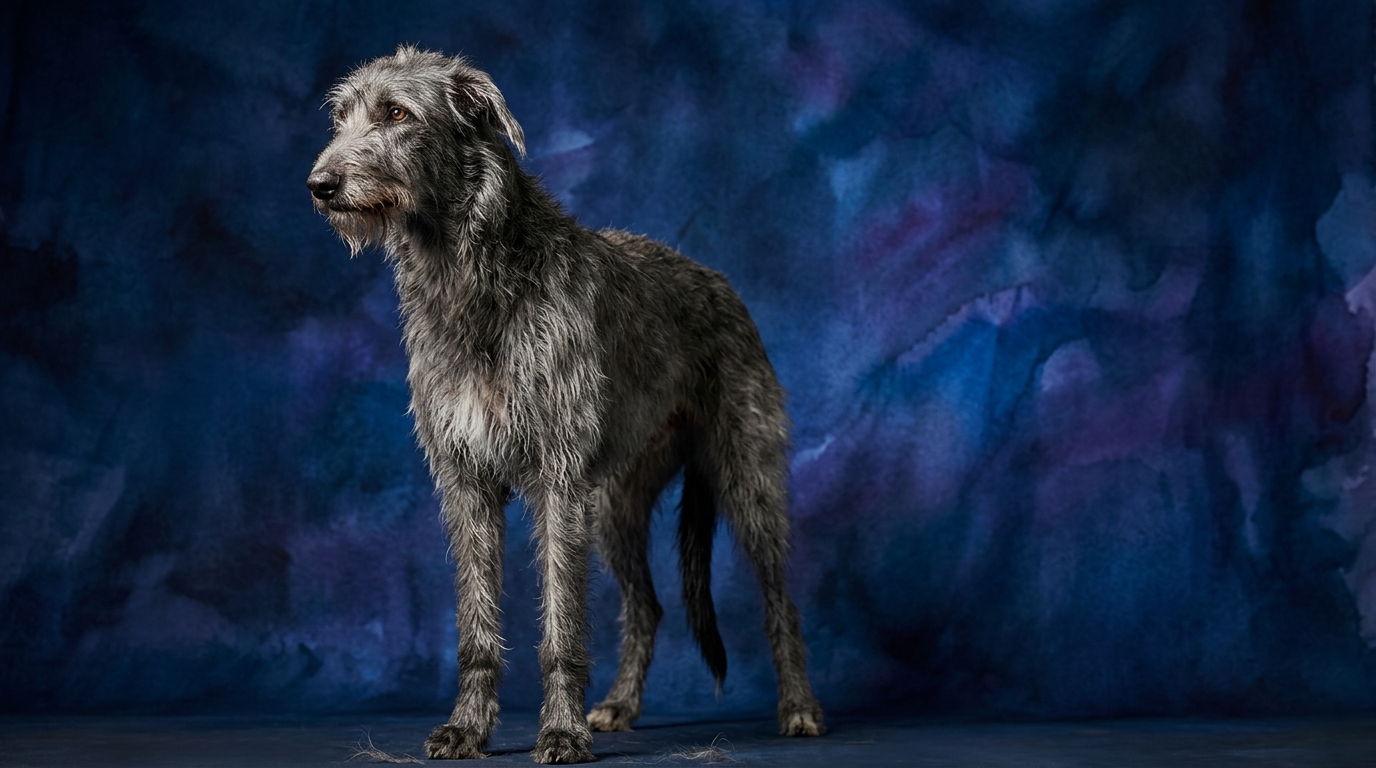
Side-by-Side Cognitive Profile: Golden Retriever vs. Scottish Deerhound
**Coren Rank:** The Golden Retriever holds a distinguished Coren rank of #4, placing it among the most obedient and biddable breeds, indicating a strong capacity for understanding and executing human commands. The Scottish Deerhound, conversely, is not Coren-ranked, suggesting its intelligence manifests in ways less aligned with traditional obedience metrics, often favoring independence over immediate compliance.
**Problem Solving (Golden Retriever 4/5 vs. Scottish Deerhound 3/5):** The Golden Retriever exhibits a strong capacity for navigating complex tasks, often employing learned strategies to retrieve hidden items or manipulate simple latches. Their approach is typically persistent and goal-oriented when working with humans. In contrast, the Scottish Deerhound demonstrates problem-solving abilities that are often more rooted in their sighthound instincts, such as efficiently finding paths to moving objects, but may show less sustained enthusiasm for human-designed puzzles, preferring efficiency and directness over prolonged engagement.
**Training Speed (Golden Retriever 5/5 vs. Scottish Deerhound 3/5):** Golden Retrievers possess an exceptional ability to grasp new commands and routines quickly, often requiring fewer repetitions due to their strong desire to please and focused attention. This makes them highly responsive to positive reinforcement. The Scottish Deerhound, rated 3/5, can learn commands but typically requires more patience, consistency, and repetition. Their independent nature means they might deliberate on compliance based on their own assessment, rather than immediate eagerness.
**Social Intelligence (Golden Retriever 5/5 vs. Scottish Deerhound 3/5):** The Golden Retriever shows an outstanding capacity to read human cues, understand intentions, and adapt its behavior to social situations. They form strong bonds and are acutely attuned to emotional states, making them empathetic companions. The Scottish Deerhound, at 3/5, forms deep bonds with its immediate family but can be reserved with strangers. While understanding familiar human cues, they might not actively seek to interpret complex human emotions with the same intensity as a Golden.
**Instinctive Drive (Golden Retriever 4/5 vs. Scottish Deerhound 3/5):** Golden Retrievers have strong natural drives for retrieving, companionship, and activity, rooted in their sporting heritage. This manifests as a desire to "work" alongside humans and engage in purposeful tasks. The Scottish Deerhound's primary drive is chasing and hunting by sight, a deeply ingrained sighthound trait. This powerful urge to pursue moving objects can often override learned behaviors, and their drive for companionship is present but often expressed with quiet dignity.
**Memory (Golden Retriever 4/5 vs. Scottish Deerhound 3/5):** Golden Retrievers retain learned commands, routines, and experiences over long periods, remembering people, places, and successful strategies, contributing to their consistent performance. The Scottish Deerhound possesses a good memory for routines, familiar people, and preferred paths, especially those related to their sighthound activities. However, their memory for arbitrary commands might require more consistent reinforcement due to their selective attention and independent spirit.
Where the Golden Retriever Wins Cognitively
**Consistent Biddability and Task Orientation:** Golden Retrievers consistently excel in structured learning environments due to their superior training speed and social intelligence. They actively seek human direction, finding intrinsic satisfaction in completing tasks and following commands, making them highly reliable partners for various working roles.
**Exceptional Emotional Attunement:** Their 5/5 social intelligence allows them to perceive and respond to human emotions with remarkable precision. This isn't merely friendliness; it's a deep understanding of social context, enabling them to offer comfort, anticipate needs, and form profound empathetic connections, which is crucial for roles like therapy or assistance dogs.
**Broad Adaptability to Human-Centric Roles:** Their combined problem-solving and social intelligence grant them a remarkable ability to adapt to a wide array of human environments and tasks, from complex obedience routines to navigating public spaces as service animals. They are adept at generalizing learned behaviors across different situations, showcasing robust cognitive flexibility in a human world.
Where the Scottish Deerhound Wins Cognitively
**Autonomous Problem-Solving in Open Terrain:** The Scottish Deerhound's cognitive strengths truly emerge in scenarios demanding independent thought and swift action, particularly in vast, open spaces. Their instinctive drive, while rated 3/5 for human-directed tasks, translates into powerful, self-directed problem-solving when spotting and pursuing distant objects, navigating complex outdoor environments without constant human instruction.
**Strategic Energy Conservation:** While appearing less eager than some breeds, their approach to tasks often reflects a strategic efficiency. They possess a subtle intelligence that prioritizes effective action over sustained, high-energy engagement, learning precisely what is necessary for a task and conserving energy for moments requiring explosive speed or decisive action. This isn't laziness but a calculated cognitive style.
**Specialized Situational Awareness for Sight:** Their sighthound heritage imbues them with a specialized form of intelligence focused on acute perception of movement, distant objects, and subtle environmental changes relevant to their hunting drive. This keen, focused awareness allows them to process specific sensory information rapidly and make independent decisions based on visual cues, a distinct cognitive advantage in their traditional role.
Which is Easier to Train and Why
The Golden Retriever is decidedly easier to train due to its exceptional 5/5 training speed and 5/5 social intelligence. This breed possesses an innate desire to please its human companions, coupled with outstanding focus and responsiveness to cues. They actively engage in the learning process, often offering behaviors to discern what is desired and quickly generalizing successful actions. This means fewer repetitions are needed for new commands, and they are highly forgiving of handler inconsistencies, readily maintaining eye contact and engagement.
In contrast, the Scottish Deerhound, with its 3/5 ratings in both training speed and social intelligence, presents a more nuanced training experience. These are independent thinkers; while capable of learning, their compliance often stems from their own assessment of the situation or a strong, consistent reward rather than an inherent eagerness to please. Training requires immense patience, creativity, and an understanding of their sighthound motivations. Their powerful prey drive can easily override learned commands if a compelling visual stimulus, like a squirrel, appears, demonstrating their selective attention and prioritization of instinct over handler direction.
Which Suits Active Owners vs. Relaxed Owners
For active owners, both breeds offer distinct companionship. The Golden Retriever thrives with interactive activities like fetch, agility, or obedience trials, and enjoys long hikes where they are actively engaged with their human. They flourish when given a "job" and consistent mental stimulation alongside physical exercise. The Scottish Deerhound, conversely, suits active owners who can provide ample, secure space for exhilarating, full-speed gallops. Their exercise needs are intense bursts of speed rather than sustained endurance, requiring owners to understand their need to stretch their immense strides in a safe, enclosed environment, often for shorter, more vigorous sessions.
For owners seeking a more relaxed companion, the Golden Retriever can adapt to a slightly less rigorous daily schedule, provided they still receive daily walks, play, and mental enrichment; they are not suited for entirely sedentary lifestyles. The Scottish Deerhound, surprisingly, fits the "45 mph couch potato" description well. After their necessary bursts of intense exercise, they are content to lounge gracefully and quietly indoors, making them suitable for owners who appreciate a calm, dignified presence in the home but can reliably provide dedicated opportunities for vigorous outdoor sprints.
The Verdict
Choose a Golden Retriever when you prioritize a highly biddable, eager-to-please companion who excels in structured training, adapts to diverse roles, and offers profound emotional attunement. This breed thrives with consistent engagement and a desire for partnership in all activities.
Choose a Scottish Deerhound when you seek a dignified, independent companion valuing explosive bursts of exercise followed by serene home life, and who appreciates a subtle, self-possessed intelligence that doesn't always seek to please but offers deep, quiet loyalty. This breed requires an understanding of its sighthound instincts and a willingness to adapt training and lifestyle to its unique nature.
🧠 Find Your Pet's IQ Score
Our Pet IQ Lab assessment covers 25+ tests across 5 cognitive dimensions — personalized to your breed.
Take the Full IQ Test →Frequently Asked Questions
Are Scottish Deerhounds difficult to train?
Scottish Deerhounds can be more challenging to train than some other breeds due to their independent nature and strong prey drive. They respond best to consistent, positive reinforcement and require patience and creativity from their handlers to maintain engagement.
Do Golden Retrievers need a lot of exercise?
Yes, Golden Retrievers are an active sporting breed that requires significant daily exercise, including walks, playtime, and mental stimulation. They thrive on having a purpose and participating in family activities to stay happy and healthy.
Which breed is better with children?
Golden Retrievers are generally known for their gentle, patient, and tolerant nature with children, often making them excellent family pets. Scottish Deerhounds are typically gentle and calm with children within their family, but their large size and sighthound instincts mean supervision is always essential, especially with very young children.