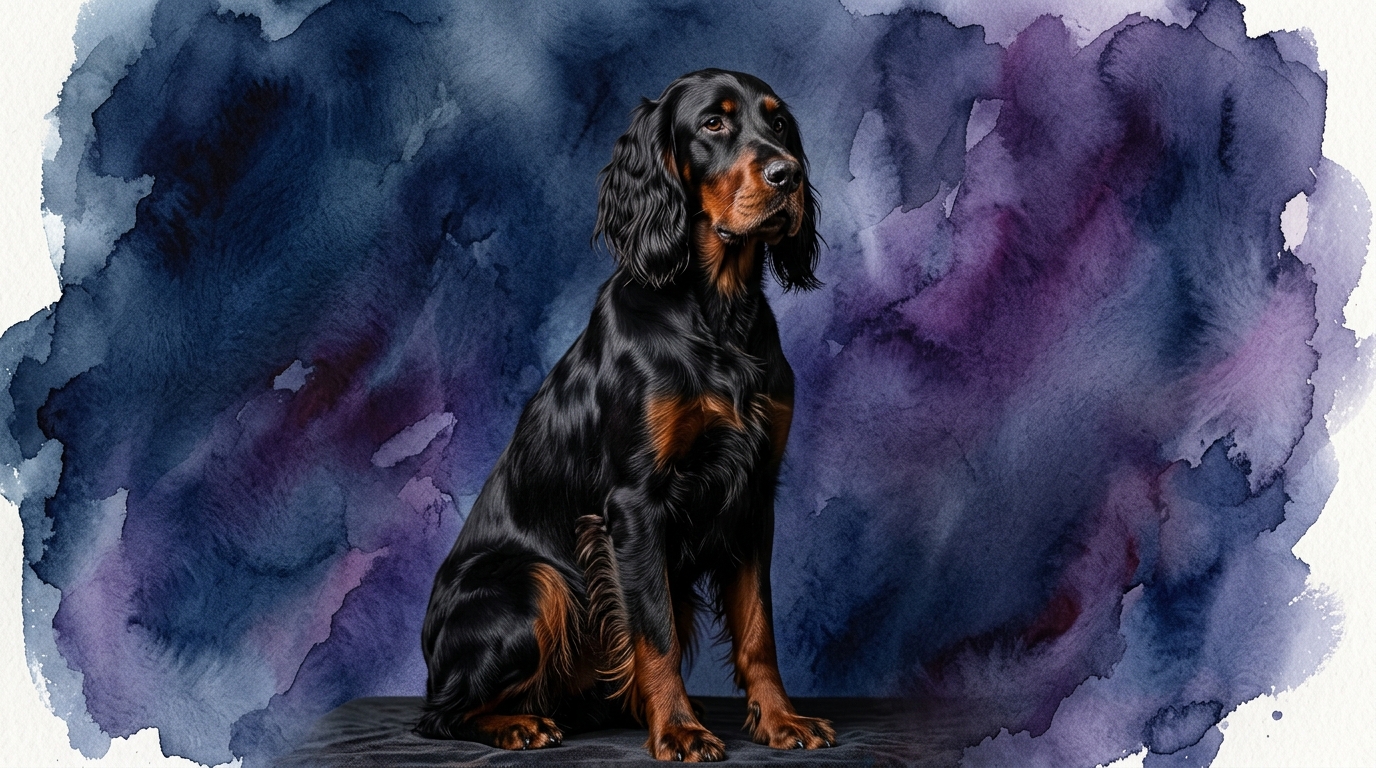
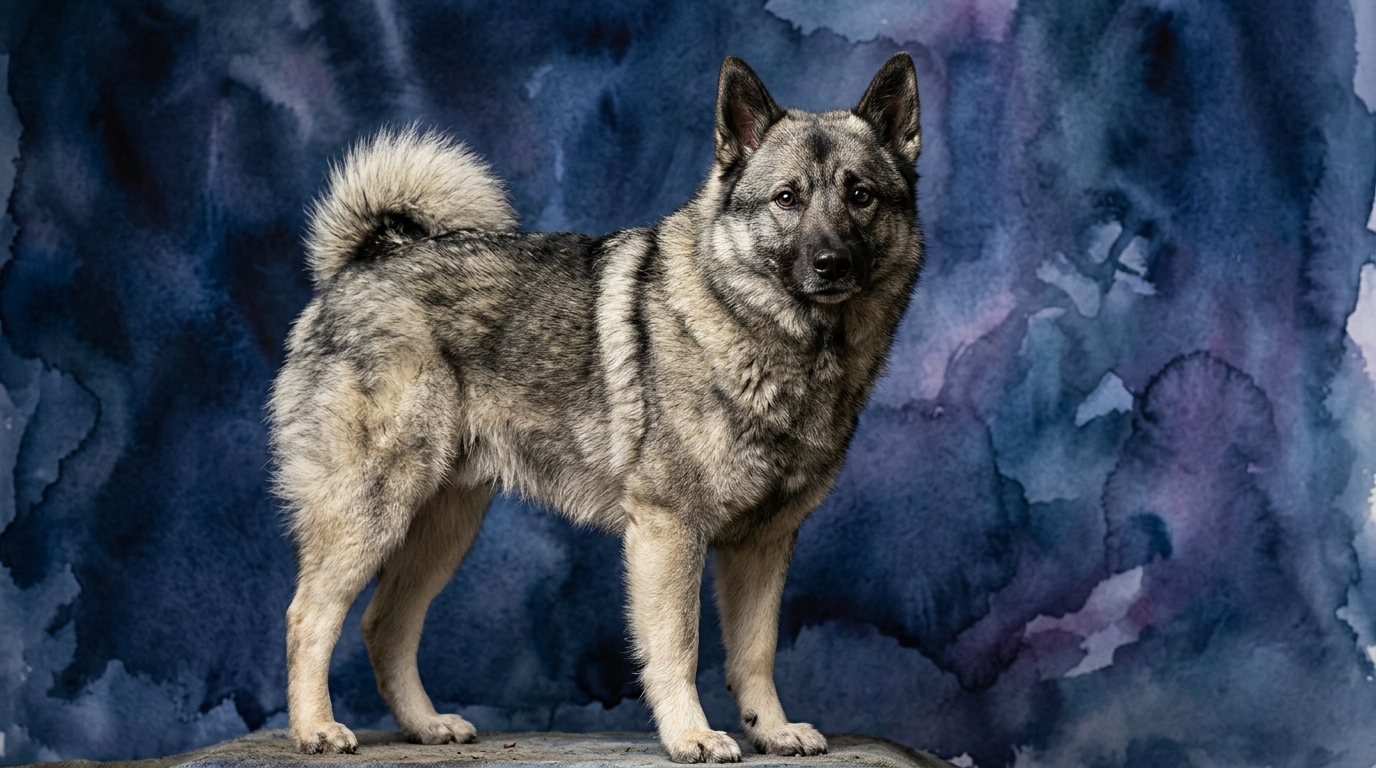
Side-by-Side Cognitive Profiles
The Cosmic Pet Pet IQ Lab evaluates canine intelligence across five key dimensions: problem solving, training speed, social intelligence, instinctive drive, and memory. For both the Gordon Setter and the Norwegian Elkhound, a remarkable consistency emerges across these metrics, each scoring 4/5 for problem solving, 4/5 for training speed, 3/5 for social intelligence, 3/5 for instinctive drive, and 4/5 for memory. This parity indicates that both breeds possess robust cognitive foundations, but their historical roles dictate how these capacities are applied.
A problem-solving score of 4/5 suggests both breeds are adept at navigating novel situations, finding solutions to obstacles, or strategizing to achieve a goal. For the Gordon Setter, this might involve figuring out how to retrieve a downed bird from challenging terrain, while for the Norwegian Elkhound, it could mean intelligently bypassing an obstruction to maintain a scent trail. Their identical training speed of 4/5 points to a commendable ability to grasp new commands and routines with moderate repetition, showcasing their receptiveness to instruction.
A social intelligence rating of 3/5 indicates that both breeds are capable of understanding and responding to human cues and social dynamics, though perhaps with a degree of independence or a specific focus rather than an overwhelming desire to please. The instinctive drive score of 3/5 for both highlights a moderate but present inherent motivation rooted in their breed's purpose; for the Gordon Setter, this is typically bird-related, whereas for the Norwegian Elkhound, it's centered on tracking and holding large game. Finally, a memory score of 4/5 confirms their capacity to retain learned behaviors, routes, and experiences over time, a critical component for both hunting and companionship.
Where the Gordon Setter Exhibits Cognitive Advantages
While their raw IQ scores are identical, the Gordon Setter's heritage as a Sporting dog, specifically a bird dog, shapes the application of its cognitive strengths in distinct ways. Its problem-solving ability (4/5) is often channeled into collaborative tasks, such as pinpointing the location of game birds or navigating dense cover to retrieve. This breed's memory (4/5) is particularly tuned for recalling specific field locations, handler signals, and the nuances of complex hunting patterns, making it exceptionally reliable in repetitive, task-oriented scenarios.
The Gordon Setter's social intelligence (3/5), though not the highest, is inherently geared towards working in close partnership with a human handler. This means their understanding of human directives and their responsiveness to subtle cues can be more finely honed in cooperative ventures. Owners seeking a canine partner for activities requiring precise, coordinated actions will find the Gordon Setter's cognitive profile, particularly its application of memory and problem-solving, aligns well with such demands.
Where the Norwegian Elkhound Exhibits Cognitive Advantages
The Norwegian Elkhound, a member of the Hound group, applies its identical cognitive capacities with a strong bias towards independent action and environmental navigation. Its problem-solving score of 4/5 shines in autonomous situations, such as deciphering complex scent trails, determining the best route through varied terrain, or strategically cornering game without direct human intervention. This breed's memory (4/5) is often dedicated to retaining intricate scent patterns and geographical layouts, crucial for its role as a persistent tracker.
With a Coren rank of #36 compared to the Gordon Setter's #39, the Elkhound demonstrates a slight statistical edge in understanding new commands and obeying the first command, suggesting a marginal, yet noteworthy, efficiency in initial obedience acquisition. While its social intelligence (3/5) allows for connection with its human family, it often manifests alongside a self-reliant streak, enabling it to make decisions independently in the field. This blend of cognitive traits makes the Norwegian Elkhound particularly adept at tasks requiring self-sufficiency and sustained focus on a singular objective.
Training Dynamics: Gordon Setter vs. Norwegian Elkhound
Both breeds boast a training speed of 4/5, indicating they are generally responsive learners. However, the *ease* of training can differ significantly due to their inherent behavioral tendencies. The Gordon Setter, as a Sporting dog, typically possesses a strong desire to please its handler and thrives on cooperative tasks. This innate willingness to work alongside humans can make the process of teaching complex commands and maintaining engagement in training sessions more fluid, especially for activities like obedience trials or field work where precision and partnership are paramount.
The Norwegian Elkhound, conversely, while capable of learning quickly, often brings a degree of independent thought characteristic of its Hound lineage. Its instinctive drive (3/5) is deeply rooted in tracking and pursuit, which can sometimes overshadow a direct focus on human commands, particularly if an enticing scent is present. While they learn commands efficiently, motivating an Elkhound for repetitive drills or tasks that lack an independent, stimulating challenge might require more creativity and consistent positive reinforcement from the trainer. Their independence means they might question the 'why' behind a command more readily than a Setter, requiring a trainer who can establish clear boundaries and provide engaging motivation.
Matching Canine Companions to Lifestyles
Neither the Gordon Setter nor the Norwegian Elkhound is suited for a truly relaxed, sedentary lifestyle; both are active breeds requiring substantial mental and physical engagement. However, the *type* of activity they thrive on differs, making them suitable for owners with specific inclinations.
The Gordon Setter excels with owners who appreciate consistent interaction and structured activity. They are wonderful partners for long hikes, field work, agility, or competitive obedience, where their cooperative nature and memory for patterns can truly shine. Their problem-solving skills are often best utilized in scenarios that involve working in tandem with their human, making them a fit for individuals who enjoy training and participating in dog sports as a team. Owners who enjoy a clear partnership in their outdoor adventures will find a Gordon Setter a rewarding companion.
The Norwegian Elkhound is an ideal match for owners who enjoy independent exploration and robust outdoor adventures, particularly those involving scent work or covering significant distances. Their cognitive strengths are best engaged in activities like tracking, long-distance hiking, or exploring varied environments where their independent problem-solving and memory for trails can be fully utilized. They thrive with owners who understand and respect their self-reliant nature and can provide ample opportunities for them to engage their powerful senses and persistent drive. An Elkhound companion is perfect for those who appreciate a dog capable of making its own intelligent decisions while on an adventure.
The Verdict
Choose a Gordon Setter if you seek a cooperative, intelligent partner for structured activities like field work or obedience, where teamwork and precise execution are valued.
Opt for a Norwegian Elkhound if you prefer an independently-minded, intelligent companion for rugged outdoor adventures, tracking, or exploring, valuing their self-reliant decision-making.
🧠 Find Your Pet's IQ Score
Our Pet IQ Lab assessment covers 25+ tests across 5 cognitive dimensions — personalized to your breed.
Take the Full IQ Test →Frequently Asked Questions
Do Gordon Setters and Norwegian Elkhounds have similar energy levels?
Yes, both breeds possess high energy levels and require significant daily exercise. While the type of activity might differ, neither is a couch potato; they need outlets for their physical stamina and cognitive engagement.
Are these breeds suitable for first-time dog owners?
Both breeds can be challenging for first-time owners due to their energy, strong drives, and need for consistent training and socialization. An experienced owner who understands their specific breed traits and can dedicate time to their needs would likely be a better match.
How do their social intelligence scores of 3/5 manifest differently?
For the Gordon Setter, 3/5 social intelligence often means a cooperative spirit with a strong bond to its family, but not necessarily a desire for constant attention. For the Norwegian Elkhound, it suggests they connect well with their family but retain a degree of independence, sometimes appearing less overtly demonstrative in social interactions.