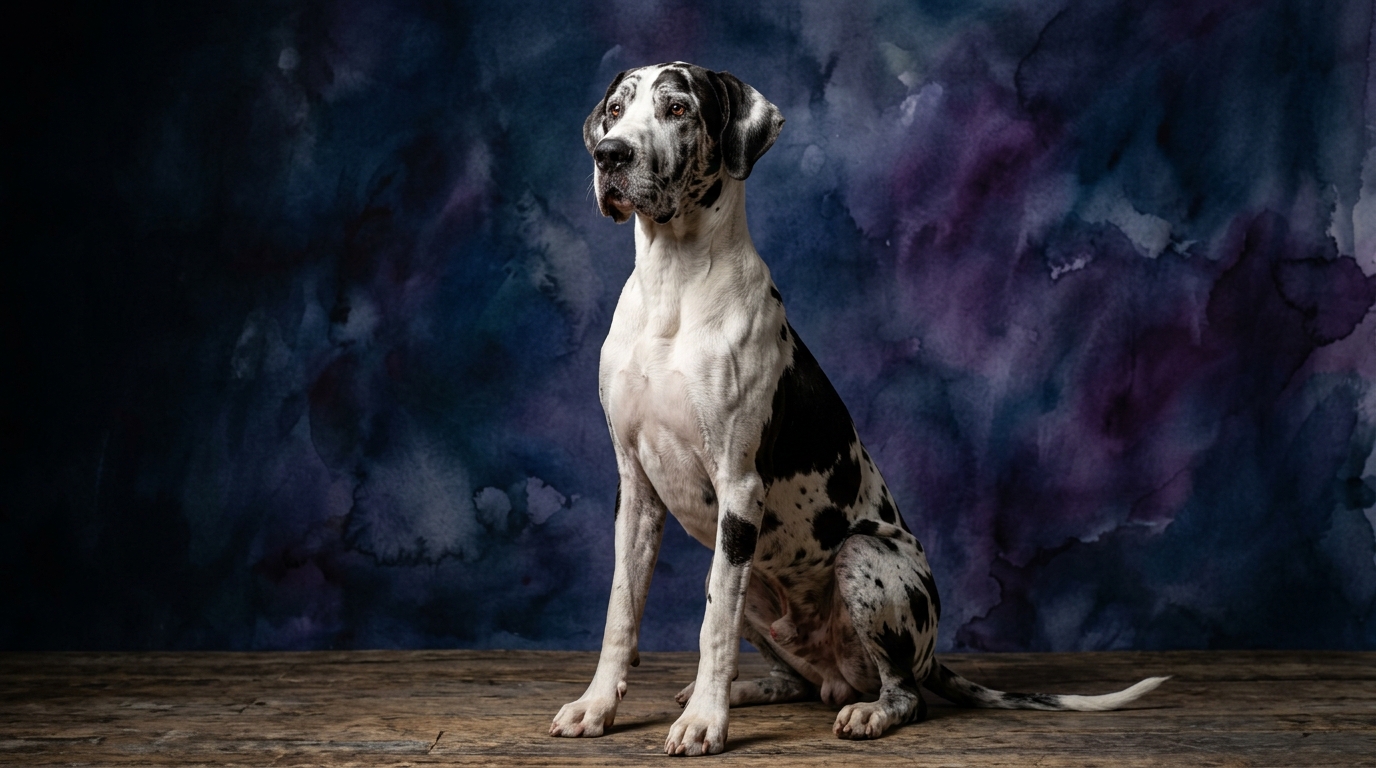
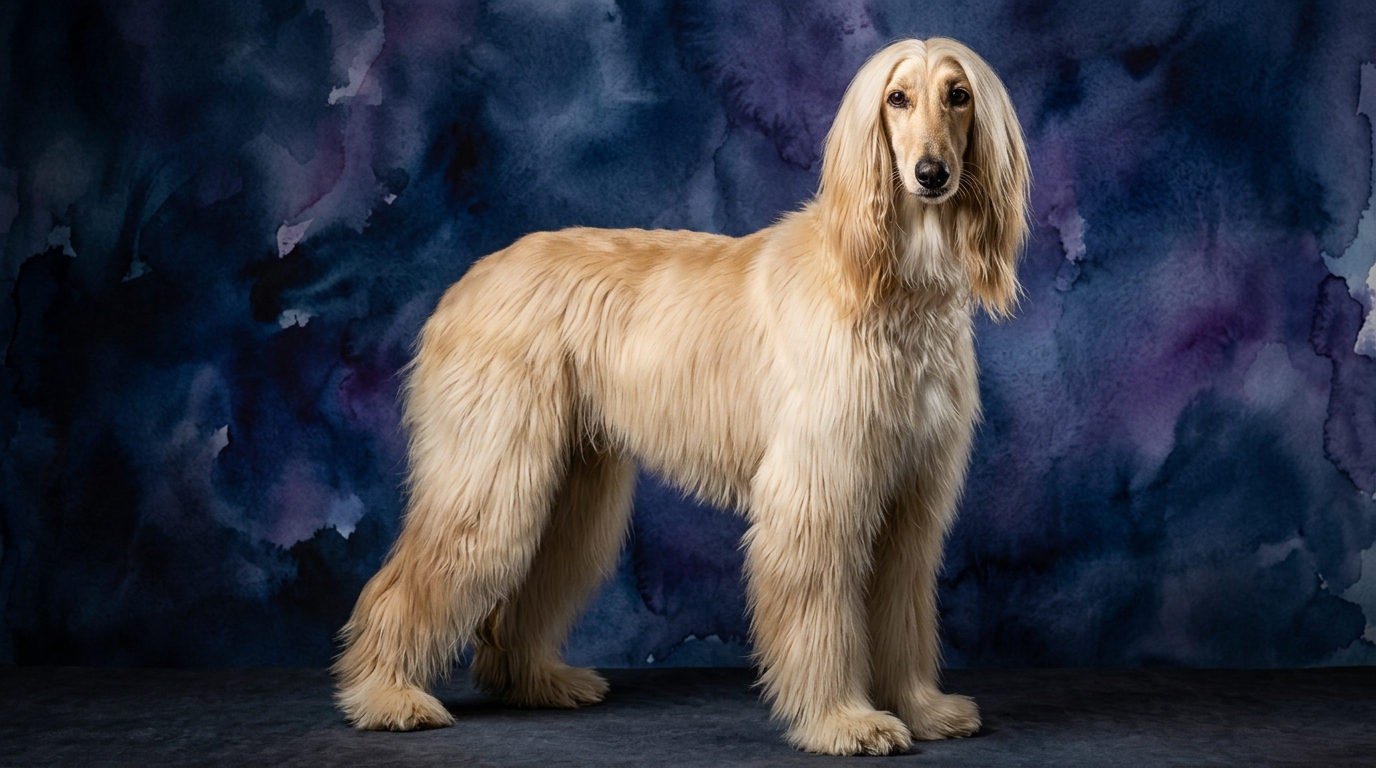
Side-by-Side IQ Profile: Great Dane vs. Afghan Hound
The Cosmic Pet Pet IQ Lab evaluates canine intelligence across five key dimensions, offering a detailed look beyond simple rankings. The Great Dane, a working breed with a Coren rank of #48, shows a balanced cognitive profile: Problem Solving 3/5, Training Speed 3/5, Social Intelligence 4/5, Instinctive Drive 3/5, and Memory 3/5. This suggests a dog capable of moderate learning and good social awareness, without overwhelming innate urges.
In contrast, the Afghan Hound, a hound breed ranked #79 by Coren, presents a unique and somewhat specialized cognitive makeup: Problem Solving 4/5, Training Speed 1/5, Social Intelligence 2/5, Instinctive Drive 5/5, and Memory 3/5. This profile indicates a dog with strong independent thought and powerful natural instincts, but a less cooperative approach to human-directed tasks and social interaction. Their high problem-solving score often manifests in self-serving ingenuity rather than collaborative effort.
Where the Great Dane Excels Cognitively
The Great Dane's primary cognitive strength lies in its exceptional Social Intelligence (4/5). These dogs exhibit a remarkable ability to read human emotions, understand social cues within a family unit, and adapt their behavior to maintain harmony. This makes them highly attuned companions, often anticipating their owner's needs or moods, and navigating complex social dynamics with a gentle perceptiveness. Their moderate Training Speed (3/5) is significantly bolstered by this social awareness; they are often motivated by the desire to please and connect with their human counterparts.
Furthermore, their Problem Solving (3/5), while not the highest, is frequently applied in socially beneficial ways. A Great Dane might figure out how to gently alert an owner to a perceived problem or learn household routines quickly to fit in seamlessly. Their balanced Instinctive Drive (3/5) means their problem-solving isn't constantly hijacked by overpowering prey urges, allowing for more focused attention on human interactions and tasks.
Where the Afghan Hound Shows Unique Cognitive Prowess
The Afghan Hound truly shines in raw Problem Solving (4/5), albeit in a highly independent fashion. This isn't necessarily about solving problems for a human, but for themselves. Their cognitive abilities are often directed towards achieving their own goals, such as finding a way to access something interesting or outmaneuvering obstacles in their environment. This high problem-solving capacity is intimately linked with their formidable Instinctive Drive (5/5); they are masters at devising strategies to pursue scents or visual stimuli, reflecting their deep sighthound heritage.
Their cognitive independence means they can be incredibly resourceful when motivated by their instincts. An Afghan Hound might brilliantly figure out how to open a gate or navigate a complex terrain to follow a perceived trail, showcasing a cleverness that is impressive in its self-sufficiency. However, this independent problem-solving often comes at the expense of human-directed cooperation, as their own internal motivations frequently override external commands.
Trainability: A Tale of Two Temperaments
When it comes to training, the Great Dane (Training Speed 3/5, Social Intelligence 4/5) presents a far more straightforward experience than the Afghan Hound (Training Speed 1/5, Social Intelligence 2/5). Great Danes, with their strong social intelligence, genuinely seek to understand and engage with their trainers. They respond well to positive reinforcement and consistent methods, eager to form a cooperative bond. Their moderate training speed means they grasp concepts at a reasonable pace, and their desire for human connection makes them willing participants in the learning process, even if they aren't instant prodigies.
The Afghan Hound, on the other hand, is famously challenging to train. Their incredibly low Training Speed and Social Intelligence scores reflect a breed that is often aloof and less motivated by human approval. Repetitive drills, which work well for many breeds, can quickly bore or frustrate an Afghan. Their high Problem Solving combined with their strong Instinctive Drive means they are more likely to apply their intelligence to outsmarting the trainer or pursuing their own interests. Successful training with an Afghan Hound requires immense patience, creativity, and finding ways to motivate them through their prey drive or by appealing to their independent, puzzle-solving nature, rather than expecting eager obedience. They often learn through observation and their own self-directed exploration, rather than through direct instruction.
Suiting Lifestyles: Active Explorers vs. Relaxed Companions
For owners seeking a relaxed yet engaged companion, the Great Dane is often the ideal choice. While they require regular exercise, their profound social intelligence and moderate instinctive drives mean they thrive in a home environment focused on companionship and cooperative activities. They are generally content to be near their people, participating in family life, and their social perceptiveness makes them excellent, intuitive housemates. Their cognitive profile supports a lifestyle where interaction and shared experiences are prioritized over independent pursuits.
The Afghan Hound, however, is better suited for active owners who appreciate and can manage a dog with a powerful independent streak and very high instinctive drives. Their need for significant physical exercise, often in secure, off-leash areas where they can run and express their sighthound nature, is paramount. Owners must understand that an Afghan's cognitive strengths lean towards self-direction and pursuing their own interests, meaning they require an environment that allows for this without compromising safety. They are not dogs that will always seek to please; rather, they demand respect for their unique, often enigmatic, personality and cognitive independence.
The Verdict
Choose a Great Dane if you prioritize a highly social, cooperative, and perceptively communicative companion who integrates smoothly into family life with moderate training effort.
Opt for an Afghan Hound if you are an experienced owner who values independent thought, can manage an intense instinctive drive, and enjoys the challenge of engaging a clever but often aloof canine mind.
🧠 Find Your Pet's IQ Score
Our Pet IQ Lab assessment covers 25+ tests across 5 cognitive dimensions — personalized to your breed.
Take the Full IQ Test →Frequently Asked Questions
Is a Great Dane easy to train for a first-time dog owner?
With a Training Speed of 3/5 and high Social Intelligence (4/5), Great Danes are relatively approachable for first-time owners who are committed to consistent, positive reinforcement. Their eagerness to please and understand human cues makes the learning process more rewarding, though their size requires early socialization and leash training.
How does the Afghan Hound's high problem-solving ability manifest in daily life?
An Afghan Hound's Problem Solving (4/5) often manifests as ingenious methods for achieving their own desires, such as opening cabinets, finding escape routes, or outsmarting perceived barriers to reach something interesting. This independent cleverness is usually driven by their strong Instinctive Drive (5/5) rather than a desire to follow human commands.
Which breed is better for a multi-pet household?
The Great Dane, with its high Social Intelligence (4/5), generally adapts very well to multi-pet households, often displaying a gentle and tolerant nature towards other animals. The Afghan Hound's lower Social Intelligence (2/5) and very high Instinctive Drive (5/5) mean they can be more aloof or have a stronger prey drive towards smaller pets, requiring careful introductions and supervision.