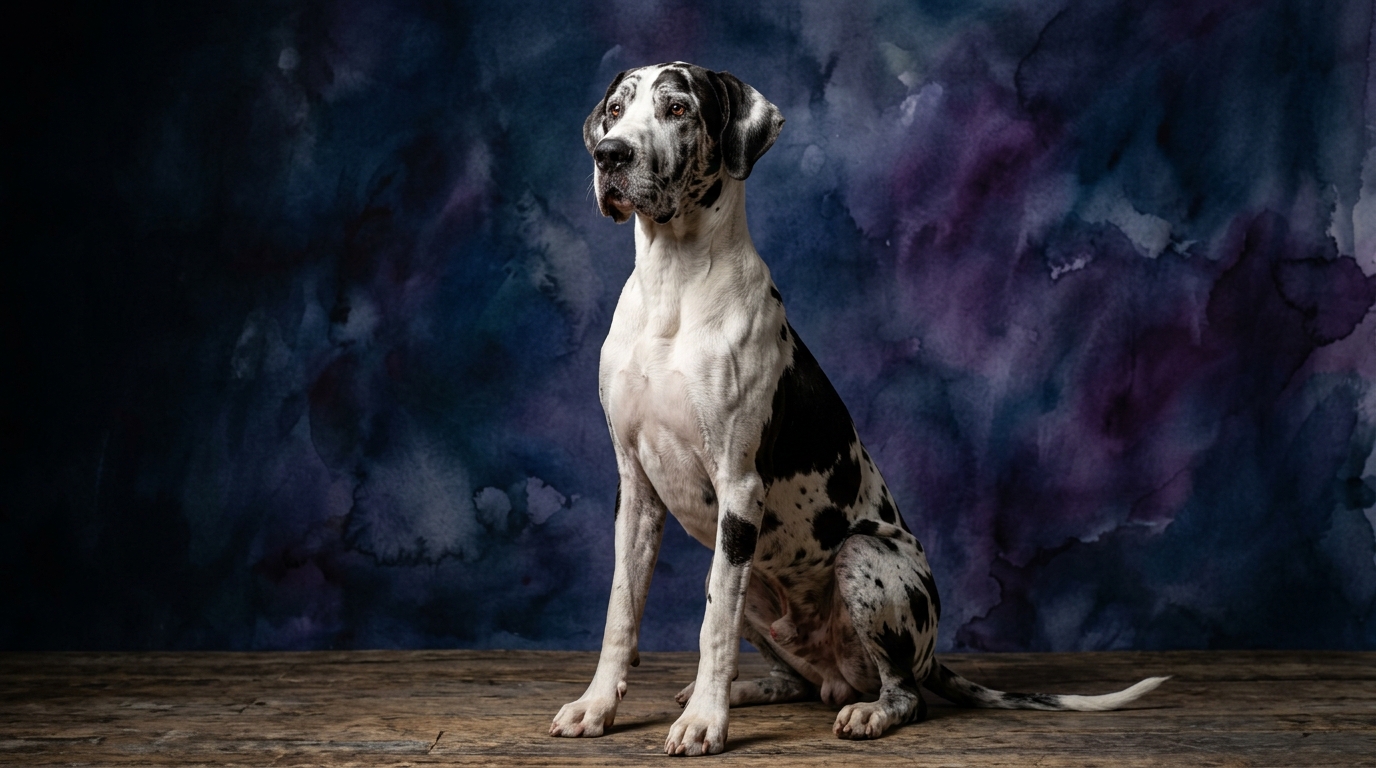
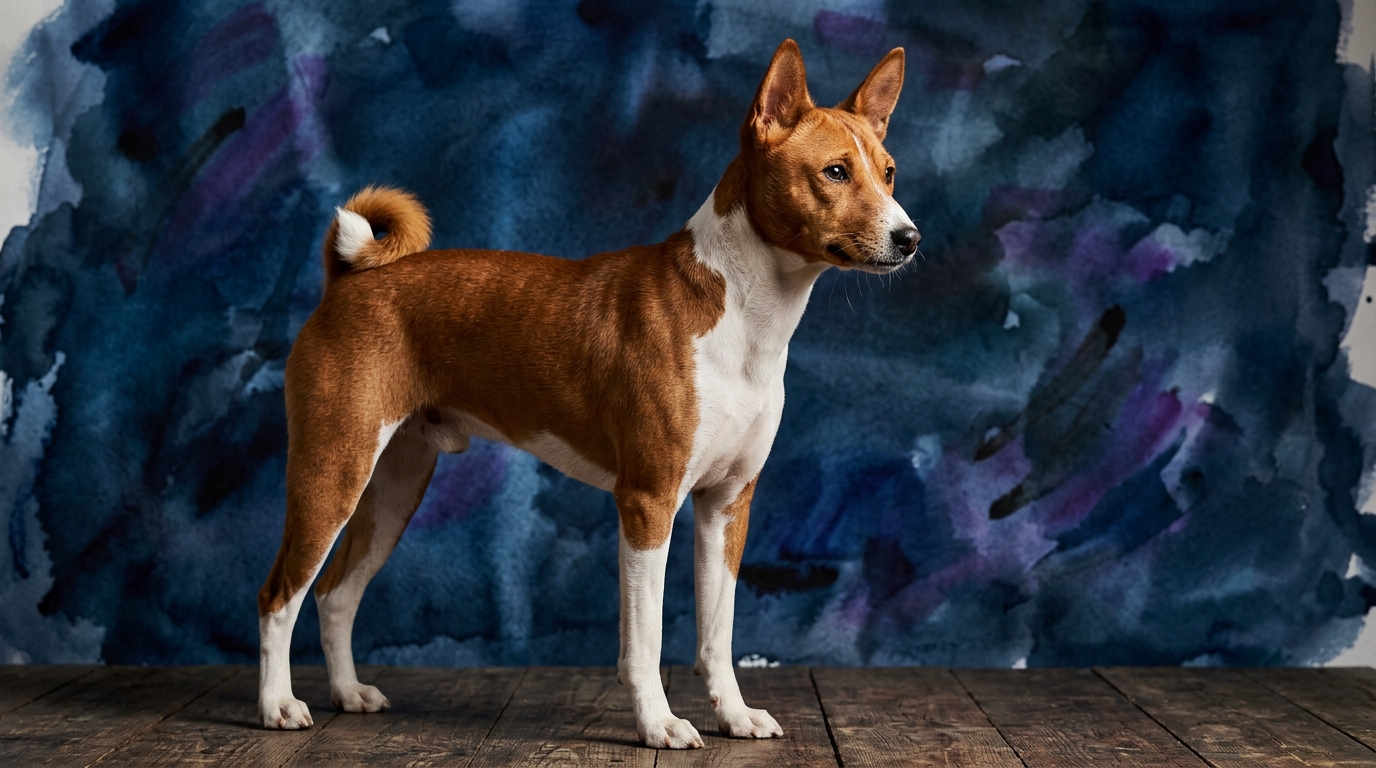
Side-by-Side IQ Profile: Great Dane vs. Basenji
The Cosmic Pet Pet IQ Lab employs a five-dimensional model to assess canine cognition, offering a granular view of each breed's mental landscape.
**Great Dane (Coren Rank #48, Working Group)**: This majestic breed exhibits a balanced cognitive profile. Their **Problem Solving (3/5)** indicates they can navigate moderately complex situations, often relying on learned routines or social cues rather than inventing novel solutions. **Training Speed (3/5)** suggests they learn new commands at a moderate pace, thriving on consistent repetition and positive reinforcement. Their **Social Intelligence (4/5)** is a standout trait, showing deep attunement to human emotions and social dynamics, fostering strong bonds. An **Instinctive Drive (3/5)** means their protective instincts are present, but their working drive leans more towards companionship or guarding than intense, independent tasks. Finally, their **Memory (3/5)** allows them to retain learned behaviors and associations moderately well, benefiting from regular practice.
**Basenji (Coren Rank #78, Hound Group)**: The Basenji presents a contrasting, highly independent cognitive makeup. Their exceptional **Problem Solving (5/5)** means they are adept at devising creative, often mischievous, solutions to obstacles, such as opening latches or escaping enclosures. A **Training Speed (1/5)** highlights their strong will and independent nature, making them slow to learn conventional commands as they often choose to comply only if it aligns with their own interests. Their **Social Intelligence (3/5)** is observant but tends towards aloofness, prioritizing their own agenda despite understanding human cues. A powerful **Instinctive Drive (5/5)** reflects their ancient hunting heritage, endowing them with fierce prey drive, keen observation, and an independent working mindset. Their **Memory (4/5)** is robust, particularly for things that benefit them or for environmental details, which can be a double-edged sword in training.
Where the Great Dane Wins Cognitively
The Great Dane's cognitive strengths are most apparent in their social attunement and cooperative spirit. Their impressive social intelligence rating of 4/5 means they are exceptionally perceptive of human emotions, often acting as intuitive companions capable of sensing distress or joy. This translates into a dog deeply connected to its family, responding to subtle cues and forming profound bonds. Their moderate training speed and problem-solving abilities, while not top-tier for independent thought, are bolstered by a strong desire to please, making them generally more amenable to structured learning within a human-centric environment. They excel in situations requiring a calm presence and an understanding of social dynamics, making them excellent therapy dogs or gentle family protectors who instinctively know when to be subtle.
Where the Basenji Wins Cognitively
The Basenji shines in areas demanding raw, independent intellect and self-reliance. Their 5/5 problem-solving ability means they are masters of figuring things out on their own, often displaying remarkable ingenuity in navigating their environment, whether it's opening doors or circumventing perceived limitations. This breed's high instinctive drive (5/5) is a testament to their ancient hunting heritage, giving them exceptional observational skills and a keen understanding of their surroundings, frequently anticipating events ahead of their human counterparts. Their memory, rated 4/5, allows them to retain complex information about their environment and past successful strategies, contributing to their reputation as clever, if sometimes challenging, companions. They thrive in environments where they can exercise their natural curiosity and independent thought.
Which is Easier to Train and Why
When it comes to conventional obedience training, the Great Dane is unequivocally easier to train. Their training speed of 3/5 is supported by a significant social intelligence score of 4/5, meaning they inherently seek to understand and please their human companions. They respond well to positive reinforcement, consistency, and a calm approach, eager to engage in cooperative tasks. Great Danes are less likely to question a command or devise an alternative action; they generally want to comply with their people.
In contrast, the Basenji's training speed is a mere 1/5, a direct reflection of their profound independence and problem-solving prowess. A Basenji will often assess whether a command benefits them, or if there's a more interesting alternative, rather than simply obeying. Their strong instinctive drive means they are easily distracted by scents or movement, and their memory for past "successful" disobedience can make consistent training a prolonged effort. Basenjis require immense patience, creativity, and a deep understanding of their unique motivations, often responding better to 'what's in it for me?' rather than pure compliance.
Which Suits Active Owners vs. Relaxed Owners
For active owners seeking a dog for adventurous pursuits like hiking, trail running, or even agility, the Basenji, despite its smaller size, might be a surprisingly good fit due to its boundless energy and high instinctive drive. Their need for mental stimulation, coupled with their physical stamina, means they thrive with owners who can provide consistent, engaging activities that tap into their problem-solving skills and prey drive, such as lure coursing or challenging puzzle toys. However, this activity must be managed with their independent nature in mind, often requiring secure, fenced areas.
Relaxed owners, or those seeking a more placid and physically less demanding companion, would find the Great Dane a more suitable choice. While they require regular walks and play, their energy levels are generally lower and their exercise needs are less intense compared to the Basenji. Their social intelligence and calm demeanor make them excellent companions for cozy evenings, family gatherings, and generally fitting into a more relaxed household rhythm, provided their basic exercise needs are consistently met.
The Verdict
Choose a Great Dane if you prioritize a deeply empathetic, cooperative companion eager to please, and you appreciate a dog whose social intelligence makes them a gentle, intuitive family member.
Opt for a Basenji if you are an experienced, patient owner who values a highly independent, clever problem-solver with a strong adventurous spirit and a unique, often mischievous, personality.
🧠 Find Your Pet's IQ Score
Our Pet IQ Lab assessment covers 25+ tests across 5 cognitive dimensions — personalized to your breed.
Take the Full IQ Test →Frequently Asked Questions
Are Great Danes slow learners?
Great Danes learn at a moderate pace, rated 3/5 for training speed. They are not instant learners but are generally willing to cooperate, making them receptive to consistent positive reinforcement and clear communication. Their social intelligence helps them understand what is expected.
Why is the Basenji considered difficult to train?
The Basenji's difficulty in training stems from their extreme independence and high problem-solving ability (5/5), coupled with a low training speed (1/5). They often choose to comply only if it aligns with their own interests, requiring creative, patient, and highly motivating training methods rather than strict obedience.
Which breed is better with children?
The Great Dane generally excels with children due to their high social intelligence (4/5) and gentle, patient temperament, often acting as watchful, calm companions. Basenjis, while not aggressive, tend to be more independent and less tolerant of boisterous play, preferring older, respectful children.