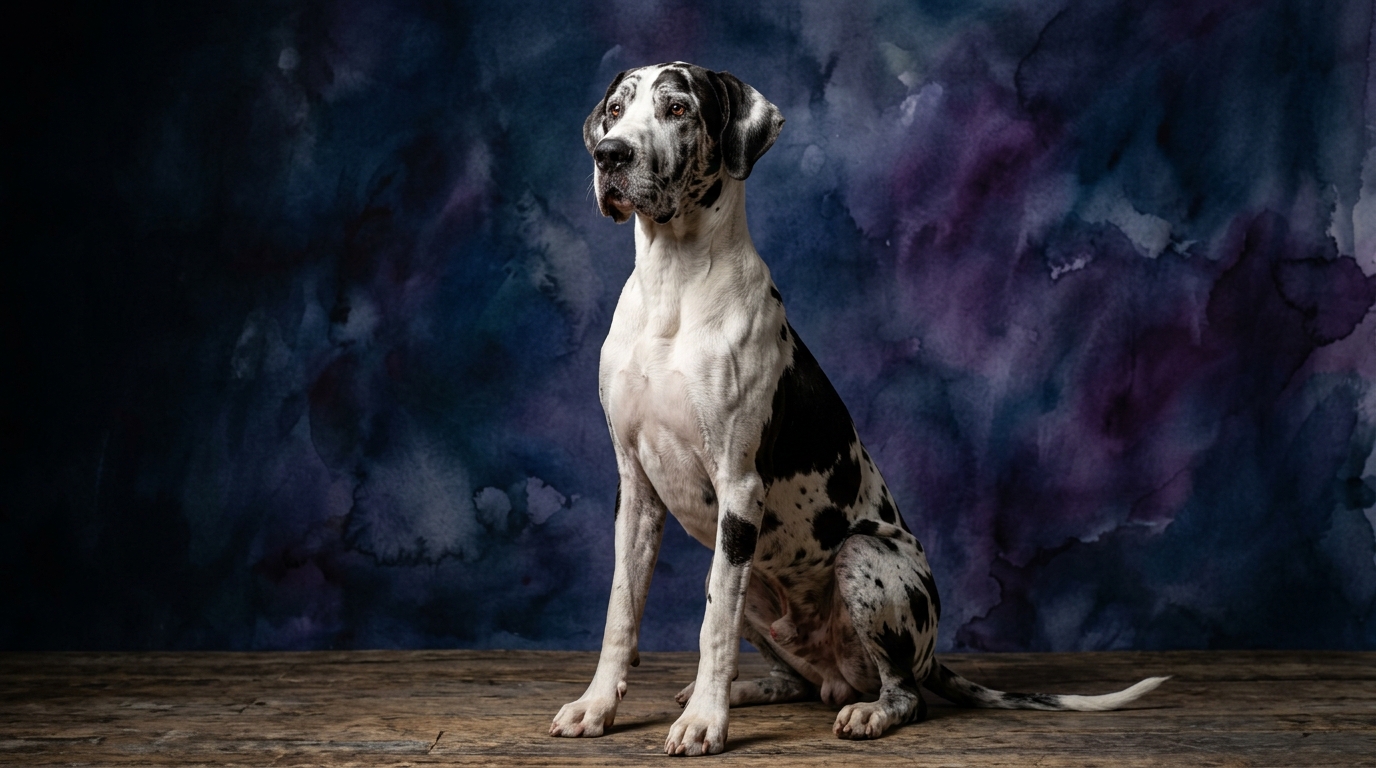
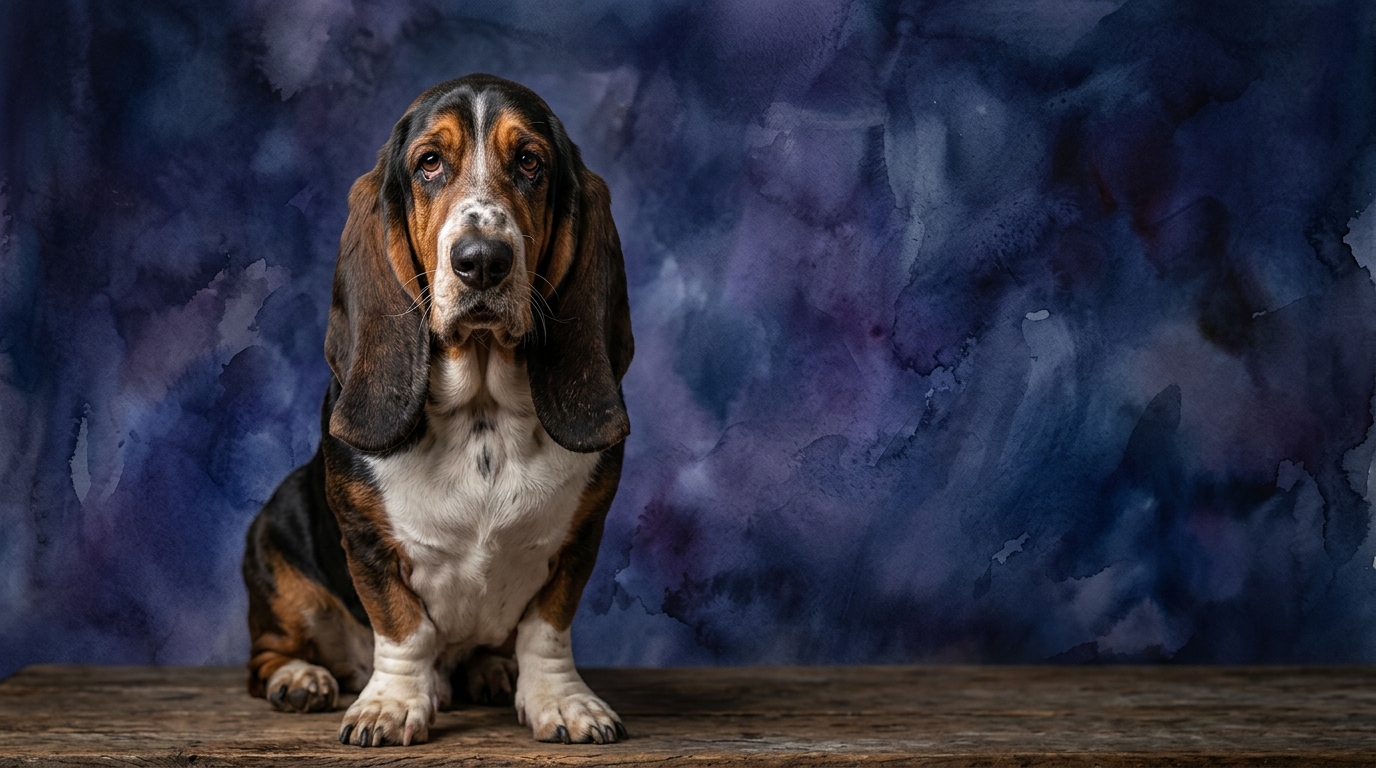
Side-by-Side IQ Profile: Great Dane vs. Basset Hound
At The Cosmic Pet Pet IQ Lab, we analyze canine intelligence across five key dimensions, offering a detailed look at how these breeds stack up. While both breeds score similarly in several areas, the subtle differences, especially in social intelligence and their Coren ranking, paint a clearer picture of their distinct cognitive blueprints.
**Great Dane IQ Profile (Coren Rank #48):**
**Problem Solving: 3/5** Great Danes exhibit a practical approach to problem-solving, often figuring out how to navigate household obstacles or manipulate simple latches. Their strategies tend to be direct and observable, rather than complex, focusing on achieving a clear, immediate goal like accessing a favorite toy or a comfortable spot.
**Training Speed: 3/5** The Great Dane's training speed is consistent, meaning they grasp new commands and routines with moderate repetition. They are generally amenable to learning when motivated by positive reinforcement, showing a steady progression through obedience exercises without rapid acceleration or significant resistance.
**Social Intelligence: 4/5** This is where Great Danes shine. Their social intelligence is robust, enabling them to keenly interpret human moods, intentions, and subtle cues. They integrate seamlessly into family dynamics, often forming deep bonds and demonstrating a strong awareness of their role within the social structure of the household, making them adept companions.
**Instinctive Drive: 3/5** As descendants of hunting dogs, Great Danes possess a moderate instinctive drive, often expressed through a desire for companionship and a protective instinct towards their family. While they retain some prey drive, it's generally manageable in a domestic setting, manifesting more as a watchful presence than an overwhelming urge to hunt.
**Memory: 3/5** Great Danes demonstrate a solid memory for routines, commands, and the people and places they encounter regularly. They recall past experiences and learned behaviors effectively, contributing to their reliability as family pets and their ability to maintain learned training over time.
**Basset Hound IQ Profile (Coren Rank #71):**
**Problem Solving: 3/5** Basset Hounds approach problem-solving with a distinctive, scent-driven persistence. While not typically excelling at abstract puzzles, they demonstrate remarkable ingenuity in tracking a scent trail, overcoming physical barriers, or finding hidden treats through olfactory deduction. Their problem-solving is often rooted in their primary sensory input.
**Training Speed: 3/5** Basset Hounds learn at a moderate pace, similar to Great Danes, but their independent nature and strong olfactory focus can sometimes make them appear less eager to comply. They require consistent, patient training, and while they absorb information effectively, their willingness to execute a command can be highly dependent on their current sensory engagement.
**Social Intelligence: 3/5** Basset Hounds possess a good level of social intelligence, forming affectionate bonds with their human families and demonstrating an awareness of household dynamics. They appreciate companionship and often seek attention, though their social interactions might be less nuanced or outwardly expressive compared to breeds with higher scores, often preferring quiet presence.
**Instinctive Drive: 3/5** The Basset Hound's instinctive drive is profoundly centered on scent. This 3/5 score belies the *intensity* of their olfactory focus; once they latch onto a scent, their drive to follow it can override almost all other stimuli. This isn't a broad hunting drive but a highly specialized, persistent tracking instinct that defines much of their cognitive engagement with the world.
**Memory: 3/5** Basset Hounds exhibit a good memory, particularly for scent trails and the locations of interesting smells. They remember familiar routes and the people who provide comfort and food. Their memory is practical and often tied to their sensory experiences, allowing them to recall past positive interactions and the layout of their environment.
Where the Great Dane Wins Cognitively
The Great Dane's most notable cognitive advantage lies in their superior social intelligence (4/5 compared to the Basset Hound's 3/5). This higher score translates into a profound ability to read human emotions, understand subtle social cues, and integrate themselves deeply into the human family unit. They are often described as sensitive to their owners' moods, adjusting their behavior accordingly, which fosters a strong, communicative bond.
Furthermore, the Great Dane's Coren ranking of #48, significantly higher than the Basset Hound's #71, indicates a greater aptitude for obedience and working intelligence. While their raw problem-solving and training speed scores are similar to the Basset's, the Great Dane's working breed heritage often means they approach tasks with a stronger desire to cooperate and please. This willingness to engage directly with human-initiated tasks gives them an edge in structured learning and responsiveness, making them more consistently pliable to direction and training in a domestic context. They are more likely to interpret a request as a cooperative venture, leveraging their social intelligence to understand and fulfill expectations.
Where the Basset Hound Wins Cognitively
The Basset Hound's unique cognitive strength resides in their unparalleled olfactory intelligence and the specialized problem-solving it enables. While their instinctive drive is rated 3/5, the *nature* of this drive is singularly focused on scent, granting them an extraordinary ability to process and remember complex scent information. Their cognitive 'win' is in their capacity for sustained, single-minded focus when tracking, a profound form of concentration that few breeds can match.
Their problem-solving, though rated 3/5, is often displayed in their relentless pursuit of a scent. This isn't about abstract puzzles, but about navigating intricate environments, overcoming obstacles, and using their memory to retrace or follow a fading trail, all driven by their nose. A Basset Hound's ability to discriminate between countless odors and prioritize the target scent is a highly sophisticated cognitive feat, making them exceptional at tasks requiring detailed sensory analysis and persistent investigation. This specialized intelligence makes them masters of their olfactory world, showcasing a distinct type of canine brilliance.
Which is Easier to Train and Why
Between the two, the Great Dane is generally considered easier to train, primarily due to their higher social intelligence and working breed background. Their 4/5 social intelligence means they are more attuned to human commands and intentions, making them more responsive to verbal and non-verbal cues. They often possess a stronger intrinsic desire to please their owners and participate in cooperative activities, which streamlines the training process.
Conversely, while Basset Hounds also have a 3/5 training speed, their powerful, independent instinctive drive for scent can pose a challenge. When a Basset Hound catches an interesting scent, their focus can become singularly directed, making it difficult to redirect their attention to human commands. They are certainly capable of learning, but their deep-seated drive to follow their nose means training requires exceptional patience, consistency, and a deep understanding of their motivations to effectively compete with their olfactory passions. Their 'stubbornness' is often a manifestation of this deeply ingrained, independently driven cognitive process rather than a lack of understanding.
Which Suits Active Owners vs. Relaxed Owners
For owners seeking a companion that aligns with a moderately active lifestyle, the Great Dane is often a better fit. While they are not hyperactive, they do benefit from regular exercise, including walks and play, to maintain their physical and mental well-being. Their social intelligence means they thrive on interaction and engagement, making them excellent partners for owners who enjoy incorporating their dog into daily activities and social outings. They appreciate a routine that includes both physical activity and quality time with their human family.
The Basset Hound, with its more relaxed demeanor and lower energy requirements, is well-suited for owners with a more laid-back lifestyle. While they enjoy a good sniff-walk, their exercise needs are generally moderate, often content with a leisurely stroll and plenty of time to lounge. Their strong scent drive means they can be engaged with scent games or short, focused tracking activities, but they are equally happy to be a calm presence in the home, making them ideal for individuals or families who prefer a more tranquil companion and are prepared for their independent nature.
The Verdict: When to Choose Each Breed
The Verdict
Choose a Great Dane if you seek a highly socially intelligent companion who will integrate deeply into your family life, is consistently responsive to training, and thrives on cooperative interaction and a moderately active lifestyle.
Opt for a Basset Hound if you appreciate a calm, independent companion with a unique olfactory intelligence, are prepared for patient and consistent training, and prefer a more relaxed daily routine complemented by engaging scent work.
🧠 Find Your Pet's IQ Score
Our Pet IQ Lab assessment covers 25+ tests across 5 cognitive dimensions — personalized to your breed.
Take the Full IQ Test →Frequently Asked Questions
Are Great Danes good with children?
Great Danes, with their high social intelligence and typically gentle nature, are often excellent with children when properly socialized and trained. Their awareness of family dynamics and desire to be part of the pack makes them patient and protective, though their large size always necessitates supervision with very young children.
Do Basset Hounds bark a lot?
Basset Hounds are known for their distinctive, baying bark, which they primarily use when excited, tracking a scent, or feeling lonely. While not constant barkers, their vocalizations can be loud and persistent when their strong instinctive drive is activated, requiring consistent training to manage.
Which breed requires more grooming?
Both breeds have relatively low-maintenance coats, but Basset Hounds typically require more attention to their long, floppy ears to prevent infections, needing regular cleaning. Great Danes benefit from routine brushing to manage shedding and maintain coat health, but their ears are generally less problematic.