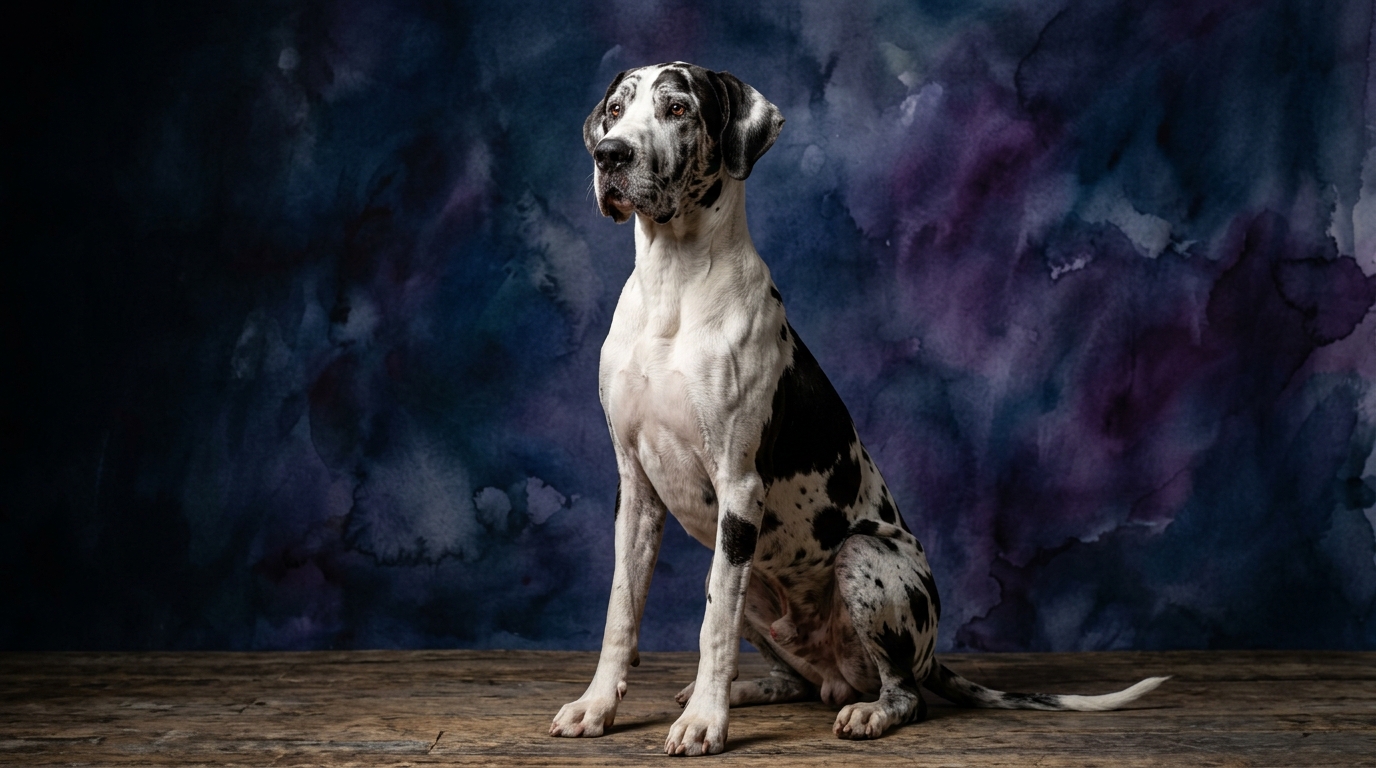

Side-by-Side Cognitive Profiles: Gentle Giant vs. Agile Herder
At The Cosmic Pet Pet IQ Lab, we dissect canine cognition across five key dimensions. For the majestic Great Dane, categorized as a Working breed, their Coren rank of #48 places them squarely in the realm of above-average working and obedience aptitude, yet their specific cognitive scores paint a nuanced picture. Their Problem Solving is rated at 3/5, indicating a moderate ability to navigate novel situations or figure out puzzles without extensive human intervention. Training Speed also sits at 3/5, suggesting they learn new commands at a steady, deliberate pace, requiring consistent reinforcement and patience. Where the Great Dane truly shines is in Social Intelligence, scoring an impressive 4/5, reflecting a profound capacity to read human emotions, understand social cues, and form deep, empathetic bonds. Their Instinctive Drive is moderate at 3/5, meaning they possess natural inclinations but are not overwhelmingly compelled by primal urges, making them generally adaptable companions. Finally, their Memory is rated 3/5, demonstrating a decent recall of learned behaviors and experiences, though perhaps not with the razor-sharp precision seen in some other breeds.
In stark contrast, the Belgian Sheepdog (Groenendael), a Herding breed, boasts a remarkable Coren rank of #15, signifying a dog with exceptional working and obedience intelligence. Their cognitive scores consistently reflect this prowess. Problem Solving is a perfect 5/5, indicating an outstanding ability to analyze and resolve complex challenges, often devising independent solutions. Training Speed also reaches the pinnacle at 5/5, meaning these dogs pick up new commands and routines with incredible swiftness, often requiring very few repetitions to master a skill. However, their Social Intelligence is rated 3/5, suggesting they are competent in understanding social cues but may be more reserved or focused on task-oriented interactions rather than purely emotional bonding, sometimes appearing more aloof than the Great Dane. Their Instinctive Drive, like the Dane, is 3/5, but within this moderate rating, their herding heritage can manifest as a strong inclination to gather, control, or patrol, especially when stimulated. Memory is another area where the Groenendael excels, scoring 5/5, demonstrating outstanding retention of information, commands, and experiences, leading to highly consistent and reliable performance over the long term.
Where the Great Dane Cognitively Excels: The Empathetic Companion
The Great Dane’s primary cognitive strength lies in their superior Social Intelligence, scoring 4/5 compared to the Groenendael’s 3/5. This isn't merely about being 'friendly'; it's a deep-seated capacity to interpret nuanced human emotions and social dynamics. Great Danes often exhibit an almost uncanny ability to sense their owner's mood, offering comfort during distress or mirroring joy with a calm, reassuring presence. They are adept at understanding non-verbal cues, making them highly intuitive companions who can seamlessly integrate into a family's emotional landscape. This translates into a dog that isn't just present but truly connected, capable of providing profound emotional support and responding to subtle shifts in household atmosphere. Their cognitive processes are geared towards harmonious cohabitation and emotional attunement, making them exceptional at being a comforting presence rather than a task-driven partner.
Where the Belgian Sheepdog (Groenendael) Cognitively Excels: The Master Learner
The Belgian Sheepdog (Groenendael) showcases a formidable cognitive advantage across three critical dimensions: Problem Solving (5/5), Training Speed (5/5), and Memory (5/5). This combination creates a dog built for complex work and rapid assimilation of new information. Their exceptional problem-solving skills mean they don't just follow instructions; they can independently analyze situations and strategize solutions, whether it's figuring out a complex puzzle toy or navigating an intricate agility course. Complementing this is their lightning-fast Training Speed; these dogs absorb new commands and routines with minimal repetition, often seeming to anticipate what's expected. Once a skill is learned, their outstanding Memory ensures it's retained with remarkable permanence, leading to consistent and highly reliable performance over time. This makes the Groenendael an incredibly efficient learner, capable of mastering advanced tasks and maintaining a vast repertoire of commands with precision and enthusiasm.
Training Dynamics: Swift Absorption vs. Patient Consistency
When it comes to ease of training, the Belgian Sheepdog (Groenendael) holds a distinct advantage, primarily due to their 5/5 Training Speed and 5/5 Memory. These dogs are natural students, thriving on mental engagement and quickly connecting actions with desired outcomes. Their high problem-solving ability often means they can extrapolate and apply learned concepts to new situations, making them highly adaptable in various training contexts. They respond best to dynamic, varied training sessions that challenge their intellect and keep them engaged, often becoming bored with repetitive, unstimulating drills. Their intrinsic drive to work and please, combined with their rapid learning curve, makes them exceptionally receptive to advanced obedience, dog sports, and specialized tasks, requiring minimal repetitions to solidify new behaviors.
The Great Dane, with its 3/5 Training Speed and 3/5 Memory, requires a different approach. While certainly trainable, they learn at a more measured pace. Owners must be prepared for more repetitions and unwavering consistency to establish new commands. Their training benefits immensely from positive reinforcement and leveraging their strong Social Intelligence; they are eager to please their human companions and respond well to clear, calm communication and emotional encouragement. Unlike the Groenendael, who might become frustrated by too much repetition, the Great Dane often benefits from the predictability and structure, solidifying behaviors over time. Patience, a gentle hand, and a focus on building a strong, trusting bond are paramount to successful Great Dane training, as they are less driven by an innate need for complex work and more by their connection with their owner.
Lifestyle Match: Energetic Engagement vs. Calm Companionship
Matching a dog's cognitive profile to an owner's lifestyle is crucial for a harmonious relationship. The Belgian Sheepdog (Groenendael), with its top-tier Problem Solving, Training Speed, and Memory, is unequivocally suited for active owners. These dogs possess a profound cognitive drive that demands consistent mental stimulation and physical activity. They flourish when given a 'job,' whether it's participating in agility, advanced obedience, herding trials, or protection work. Owners who enjoy dog sports, long hikes, or daily challenging activities will find the Groenendael an eager and capable partner. Without adequate intellectual and physical outlets, their sharp minds can turn to boredom, potentially leading to destructive behaviors or excessive barking, as they are hardwired for engagement and purpose.
Conversely, the Great Dane, while still requiring regular exercise, aligns more comfortably with relaxed owners. Their moderate instinctive drive and more deliberate learning pace mean they don't possess the relentless need for intense mental and physical exertion seen in the Groenendael. Once past their boisterous puppy stage, Great Danes are often described as 'gentle giants' who are content to be close companions, enjoying a comfortable routine. They appreciate substantial daily walks and opportunities to stretch their long legs, but their preference leans towards steady companionship rather than high-octane engagement. For owners seeking an empathetic, calm presence who will happily share a sofa after a good stroll, the Great Dane’s temperament and cognitive leanings make them an ideal, albeit large, family member, blending seamlessly into a more laid-back household rhythm.
The Verdict: Choosing Your Cognitive Canine Partner
The Verdict
Choose the Great Dane if you seek an empathetic, gentle giant who offers deep companionship and a calm, reassuring presence, valuing social connection over constant mental challenge and high-intensity activities.
Choose the Belgian Sheepdog (Groenendael) if you are a dedicated owner prepared to provide consistent, high-level mental stimulation and engage in advanced training or dog sports, seeking a highly capable, responsive, and intellectually driven working partner.
🧠 Find Your Pet's IQ Score
Our Pet IQ Lab assessment covers 25+ tests across 5 cognitive dimensions — personalized to your breed.
Take the Full IQ Test →Frequently Asked Questions
Are Great Danes difficult to train?
Great Danes possess a moderate training speed and memory, meaning they require consistent, patient methods and positive reinforcement. While not as quick to grasp concepts as some working breeds, their strong social intelligence makes them eager to please their human companions, responding well to clear communication and emotional connection.
Do Belgian Sheepdogs (Groenendael) need a lot of mental stimulation?
Absolutely. With top scores in problem-solving, training speed, and memory, Belgian Sheepdogs thrive on mental challenges and purposeful activities. Without adequate intellectual engagement, such as obedience training, puzzle toys, or dog sports, they can become bored and potentially develop undesirable behaviors.
Which breed is better for a first-time dog owner?
For a first-time owner, the Great Dane might be a more forgiving choice due to their generally lower drive and higher social intelligence, making them adaptable companions. The Belgian Sheepdog's intense cognitive needs and requirement for consistent, experienced handling might be overwhelming for a novice owner, demanding a significant commitment to advanced training and activity.