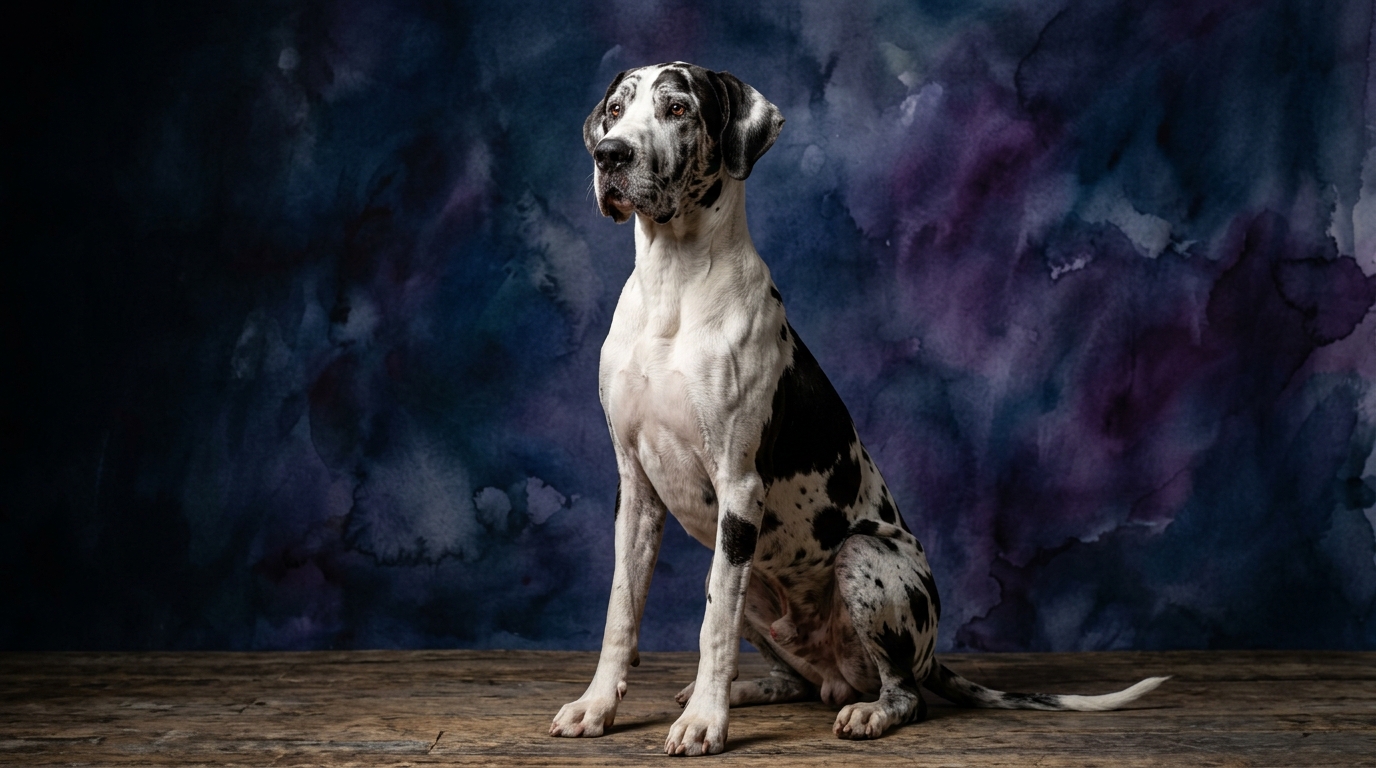
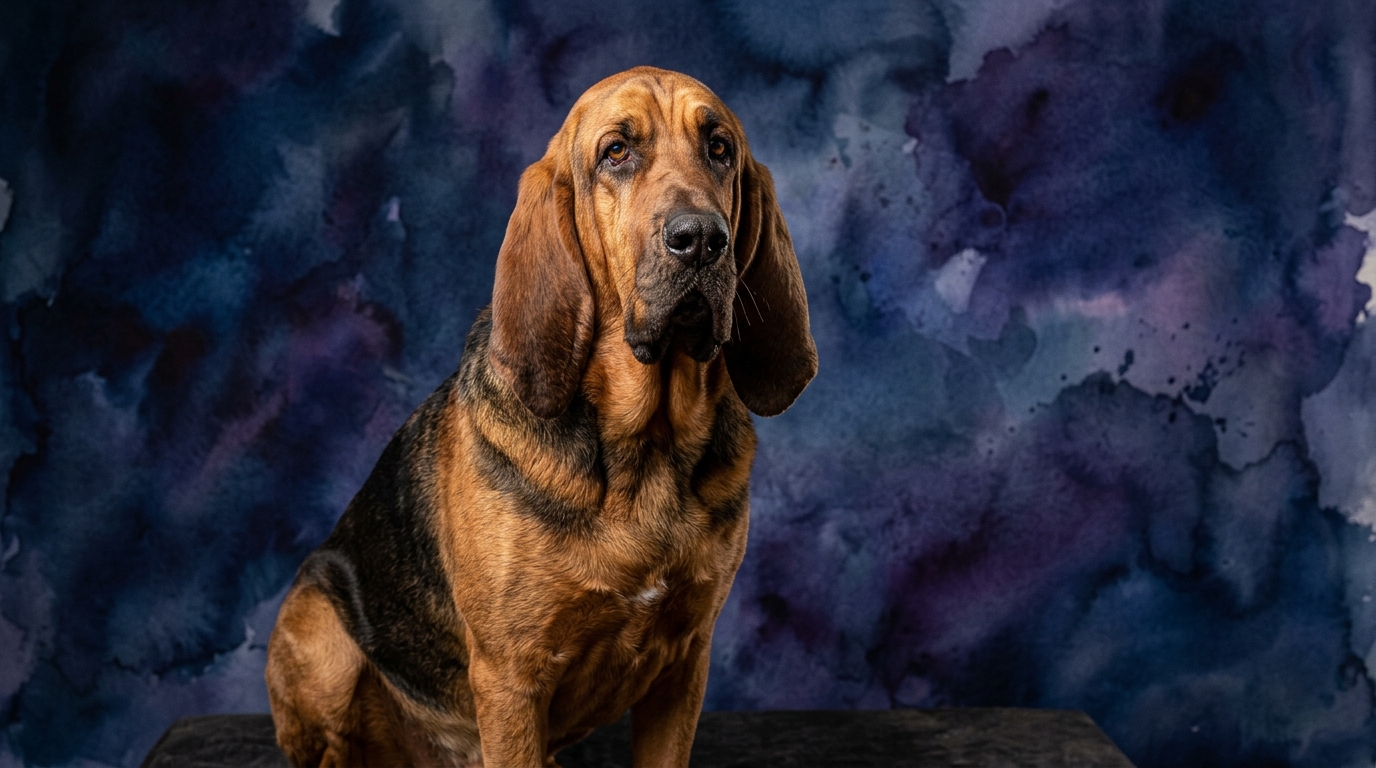
Side-by-Side IQ Profile: Great Dane vs. Bloodhound
The Cosmic Pet Pet IQ Lab employs a five-dimensional framework to assess canine cognition, offering a granular view beyond traditional notions of smartness. For the Great Dane, a member of the Working Group with a Coren rank of #48, these dimensions paint a picture of a socially attuned and moderately adaptable companion. Their Problem Solving is rated at 3/5, indicating a practical, straightforward approach to challenges rather than complex, multi-layered deduction. Training Speed stands at 3/5, suggesting a steady learning curve that rewards consistency, while their Social Intelligence shines at 4/5, reflecting a deep attunement to human emotional and social cues. Instinctive Drive is a moderate 3/5, focusing more on protective instincts than a relentless urge to perform specific tasks, and their Memory is also a solid 3/5, sufficient for daily routines and commands.
In contrast, the Bloodhound, a Hound Group member ranked #74 by Coren, presents a profile sculpted by extreme specialization. Their Problem Solving is an outstanding 5/5, not in abstract puzzles, but in the intricate, persistent deciphering of scent trails, navigating complex environments to reach an olfactory goal. However, their Training Speed is a challenging 1/5; their single-minded focus on scent often overrides a desire for general obedience. Social Intelligence is lower at 2/5, as their world is primarily defined by scent, often making them seem oblivious to human social nuances when a compelling odor is present. Their Instinctive Drive is a powerful 5/5, an all-consuming impulse for tracking that dictates much of their behavior, and their Memory is an equally impressive 5/5, specifically for recalling and differentiating countless scent details over time.
Where the Great Dane Wins Cognitively
The Great Dane's cognitive strengths shine brightest in areas requiring cooperative engagement and social attunement. Their superior social intelligence (4/5) means they are remarkably adept at reading human emotions and intentions, often anticipating needs or reacting appropriately to household dynamics. This makes them profoundly empathetic companions who integrate seamlessly into family life, understanding unspoken cues that many breeds might miss. Unlike the Bloodhound, whose world is primarily olfactory, the Great Dane's world is significantly relational, processing social information with a depth that fosters strong, mutual bonds.
Furthermore, their moderate training speed (3/5) offers a more straightforward path to general obedience and manners compared to the Bloodhound's often stubborn learning curve. While not instant, they are generally eager to please and respond well to consistent, positive reinforcement, making them more adaptable to a variety of domestic settings and activities that don't rely on specialized instincts. This cognitive profile makes the Great Dane a more universally adaptable companion in a typical family environment.
Where the Bloodhound Wins Cognitively
The Bloodhound’s cognitive architecture is a testament to specialized evolution, dominating in areas directly tied to their extraordinary olfactory capabilities. Their problem-solving (5/5) is legendary, not in abstract puzzles, but in the intricate deciphering of complex scent trails. A Bloodhound can mentally reconstruct a path from minute scent particles, navigating diverse terrains and overcoming obstacles with singular focus, a feat of cognitive mapping and persistent deduction unmatched by most breeds. This unparalleled ability is fueled by an instinctive drive (5/5) that is a pure, unadulterated force of nature; once on a trail, their mental resources are entirely dedicated to its pursuit, demonstrating an unwavering determination that few can match.
Complementing this is their exceptional memory (5/5) for scent. They don't just follow a fresh trail; they recall and differentiate specific odors from days past, demonstrating a long-term olfactory memory that is a marvel of biological information storage and retrieval. This triad of specialized cognition makes them peerless in tasks requiring sustained, independent scent work, making them invaluable in search and rescue or tracking endeavors.
Which is Easier to Train and Why
When considering general household training and obedience, the Great Dane presents a significantly easier path. Their balanced training speed (3/5) combined with high social intelligence (4/5) means they are generally receptive to learning commands, understanding expectations, and desiring to cooperate with their human companions. They respond well to praise and positive reinforcement, often showing a clear desire to please. Training a Great Dane involves consistent repetition and clear communication, but their inherent sociability means they are usually engaged and attentive to their handler, making the process a rewarding partnership.
In stark contrast, training a Bloodhound for general obedience is a formidable challenge, primarily due to their low training speed (1/5) and lower social intelligence (2/5) in contexts unrelated to their scent work. A Bloodhound's brain is overwhelmingly wired for scent detection, and when a compelling odor is present, their focus on human directives can simply vanish. Their instinctive drive (5/5) to track overrides nearly all other considerations. They are not unintelligent, but their intelligence is so deeply specialized that traditional obedience commands often feel irrelevant to them. Training a Bloodhound requires immense patience, understanding of their unique motivations, and often, a willingness to work *with* their nose rather than against it. Commands must be practiced in environments free of distracting scents, and even then, their learning pace is considerably slower, making them challenging for owners seeking a highly biddable companion.
Which Suits Active Owners vs. Relaxed Owners
The Great Dane, despite its imposing size, can adapt surprisingly well to both active and somewhat relaxed owners, though a moderately active lifestyle is ideal. While they enjoy regular walks and playtime, their instinctive drive (3/5) is not overwhelming, meaning they don't possess a relentless need for intense physical or mental exertion like some working breeds. They are content with a good daily stroll, some yard play, and plenty of couch time with their family. Their social intelligence (4/5) means they thrive on human companionship and interaction, making them excellent partners for owners who appreciate a dog that is present and engaged in their daily lives without demanding constant high-energy activities.
The Bloodhound, however, is unequivocally suited for active owners, specifically those who understand and can channel their profound instinctive drive (5/5). These dogs require significant mental and physical stimulation, ideally through scent work, tracking, or long, purposeful walks where they can engage their nose. A 'relaxed' owner who cannot provide outlets for their powerful olfactory drive will likely find themselves with a frustrated, destructive, or perpetually 'tuned out' Bloodhound. Their specialized problem-solving (5/5) and memory (5/5) for scent demand consistent engagement in activities that challenge these innate abilities. Owners who are dedicated to structured scent games, long lead walks for tracking practice, or even search and rescue training will find a Bloodhound fulfilling, whereas those seeking a low-maintenance companion might struggle.
The Verdict
Choose a Great Dane if you prioritize a companion with strong social intelligence, moderate trainability for general obedience, and a balanced activity level that includes plenty of family interaction.
Opt for a Bloodhound if you are an active owner passionate about engaging a dog's unparalleled scent tracking abilities, willing to embrace a unique training journey, and ready for a canine partner driven by an intense instinctive purpose.
🧠 Find Your Pet's IQ Score
Our Pet IQ Lab assessment covers 25+ tests across 5 cognitive dimensions — personalized to your breed.
Take the Full IQ Test →Frequently Asked Questions
Do Great Danes make good guard dogs?
While their imposing size can be a deterrent, Great Danes are generally more inclined to be gentle giants. Their social intelligence means they are protective of their family and will alert to strangers, but they are not typically aggressive guard dogs, preferring to observe and assess rather than confront.
Is a Bloodhound a good choice for a first-time dog owner?
A Bloodhound is generally not recommended for first-time dog owners due to their challenging training speed and overwhelming instinctive drive. They require an experienced hand, immense patience, and a deep understanding of their specialized needs to thrive and prevent frustration for both dog and owner.
How important is socialization for both breeds?
Socialization is crucial for both, though for different reasons. For Great Danes, it enhances their already strong social intelligence, ensuring they are well-adjusted and confident in various situations. For Bloodhounds, early and consistent socialization helps them learn appropriate interactions despite their lower innate social intelligence, preventing them from becoming overly focused solely on scent and ignoring their environment.