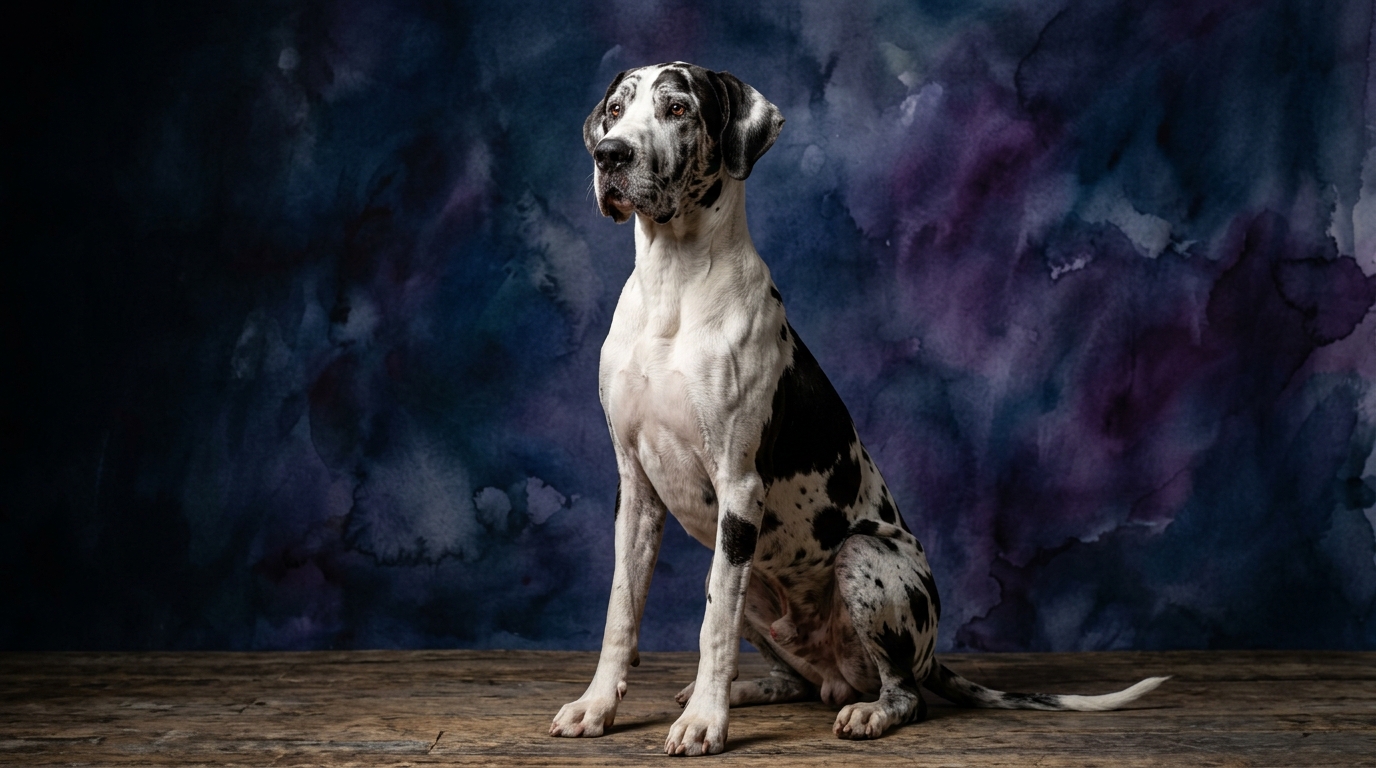
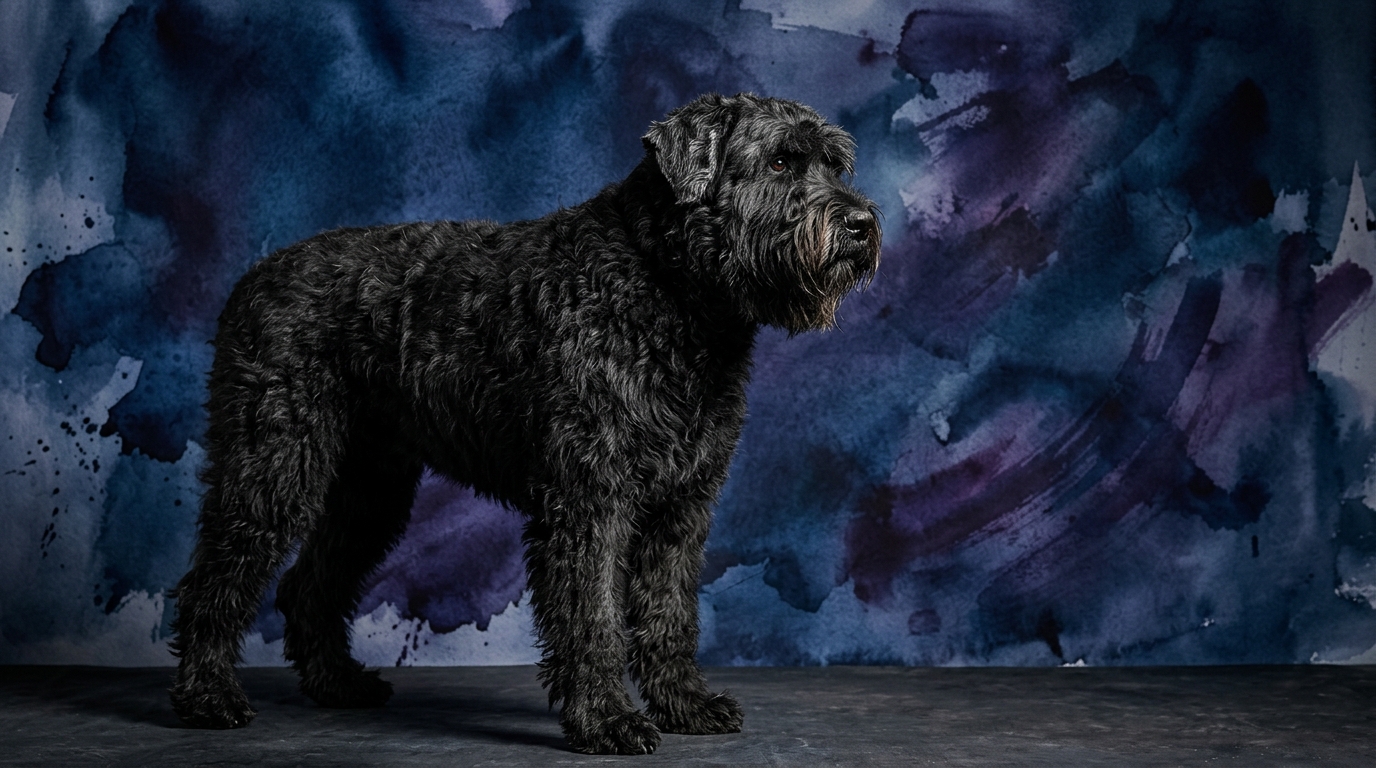
Side-by-Side IQ Profile: Great Dane vs. Bouvier des Flandres
To understand the Great Dane and Bouvier des Flandres, we evaluate their cognitive abilities across five key dimensions: Problem Solving, Training Speed, Social Intelligence, Instinctive Drive, and Memory. These metrics offer a nuanced look beyond mere anecdotal observations, providing a framework for appreciating their distinct mental aptitudes. It is important to remember that these scores represent general breed tendencies, and individual dogs can vary significantly based on genetics, environment, and training.
The Great Dane, a member of the Working group, presents a profile marked by a balanced aptitude for learning and a notable strength in social interaction. Its Problem Solving is rated at 3/5, indicating a solid capacity to navigate novel situations and figure out solutions, though perhaps not with the rapid, inventive flair seen in some more specialized working breeds. Training Speed also stands at 3/5, suggesting a moderate pace of acquiring new commands and behaviors, requiring consistent and engaging methods. Where the Great Dane truly shines is in Social Intelligence, scoring a robust 4/5; this reflects a profound ability to understand and respond to human emotions, cues, and social dynamics, making them exceptionally attuned companions. Instinctive Drive, at 3/5, points to a moderate level of inherent motivations like guarding or hunting, which are present but typically secondary to their social inclinations. Finally, Memory is scored at 3/5, meaning they retain learned information and experiences reasonably well over time.
The Bouvier des Flandres, hailing from the Herding group, exhibits a consistently capable cognitive profile across the board. Its Problem Solving ability is rated 3/5, signifying a practical intelligence for tackling challenges, particularly those related to its historical role in managing livestock. Training Speed also sits at 3/5, indicating a steady, methodical approach to learning new tasks, often requiring clear, consistent direction. Social Intelligence for the Bouvier is 3/5, suggesting a respectable capacity to interact and understand human cues, though perhaps with a more reserved or independent demeanor compared to the Great Dane's overt social exuberance. Instinctive Drive is also 3/5, reflecting a strong, purposeful motivation rooted in its herding and guarding heritage, which translates into a desire for meaningful activity and oversight. Memory rounds out its profile at 3/5, demonstrating an adequate ability to recall past lessons and experiences, crucial for a working dog.
Where the Great Dane Wins Cognitively
The Great Dane's standout cognitive advantage lies unequivocally in its Social Intelligence, where it scores a 4/5 compared to the Bouvier des Flandres' 3/5. This elevated capacity means Great Danes are exceptionally adept at reading human emotions, understanding subtle body language, and integrating seamlessly into family dynamics. They possess an innate ability to connect on a deeper emotional level, often anticipating their owner's needs or moods. This superior social acumen translates into a dog that is not just a companion, but a truly empathetic and responsive family member, often initiating gentle comfort or seeking interaction based on perceived human states. Their strong desire for connection drives much of their behavior and makes them highly receptive to social feedback.
This higher social intelligence also contributes to a Great Dane's generally more adaptable nature in diverse social settings. They are often more comfortable with strangers and other animals when properly socialized, relying on their ability to interpret and respond appropriately to new social cues. While their problem-solving and training speed scores are moderate, their strong social drive often acts as a powerful motivator, encouraging them to engage with training and overcome challenges primarily to please their human companions and maintain that valued social bond. This makes them particularly rewarding for owners who prioritize a deeply interactive and emotionally connected relationship with their dog.
Where the Bouvier des Flandres Wins Cognitively
While the Bouvier des Flandres' scores are consistently 3/5 across all categories, its cognitive strengths manifest differently, rooted in its robust working heritage. Its 3/5 in Instinctive Drive and Problem Solving, when viewed through the lens of a herding breed, speaks to a functional, self-reliant intelligence. This isn't about numerical superiority, but about the *application* and *type* of intelligence. A Bouvier's problem-solving is often geared towards practical, real-world challenges—like managing livestock, assessing threats, or navigating complex environments independently—rather than purely human-centric puzzles. This breed excels in tasks requiring perseverance, observational skills, and the ability to make decisions without constant human oversight, traits critical for a successful herder.
The Bouvier's consistent cognitive profile also underscores its formidable resilience and mental fortitude. Its 3/5 in instinctive drive is a powerful engine for purpose-driven activity, meaning these dogs are often more fulfilled when given a 'job' to do, be it advanced obedience, protection work, or dog sports. This drive, combined with solid problem-solving skills, allows them to excel in situations demanding focus, endurance, and a certain degree of independence. While its social intelligence is respectable, it's balanced by a strong sense of self-reliance, making the Bouvier an excellent choice for owners who appreciate a dog with a strong will, capable of independent thought, and possessing a deep-seated desire to work alongside them on a task rather than simply for social connection.
Which is Easier to Train and Why
Determining which breed is 'easier' to train is nuanced, as both the Great Dane and Bouvier des Flandres score 3/5 in Training Speed. However, their differing Social Intelligence and Instinctive Drive scores significantly influence the training experience. The Great Dane's 4/5 Social Intelligence makes it inherently eager to please and highly responsive to human cues. They typically thrive on positive reinforcement and verbal praise, as maintaining a strong bond with their owner is a primary motivator. Their desire for companionship means they are often more forgiving of handler errors and quicker to connect actions with rewards that involve human interaction. This high social drive can make initial training phases feel more fluid, as they actively seek to understand and comply with their human's wishes.
Conversely, the Bouvier des Flandres, with its 3/5 Social Intelligence and strong instinctive drive, often approaches training with a more independent and business-like mindset. While equally capable of learning, their herding background means they are accustomed to making their own judgments and may not be as overtly driven by a desire to simply please their human. Training a Bouvier often requires more consistency, clear boundaries, and an understanding of their working dog mentality. They can be perceived as more 'stubborn' if their intelligence isn't channeled correctly, demanding a handler who respects their independent nature and can provide compelling motivation beyond mere social approval. For the Bouvier, training is often about establishing a partnership and a clear hierarchy, where mutual respect and purpose-driven tasks yield the best results.
Which Suits Active Owners vs. Relaxed Owners
The choice between a Great Dane and a Bouvier des Flandres largely depends on an owner's lifestyle and their willingness to engage with their dog's specific cognitive and physical needs. For relaxed owners seeking a giant, affectionate presence, the Great Dane is often an ideal fit. Its higher Social Intelligence means it thrives on human companionship and is generally content to be a part of family life, whether that involves long cuddles on the couch or gentle strolls. While they require regular exercise, their energy levels are often moderate for their size, and their primary fulfillment comes from being deeply integrated into their human family. They adapt well to routines that prioritize social interaction and comfort.
Active owners, particularly those who enjoy structured activities or have a specific 'job' in mind for their dog, might find the Bouvier des Flandres more appealing. Its consistent 3/5 scores across Problem Solving, Training Speed, and Instinctive Drive, combined with its herding heritage, indicate a dog that needs mental and physical engagement beyond casual walks. Bouviers thrive when given a purpose, whether it's advanced obedience, agility, tracking, or protection work. Owners who can provide consistent training, mental challenges, and opportunities to utilize their instinctive drives will find the Bouvier to be a highly rewarding and devoted partner. Their self-reliant nature means they appreciate a structured environment where their intelligence can be put to good use, rather than simply being a decorative companion.
The Verdict
Choose the Great Dane if you seek a deeply empathetic, socially intelligent companion who thrives on emotional connection and integrates seamlessly into a relaxed family lifestyle. Their primary need is to be cherished and included.
Opt for the Bouvier des Flandres if you are an active owner looking for a robust, purposeful partner who excels with structured training, mental challenges, and a 'job' to do, appreciating their independent yet devoted nature.
🧠 Find Your Pet's IQ Score
Our Pet IQ Lab assessment covers 25+ tests across 5 cognitive dimensions — personalized to your breed.
Take the Full IQ Test →Frequently Asked Questions
Are Bouvier des Flandres difficult to train?
Bouvier des Flandres are not inherently difficult to train, but their independent nature and strong instinctive drive mean they require consistent, clear, and engaging training methods. They respond best to handlers who understand their working mindset and provide purposeful tasks, rather than relying solely on social approval.
How does Great Dane social intelligence manifest?
The Great Dane's high social intelligence manifests as a profound ability to read and respond to human emotions, often seeking to comfort or engage based on perceived moods. They are highly attuned to their family's dynamics, thrive on companionship, and are generally very adaptable in social settings, making them exceptional family members.
Which breed is better for a first-time dog owner?
For a first-time dog owner, the Great Dane might be an easier introduction due to its higher social intelligence and eagerness to please, making training more forgiving. The Bouvier des Flandres, while capable, often requires a more experienced hand to manage its independent streak and ensure its working drives are appropriately channeled.