Side-by-Side Cognitive Profiles
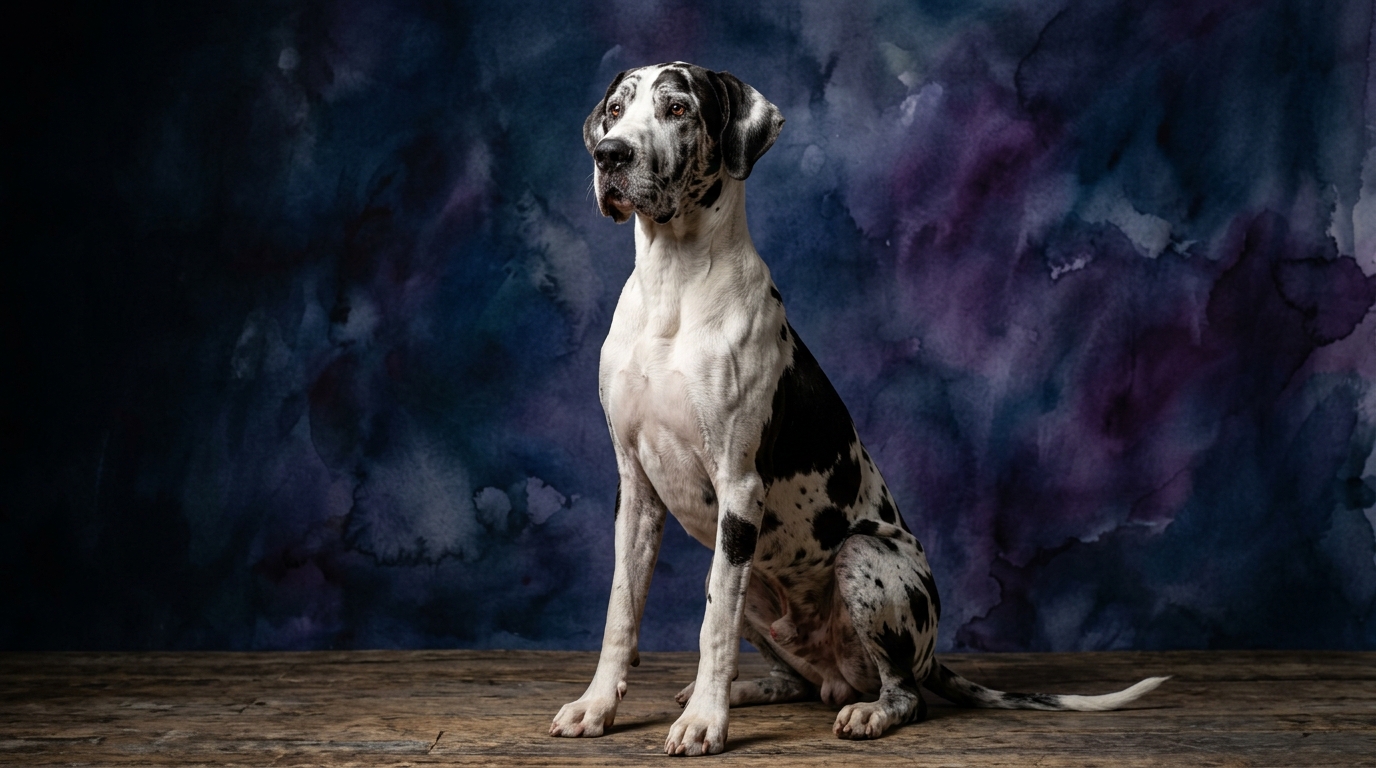
The Great Dane, ranked #48 by Coren, presents a cognitive profile characterized by a notable strength in social interaction. Its Problem Solving is rated at 3/5, indicating a moderate capacity for independent thought and navigating novel situations. Training Speed also sits at 3/5, suggesting a reasonable pace for acquiring new behaviors and commands, neither exceptionally quick nor particularly slow. Where the Great Dane truly distinguishes itself is in Social Intelligence, scoring a robust 4/5, demonstrating a keen ability to interpret human cues, form strong bonds, and adapt to social dynamics. Instinctive Drive and Memory both register at 3/5, reflecting a balanced, moderate level of intrinsic motivation and recall ability.
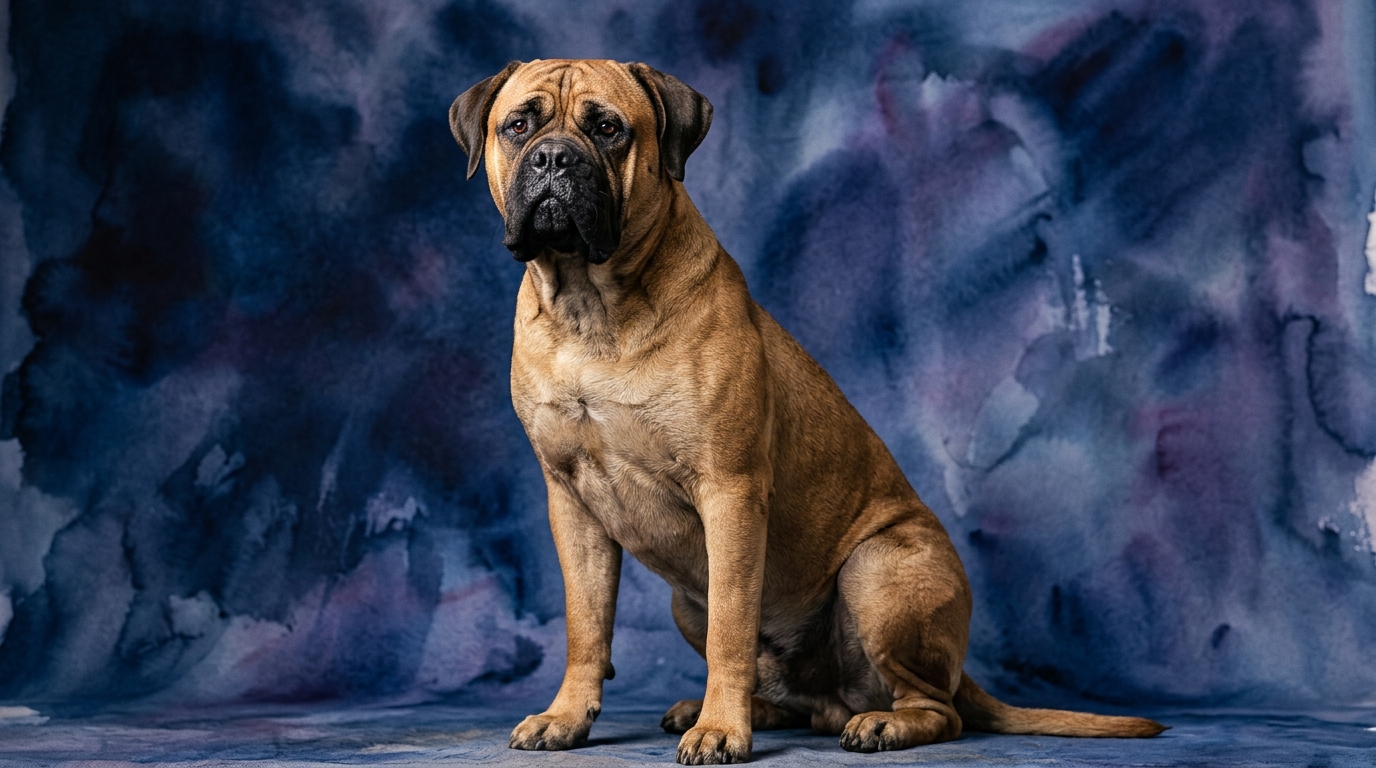
In contrast, the Bullmastiff, with a Coren rank of #69, exhibits a remarkably consistent cognitive makeup across all measured dimensions. Its Problem Solving capacity is 3/5, similar to the Great Dane, suggesting it can learn and adapt but may not independently devise complex solutions. Training Speed also mirrors the Great Dane at 3/5, indicating a steady, if not rapid, learning curve. Social Intelligence for the Bullmastiff is rated at 3/5, showing competence in understanding social structures but perhaps without the same nuanced perceptiveness as its Great Dane counterpart. Instinctive Drive and Memory are likewise 3/5, pointing to a balanced, grounded temperament with moderate inherent motivations and recall, making it a predictable and reliable companion.
Where the Great Dane Excels Cognitively
The Great Dane's primary cognitive advantage lies in its superior Social Intelligence, scoring 4/5 compared to the Bullmastiff's 3/5. This higher rating implies a greater aptitude for understanding human emotions, intentions, and communication, making them exceptionally attuned companions. A Great Dane is more likely to pick up on subtle changes in your tone of voice, body language, or mood, often responding with empathy or seeking to engage. This enhanced social perceptiveness can translate into a dog that feels more connected and responsive in daily interactions, making them particularly intuitive family members.
Furthermore, their slightly higher Coren rank of #48 (versus #69 for the Bullmastiff) suggests a general cognitive edge in obedience and working intelligence. While their individual IQ dimension scores for problem-solving and training speed are similar, the Great Dane's overall cognitive framework, bolstered by its social acumen, often allows it to integrate learned behaviors more seamlessly into its understanding of social rules. This can make them appear more adaptable in various environments and more inclined to seek cooperation and approval from their human companions.
Where the Bullmastiff Shines Cognitively
While the Bullmastiff's individual cognitive scores consistently land at 3/5 across all dimensions, this very consistency is a distinct strength. Its balanced profile across Problem Solving, Training Speed, Social Intelligence, Instinctive Drive, and Memory suggests a pragmatic and unwavering cognitive approach. This breed is less prone to overthinking or displaying complex emotional fluctuations due to an overly sensitive social barometer; instead, it operates with a grounded, deliberate mindset.
The Bullmastiff's cognitive strength lies in its steadfastness and practical application of its moderate instinctive drive. Its 3/5 instinctive drive, combined with a 3/5 social intelligence, means it processes information and reacts with a measured, purposeful intent, particularly in its traditional role as a guardian. This isn't about flashy problem-solving but rather a reliable, unwavering presence that makes calculated decisions based on its understanding of its environment and family. For owners seeking a dog with a predictable, solid temperament and a no-nonsense approach to its duties, the Bullmastiff's balanced cognitive profile is a significant asset.
Training: Great Dane's Social Edge vs. Bullmastiff's Steadfastness
Both breeds share a Training Speed score of 3/5, indicating they are capable learners. However, the Great Dane's 4/5 Social Intelligence provides a distinct advantage in the training process. Great Danes are generally more eager to please and more receptive to social reinforcement, such as praise, affection, and interactive play. They are adept at reading human body language and vocal cues, which can make training sessions feel more collaborative and responsive. Their desire for connection and approval often translates into a smoother, more engaging training experience, as they are intrinsically motivated by positive social interaction.
The Bullmastiff, while equally capable of learning with its 3/5 Training Speed, may require a more consistent, direct, and less nuanced approach. Its 3/5 Social Intelligence means it understands commands but might not be as driven by the subtle social cues or the sheer desire to please in the same way a Great Dane might be. Training a Bullmastiff often benefits from clear, firm, and patient methods, emphasizing routine and repetition. They respond well to handlers who establish clear expectations and provide consistent leadership, rather than relying heavily on emotional appeals or intricate social games.
Ideal Companions for Varied Lifestyles
For owners with an active social life or those who enjoy incorporating their dog into a broader range of activities, the Great Dane often proves to be an excellent match. Its 4/5 Social Intelligence makes it highly adaptable to various social settings, whether it's a bustling park, a family gathering, or even some dog-friendly public spaces. While not a high-energy endurance athlete, the Great Dane appreciates consistent walks and opportunities for social engagement, thriving on interaction and connection. They are engaged companions who enjoy being central to family activities and can adapt to new people and situations with greater ease.
Conversely, the Bullmastiff, with its consistently balanced 3/5 cognitive profile, is often better suited for relaxed owners who appreciate a more predictable, steadfast presence. This breed is content with a moderate routine of exercise, followed by ample downtime within the comfort of its home. Its 3/5 Social Intelligence means it forms strong bonds but may not demand constant social engagement or thrive on being the center of attention in varied social scenarios. Bullmastiffs are superb homebodies and guardians, valuing their quiet time and the security of their family environment, making them ideal for owners who prefer a calm, reliable, and less outwardly demanding companion.
The Verdict
Choose the Great Dane if you seek a highly socially attuned companion, eager to connect and integrate seamlessly into diverse family and social dynamics.
Opt for the Bullmastiff if you prefer a consistently steady, pragmatic companion and guardian, valuing reliability and a more self-contained temperament in a home environment.
🧠 Find Your Pet's IQ Score
Our Pet IQ Lab assessment covers 25+ tests across 5 cognitive dimensions — personalized to your breed.
Take the Full IQ Test →Frequently Asked Questions
Which breed is better with children?
The Great Dane's 4/5 Social Intelligence often makes it more naturally attuned to children's behaviors and more tolerant of their energy, provided proper socialization and supervision. Bullmastiffs can also be excellent family dogs, but their 3/5 social intelligence might mean they require more direct guidance in interactions to ensure smooth integration.
Do Great Danes or Bullmastiffs require more exercise?
Both breeds are giant dogs requiring moderate daily exercise, such as walks and playtime, but neither is an endurance athlete. Great Danes might enjoy more varied social outings due to their higher social intelligence, while Bullmastiffs are often content with consistent, routine exercise followed by rest at home.
Which breed is more protective?
Both breeds possess protective instincts, but they manifest differently. The Bullmastiff, with its consistent 3/5 instinctive drive and historical role, tends to be a more deliberate and naturally reserved guardian. The Great Dane's protection is often more socially driven, stemming from its strong bond and desire to keep its family safe, though it might be less inherently suspicious of strangers.