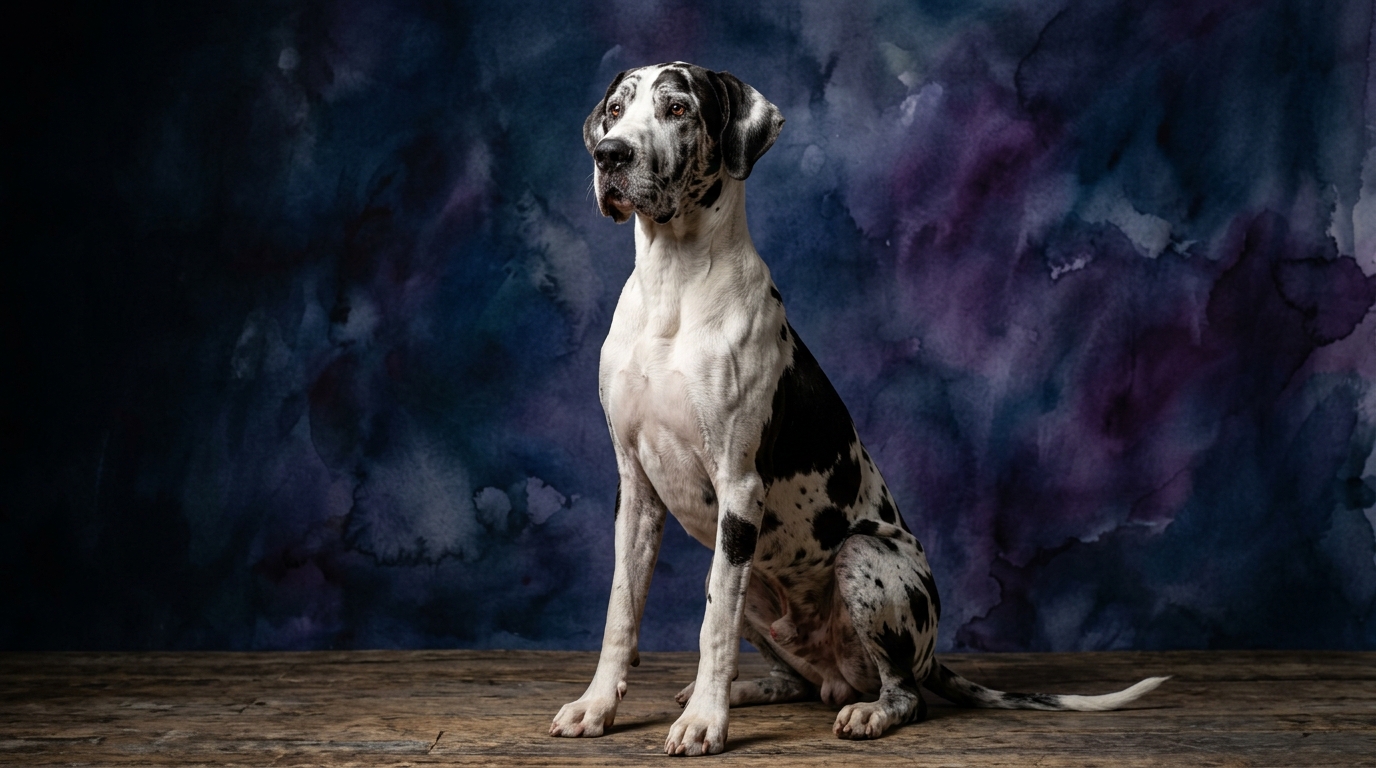
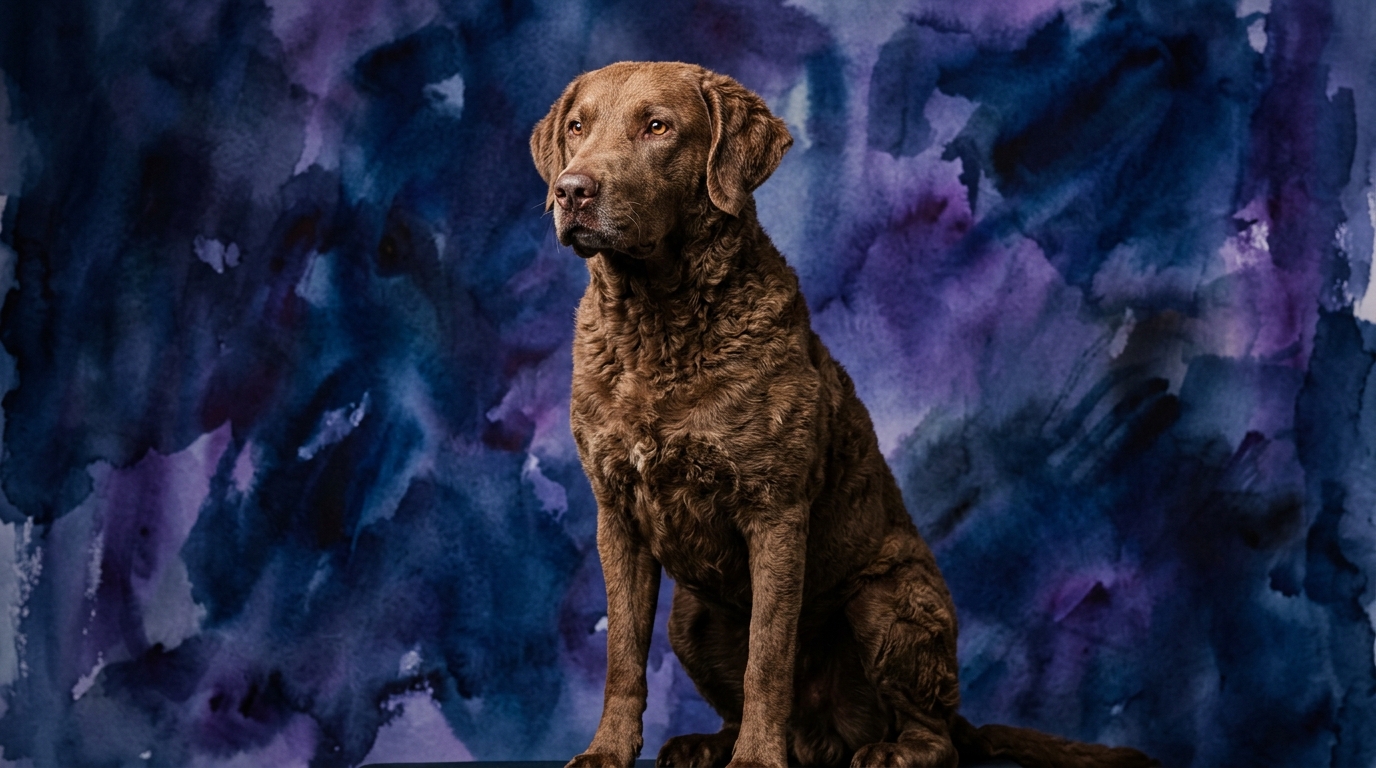
Side-by-Side Cognitive Profile: Great Dane vs. Chesapeake Bay Retriever
At The Cosmic Pet Pet IQ Lab, we evaluate canine intelligence across five key dimensions, offering a detailed look into each breed's unique mental landscape. For the Great Dane, we observe a Problem Solving score of 3/5, indicating a capacity for moderate challenges, often relying on learned sequences rather than novel solutions. Their Training Speed is also 3/5, meaning they absorb new commands at a steady pace, generally requiring consistent repetition to solidify understanding, yet aided by their willingness to please. Social Intelligence is a standout at 4/5, demonstrating exceptional sensitivity to human emotions and social cues, making them highly attuned companions. Instinctive Drive is rated 3/5, reflecting a moderate prey drive and protective instinct balanced by their companion nature. Finally, their Memory is 3/5, suggesting they retain learned behaviors and social interactions well, but might require occasional refreshers for less frequently practiced commands.
The Chesapeake Bay Retriever presents a different cognitive profile. Their Problem Solving score is 4/5, indicating a strong aptitude for independent thought and creative solutions, particularly in tasks related to their working heritage, often finding efficient ways to achieve goals. Training Speed is also 4/5; these retrievers grasp new concepts quickly, thriving on consistent, engaging training sessions, making them rapid learners of complex tasks. Social Intelligence is 3/5; while forming deep bonds with their families, their social awareness is more task-oriented than the Dane's, focusing on handler cues rather than broad emotional interpretation. Instinctive Drive matches the Dane at 3/5, possessing a robust retrieving drive and a resilient nature, geared towards independent work and enduring challenging conditions. Their Memory is a strong 4/5, exhibiting excellent long-term retention for commands, routines, and experiences, allowing them to recall complex sequences even after long periods.
Where the Great Dane Excels Cognitively
Great Danes shine brightest in social intelligence. Their 4/5 rating here indicates a profound capacity to read and respond to human emotions, making them exceptionally empathetic companions. This manifests as a deep understanding of subtle shifts in mood, a readiness to offer comfort, and an intuitive grasp of family dynamics. Unlike many breeds, a Dane might anticipate a handler's distress and respond with a gentle nudge or presence, rather than waiting for an explicit command. This cognitive strength makes them superb therapy animals and deeply bonded family members, where emotional attunement is paramount. Their social acumen also aids in navigating complex household routines without explicit direction, often adapting seamlessly to family life by observing patterns and human reactions.
Where the Chesapeake Bay Retriever Excels Cognitively
The Chesapeake Bay Retriever's cognitive strengths lie in problem-solving, training speed, and memory. With a 4/5 in problem-solving, Chessies exhibit a remarkable ability to figure things out independently, especially when motivated by a task. This could mean devising a novel way to retrieve a toy stuck under furniture or strategizing to navigate a complex scent trail. Their 4/5 training speed means they pick up new commands and multi-step tasks with impressive rapidity, making them highly efficient learners in structured environments. Paired with a 4/5 memory, they retain these learned skills and solutions over extended periods, requiring fewer refreshers than many breeds. This combination allows them to excel in demanding working roles, field trials, and dog sports where quick learning, retention, and independent application of skills are critical.
Training Dynamics: Which Breed is Easier to Train?
Based on their cognitive profiles, the Chesapeake Bay Retriever is generally easier to train in terms of acquiring new commands and performing complex tasks. Their 4/5 training speed and 4/5 problem-solving ability mean they grasp concepts quickly and can apply them even in novel situations. They thrive on structured, consistent training that engages their active minds and strong work ethic. A Chessie is likely to pick up a multi-step retrieve command or an agility course sequence with fewer repetitions compared to a Great Dane. However, their independent nature and strong drive mean training requires a confident, consistent handler who can channel their energy and focus.
The Great Dane, with a 3/5 training speed, requires more patience and repetition. While they are eager to please their beloved humans, their learning curve is more gradual. Their social intelligence (4/5) can be leveraged in training, as they respond well to positive reinforcement rooted in human approval and connection. They might take longer to master complex sequences, but their desire for social harmony means they are generally cooperative once they understand what is expected. Training a Dane often feels more like a collaborative dance, focused on building a strong bond and mutual understanding, rather than solely on task mastery. Their sheer size also necessitates early and consistent leash and manners training for practical manageability.
Matching Breeds to Lifestyles: Active vs. Relaxed Owners
The Chesapeake Bay Retriever is an ideal match for active owners who relish outdoor adventures and enjoy engaging in dog sports or demanding training activities. Their robust physical and mental energy, coupled with their strong retrieving drive and problem-solving acumen, means they thrive when given a "job" to do. Owners who enjoy hiking, hunting, competitive obedience, agility, or dock diving will find a Chessie an enthusiastic and capable partner. A relaxed owner might struggle to provide the necessary mental and physical stimulation, potentially leading to boredom-driven behaviors.
The Great Dane, while requiring regular exercise to maintain health, generally suits owners with a more relaxed lifestyle, provided they can accommodate a large, gentle presence. Their lower instinctive drive and moderate energy levels mean they are often content with daily walks and play sessions, followed by long periods of lounging with their family. Owners who appreciate a deeply bonded, emotionally intuitive companion and enjoy quiet evenings at home will find a Dane’s temperament a perfect fit. Their social intelligence makes them excellent housemates who adapt well to family routines, prioritizing companionship over constant activity.
The Verdict
Choose a Great Dane if you seek a deeply empathetic, emotionally attuned companion who thrives on close social connection and will integrate seamlessly into a relaxed family routine, prioritizing gentle presence over demanding activity.
Choose a Chesapeake Bay Retriever if you are an active individual or family seeking a highly capable, task-oriented partner for outdoor adventures, dog sports, or demanding work, appreciating a quick learner with robust physical and mental stamina.
🧠 Find Your Pet's IQ Score
Our Pet IQ Lab assessment covers 25+ tests across 5 cognitive dimensions — personalized to your breed.
Take the Full IQ Test →Frequently Asked Questions
Are Great Danes difficult to train due to their size?
While their size necessitates early and consistent training for manageability, Great Danes are not inherently difficult. Their 3/5 training speed means they learn steadily with patience and positive reinforcement, particularly benefiting from their strong social bond with their handler.
Do Chesapeake Bay Retrievers require a lot of mental stimulation?
Absolutely. With a 4/5 in problem-solving and training speed, Chessies thrive on mental challenges and purposeful activities. Without adequate mental engagement, they can become bored and potentially develop undesirable behaviors.
Which breed is better with children, based on their IQ profiles?
The Great Dane's 4/5 social intelligence makes them exceptionally attuned to family dynamics and gentle with children, often acting as patient, watchful companions. While Chessies bond well with family, their 3/5 social intelligence is more task-focused, meaning they might require more supervision around very young children to ensure appropriate interactions, prioritizing their activity needs.