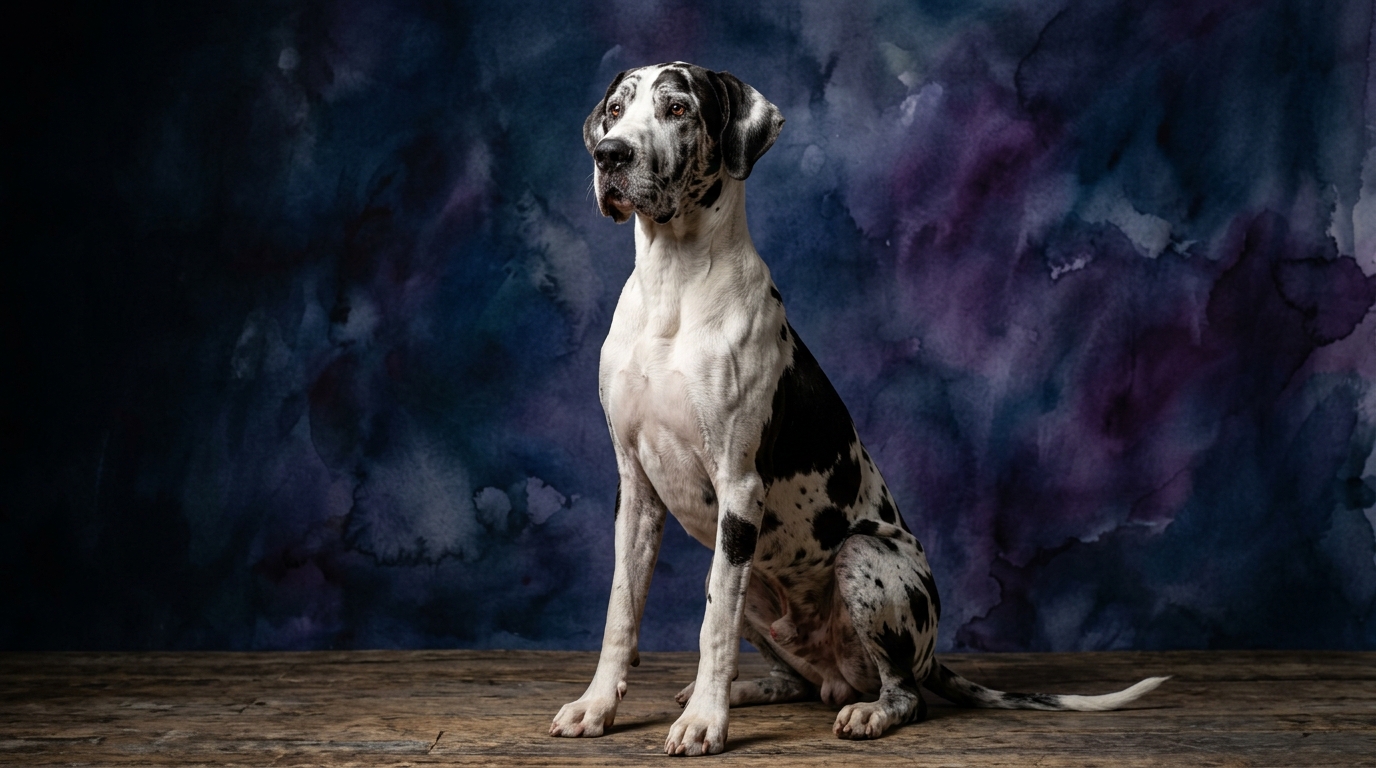
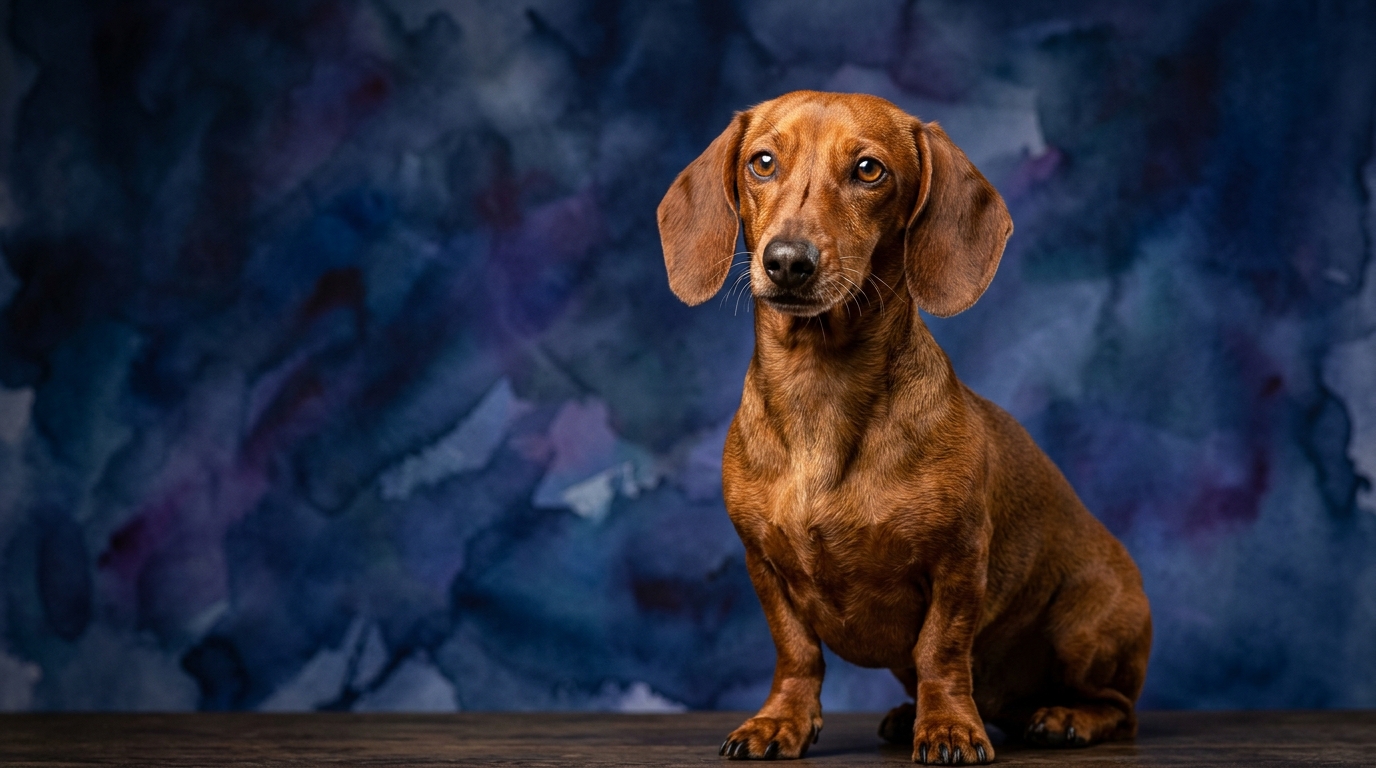
Side-by-Side IQ Profile: Great Dane vs. Dachshund
The Cosmic Pet Pet IQ Lab employs five key dimensions to evaluate canine cognition, offering a granular look beyond simple rankings. For the Great Dane, a Working group dog with a Coren rank of #48, their cognitive breakdown reveals a balanced profile. Their Problem Solving ability is rated 3/5, indicating a moderate capacity to navigate novel challenges or figure out how to achieve a desired outcome. Training Speed also sits at 3/5, suggesting they grasp new commands and routines at an average pace. Where the Great Dane truly shines is in Social Intelligence, scoring an impressive 4/5, reflecting their strong empathetic connection and understanding of human cues. Their Instinctive Drive is 3/5, a moderate level that doesn't typically dominate their behavior, and their Memory is also 3/5, meaning they retain information and experiences reasonably well.
In contrast, the Dachshund, a Hound group dog with a Coren rank of #49, presents a very different cognitive landscape. Despite their smaller stature, their Problem Solving skills are rated 4/5, indicating a superior ability to find solutions and overcome obstacles, often with creative flair. However, their Training Speed is 2/5, suggesting they may take longer to learn and solidify new behaviors. Their Social Intelligence is 3/5, a solid but not outstanding capacity for reading human emotions and intentions. The Dachshund's most defining cognitive trait is their Instinctive Drive, soaring to 5/5; this reflects an incredibly strong, persistent urge to follow scents, tunnel, and hunt, deeply rooted in their badger-hunting heritage. Like the Great Dane, their Memory is rated 3/5, allowing them to recall past events and learned behaviors adequately.
Where the Great Dane Wins Cognitively
The Great Dane's primary cognitive advantage lies in their superior Social Intelligence, scoring 4/5 compared to the Dachshund's 3/5. This translates into a profound capacity for understanding and responding to human emotions and social cues. A Great Dane is often described as being exceptionally attuned to their family's mood, offering comfort or playful engagement precisely when needed. They excel in situations requiring nuanced social interaction, such as therapy work or simply being a sensitive companion in a busy household. Their higher social intelligence means they are often more inclined to seek out and understand human direction, making them inherently more cooperative in group settings or when interacting with strangers. This trait fosters a strong bond and a desire to please, making them particularly responsive to positive reinforcement rooted in social connection.
Furthermore, while their Problem Solving and Training Speed are moderate, their social acumen often compensates. A Great Dane might not independently figure out a complex puzzle as quickly as a Dachshund, but they are more likely to seek human assistance or respond to a guiding gesture. Their inclination to collaborate and their sensitivity to human feedback can make them appear more adaptable in certain social learning contexts. This strong social understanding also helps them integrate smoothly into diverse family dynamics, often showing patience and gentleness with children and other pets, guided by their keen awareness of social harmony.
Where the Dachshund Wins Cognitively
The Dachshund's cognitive strengths distinctly diverge from the Great Dane's, highlighted by their superior Problem Solving (4/5) and unmatched Instinctive Drive (5/5). Their higher problem-solving score indicates a remarkable ability to independently assess situations and devise solutions, often with a clever, sometimes mischievous, ingenuity. This might manifest as figuring out how to open a 'secure' cabinet, navigating a complex route to a desired object, or outsmarting environmental barriers. Their hound heritage has honed their minds for independent action and persistent pursuit, skills that translate into acute observational learning and strategic thinking, even if it's applied to finding a dropped treat under the couch.
Their preeminent Instinctive Drive (5/5) is perhaps their most defining cognitive trait. This isn't just about a love for chasing; it's a deep-seated, persistent motivation to follow a scent, dig, or pursue a perceived 'prey.' This drive fuels their problem-solving capabilities, as they are incredibly focused and determined when their instincts are engaged. While this can make them tenacious hunters, it also means they are less easily deterred by obstacles and possess a singular focus that can be harnessed for specific tasks. This robust intrinsic motivation means they don't always rely on human direction to initiate action, often preferring to follow their own investigative impulses, a clear win for independent thought and action.
Which Is Easier to Train and Why
When considering ease of training, the Great Dane generally presents fewer challenges than the Dachshund. The Great Dane’s Training Speed of 3/5, combined with their 4/5 Social Intelligence, means they are typically more receptive to learning and more motivated by pleasing their human companions. Their desire for social connection and approval often translates into a willingness to engage in training sessions and a quicker understanding of what is expected of them. Behavioral differences like their lower Instinctive Drive (3/5) mean they are less likely to become singularly focused on a scent or object during training, allowing for better attention and focus on the handler. They respond well to praise and affection, which are powerful motivators for their socially oriented minds.
The Dachshund, on the other hand, with a Training Speed of 2/5 and an Instinctive Drive of 5/5, can be more challenging. Their formidable drive often means their attention is easily diverted by compelling scents or the urge to dig, making consistent focus on human commands difficult. While they possess excellent Problem Solving skills, these are often employed to achieve their own goals rather than to comply with human directives. Their independent nature, stemming from their history as solo hunters, means they are not always as eager to please as the Great Dane. Training a Dachshund requires immense patience, consistency, and creative methods to make learning more rewarding than their instinctual urges. They often respond best to short, engaging sessions that incorporate their natural drive in a controlled manner, rather than relying solely on social approval.
Which Suits Active Owners vs. Relaxed Owners
For owners seeking a more relaxed yet deeply connected companion, the Great Dane often proves to be an ideal match. Their high Social Intelligence makes them fantastic family dogs who thrive on companionship and being involved in daily household life. While they require regular exercise, their energy levels are generally moderate once past puppyhood, and they are often content with a good walk and then lounging with their people. Their cooperative nature and lower instinctive drive mean they are less likely to embark on independent adventures or demand constant mental stimulation through complex tasks. They fit well into routines that prioritize shared presence and gentle interaction, making them suitable for owners who appreciate a calm, empathetic presence.
Conversely, the Dachshund is better suited for owners who are prepared for a more active and engaged lifestyle, particularly one that caters to their sharp problem-solving skills and potent instinctive drive. Despite their small size, Dachshunds are not merely lap dogs; they are tenacious, clever, and often require outlets for their innate curiosity and hunting instincts. Owners who enjoy engaging in scent work, puzzle toys, or structured play that mimics hunting behaviors will find the Dachshund a rewarding companion. Their independence and drive mean they need consistent mental and physical stimulation to prevent boredom and potential undesirable behaviors. They thrive with owners who understand and appreciate their strong will and provide opportunities for them to use their brains and noses, making them a fit for those who enjoy active training and adventurous outings.
The Verdict
Choose a Great Dane if you prioritize a highly social, empathetic companion who thrives on human connection and integrates smoothly into a harmonious family environment.
Choose a Dachshund if you appreciate a clever, independent spirit with strong problem-solving abilities and are prepared to engage their powerful instinctive drives through consistent, stimulating activities.
🧠 Find Your Pet's IQ Score
Our Pet IQ Lab assessment covers 25+ tests across 5 cognitive dimensions — personalized to your breed.
Take the Full IQ Test →Frequently Asked Questions
Do Great Danes respond well to emotional cues from humans?
Yes, Great Danes have a high Social Intelligence score (4/5), indicating a strong capacity to understand and respond to human emotions and social signals. They are often very empathetic and attuned to their family's moods.
Are Dachshunds good at figuring out puzzles or navigating complex spaces?
Absolutely, Dachshunds excel in Problem Solving (4/5), demonstrating a clever and persistent ability to figure out how to achieve their goals, whether it's opening a gate or finding a hidden treat.
Which breed is more likely to follow a scent trail persistently?
The Dachshund, with an Instinctive Drive of 5/5, is far more likely to follow a scent trail with intense persistence. This trait is deeply ingrained from their hunting heritage, making them highly motivated by olfactory stimuli.