
Side-by-Side Cognitive Profiles
Delving into the specific cognitive dimensions for each breed reveals where their mental strengths and leanings lie, guiding our understanding of their intrinsic aptitudes.
The **Great Dane**, a Working Group breed ranked #48 by Coren for obedience and working intelligence, exhibits a balanced cognitive profile. Their Problem Solving is rated 3/5, indicating a moderate capacity to navigate new situations, often favoring direct and learned solutions. Training Speed also sits at 3/5, suggesting they absorb instruction at an average pace, benefiting greatly from consistent reinforcement. A standout trait is their Social Intelligence at 4/5, reflecting a strong intuitive grasp of human emotions and social dynamics within a family unit. Their Instinctive Drive is 3/5, a moderated version of their ancestral hunting purpose, while their Memory is 3/5, allowing them to retain commands and experiences with regular practice.
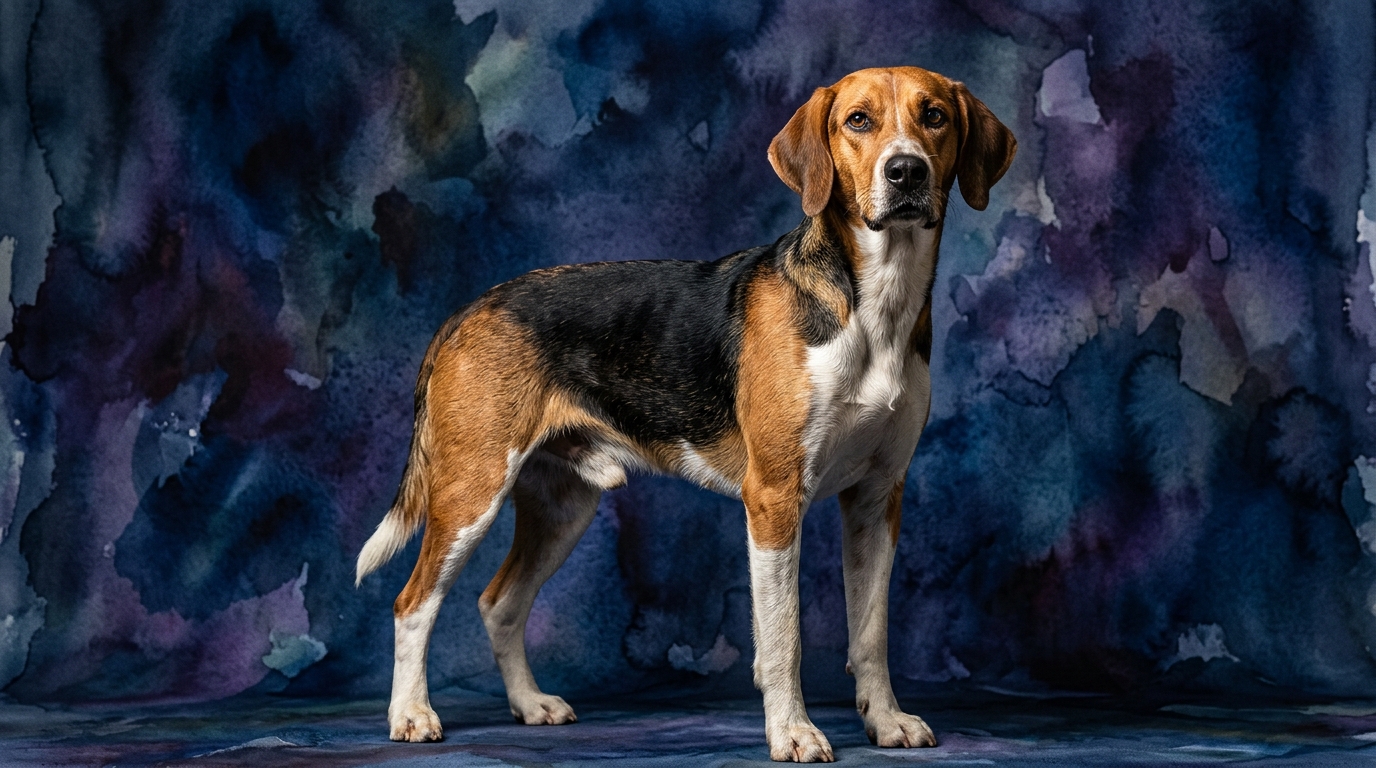
The **English Foxhound**, a Hound Group breed not specifically ranked by Coren, presents a profile geared towards its specialized function. Their Problem Solving is 3/5, practical and task-oriented, particularly when navigating complex terrains or tracking. Training Speed is 3/5, but this is profoundly influenced by their environmental focus, making consistent engagement challenging amidst distractions. Social Intelligence is 3/5, meaning they are affable and capable of bonding, but their primary social attunement is often towards their pack and working handler rather than nuanced human emotional states. Their Instinctive Drive, also rated 3/5, is a powerful, persistent scent-driven focus that defines much of their cognitive processing. Memory is 3/5, functional for recalling routes and scent patterns within their working domain, but often overshadowed by immediate olfactory input.
Where the Great Dane Shows Cognitive Strengths
The Great Dane's most pronounced cognitive advantage lies in its superior Social Intelligence, scoring 4/5 compared to the Foxhound's 3/5. This translates into a more profound, nuanced understanding of human social structures, emotional cues, and household routines. A Great Dane is more likely to intuitively perceive a shift in a family member's mood, offering comfort or sensing when space is needed. They integrate into complex human social environments with greater ease, often anticipating needs or reacting appropriately to subtle social signals without explicit instruction. Their cognitive processes are inherently geared towards harmonious cohabitation, making them adept at navigating the subtle hierarchies and expectations of a human household. This allows for a deeper, more reciprocal form of communication and a robust emotional connection with their human companions, a hallmark of their companion-oriented breeding.
Where the English Foxhound Shows Cognitive Strengths
While the English Foxhound doesn't boast higher scores in individual cognitive dimensions, its strength lies in the *intensity and singular focus* of its instinctive drive, rated 3/5 but expressed with profound dedication. This breed's entire cognitive architecture is optimized for the sustained, independent pursuit of scent. Their problem-solving and memory, while scoring 3/5, are exceptionally effective within the context of a hunt: navigating complex terrain, identifying faint scent trails, and remembering patterns of quarry movement. They possess an unwavering mental tenacity when engaged in their primary purpose, a cognitive resilience that allows them to ignore distractions and persist for extended periods. This isn't about a higher general cognitive capacity, but rather a specialized, highly refined cognitive adaptation perfectly suited for a specific, demanding task. Their memory for scent trails and established routes is particularly robust within this specialized domain, showcasing a different kind of mental prowess.
Trainability: Great Dane vs. English Foxhound
The Great Dane generally presents an easier training prospect due to its higher social intelligence and its Coren rank of #48, which suggests a greater inherent capacity for obedience and responsiveness. Their inclination to understand and please their human companions means they are often more receptive to instruction. While both breeds have a Training Speed of 3/5, the Great Dane's focus during training is less likely to be derailed by external stimuli compared to the scent-driven English Foxhound. Their larger size necessitates early, consistent training, but their willingness to engage makes the process smoother.
The English Foxhound’s powerful instinctive drive, while not higher rated, is a constant, potent force that profoundly impacts trainability. When a Foxhound catches a compelling scent, its cognitive focus narrows almost entirely on that trail, making it incredibly challenging to redirect its attention. Their independent working nature means they are less inclined to automatically defer to human commands if it conflicts with their olfactory pursuit. Training a Foxhound requires immense patience, creativity, and a deep understanding of their hound mentality to effectively channel, rather than suppress, their ingrained desire to follow a nose.
Matching Canine Cognition to Lifestyle
For active owners seeking a canine partner for endurance activities, the English Foxhound is the clear choice. Their entire lineage is built on sustained physical exertion and mental engagement in the field. They require vast amounts of exercise, not just a casual walk, but opportunities to run, explore, and ideally, engage their powerful sense of smell through structured activities. Owners who enjoy long-distance running, hiking, or even participate in scent work or field trials would find a Foxhound a suitable match for their energetic lifestyle, as this breed thrives when its cognitive and physical needs for sustained activity are met.
Relaxed owners, or those seeking a companion that integrates seamlessly into a less intensely active household, would find the Great Dane more appropriate. While undeniably large and requiring regular exercise for health, their energy demands are generally lower than a Foxhound's once they mature. Their higher social intelligence means they are often content to be near their human family, participating in quieter activities, and are typically more adaptable to varying routines. They are often described as "gentle giants" who, despite their imposing size, often enjoy lounging and being an integral, calm presence within the domestic scene, provided their basic exercise and mental enrichment needs are met.
The Verdict
Opt for a Great Dane if you prioritize a deeply bonded companion with high social attunement, capable of integrating smoothly into a family environment, and are prepared for a large dog with moderate exercise needs.
Select an English Foxhound if you are an exceptionally active individual or family, passionate about outdoor pursuits, and ready to channel a powerful, scent-driven instinct into structured activities.
🧠 Find Your Pet's IQ Score
Our Pet IQ Lab assessment covers 25+ tests across 5 cognitive dimensions — personalized to your breed.
Take the Full IQ Test →Frequently Asked Questions
Do Great Danes and English Foxhounds bark frequently?
Great Danes are not typically excessive barkers, often using their voice to alert or express specific needs, though their deep bark is certainly noticeable. English Foxhounds, as hounds, are prone to baying and barking, especially when following a scent or feeling under-exercised, reflecting their ancestral communication style.
Are either of these breeds good with children?
Great Danes, with their high social intelligence and gentle nature, are often excellent with children when properly socialized and trained, though their size requires supervision. English Foxhounds can be good with children, being generally good-natured, but their boisterous energy and strong prey drive mean interactions should always be supervised to ensure safety for both dog and child.
What are the main exercise differences between the two breeds?
The Great Dane requires regular, moderate exercise, such as daily walks and playtime, to maintain health and prevent boredom, but is also content with lounging. The English Foxhound demands intense, sustained physical activity for several hours daily, ideally involving off-leash running and opportunities for scent work, reflecting its heritage as an endurance hunter.