Side-by-Side Cognitive Profiles
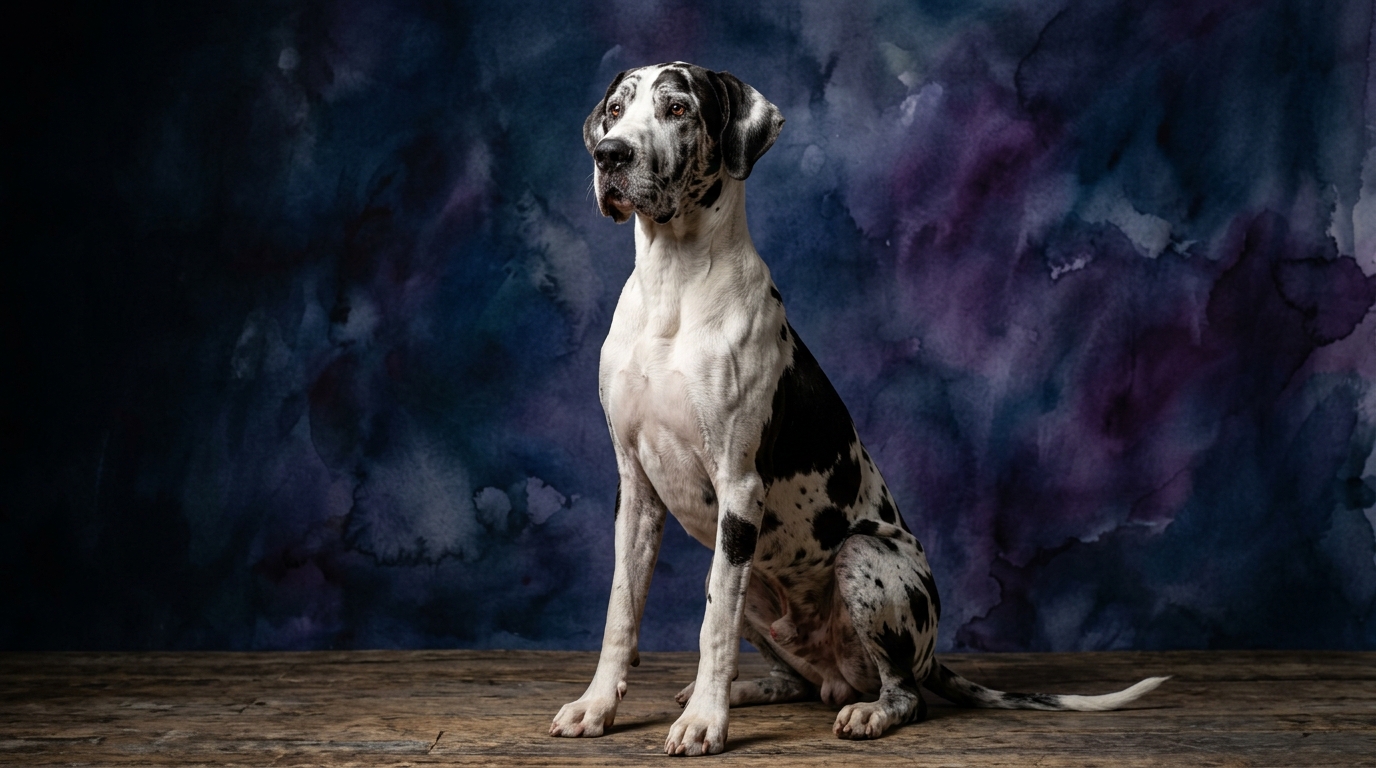
The Cosmic Pet Pet IQ Lab employs a five-dimensional framework to assess canine cognitive abilities, providing a nuanced view beyond simplistic 'smart' labels. For the Great Dane, a breed often recognized for its imposing size and gentle disposition, its profile includes Problem Solving 3/5, Training Speed 3/5, Social Intelligence 4/5, Instinctive Drive 3/5, and Memory 3/5. This Coren-ranked #48 breed demonstrates a balanced yet distinct set of mental aptitudes.
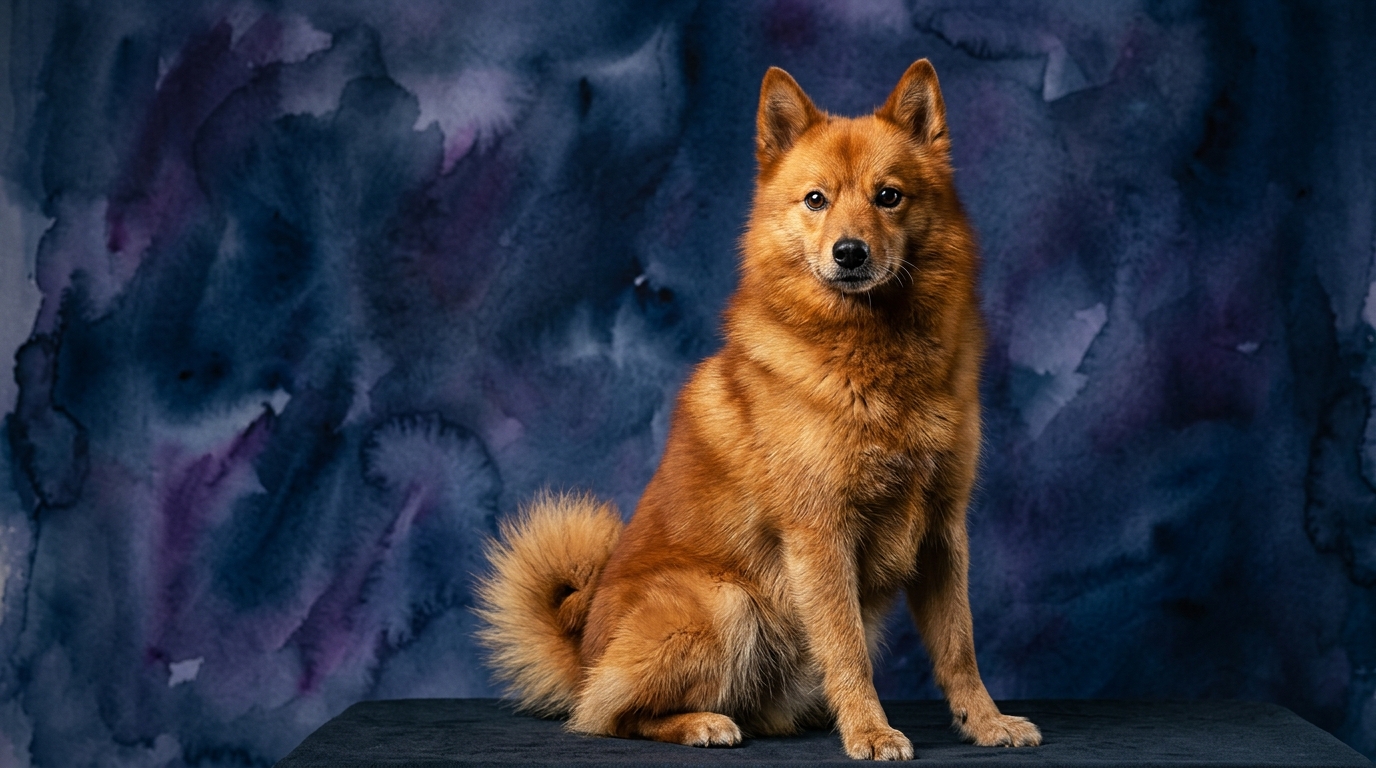
In contrast, the Finnish Spitz, a vocal and active breed from the Non-Sporting group without a Coren rank, presents a slightly different cognitive fingerprint. Its scores are Problem Solving 3/5, Training Speed 3/5, Social Intelligence 3/5, Instinctive Drive 3/5, and Memory 3/5. While many scores appear similar at first glance, the underlying behavioral manifestations of these metrics differ significantly due to their divergent historical roles and intrinsic motivations.
**Problem Solving (3/5 for both):** Both breeds exhibit an average capacity for navigating their environments and figuring out how to achieve desired outcomes. A Great Dane might strategically nudge a gate open with its nose to access a forbidden couch, relying on observation and physical manipulation. A Finnish Spitz, similarly, might persistently try various methods to retrieve a toy stuck under furniture, demonstrating practical, persistent attempts rather than abstract reasoning. Neither breed is expected to consistently devise complex, multi-step solutions independently.
**Training Speed (3/5 for both):** Both the Great Dane and the Finnish Spitz grasp new commands at an average pace. A Great Dane, often eager to please and highly attuned to human companionship, may internalize consistent cues readily due to its social drive. The Finnish Spitz, while capable of learning, might require more engaging and varied techniques to maintain focus, as its independence can sometimes lead to a perceived reluctance to comply, even if the processing speed is similar.
**Social Intelligence (Great Dane 4/5, Finnish Spitz 3/5):** Here lies a notable difference. The Great Dane’s 4/5 score indicates a profound ability to interpret human emotions and intentions. They often display empathy, responding sensitively to changes in household moods and forming deep, intuitive bonds with their family members. They are remarkably perceptive to subtle cues, making them highly integrated companions. The Finnish Spitz, with a 3/5, forms strong affectionate bonds but tends to be more reserved in its social interactions. While observant of its family, it may not exhibit the same overt emotional mirroring or intense desire for constant human connection as the Great Dane.
**Instinctive Drive (3/5 for both):** This score, though identical, manifests uniquely. For the Great Dane, a 3/5 often translates to a moderate protective instinct towards its home and family, perhaps patrolling the yard or offering a deep bark at strangers. It typically lacks a strong prey drive. The Finnish Spitz’s 3/5, however, is deeply rooted in its heritage as a barking bird dog. This manifests as a keen, almost obsessive interest in its environment, a strong vocalization tendency (alert barking), and a moderate prey drive, making them alert and active observers of everything around them.
**Memory (3/5 for both):** Both breeds possess an average memory for commands, routines, and past interactions. They retain learned behaviors and experiences adequately, remembering people and places. However, consistent reinforcement and regular practice are beneficial for both to solidify recall and prevent skill fade over long periods.
Where the Great Dane Excels Cognitively
The Great Dane’s standout cognitive strength lies in its superior Social Intelligence (4/5). This breed truly shines in its ability to connect with humans on an emotional level, often anticipating needs or reacting with sensitivity to their owner's mood. They excel at becoming integral, empathetic family members, readily integrating into complex household dynamics where understanding nuanced social cues is paramount. This makes them exceptional emotional support animals or companions for individuals seeking a deeply connected canine presence, as they can interpret and respond to human non-verbal communication with remarkable accuracy. Their capacity for forming profound, intuitive bonds is a hallmark of their cognitive makeup, making them highly desirable for companionship-focused roles.
Furthermore, their Coren ranking at #48, while not top-tier, indicates a solid baseline for adaptive intelligence within a domestic setting. This suggests a capacity for understanding and complying with household rules and routines, supported by their inherent desire for social harmony. The combination of their social acuity and moderate training speed means that once a Great Dane understands what is expected, their motivation to please their human companions reinforces their adherence to learned behaviors, demonstrating a practical application of their cognitive traits in daily life.
Where the Finnish Spitz Excels Cognitively
While the Finnish Spitz's numerical scores might not show a clear 'win' in a single category, its cognitive strengths are best understood through the lens of its purpose-bred history. Its Instinctive Drive (3/5) is uniquely channeled towards alertness and vocalization, making it an exceptional watchdog and companion for those who appreciate its independent, observant nature. Their ability to keenly survey their surroundings and provide a persistent, characteristic 'yodel' or bark at perceived intruders or interesting environmental stimuli is a cognitive strength, a highly developed form of environmental awareness and communication.
Their problem-solving (3/5) and training speed (3/5) scores, combined with their independence, mean they excel at tasks that align with their natural instincts, such as scent work or agility, where their persistence and environmental focus can be harnessed. While not as overtly socially intelligent as the Great Dane, their strong, albeit more reserved, bonds with their chosen humans foster a companionship built on mutual respect and shared activity. This breed's specific cognitive architecture makes it adept at engaging with the world through its senses and voice, offering a different kind of intelligent interaction.
Which is Easier to Train and Why
Despite sharing the same 3/5 Training Speed score, the Great Dane is generally perceived as easier to train for general obedience due to its higher Social Intelligence (4/5) and inherent desire to please. A Great Dane typically thrives on positive reinforcement and praise, valuing the approval of its human companions. Their sensitivity means they respond well to gentle, consistent methods, and their strong bonds often translate into a willingness to cooperate. For instance, teaching a Great Dane to 'stay' is often facilitated by their attentiveness to human cues and their pleasure in receiving positive feedback, making the process more collaborative and less challenging.
The Finnish Spitz, while equally capable of learning (3/5 Training Speed), often presents a greater challenge due to its independent nature and strong instinctive drives. Their historical role required them to work autonomously, and this independence can sometimes manifest as a 'what's in it for me?' attitude during training sessions. Their vocal nature and prey drive can also be distracting. To effectively train a Finnish Spitz, owners must employ highly engaging, reward-based methods and maintain a consistent, patient approach. For example, teaching recall might require more effort and higher-value rewards for a Finnish Spitz, as their natural inclination might be to follow an interesting scent or sound rather than immediately returning to their owner, demanding a more strategic and persistent training approach.
Which Suits Active Owners vs. Relaxed Owners
The Great Dane, with its lower instinctive drive (3/5, not geared towards high-intensity work) and high social intelligence (4/5), is an excellent match for more relaxed owners who prioritize companionship and emotional connection over strenuous activities. While they do require regular exercise to maintain their health, their gentle giant demeanor makes them content with moderate walks and ample couch time with their family. They thrive in environments where they can be an ever-present, affectionate companion, often content to observe household activities from a comfortable spot.
The Finnish Spitz, conversely, is better suited for active, engaged owners who appreciate and can channel their breed-specific drives. Their instinctive drive (3/5, focused on environmental alertness and vocalization) means they need outlets for their energy and mental stimulation. Owners who enjoy hiking, scent work, or dog sports will find the Finnish Spitz a willing and capable partner. Their independence also means they appreciate activities where they can utilize their senses and problem-solving skills, making them a rewarding choice for those who are prepared to provide consistent engagement and understand their unique, spirited personality.
The Verdict
Choose the Great Dane if you seek a deeply empathetic, gentle companion who excels at social interaction and thrives on being an integrated family member, offering quiet, loving presence.
Choose the Finnish Spitz if you desire an independent, active, and vocal companion who will alert you to the world around you and enjoys engaging in activities that stimulate its keen senses and spirited nature.
🧠 Find Your Pet's IQ Score
Our Pet IQ Lab assessment covers 25+ tests across 5 cognitive dimensions — personalized to your breed.
Take the Full IQ Test →Frequently Asked Questions
Do Great Danes have a strong prey drive?
Great Danes generally have a moderate instinctive drive (3/5) which typically manifests as a protective instinct rather than a strong prey drive. While individual variations exist, they are not typically known for pursuing small animals with the same intensity as many hunting breeds.
Are Finnish Spitz dogs good for first-time dog owners?
Finnish Spitz dogs can be challenging for first-time owners due to their independent nature, strong vocalization tendencies, and need for consistent, engaging training. Their unique traits require an owner who understands breed-specific behaviors and is committed to patient, reward-based methods.
How much exercise do Great Danes need?
Great Danes require moderate daily exercise to maintain their health and well-being, typically consisting of a few walks or play sessions. While they are large, they are not high-energy dogs and often enjoy relaxing with their family after their exercise needs are met.