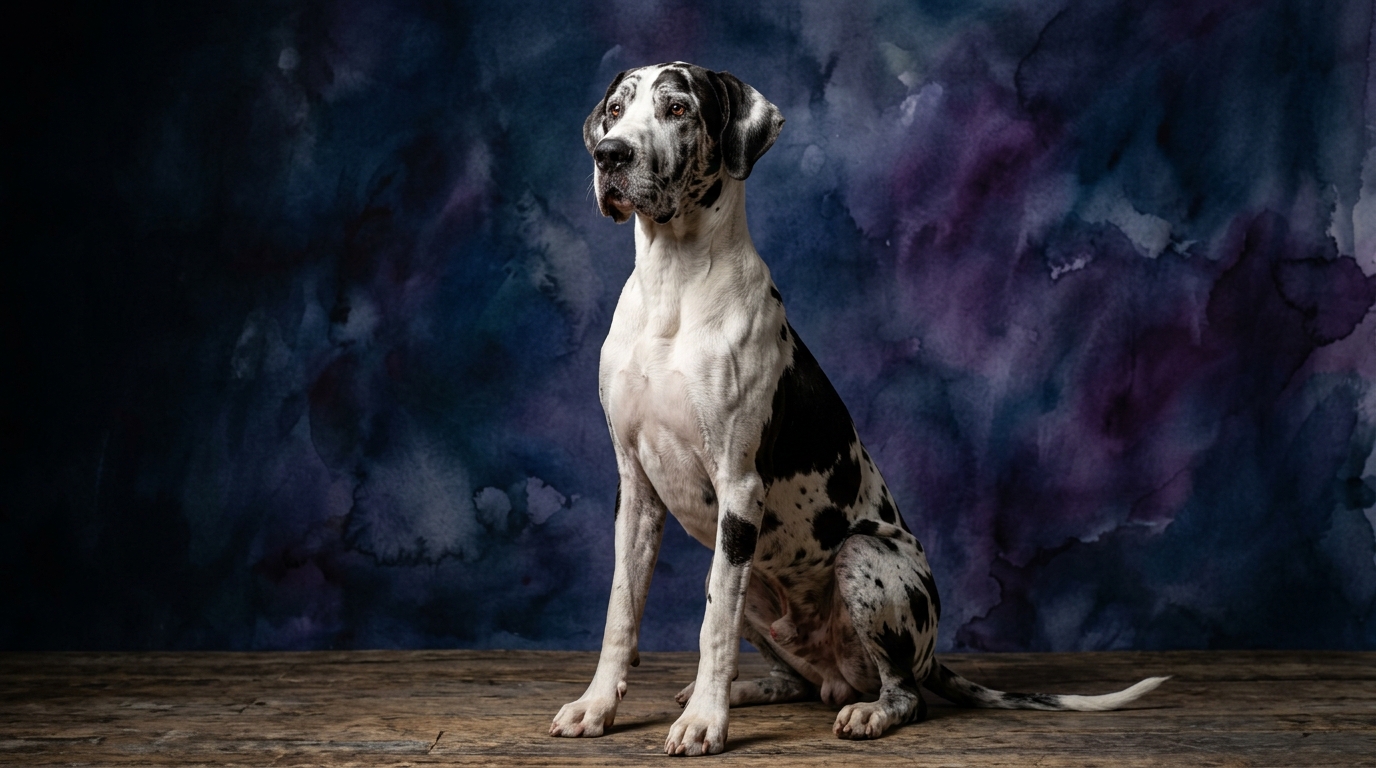
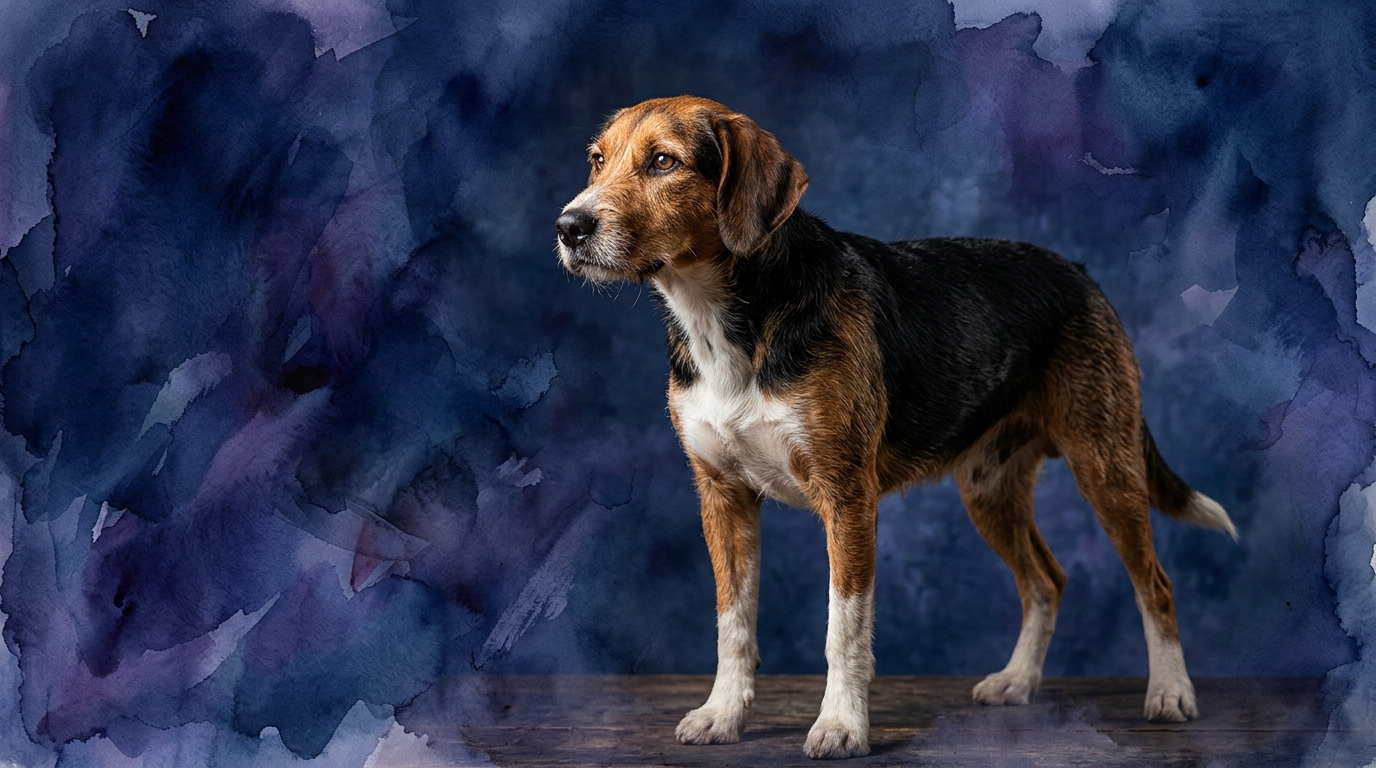
Side-by-Side IQ Profile: Great Dane vs. Harrier
The Cosmic Pet Pet IQ Lab evaluates canine intelligence across five key dimensions, providing a nuanced view beyond simplistic 'smart' labels. For the Great Dane, a breed within the Working group, its profile paints a picture of a thoughtful, socially adept companion. Its Problem Solving is rated 3/5, indicating a capacity to learn complex tasks and understand cause-and-effect relationships, often applied to navigating its home environment or engaging with puzzles. Training Speed also sits at 3/5, meaning Danes grasp new commands at an average pace, thriving with consistent positive reinforcement. Where the Great Dane truly shines is in Social Intelligence, scoring 4/5; these dogs are highly attuned to human emotions and intentions, often seeking to please and forming deep, empathetic bonds with their families. Its Instinctive Drive is 3/5, manifesting less as intense prey pursuit and more as a moderate drive for companionship or guarding. Memory is 3/5, allowing them to retain learned routines and commands effectively, remembering people and places with reliability. The Great Dane holds a Coren rank of #48, placing it firmly within the average working/obedience intelligence category.
The Harrier, a member of the Hound group, presents a different yet equally specialized cognitive blueprint. Its Problem Solving, like the Dane, is 3/5, reflecting a capability for practical solutions, particularly those involving scent tracking or navigating varied terrain during a pursuit. Training Speed is also 3/5, suggesting an average learning curve, though its strong independent streak and sensory focus can sometimes make training appear more challenging. Social Intelligence for the Harrier is 3/5; while they form strong bonds within their 'pack' (human or canine), they tend to be less overtly people-focused than the Great Dane, often prioritizing environmental stimuli. Its Instinctive Drive, also 3/5, is intensely specialized towards scenting and tracking; this single-minded pursuit of a trail is a defining cognitive characteristic, often overriding other considerations. Memory is rated 3/5, showing good retention for scent trails, familiar routes, and learned hunting patterns. The Harrier is not Coren-ranked, a common occurrence for breeds whose specialized working roles don't always align with the specific obedience trials used for Coren's methodology.
Where the Great Dane Wins Cognitively
The Great Dane's most prominent cognitive advantage lies in its superior Social Intelligence, scoring a 4/5 compared to the Harrier's 3/5. This higher rating translates into a profound capacity for emotional attunement and seamless integration into human family dynamics. A Great Dane often demonstrates an uncanny ability to read subtle cues from its owners, anticipating needs or responding to unspoken moods. This empathy makes them exceptional companions, fostering a deep, almost intuitive connection. For instance, a Dane might comfort a distressed family member without explicit prompting, or adjust its behavior based on the household's energy level. This elevated social awareness also means they often perceive their human family as their primary 'pack,' leading to a strong desire to please and cooperate, a significant cognitive strength in a domestic setting. Their willingness to engage in reciprocal social interactions, seeking out companionship and approval, sets them apart.
Where the Harrier Wins Cognitively
While the Harrier's raw scores might appear similar or lower in some dimensions, its cognitive strength truly shines in the highly specialized application of its Instinctive Drive and Problem Solving capabilities, particularly within its intended domain of scent work. Where the Great Dane is a generalist companion, the Harrier is a specialized hunter. Its 3/5 Instinctive Drive is intensely focused on scenting and tracking, allowing it to maintain an unwavering focus on a trail for extended periods, despite distractions. This persistence, combined with its 3/5 Problem Solving, means a Harrier excels at independently navigating complex terrains and overcoming obstacles to achieve its goal – finding the source of a scent. For example, a Harrier will employ strategic thinking to cut corners, backtrack, or bypass physical barriers, all while maintaining the integrity of a scent trail. This sustained, independent, and goal-oriented problem-solving in a dynamic, sensory-rich environment represents a unique cognitive 'win' that surpasses the Dane's more generalized approach to problem-solving, showcasing a highly evolved form of field intelligence essential for its historical purpose.
Training Dynamics: Great Dane vs. Harrier
When considering ease of training, the Great Dane, despite sharing a 3/5 Training Speed rating with the Harrier, often presents a more straightforward experience due to its higher Social Intelligence (4/5). A Great Dane's innate desire to please its human companions and its sensitivity to their reactions make it generally more receptive to commands and eager to cooperate during training sessions. They are more likely to focus on their handler and less prone to being distracted by external stimuli, particularly if a strong bond has been established. Their understanding of social cues allows for nuanced communication during training, where praise and positive reinforcement are highly effective motivators. This translates to a dog that, while requiring consistency, often appears to learn new behaviors with greater enthusiasm and less resistance.
The Harrier, with its 3/5 Training Speed and 3/5 Social Intelligence, coupled with its intense 3/5 Instinctive Drive, can be a more independent and challenging student. While capable of learning, their powerful drive to follow scent can easily override their focus on their handler, making environmental distractions a significant hurdle. Training a Harrier often requires immense patience, creativity, and highly engaging methods to capture and maintain their attention. Their independent hound nature means they might not always prioritize human directives over a compelling scent or an interesting trail. Owners must be prepared for training sessions that might involve more redirection and a stronger emphasis on proofing commands in varied, stimulating environments to ensure reliability. While both breeds require consistent training, the Great Dane's social nature often makes the process feel more collaborative, whereas the Harrier's independence demands a more strategic and persistent approach from the trainer.
Owner Lifestyles: Active vs. Relaxed
Considering their distinct cognitive and physical profiles, the Great Dane and Harrier appeal to different owner lifestyles. The Great Dane, despite its immense size, often suits owners who appreciate a generally relaxed indoor companion that still requires consistent, moderate exercise. While not a couch potato, their 3/5 Instinctive Drive for companionship means they thrive on being an integral part of family life and are content with daily walks, playtime, and mental enrichment activities that don't necessarily involve intense, sustained physical exertion. Their high Social Intelligence (4/5) means they are deeply attuned to their family's rhythms and needs, making them excellent choices for owners who value a strong emotional bond and a dog that is empathetic and generally calm within the home, provided their moderate exercise needs are met. They are ideal for individuals or families who desire a gentle giant that integrates seamlessly into their daily routine and enjoys shared quiet moments as much as a stroll.
Conversely, the Harrier is unequivocally suited for active owners who can provide substantial and consistent daily exercise, often involving significant off-leash running or structured scent work. Their 3/5 Instinctive Drive, heavily geared towards scenting and tracking, means they possess boundless energy and a profound need for mental stimulation related to their natural abilities. Owners must be prepared to channel this drive constructively, as a bored or under-exercised Harrier can become restless or engage in undesirable behaviors. They thrive with individuals or families who embrace outdoor activities, understanding that a Harrier's cognitive and physical well-being is intrinsically linked to regular, vigorous engagement. This breed is not for the relaxed owner seeking a low-maintenance companion; rather, it's for those who actively seek an energetic, independent, and tenacious partner for adventures and specialized activities, appreciating their focused nature and endurance.
The Verdict: When to Choose Each
The Verdict
Choose a Great Dane if you seek a deeply empathetic, socially attuned companion who integrates seamlessly into family life, offering gentle companionship and responding well to consistent, positive training within a moderately active household.
Opt for a Harrier if you are an active individual or family prepared to channel its tenacious, scent-driven energy into regular, vigorous exercise and engaging activities, appreciating its independent spirit and specialized problem-solving abilities in the field.
🧠 Find Your Pet's IQ Score
Our Pet IQ Lab assessment covers 25+ tests across 5 cognitive dimensions — personalized to your breed.
Take the Full IQ Test →Frequently Asked Questions
Is a Great Dane difficult to train due to its size?
Despite their large stature, Great Danes are generally receptive to training due to their high social intelligence and desire to please. Their 3/5 training speed means consistency is key, but their eagerness to bond often makes the process smoother than one might expect for such a large dog.
Do Harriers make good family pets, given their strong instinctive drive?
Harriers can be wonderful family pets, but their strong instinctive drive and energy require an active family prepared to meet their exercise and mental stimulation needs. They form strong bonds with their 'pack' and can be affectionate, though their independence means they might not always be as overtly people-focused as some other breeds.
Which breed is better for apartment living?
Neither breed is ideally suited for small apartment living without significant effort, but a Great Dane might adapt better if its moderate exercise needs are consistently met, as they are generally calm indoors. Harriers, with their intense energy and strong instinctive drive, typically require more space and robust outdoor activity to thrive.