Side-by-Side IQ Profile: Great Dane vs. Komondor
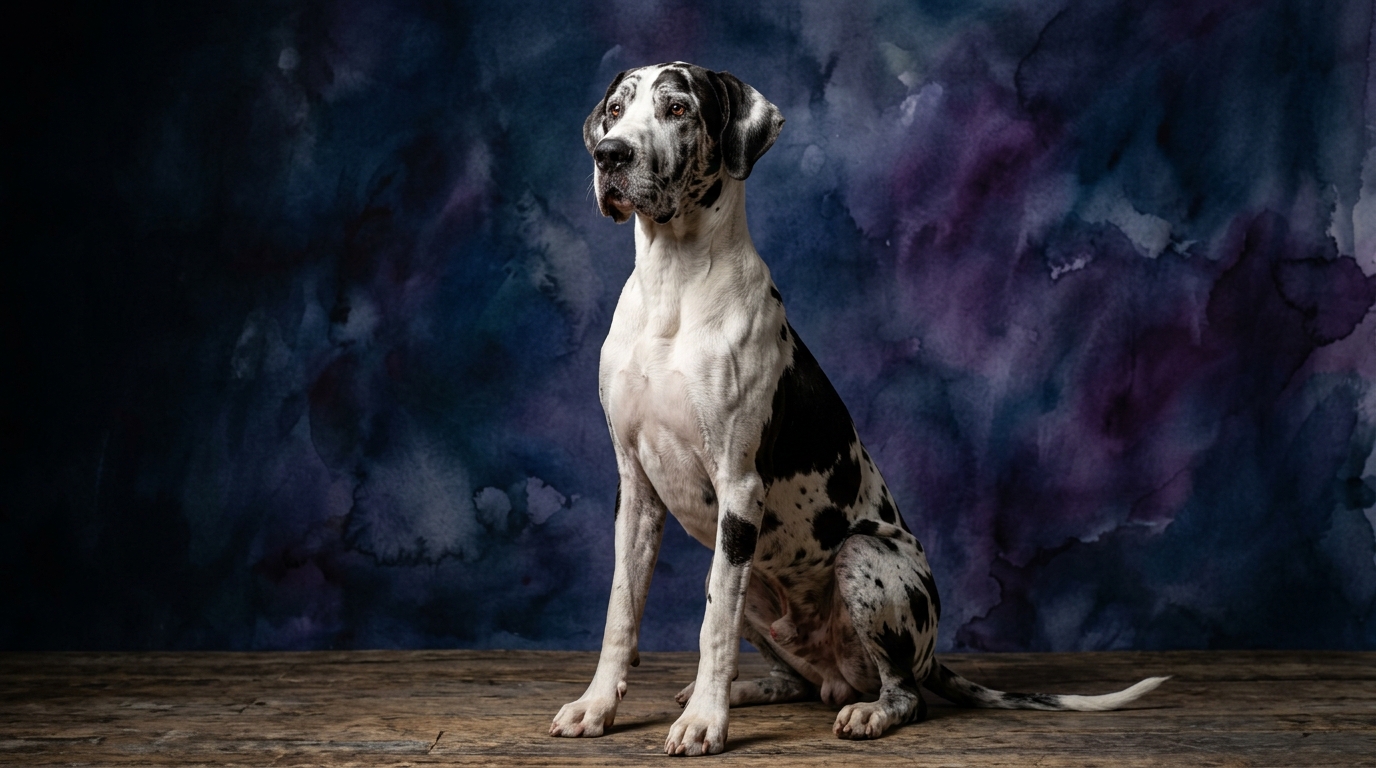
At The Cosmic Pet Pet IQ Lab, we analyze canine intelligence across five key dimensions. The Great Dane, ranking #48 in Coren's intelligence scale for obedience and working intelligence, offers a distinct cognitive blueprint. Their Problem Solving is rated 3/5, indicating a practical capacity for navigating routine challenges and understanding basic cause-and-effect relationships, though they may not consistently devise intricate solutions to novel problems without human guidance. Training Speed also scores 3/5, meaning they learn new commands and routines at a steady, moderate pace, responding well to consistent, positive reinforcement methods.
Where the Great Dane truly shines is in Social Intelligence, scoring an impressive 4/5. This reflects a profound understanding of human emotions, moods, and subtle social cues, fostering exceptionally deep, empathetic bonds and making them highly responsive to their family's communication. Their Instinctive Drive is 3/5, primarily directed towards companionship and a gentle, watchful protection of their family unit, expressed more through presence than proactive defense. Finally, their Memory is 3/5, solid and reliable for learned commands, routines, and the identities of familiar people and places, contributing to their consistent behavior.
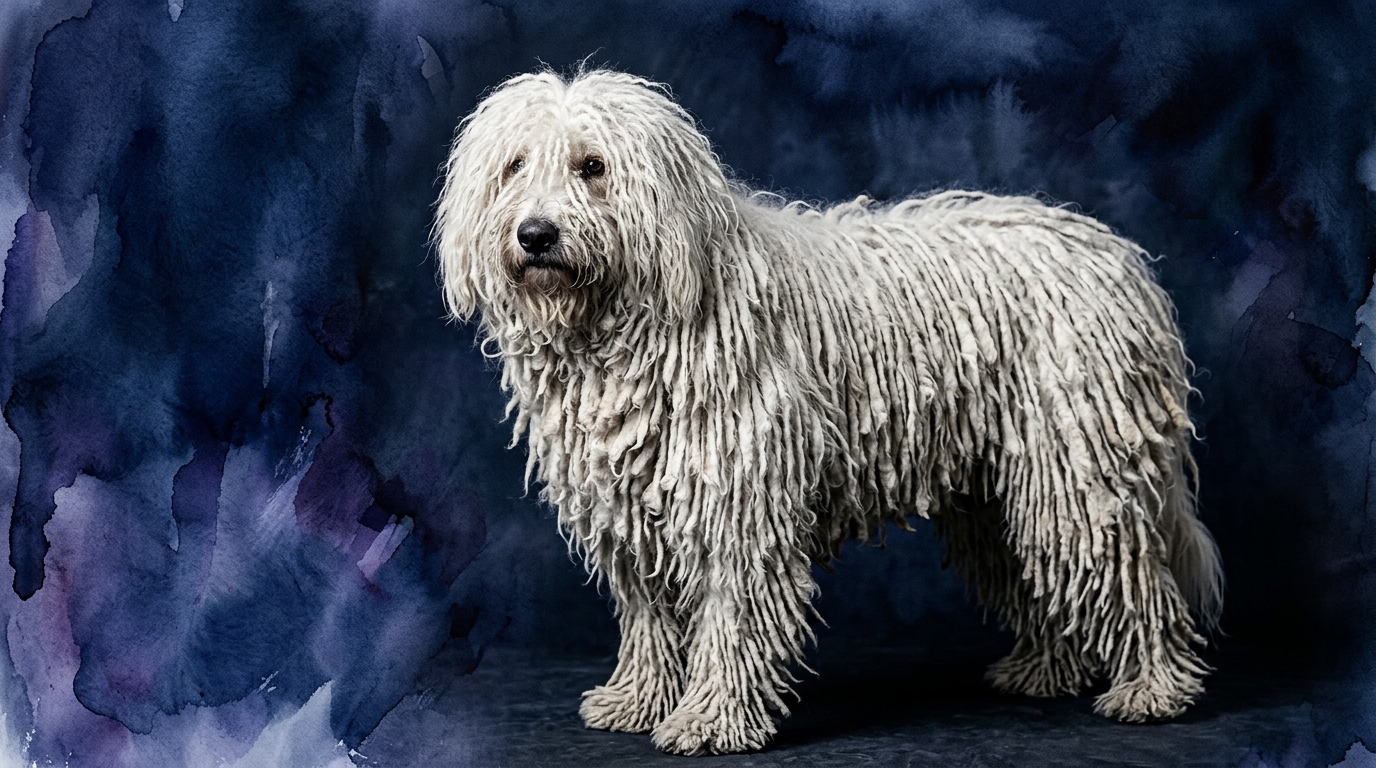
The Komondor, ranking #67 in Coren's scale, presents a different cognitive architecture, deeply rooted in its ancient guarding heritage. Their Problem Solving is 3/5, demonstrating a practical aptitude particularly when assessing situations on their territory, identifying potential threats, and strategizing responses autonomously. While not inclined towards complex puzzle toys, their intelligence is well-suited to evaluating environmental changes for security purposes. Training Speed is also 3/5; they learn new commands at a moderate pace, but their independent nature often means they require a distinct approach, processing information quickly but complying based on their perceived necessity or logic.
The Komondor's Social Intelligence is 3/5; they form intensely loyal bonds with their immediate family but are distinctly less outwardly expressive or universally outgoing than the Great Dane. They are often reserved, watchful, and discerning with strangers, taking time to evaluate new individuals, with interactions typically purposeful and centered around their perceived family and territory. Their Instinctive Drive is a powerful 3/5, singularly focused on their ancient role as a livestock guardian, manifesting as unwavering vigilance, territorial awareness, and a deep-seated need to protect. Lastly, their Memory is 3/5, strong and enduring, particularly for individuals, routines, and especially for perceived threats or safe zones within their domain, underpinning their consistent vigilance.
Where the Great Dane Wins Cognitively
The Great Dane's standout cognitive advantage lies unequivocally in its superior Social Intelligence, rated 4/5 compared to the Komondor's 3/5. This higher score translates into a dog that is exceptionally attuned to the human world, making them incredibly responsive and cooperative companions. A Great Dane often anticipates their owner's needs and moods, offering comfort or seeking interaction based on subtle cues like a sigh or a shift in body language. This empathetic connection means they are more likely to seek human guidance and approval, making them highly integrated family members who thrive on shared emotional experiences.
This elevated social acumen also means Great Danes typically adapt more readily to diverse social environments and new people, provided they are properly socialized. Their ability to quickly read and respond to human intentions facilitates smoother interactions in public settings or during visits from guests. While both breeds are loyal, the Great Dane's loyalty is often expressed through a desire for close proximity and shared activity, demonstrating a cognitive preference for partnership and emotional reciprocity that sets them apart in the realm of social cognition.
Where the Komondor Wins Cognitively
Despite sharing similar numerical scores in several cognitive dimensions, the Komondor exhibits a distinct cognitive strength rooted in the *nature* of its Instinctive Drive (3/5) and Problem Solving (3/5), specifically applied to its guardian role. While the Great Dane's drive is geared towards companionship, the Komondor's is intensely focused on autonomous protection and threat assessment. This translates into a remarkable capacity for independent decision-making in security-related scenarios; they can evaluate situations, identify potential dangers, and react appropriately without requiring direct human command.
This specialized problem-solving, though rated 3/5, is a significant cognitive advantage for their unique purpose. A Komondor's mind is constantly processing environmental stimuli for anomalies, strategically positioning themselves to oversee their territory, and making nuanced judgments about perceived threats. Their cognitive 'win' is thus in their self-reliant vigilance and their unwavering, purpose-driven intelligence, which allows them to excel in roles requiring independent judgment and steadfast guardianship, often in situations where human intervention might be delayed or absent.
Which Is Easier to Train and Why?
When considering ease of training, the Great Dane generally presents a more straightforward experience for most owners. Despite both breeds having a Training Speed of 3/5, the Great Dane's significantly higher Social Intelligence (4/5) plays a pivotal role. Their eagerness to please and strong desire for human interaction translates into a more cooperative and attentive student. A Great Dane is typically more motivated by praise, affection, and the opportunity to engage with their human companions, making them more receptive to learning commands and adhering to household rules. Their higher Coren rank (#48) further supports their better general trainability in obedience.
The Komondor, by contrast, while capable of learning, can be more challenging to train due to their independent nature and strong instinctive drive. Their 3/5 Social Intelligence means they are less inclined to blindly follow commands purely for human approval. A Komondor often assesses a command's logic or necessity within their own framework of duties, and if it doesn't align with their perceived protective role, they may be less immediate in their compliance. Training a Komondor requires immense patience, consistency, and an understanding of their self-reliant temperament, often necessitating an approach that frames commands as a collaborative effort rather than strict obedience to achieve lasting results. Their lower Coren rank (#67) reflects this inherent independence, which can be interpreted as 'stubbornness' by inexperienced trainers.
Which Suits Active Owners vs. Relaxed Owners
The Great Dane, often dubbed a 'gentle giant,' tends to suit owners who appreciate a balance of activity and relaxation. While they require regular, moderate exercise to maintain their physical and mental well-being, such as daily walks or playtime in a secure yard, they are generally content to lounge indoors with their family once their needs are met. Their high social intelligence makes them adaptable to various household dynamics, thriving on companionship and shared, calm activities. They are excellent companions for owners who enjoy consistent, moderate engagement and a deeply affectionate presence, fitting well into a relaxed, family-oriented lifestyle, provided their exercise requirements are consistently met.
The Komondor, on the other hand, while not necessarily requiring intense physical activity like a high-energy sporting breed, suits owners who are 'active' in understanding and channeling their unique cognitive and instinctive drives. Their independent guarding nature means they benefit from having a 'job' or a sense of purpose, even if that purpose is simply patrolling a secure property. They are not typically suited for owners seeking a jogging partner or a dog for intense dog sports, as their focus is on vigilance and protection. Owners who appreciate and can accommodate a dog with a strong, self-directed working temperament, perhaps with larger spaces to oversee or who are committed to providing structured mental engagement related to their instincts, will find the Komondor a rewarding, albeit demanding, companion. Their ideal owner is 'active' in providing mental stimulation and an environment that respects their inherent nature, rather than necessarily engaging in high-impact physical activities.
The Verdict: When to Choose Each Breed
The Verdict
Choose the Great Dane if you seek an exceptionally socially intelligent, empathetic companion eager to please, adaptable to family life, and if you can provide moderate exercise and consistent, positive training.
Opt for the Komondor if you are an experienced owner who appreciates an independent, protective guardian, understands the nuances of their strong instinctive drive, and are prepared for a committed, patient approach to training and socialization that respects their self-reliant nature.
🧠 Find Your Pet's IQ Score
Our Pet IQ Lab assessment covers 25+ tests across 5 cognitive dimensions — personalized to your breed.
Take the Full IQ Test →Frequently Asked Questions
Do Great Danes or Komondors excel at dog sports?
Great Danes, with their cooperative nature and higher social intelligence, are generally more inclined towards activities like obedience, rally, or even agility, provided their joint health is managed. Komondors, while capable, often prioritize their guarding instincts and might find structured sports less engaging than their natural duties, preferring roles that align with their protective drive.
How do their protective instincts differ?
A Great Dane's protection often stems from their strong bond and social intelligence, acting as a deterrent or intervening when they perceive a direct threat to their family, typically by barking or physically placing themselves between. A Komondor's protection is deeply rooted in their independent livestock guardian heritage, involving territorial vigilance, threat assessment, and a more proactive, self-directed defense of their perceived domain, often with less reliance on human direction.
Is a Komondor difficult for a first-time dog owner?
A Komondor can be challenging for a first-time dog owner due to their independent nature, strong guarding instincts, and need for consistent, experienced handling. Their self-reliant temperament requires an owner who understands breed-specific traits and is committed to extensive, early socialization and patient, respectful training from a young age to channel their powerful drives appropriately.