Side-by-Side Cognitive Profiles
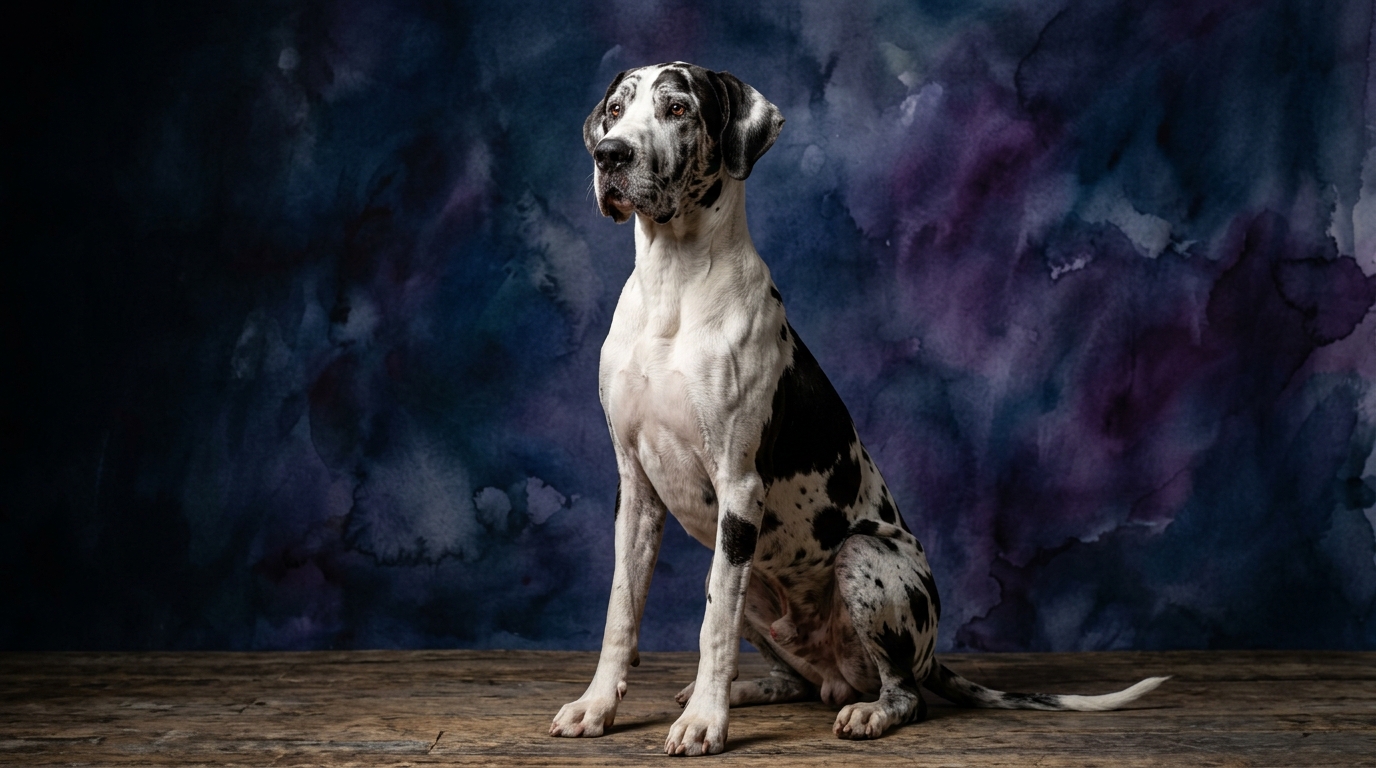
Our Pet IQ Lab analysis breaks down canine intelligence into five core dimensions, revealing distinct strengths for each breed. The Great Dane, a Working breed, holds a Coren rank of #48, indicating a solid capacity for learning and task execution. Its problem-solving ability is rated at 3/5, suggesting it can navigate moderately complex scenarios and figure out solutions with some persistence. Training speed also scores 3/5, meaning Great Danes absorb new commands and routines at a steady, average pace. Where they truly shine is social intelligence, earning a 4/5, which translates to a strong understanding of human emotions and social cues, making them attuned companions. Their instinctive drive is 3/5, reflecting a moderate inclination towards natural canine behaviors like guarding or exploring, while memory is a balanced 3/5, allowing them to recall learned experiences and commands effectively.
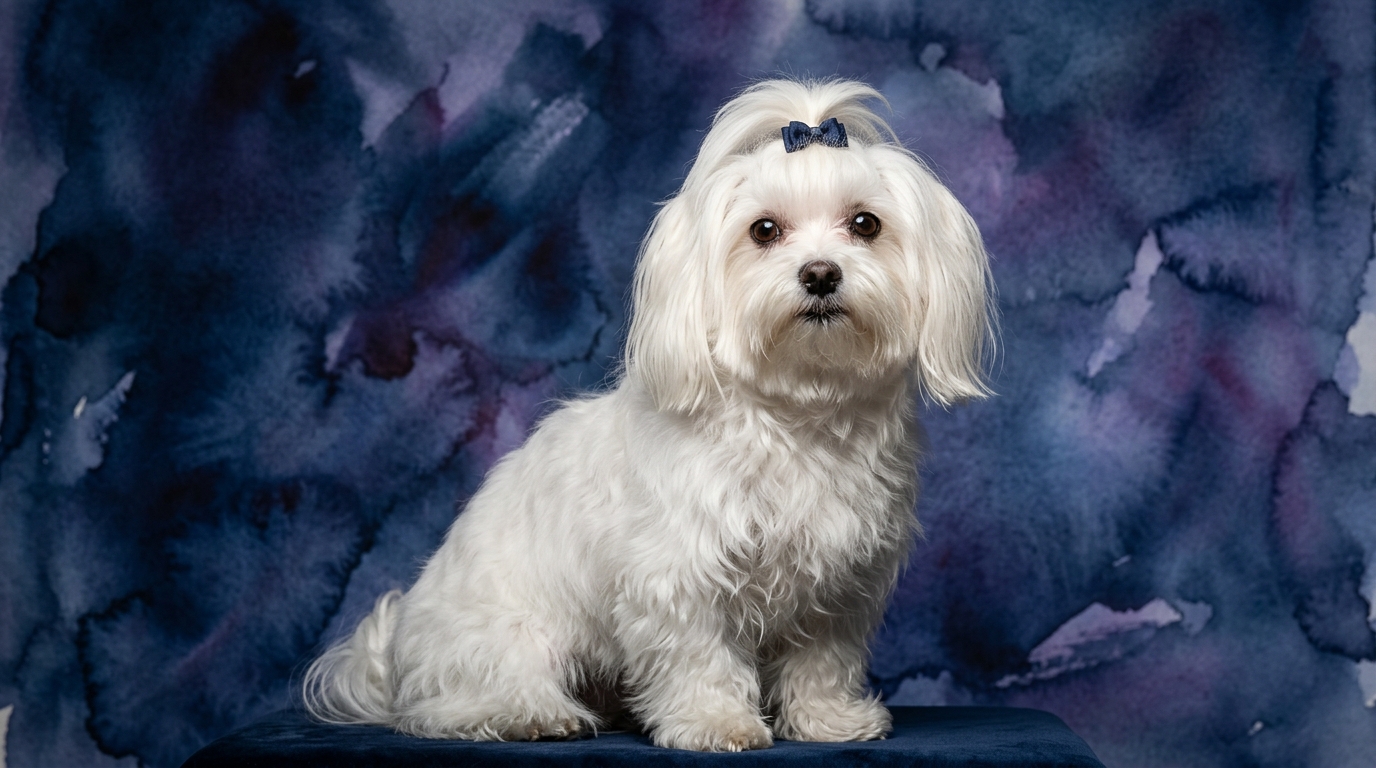
In contrast, the Maltese, a Toy breed, has a Coren rank of #59. While still respectable, this places them slightly lower in general working intelligence compared to the Great Dane. Like their larger counterparts, Maltese score 3/5 in problem-solving, demonstrating a similar capacity for tackling cognitive puzzles. Their training speed is also 3/5, indicating they learn at a comparable rate when properly motivated. However, the Maltese truly excels in social intelligence, achieving an impressive 5/5. This perfect score signifies an exceptional ability to interpret human moods, react to social interactions, and form incredibly deep, responsive bonds. Their instinctive drive is lower at 2/5, suggesting less inclination towards independent hunting or guarding behaviors, and their memory is a consistent 3/5, ensuring they retain what they've learned.
Where the Great Dane Shows Its Cognitive Strengths
While the Maltese boasts a higher social intelligence score, the Great Dane’s cognitive profile presents a different kind of strength, particularly in its overall balance and applicability. Its Coren rank of #48 suggests a more generalized capacity for understanding and executing a variety of tasks across different contexts, reflecting its heritage as a working dog. This means that while it might not be the quickest to learn every single command (training speed 3/5), its robust cognitive framework allows it to adapt to diverse environments and roles, from family guardian to therapy animal, with a quiet competence.
Furthermore, the Great Dane’s instinctive drive of 3/5, compared to the Maltese’s 2/5, indicates a slightly stronger inclination towards natural canine behaviors that can be channeled productively. This might manifest as a greater interest in exploring new scents, a more pronounced protective instinct towards its family and territory, or a deeper engagement with structured activities that appeal to its innate drives. This moderate drive, coupled with its 3/5 problem-solving ability, allows Great Danes to engage with and overcome physical and mental challenges in a way that aligns with their substantial physical presence, such as navigating complex terrain or understanding spatial relationships in a large home.
Where the Maltese Shines Cognitively
The Maltese's standout cognitive strength lies unequivocally in its social intelligence, earning a perfect 5/5 score. This exceptional capacity means they are incredibly perceptive to human emotions, subtle vocal cues, and body language. A Maltese can often seem to anticipate its owner's mood or desires, offering comfort or playful engagement precisely when needed. This isn't just about being affectionate; it's a deep cognitive understanding of social dynamics within their human family, allowing them to integrate seamlessly into a household and form profound, responsive attachments.
This superior social intelligence, combined with a 3/5 problem-solving ability, allows the Maltese to navigate social situations with remarkable finesse. They might figure out how to gain attention or elicit a desired response from their human companions through nuanced behaviors, rather than brute force or complex task execution. While their instinctive drive is lower at 2/5, indicating less interest in independent 'work,' their entire cognitive framework is optimized for companionship, making them masters of human-canine social interaction and emotional connection. This makes them particularly adept at forming deep bonds and serving as emotionally supportive companions.
Training Dynamics: Great Dane vs. Maltese
Both the Great Dane and the Maltese share a training speed score of 3/5, suggesting they learn new commands at a moderate pace. However, the practical experience of training them can differ significantly due to their other cognitive traits. A Great Dane, with its 4/5 social intelligence and 3/5 instinctive drive, often responds well to clear, consistent training that appeals to its desire to please its human and its moderate inclination for purpose. They are generally eager to understand expectations and, once motivated, can be quite compliant, especially when tasks are presented as cooperative efforts. Their larger size means early and consistent training is crucial for managing their physical presence effectively.
The Maltese, while also having a 3/5 training speed, benefits immensely from its 5/5 social intelligence. This means they are often highly motivated by praise, positive reinforcement, and the joy of interacting with their human. They are acutely aware of their owner's reactions, making them highly responsive to social cues during training sessions. While they might not be driven by complex tasks or strong instinctive urges (2/5 drive), their strong desire for connection and approval makes them enthusiastic participants in training, particularly when it strengthens their bond with their owner. Their smaller stature means training focuses more on manners and basic obedience rather than managing sheer physical power.
Lifestyle Match: Active vs. Relaxed Owners
The cognitive profiles of the Great Dane and Maltese suggest different ideal environments and owner lifestyles. A Great Dane, despite its impressive size, isn't necessarily a high-octane athlete in the way some working breeds are. Its balanced cognitive profile, including a 3/5 instinctive drive and 4/5 social intelligence, means it thrives with owners who can provide consistent routine, moderate exercise, and ample social interaction. They are well-suited for relaxed owners who appreciate a calm, dignified presence in the home but can commit to regular, albeit not overly strenuous, walks and mental engagement. Their problem-solving at 3/5 means they appreciate varied environments and new experiences, but not necessarily constant, intense challenges.
The Maltese, with its lower instinctive drive (2/5) and unparalleled social intelligence (5/5), is an ideal companion for owners seeking a deeply connected, indoor-oriented relationship. These dogs thrive in environments where they receive abundant affection, social interaction, and mental stimulation through companionship rather than rigorous physical activity. They are perfectly suited for relaxed owners who are home frequently, enjoy quiet companionship, and can engage in gentle play and consistent positive reinforcement. Their 3/5 problem-solving can be satisfied with puzzle toys or learning new tricks within the comfort of their home, making them wonderful pets for apartment living or less active households.
The Verdict
Choose a Great Dane if you seek a dignified, calm companion with a balanced cognitive profile, capable of understanding social cues and engaging in moderate activities, thriving in a home with consistent routine and gentle guidance.
Opt for a Maltese if your lifestyle prioritizes deep emotional connection and a highly social, perceptive companion that excels in reading human emotions and thrives on constant interaction and affection within a less physically demanding environment.
🧠 Find Your Pet's IQ Score
Our Pet IQ Lab assessment covers 25+ tests across 5 cognitive dimensions — personalized to your breed.
Take the Full IQ Test →Frequently Asked Questions
Do Great Danes or Maltese learn faster?
Both Great Danes and Maltese have a training speed score of 3/5, meaning they learn at a moderate, comparable pace. The motivation for learning might differ, with Great Danes responding to task-oriented training and Maltese excelling with social praise.
Which breed is better at problem-solving?
Both breeds share a problem-solving score of 3/5, indicating a similar capacity for figuring out moderately complex tasks. Their application of this skill might vary, with Great Danes potentially using it in larger environments and Maltese in social or indoor contexts.
Is social intelligence more important than other IQ dimensions?
The importance of social intelligence depends on an owner's priorities; a high social intelligence (like the Maltese's 5/5) fosters deep emotional bonds and responsiveness, while a balanced profile (like the Great Dane's 4/5) might be better suited for roles requiring a broader range of cognitive skills alongside social understanding.