Side-by-Side Cognitive Profiles
At first glance, the Great Dane and Miniature Bull Terrier appear to share a remarkably similar cognitive blueprint across many dimensions, as measured by The Cosmic Pet Pet IQ Lab. Both breeds register a 3/5 in Problem Solving, Training Speed, Instinctive Drive, and Memory. However, a closer look at their individual expressions within these scores, particularly in social intelligence, reveals fascinating nuances that define their unique mental landscapes.
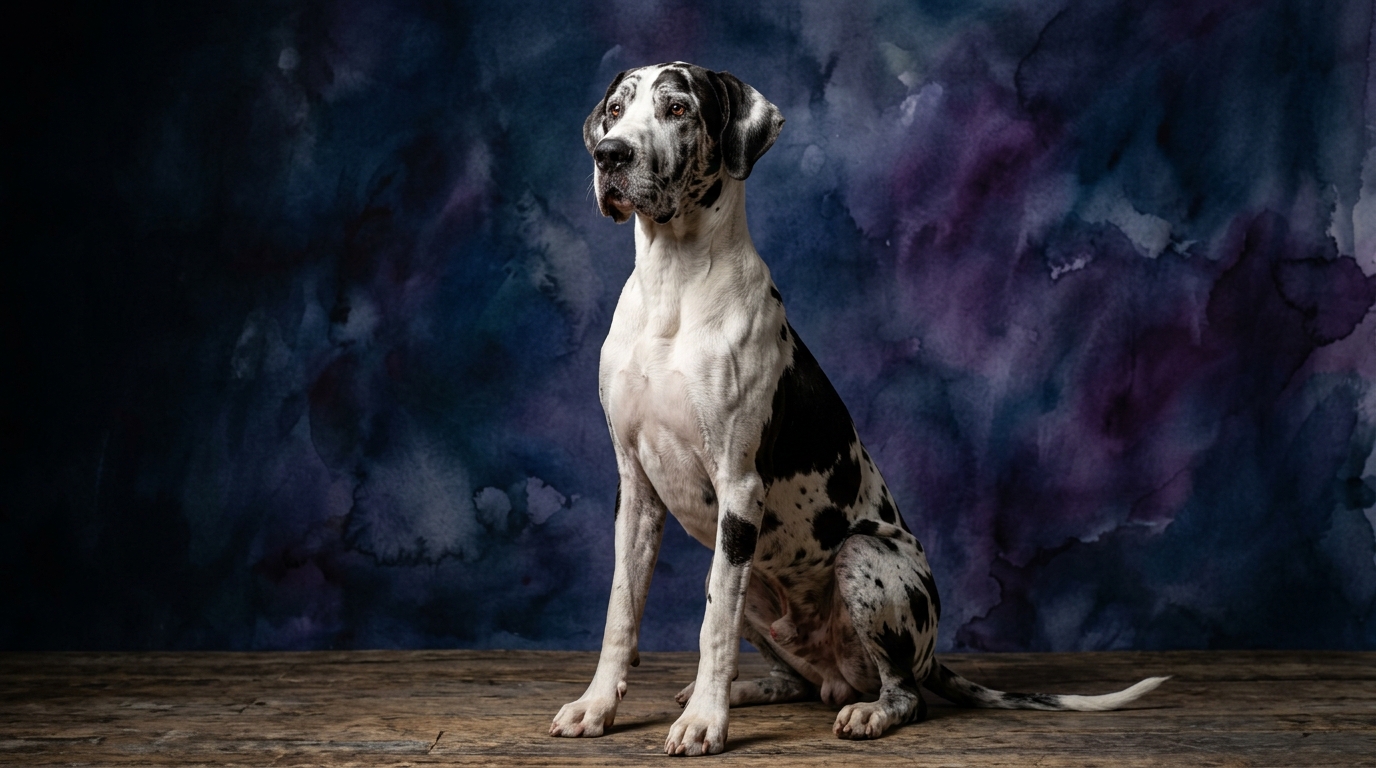
The **Great Dane**, a member of the Working group, holds a Coren rank of #48, reflecting a solid capacity for understanding and executing commands. Their Problem Solving at 3/5 indicates an ability to navigate moderately complex challenges, often relying on observation and a steady, deliberate application of learned methods rather than rapid, innovative leaps. For instance, they might methodically try different ways to open a gate rather than quickly deducing a complex latch mechanism. Their Training Speed, also 3/5, signifies a moderate pace for acquiring new commands and routines, requiring consistent, patient repetition to solidify learning. They grasp concepts steadily but aren't typically rapid learners, needing reinforced practice over time. Where the Great Dane truly distinguishes itself is in Social Intelligence, scoring a notable 4/5. This manifests as a profound ability to interpret human emotions, subtle body language, and household dynamics. They frequently anticipate their owner's needs or moods, offering comfort or space as appropriate, demonstrating a nuanced understanding of interpersonal relationships. Their keen observation of human behavior allows them to adapt their own responses, fostering a deeply empathetic bond. Their Instinctive Drive (3/5) is expressed as a protective instinct towards their family and a moderate prey drive, rather than an overwhelming urge for independent work. Memory (3/5) shows a solid ability to retain learned behaviors, routines, and experiences over time, forming strong associations with people and places.
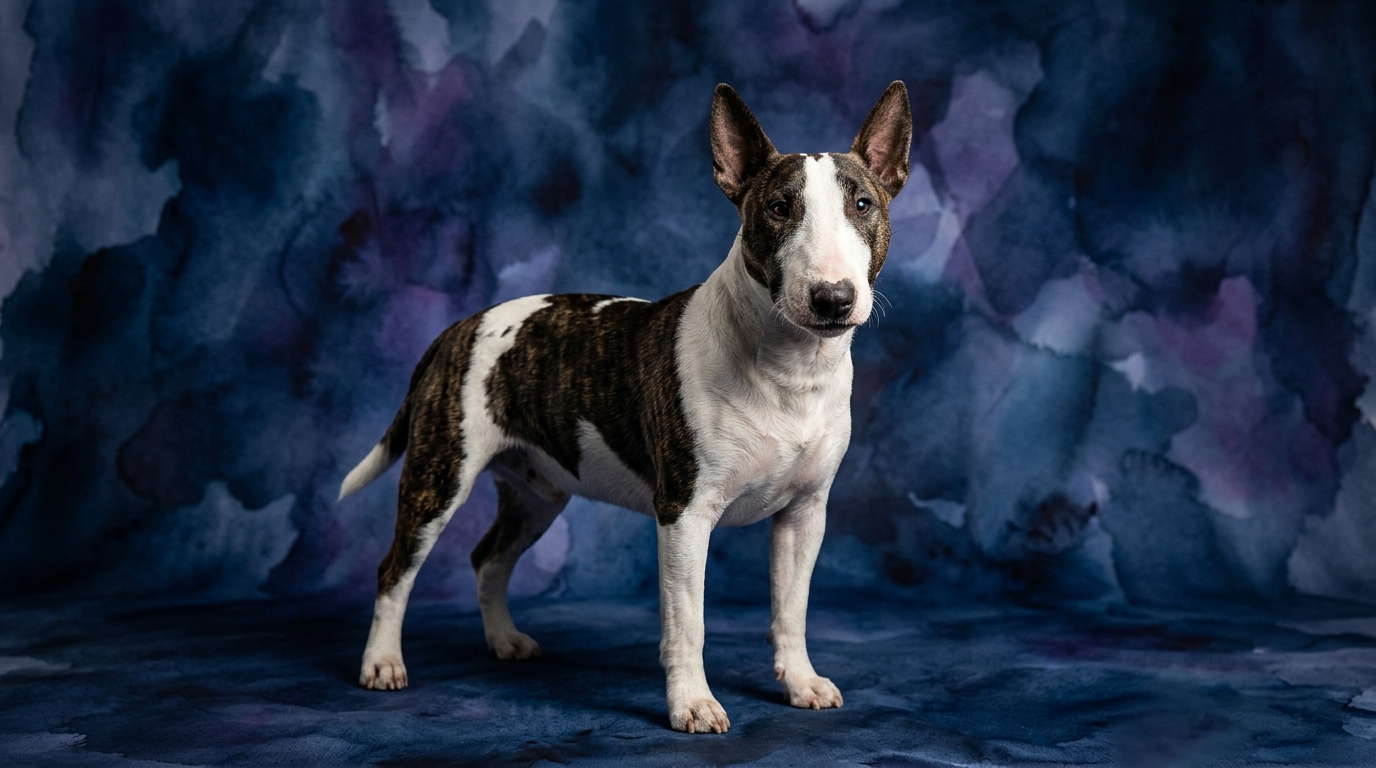
The **Miniature Bull Terrier**, belonging to the Terrier group and not Coren-ranked, presents a parallel yet distinct cognitive profile. Their Problem Solving (3/5) involves a practical ingenuity, often employing persistence and physical manipulation to achieve goals. They are clever in finding ways around obstacles but not necessarily in devising multi-step, abstract solutions. Their Training Speed (3/5) also points to a moderate learning rate, but their inherent terrier tenacity can sometimes translate into a stubborn streak or a pronounced independent focus during sessions. This necessitates highly engaging, positive reinforcement methods and an understanding that their motivation is often externally driven by the reward or the perceived fun of the interaction, rather than an inherent desire to simply please. In Social Intelligence, the Miniature Bull Terrier scores 3/5. They understand direct social cues and family interactions but might be less overtly empathetic or as finely tuned to subtle emotional shifts as the Great Dane. Their social engagement tends to be more direct, playful, and occasionally assertive, reflecting their confident and self-assured nature rather than a nuanced emotional reciprocity. Their Instinctive Drive (3/5) is true to their heritage, encompassing a moderate prey drive, a strong digging impulse, and an inherent assertiveness, often expressed through spirited exploration. Memory (3/5) is reliable for commands, routines, and experiences, though their independent nature might occasionally lead them to 'selectively remember' if a task isn't sufficiently engaging.
Where the Great Dane Wins Cognitively
The Great Dane's primary cognitive advantage lies in its superior social intelligence, scoring a 4/5 compared to the Miniature Bull Terrier's 3/5. This translates into a more profound capacity for emotional attunement and understanding complex human-canine social dynamics. Great Danes often display a remarkable ability to read and respond to subtle shifts in human mood, tone, and body language, allowing them to integrate seamlessly and empathetically into family life. They are more likely to offer comfort intuitively or to provide space when needed, demonstrating a nuanced comprehension of interpersonal relationships within their human pack. This deeper social awareness means they are less prone to misinterpreting social cues, leading to fewer behavioral misunderstandings rooted in communication gaps and fostering a remarkably harmonious coexistence.
Where the Miniature Bull Terrier Wins Cognitively
While their raw IQ scores are largely parallel, the Miniature Bull Terrier's cognitive edge often stems from its distinct blend of persistence and a certain independent ingenuity, particularly in navigating its immediate environment. Although their problem-solving score is 3/5, their terrier spirit gives them a practical, hands-on approach to obstacles. They might not devise complex solutions, but their sheer determination and physical agility allow them to overcome challenges through relentless effort and creative manipulation of their surroundings. This manifests as a tenacious drive to explore, dig, or figure out how to access desired items, often displaying a spirited self-reliance that requires owners to be one step ahead in terms of environmental management and enrichment. Their moderate instinctive drive, combined with this persistence, means they are often more self-motivated to investigate and interact with their physical world, demonstrating a clever, if sometimes mischievous, resourcefulness.
Which Is Easier to Train and Why
Both breeds share a 3/5 training speed, indicating a moderate learning curve for new commands. However, the *experience* of training diverges significantly due to their distinct social and behavioral predispositions. The Great Dane, with its higher social intelligence and inherent desire to please its human companions, often proves to be a more cooperative and straightforward pupil. Their motivation frequently stems from maintaining harmony within the social unit and receiving approval, making them generally receptive to positive reinforcement and clear, consistent instruction. While they require repetition to solidify learning, their willingness to engage and their lower propensity for independent 'terrier antics' can make the training process feel more predictable and less like a battle of wills, leading to a smoother path to obedience.
The Miniature Bull Terrier, while perfectly capable of learning, presents a different training dynamic. Their terrier heritage imbues them with a strong independent streak, a tenacious spirit, and a propensity for selective hearing if a more interesting distraction arises. This means they can be more easily diverted by environmental stimuli or their own internal motivations (like chasing a scent or digging) during training sessions. Owners often report that while Miniature Bull Terriers grasp commands, their consistent *performance* can fluctuate, especially if the reward isn't sufficiently enticing or if they perceive a more engaging alternative. Successful training with a Miniature Bull Terrier demands creativity, high-value rewards, and a firm, consistent approach that channels their spirited nature rather than suppresses it. Making training a fun, engaging game that taps into their problem-solving skills and persistence is crucial for sustained motivation and compliance.
Which Suits Active Owners vs. Relaxed Owners
For **relaxed owners** seeking a tranquil yet imposing presence, the Great Dane often presents a more suitable companion. Despite their colossal size, adult Great Danes are typically known for their calm, gentle demeanor indoors, often content to lounge gracefully near their family members for much of the day. Their moderate instinctive drive and higher social intelligence mean they are generally less demanding of constant intense mental and physical stimulation, provided they receive regular, albeit not exhaustive, daily exercise like a leisurely walk or some yard play. They thrive on companionship and a predictable routine, making them excellent choices for those seeking a large, affectionate presence that doesn't require high-octane daily activities. Their social attunement allows them to integrate smoothly into a quiet home life, often adapting their energy levels to match their human companions.
Conversely, **active owners** are more likely to find a compatible match in the Miniature Bull Terrier. While not requiring endurance running, their terrier energy, robust build, and moderate instinctive drive demand consistent physical activity and mental engagement to prevent boredom and potential destructive behaviors. They thrive on interactive play, structured walks that allow for exploration, and activities that tap into their natural curiosity and desire to investigate. Owners who enjoy training games, agility, earthdog trials, or long, stimulating walks will find the Miniature Bull Terrier a willing and enthusiastic participant. Their independent and spirited nature means they benefit from owners who can provide consistent guidance, engaging challenges, and ample outlets for their distinct terrier zest for life, thriving on an owner who is proactive in their physical and mental enrichment.
The Verdict
Choose the Great Dane if you prioritize a gentle giant with deep social intelligence, seeking a calm, empathetic companion that integrates seamlessly into a relaxed household, valuing quiet companionship over constant high-energy demands.
Opt for the Miniature Bull Terrier if you appreciate a spirited, tenacious companion with an independent streak, ready for engaging activities and consistent mental stimulation from an active, hands-on owner who enjoys a dog with a playful, determined personality.
🧠 Find Your Pet's IQ Score
Our Pet IQ Lab assessment covers 25+ tests across 5 cognitive dimensions — personalized to your breed.
Take the Full IQ Test →Frequently Asked Questions
Are Great Danes easy to train despite their size?
Great Danes are moderately easy to train due to their desire to please and social intelligence, responding well to consistent positive reinforcement. While their learning speed is average, their cooperative nature often simplifies the process compared to some more independent breeds.
Do Miniature Bull Terriers get along with other pets?
Miniature Bull Terriers can coexist with other pets, but their terrier instincts and moderate drive mean early, consistent socialization is crucial. Their interactions are often spirited, so careful introductions and ongoing supervision are key to harmonious multi-pet households.
How much exercise does each breed need daily?
Adult Great Danes need moderate daily exercise, typically a good walk or playtime, and are content with relaxed indoor time. Miniature Bull Terriers require more consistent, engaging activity to satisfy their energy and curiosity, benefiting from structured play and stimulating walks that challenge them.