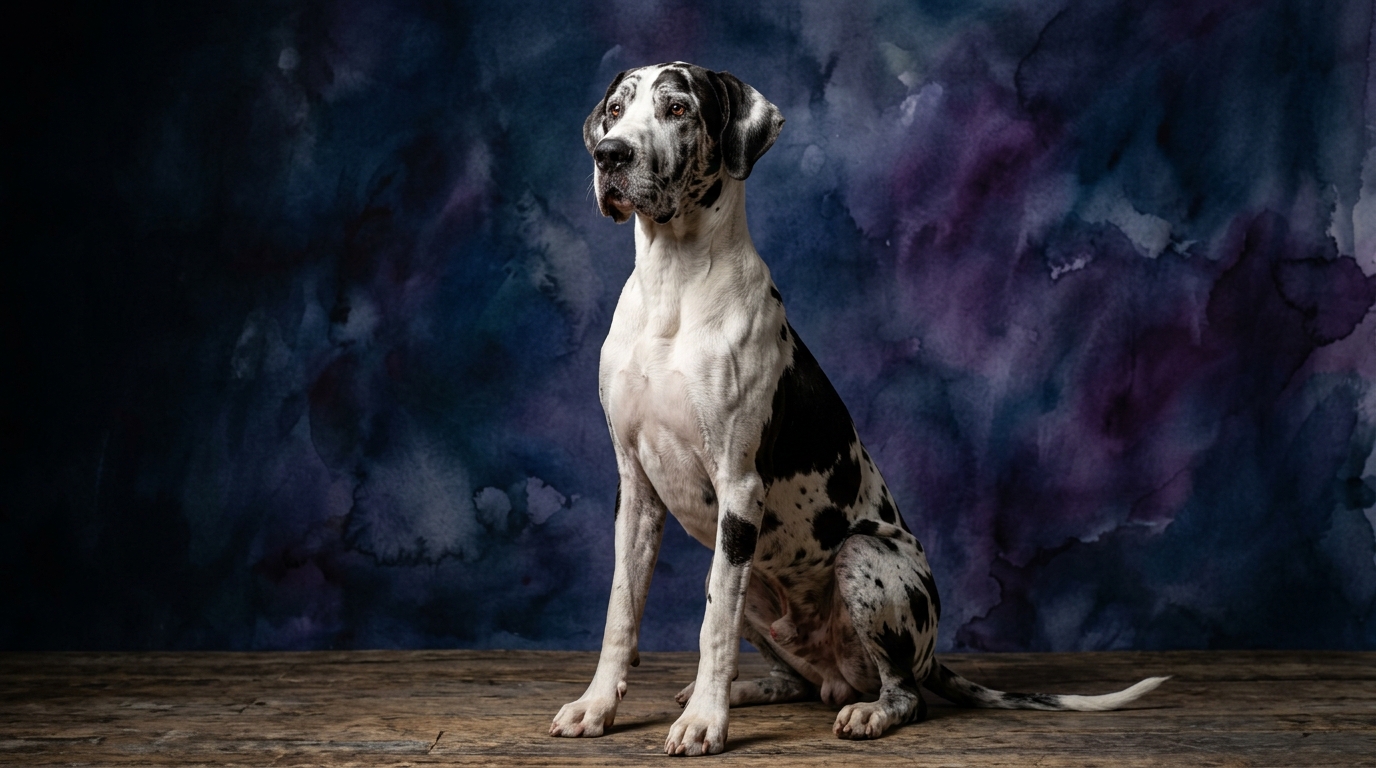
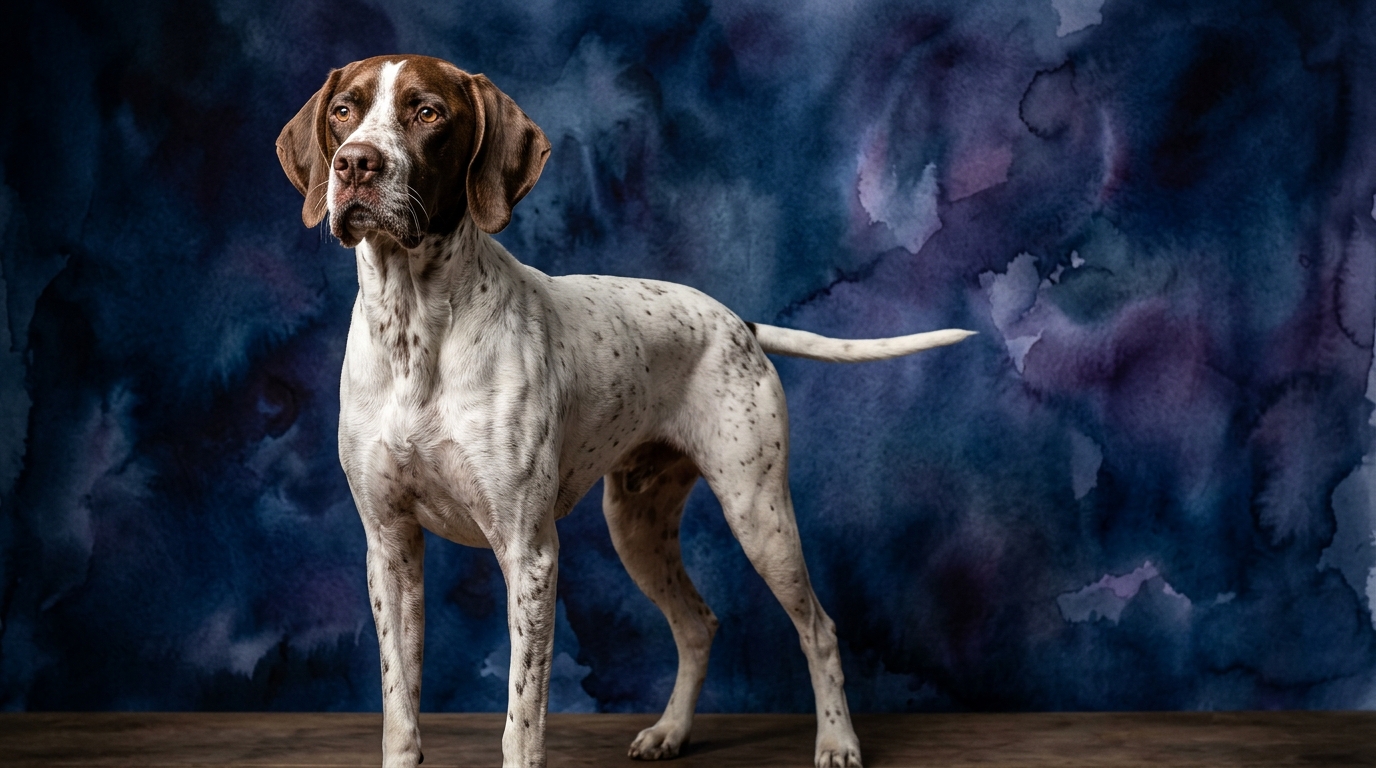
Side-by-side IQ profile
The Great Dane, a Working Group member, displays a balanced cognitive profile. Their Problem Solving and Training Speed both rate 3/5, suggesting a moderate capacity for navigating new situations and acquiring commands with consistent effort. A notable strength is their Social Intelligence, scoring a robust 4/5, indicating deep attunement to human emotions and social cues, fostering strong bonds. Their Instinctive Drive, at 3/5, reflects a moderate level of innate behaviors, historically useful for boar hunting. Memory is also 3/5, ensuring adequate retention of learned information and routines.
The Pointer, a Sporting Group dog, exhibits an IQ profile shaped by its field heritage. Problem Solving and Training Speed are both 3/5, similar to the Great Dane, reflecting their ability to tackle challenges and learn tasks, particularly those related to hunting. Their Social Intelligence scores 3/5, meaning they form affectionate bonds but are less overtly people-pleasing, with cognitive focus often on their environment and tasks. Instinctive Drive, also 3/5, is profoundly specialized for scenting, pointing, and retrieving, showcasing persistent application of innate behaviors. Memory, at 3/5, is sufficient for recalling commands and associating environmental cues with actions essential for consistent field performance.
Where Great Dane wins cognitively
The Great Dane truly shines in Social Intelligence, with a 4/5 score surpassing the Pointer's 3/5. This translates into a profound understanding of human social dynamics and emotional states. A Great Dane is often an empathetic companion, quick to pick up on family members' distress or joy. This isn't just friendliness; it’s a sophisticated cognitive ability to interpret subtle cues like tone of voice and body language, responding in ways that strengthen social bonds. For owners seeking a dog deeply connected to their emotional world, a Great Dane's superior social intelligence offers unparalleled companionship, making them exceptionally intuitive family members.
Where Pointer wins cognitively
While Problem Solving and Instinctive Drive scores are identical (3/5) for both breeds, the Pointer excels in the *application* of these traits for focused, independent task execution. Bred to work at a distance, autonomous decision-making in complex environments is central to their cognition. Their Problem Solving, though rated 3/5, is highly specialized for interpreting scent trails and making split-second decisions to "point" game without direct human instruction. Their Instinctive Drive (3/5) is a highly refined, persistent, and methodical hunting drive, allowing intense concentration on a single objective, filtering distractions. For owners valuing a dog capable of independent thought and sustained, self-directed work in a specific domain, the Pointer's focused cognitive strengths are a clear advantage.
Which is easier to train and why
Both Great Danes and Pointers share a Training Speed score of 3/5, indicating a moderate learning pace. However, their social and instinctive profiles create distinct training experiences. The Great Dane's superior Social Intelligence (4/5) makes them eager to please and highly responsive to human feedback, strengthening their bond. Their social receptiveness generally makes them amenable to consistent, gentle training, despite their size requiring early physical management. Conversely, the Pointer's 3/5 Social Intelligence means they might be less overtly motivated by human approval. Their powerful, specialized Instinctive Drive (3/5) can be a challenge in general obedience, often leading to distractions if not properly channeled. Training a Pointer demands harnessing this natural drive into desired behaviors, requiring a trainer who understands and leverages their innate motivations. So, for an owner prioritizing a dog highly attuned to emotional cues, the Great Dane might feel "easier." For an owner channeling intense focus into specific tasks, the Pointer is equally trainable but requires a drive-focused approach.
Which suits active owners vs relaxed owners
The cognitive profiles of Great Danes and Pointers suggest different suitability for active versus relaxed owners. The Great Dane, despite its size, often leans towards the more relaxed end of the spectrum after its boisterous puppy stage. Their moderate Instinctive Drive (3/5) and less intense need for constant physical exertion, coupled with high Social Intelligence (4/5), make them excellent companions for owners who enjoy a comfortable home life with moderate walks and plenty of cuddles. Their cognitive satisfaction stems from social interaction and being an integral part of family activities. Conversely, the Pointer, with its deeply ingrained and specialized Instinctive Drive (3/5) for hunting, is undeniably suited for active owners. This drive demands outlets that engage both their physical stamina and keen cognitive abilities in tracking and searching. They require consistent, vigorous exercise, ideally involving opportunities to use their nose and explore. An owner who enjoys hiking, running, or dog sports will find the Pointer an incredibly fulfilling partner, as their cognitive well-being is tied to fulfilling their innate drive.
The Verdict
Choose the Great Dane if you prioritize a deeply empathetic companion who is highly attuned to family dynamics and thrives on social connection, making them an intuitive and gentle giant for a moderately active household.
Choose the Pointer if you are an active owner seeking a driven, focused partner for outdoor adventures or dog sports, capable of independent problem-solving in task-oriented scenarios.
🧠 Find Your Pet's IQ Score
Our Pet IQ Lab assessment covers 25+ tests across 5 cognitive dimensions — personalized to your breed.
Take the Full IQ Test →Frequently Asked Questions
Does the Great Dane's size make them harder to train despite their social intelligence?
While a Great Dane's large size requires early and consistent training for manners and leash skills, their high social intelligence generally makes them eager to please and responsive to their owner's cues, often offsetting the physical challenges with their cooperative nature. With proper socialization and positive reinforcement, their impressive stature can be managed effectively.
How does the Pointer's instinctive drive impact their behavior in a family setting?
The Pointer's strong instinctive drive, while excellent for field work, means they need consistent mental and physical stimulation to prevent boredom and destructive behaviors in a family setting. Providing outlets like long walks, scent games, or dog sports can satisfy their innate needs and help them settle calmly indoors.
Are Great Danes and Pointers good with children, considering their different social intelligence scores?
Great Danes, with their higher social intelligence, are often remarkably patient and gentle with children, forming strong bonds and understanding family dynamics well, though supervision is always key due to their size. Pointers, while generally good-natured, may be less inherently attuned to a child's subtle cues due to their lower social intelligence and higher drive, requiring careful introductions and supervision to ensure positive interactions.