Side-by-Side Cognitive Profiles: Great Dane vs. Pug
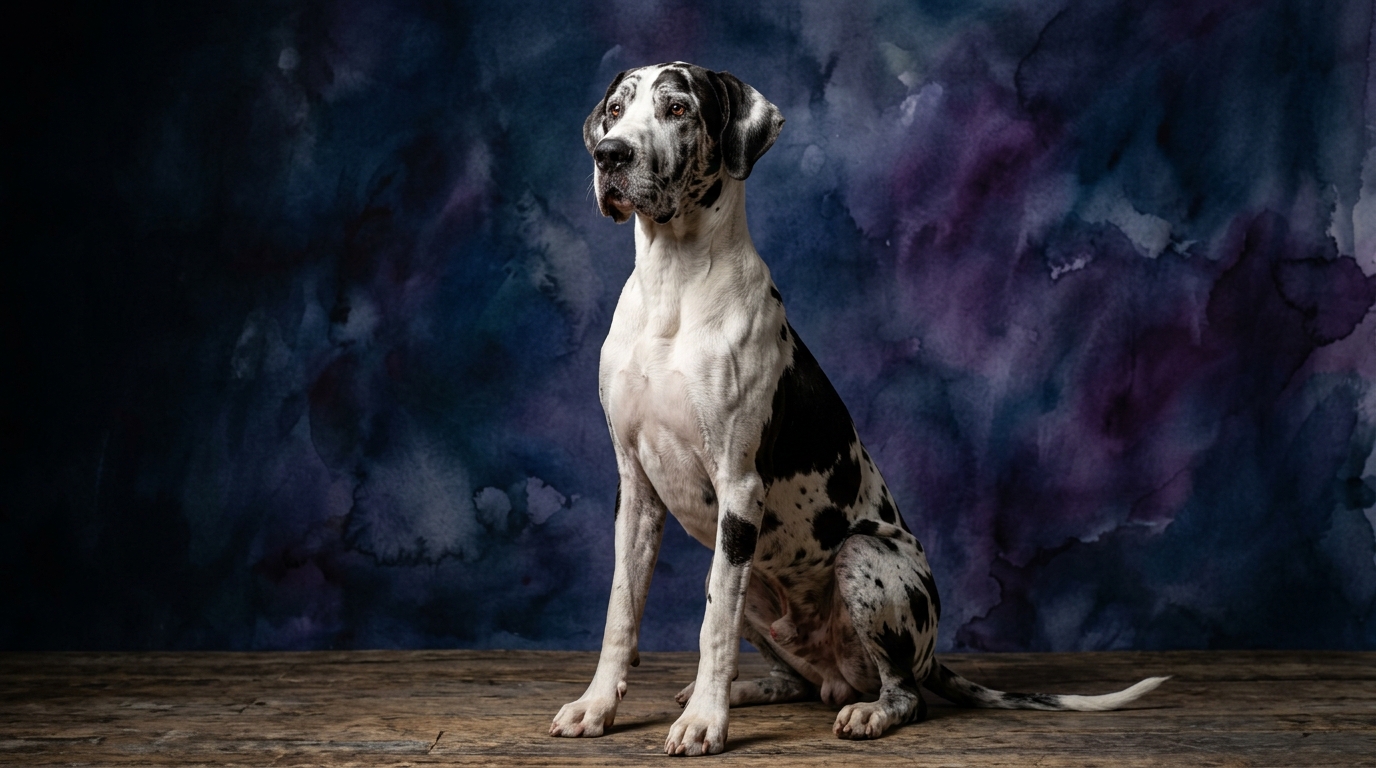
The Pet IQ Lab utilizes a comprehensive framework to assess canine cognition across five crucial dimensions. For the Great Dane, a working breed ranking #48 on the Coren scale, its Problem Solving ability is 3 out of 5, indicating a moderate capacity for independent challenge navigation. Training Speed is also 3 out of 5, suggesting moderate responsiveness to new commands, requiring consistent effort. Social Intelligence scores 4 out of 5, reflecting a strong aptitude for understanding human cues and forming deep bonds. Instinctive Drive is 3 out of 5, signifying a balanced level of inherent behaviors. Memory is 3 out of 5, indicating reasonable retention of learned information.
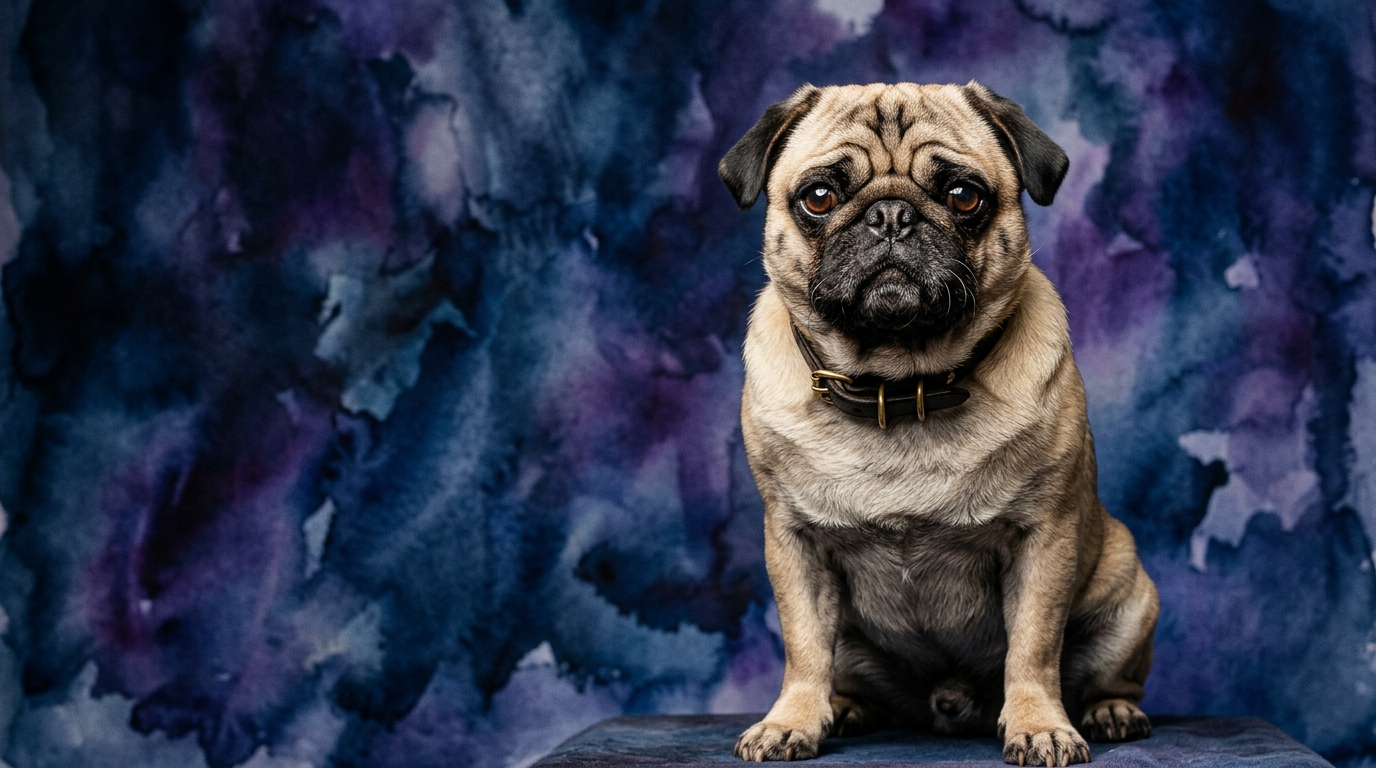
In contrast, the Pug, a toy breed with a Coren rank of #57, presents a different cognitive profile. Its Problem Solving ability is 2 out of 5, indicating a tendency to rely more on familiar routines or human guidance. Training Speed is 2 out of 5, suggesting learning new tasks might take more repetition and patience. However, the Pug truly shines in Social Intelligence, scoring a remarkable 5 out of 5, reflecting an exceptional ability to connect with humans and interpret emotional states. Instinctive Drive is 2 out of 5, meaning their inherent urges for traditional dog "jobs" are less pronounced. Finally, the Pug's Memory is 3 out of 5, showing a decent capacity for recalling past events.
Where the Great Dane Leads Cognitively
The Great Dane demonstrates clear cognitive advantages in areas requiring independent thought and proactive responses. Its Problem Solving score of 3/5, compared to the Pug's 2/5, means a Great Dane is more likely to assess a situation and devise a solution, such as systematically nudging a toy from under furniture. This breed’s moderate Instinctive Drive (3/5 vs. Pug's 2/5) also contributes, implying a greater inclination towards purposeful action like alerting to unusual sounds or exploring its environment. Its Training Speed of 3/5 further reinforces this, indicating a quicker grasp of complex sequences or multi-step commands, making it amenable to advanced obedience. This cognitive readiness allows Great Danes to engage with their surroundings in a more solution-oriented manner than their smaller counterparts.
Where the Pug Excels Cognitively
The Pug's exceptional cognitive strength lies overwhelmingly in its Social Intelligence, scoring a perfect 5 out of 5 compared to the Great Dane's respectable 4 out of 5. This reflects a profound capacity to read human emotions, understand subtle social cues, and adapt its behavior to maintain harmony and affection within its human family. A Pug is exquisitely attuned to its owner's mood, often offering comfort during distress or initiating play when sensing joy. They excel at mirroring human energy, making them deeply empathetic companions. This heightened social awareness allows them to navigate complex household dynamics with finesse, often becoming the emotional barometer of the home. Their cognitive processing prioritizes interpersonal connections, making them masters of social bonding and emotional reciprocity.
Training Aptitude: Great Dane vs. Pug
When it comes to ease of training, the Great Dane generally presents a more straightforward path. Its Training Speed of 3/5, coupled with its Problem Solving score of 3/5, means it tends to grasp new commands and concepts with moderate efficiency. A Great Dane often requires consistent but not excessive repetition to solidify new behaviors. Their moderate Instinctive Drive also means they can be motivated by tasks and challenges, making training feel like a collaborative effort.
The Pug, with a Training Speed of 2/5 and Problem Solving at 2/5, can be more challenging in traditional obedience. This isn't due to a lack of capacity, but a different prioritization of cognitive resources. Pugs are often perceived as independent, which can be interpreted as a longer processing time for commands or greater susceptibility to distractions. Their strong Social Intelligence means they respond powerfully to positive reinforcement, but their focus might waver if the task isn't immediately engaging. Their lower Instinctive Drive means they are less intrinsically motivated by typical "work" tasks, requiring highly rewarding and fun-centric training.
Matching Cognitive Profiles to Owner Lifestyles
The cognitive profiles of the Great Dane and Pug align with different owner lifestyles. The Great Dane, with its moderate Problem Solving (3/5), Training Speed (3/5), and Instinctive Drive (3/5), suits owners who appreciate engaging in structured activities and can provide consistent mental stimulation. Great Danes benefit from regular training sessions, puzzle toys challenging their moderate problem-solving abilities, and varied environmental exploration. An owner enjoying teaching new skills or dog sports would find the Great Dane a willing and capable partner. Their robust Social Intelligence (4/5) ensures deep family connection.
Conversely, the Pug, with its lower Problem Solving (2/5) and Instinctive Drive (2/5) but paramount Social Intelligence (5/5), is an ideal match for more relaxed owners whose primary desire is companionship and emotional connection. Pugs thrive on close proximity to their humans, excelling where social needs are met through cuddles and gentle play. While basic training is needed, their cognitive preference isn't for complex tasks. A relaxed owner cherishing a devoted lap companion and finding joy in a dog's empathetic presence would discover the Pug's cognitive makeup perfectly complementary.
The Verdict
Opt for a Great Dane if you seek a companion with a balanced cognitive profile, capable of moderate problem-solving and training engagement, and are prepared to provide structured mental and physical activities.
Select a Pug if your priority is unparalleled social intelligence, emotional attunement, and a deeply affectionate companion whose cognitive strengths lie in bonding and companionship rather than complex task execution.
🧠 Find Your Pet's IQ Score
Our Pet IQ Lab assessment covers 25+ tests across 5 cognitive dimensions — personalized to your breed.
Take the Full IQ Test →Frequently Asked Questions
Do Great Danes enjoy learning new tricks?
Yes, with a Training Speed of 3/5 and Problem Solving at 3/5, Great Danes generally enjoy learning new tricks, especially when training is consistent, positive, and offers mental engagement.
Are Pugs difficult to house train due to their lower training speed?
While a Pug's Training Speed is 2/5, making house training potentially require more patience and consistency, their high Social Intelligence means they are eager to please their owners once they understand expectations.
How does a Great Dane's social intelligence compare to a Pug's?
A Great Dane's Social Intelligence at 4/5 indicates strong human connection, but a Pug's 5/5 is exceptional, meaning Pugs often display an almost intuitive understanding of human emotions and social dynamics, making them masters of companionship.