
Side-by-Side IQ Profile: Unpacking Cognitive Dimensions
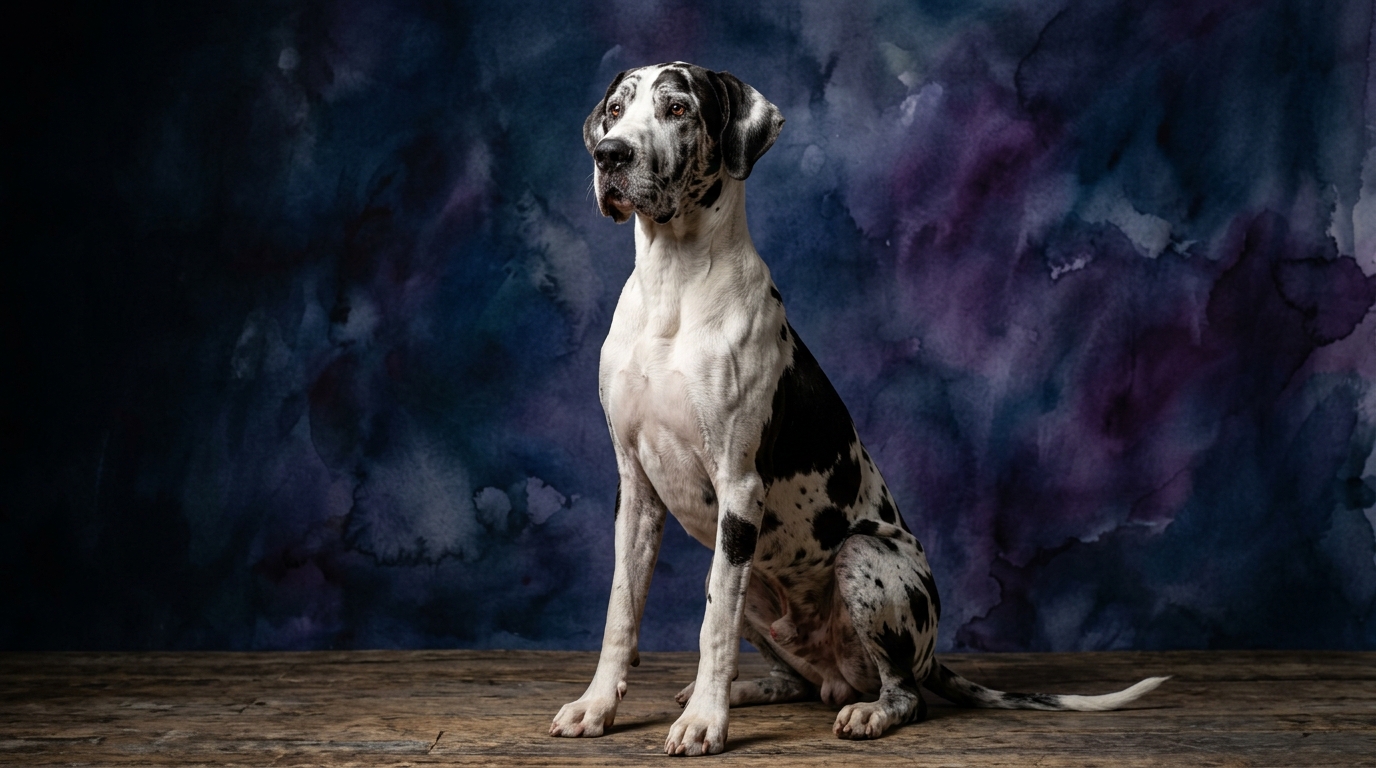
In The Cosmic Pet Pet IQ Lab, we assess canine cognition across five key dimensions, providing a nuanced understanding beyond simple labels. For the majestic Great Dane, classified within the Working group, their profile reveals a balanced intellect with a notable strength in social understanding. Their Problem Solving is rated at 3/5, indicating a moderate capacity for navigating novel challenges and strategizing. Training Speed also sits at 3/5, suggesting they absorb commands and routines at a steady pace. Where Great Danes truly shine is in Social Intelligence, scoring an impressive 4/5, reflecting their exceptional ability to interpret human emotions, communicate effectively, and integrate into family dynamics. Their Instinctive Drive, rated 3/5, points to a moderate inherent inclination for tasks related to their working heritage, while Memory, also at 3/5, signifies a solid capacity for retaining learned experiences and commands.
The Rat Terrier, a spirited member of the Terrier group, presents a consistent cognitive profile across the board. Their Problem Solving capability is rated 3/5, suggesting they possess a practical, focused approach to overcoming obstacles, often with a terrier's characteristic tenacity. Their Training Speed is also 3/5, meaning they learn at a comparable rate to the Great Dane, capable of mastering various tasks and commands. In Social Intelligence, the Rat Terrier scores 3/5, indicating good, but perhaps more independent, interaction with humans and other animals compared to the Great Dane's more pronounced social attunement. Their Instinctive Drive is 3/5, reflecting a strong, purpose-driven inclination, particularly for tasks related to their vermin-hunting origins. Finally, their Memory is rated 3/5, allowing them to recall past experiences and learned behaviors reliably.
Where the Great Dane Wins Cognitively
The Great Dane's distinct cognitive advantage lies squarely in their exceptional Social Intelligence, scoring 4/5 compared to the Rat Terrier's 3/5. This higher score isn't just a number; it translates into a profound capacity for emotional resonance and nuanced communication. Great Danes often demonstrate an uncanny ability to read human body language, tone of voice, and even subtle shifts in mood, responding with appropriate comfort or playful engagement. This makes them remarkably empathetic companions, often seeking to offer gentle reassurance when sensing distress or mirroring the calm demeanor of their human family members. Their social acumen extends to understanding complex household dynamics, navigating interactions with children and other pets with a gentle awareness. This strength makes them adept at integrating seamlessly into diverse family structures, often becoming the emotional anchors of their homes, understanding unspoken cues and fostering deep, reciprocal bonds that go beyond simple obedience.
Where the Rat Terrier Wins Cognitively
While the Rat Terrier's individual scores are consistent at 3/5, their cognitive strength isn't about outscoring in a single dimension but rather in the *application* of their problem-solving and instinctive drive, particularly in scenarios demanding independent thought and persistent effort. Their 3/5 in Problem Solving, combined with their terrier heritage, manifests as a practical, efficient, and often tenacious approach to overcoming obstacles, especially those related to discovery or reaching a goal. Unlike breeds that might wait for human direction, Rat Terriers often exhibit a self-directed cognitive process, persistently working through challenges like figuring out how to access a desired toy or navigating a complex scent trail. Their Instinctive Drive (3/5) is highly focused and enduring, allowing them to maintain intense concentration on tasks that tap into their natural hunting instincts, such as scent work or agility courses, where sustained engagement and quick, independent decisions are paramount. This unique blend of focused problem-solving and unwavering drive equips them to excel in roles requiring independent action and a determined spirit, making them formidable partners in specific, task-oriented activities.
Which is Easier to Train and Why?
When considering ease of training, both breeds score 3/5 in Training Speed, suggesting they learn at a similar pace. However, the Great Dane's superior Social Intelligence (4/5) often translates into a perceived 'easier' training experience, particularly for standard obedience. Great Danes are generally more attuned to human cues and desires, often eager to please and quick to understand what is being asked of them because they are highly motivated by social connection and approval. Their ability to interpret subtle human body language and vocal inflections means they often 'get it' faster in a social learning context, responding readily to positive reinforcement and the desire to maintain harmony within their human pack. This doesn't mean they learn complex tricks faster, but rather that the *process* of teaching and gaining compliance feels more fluid and cooperative.
The Rat Terrier, with a Social Intelligence score of 3/5, can be equally quick to learn commands (Training Speed 3/5), but their independent nature, characteristic of terriers, means they may require a different approach. They might be less inherently driven by the desire to please and more by their own perceived rewards or interests. Training a Rat Terrier often involves making the learning process engaging and highly rewarding, leveraging their tenacity and instinctive drives. They can be brilliant at problem-solving in training, especially when the task involves a 'hunt' or a puzzle, but their independence means an owner must be consistent, patient, and creative in motivation, rather than relying solely on social approval. They learn, but they may need more convincing that the task is worthwhile for *them*.
Which Suits Active Owners vs. Relaxed Owners?
The Great Dane, despite its imposing size, often possesses a surprisingly relaxed and gentle disposition indoors, making them well-suited for owners who appreciate a calmer, more companion-oriented lifestyle, provided their exercise needs are met. Their high Social Intelligence makes them excellent, empathetic companions for relaxed evenings and quiet companionship. While they certainly require regular exercise to maintain their physical health, their cognitive needs are often fulfilled through social interaction, gentle walks, and being an integral part of family life. They thrive on connection and consistent, calm presence, making them ideal for individuals or families who are home often and value a dog's role as a gentle, attentive presence, rather than a constant source of high-octane activity.
Conversely, the Rat Terrier, with its balanced cognitive profile centered around tenacity and instinctive drive, is a better match for active owners who relish engaging in structured activities and mental stimulation. Their 3/5 in Instinctive Drive and Problem Solving means they thrive when given tasks that allow them to use their intellect and physical energy. Owners who enjoy dog sports like agility, scent work, or even just long, exploratory walks where the dog can 'work' and investigate will find a rewarding partnership with a Rat Terrier. Their independent streak means they appreciate having a 'job' and the opportunity to make their own decisions within a framework. They are not content to be purely decorative; they need an outlet for their sharp minds and energetic bodies, making them perfect for those seeking an active, engaged, and often tenacious canine companion.
The Verdict
Choose the Great Dane if you prioritize a deeply empathetic, socially attuned companion who integrates seamlessly into family life with a gentle, watchful presence.
Choose the Rat Terrier if you're an active owner seeking a tenacious, independent partner for engaging in dog sports, scent work, or other task-oriented activities.
🧠 Find Your Pet's IQ Score
Our Pet IQ Lab assessment covers 25+ tests across 5 cognitive dimensions — personalized to your breed.
Take the Full IQ Test →Frequently Asked Questions
Do Great Danes require a lot of mental stimulation?
While Great Danes have a moderate problem-solving capacity, their primary cognitive need is often for social engagement and companionship. Regular, gentle walks and being an integral part of family activities usually suffice, rather than intense puzzle-solving sessions.
Are Rat Terriers good apartment dogs despite their energy?
Rat Terriers can adapt to apartment living if their significant exercise and mental stimulation needs are consistently met. Daily structured walks, playtime, and engaging activities are crucial to prevent boredom and destructive behaviors in a smaller space.
How do their memories compare for training complex tasks?
Both breeds score 3/5 in Memory, meaning they have a solid capacity for retaining learned commands and experiences. While the Great Dane's social intelligence might make initial learning feel smoother, both are capable of mastering complex tasks with consistent, appropriate training methods.