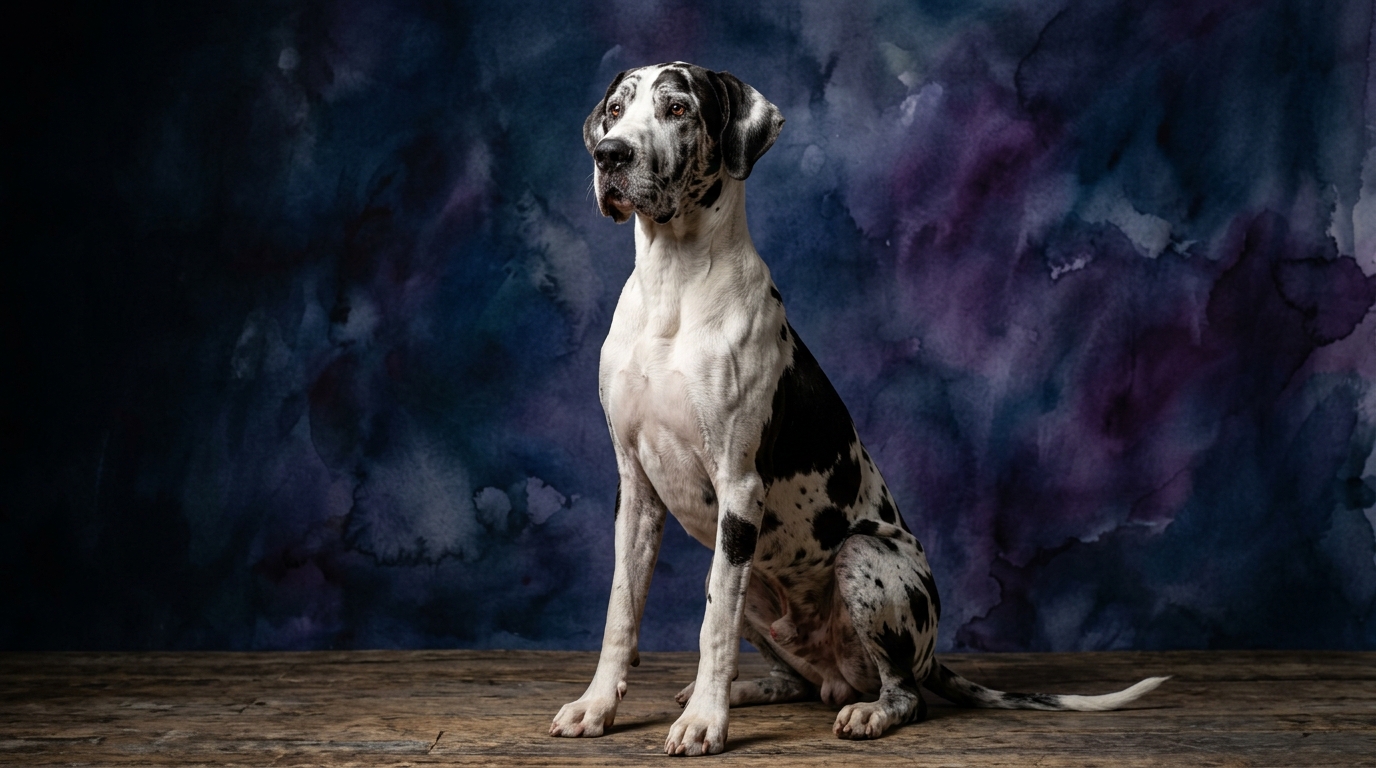
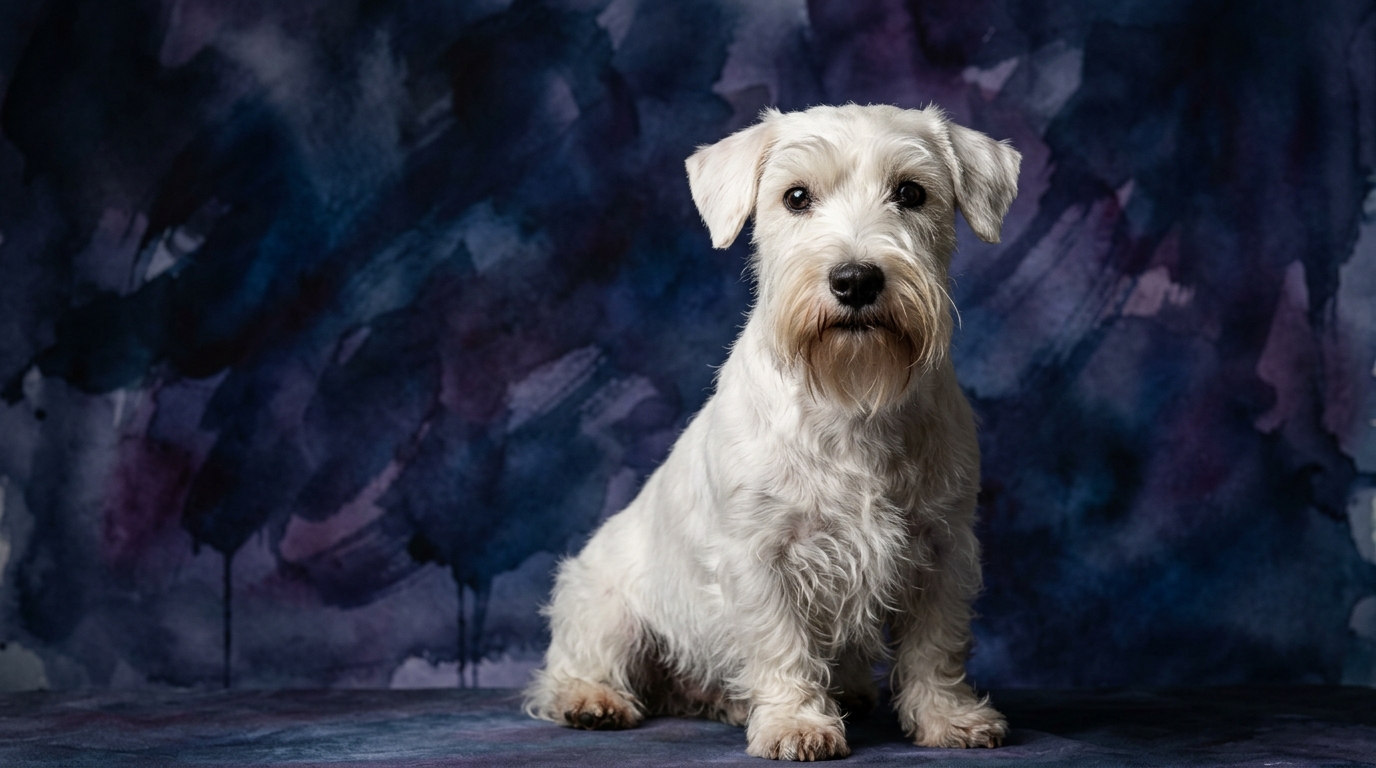
Side-by-Side Cognitive Profiles
The Cosmic Pet Pet IQ Lab provides a unique lens through which to examine the distinct mental faculties of these two breeds, offering a granular view beyond general perceptions. For the Great Dane, a member of the Working Group and Coren-ranked #48, their cognitive profile shows a balanced set of attributes: Problem Solving 3/5, Training Speed 3/5, Social Intelligence 4/5, Instinctive Drive 3/5, and Memory 3/5. This suggests a dog capable of moderate complexity, with a notable strength in understanding social cues and forming deep connections.
In contrast, the Sealyham Terrier, a Terrier Group member not listed on the Coren ranking, presents a profile of Problem Solving 3/5, Training Speed 3/5, Social Intelligence 3/5, Instinctive Drive 3/5, and Memory 3/5. While many scores align with the Great Dane, the interpretation of these dimensions often varies significantly due to their distinct breed functions and temperaments. The Sealyham's scores point to an intelligent, persistent dog whose cognitive approach is often rooted in its independent, working terrier heritage.
Where the Great Dane Excels Cognitively
The Great Dane's cognitive advantages primarily coalesce around its exceptional social intelligence, rated at 4/5. This elevated capacity allows them to interpret human moods, subtle body language, and vocal inflections with remarkable accuracy. While their problem-solving and training speed scores are moderate, their strong social attunement means they are often highly motivated to cooperate and please their human companions. This isn't just about obedience; it's about forming deep, empathetic bonds where the Dane actively seeks to understand and respond to the emotional climate of its home. For instance, a Great Dane is more likely to intuitively offer comfort or adjust its behavior based on a family member's distress, demonstrating a sophisticated form of social cognition that goes beyond simple learned responses. Their larger size, combined with this social sensitivity, means they are often keenly aware of their physical presence relative to others, particularly children or smaller pets, often exercising a self-imposed restraint that speaks volumes about their social understanding.
Where the Sealyham Terrier Excels Cognitively
While the Sealyham Terrier's individual cognitive scores largely mirror the Great Dane's, its inherent strengths lie in areas distinct from social overtures, rooted in its terrier lineage. Its 3/5 instinctive drive, though numerically equivalent, translates into a tenacious, independent problem-solving approach. Where a Great Dane might wait for a human cue, a Sealyham is more inclined to creatively and persistently tackle a perceived challenge on its own, whether it's figuring out how to access a hidden toy or navigating a complex scent trail. This independent problem-solving is often fueled by a strong internal motivation and a 'can-do' attitude, making them formidable in tasks requiring self-reliance and grit. Their social intelligence, also 3/5, manifests as a confident, self-possessed demeanor; they are loyal to their family but do not typically crave constant validation or emotional mirroring in the same way a Dane might. This cognitive independence means they excel in situations where they are allowed to use their own judgment and follow their own drives, making them adept at tasks requiring focused determination and a certain amount of self-directed initiative.
Training Aptitude: Great Dane vs. Sealyham Terrier
Evaluating ease of training between these two breeds requires understanding their core motivations. Both breeds share a 3/5 training speed score, suggesting they learn new commands at an average pace. However, the Great Dane's higher social intelligence (4/5) provides a significant advantage. They are inherently more inclined to seek human approval and understand social structures, which often translates into a greater willingness to comply with commands and respond to positive reinforcement. Their desire to be a cooperative member of the family unit makes them generally more receptive to direction, even when the task isn't inherently exciting.
In contrast, the Sealyham Terrier's training, while equally achievable in terms of learning speed, can be more challenging due to its independent nature and strong instinctive drives (3/5 for both). A Sealyham often needs to be convinced that training is rewarding for *them*, not just for their owner. Their terrier persistence, while a strength in problem-solving, can manifest as stubbornness if they perceive a command as less interesting than their own pursuits. Training a Sealyham requires engaging their intellect with varied, fun exercises and establishing clear boundaries, whereas a Great Dane often thrives on consistent, gentle guidance backed by their innate desire for connection.
Matching Breeds to Owner Lifestyles
The choice between a Great Dane and a Sealyham Terrier hinges significantly on an owner's lifestyle and their capacity to meet distinct needs. Great Danes, despite their imposing size, are often described as 'couch potatoes' once their moderate exercise requirements are met. Their social intelligence (4/5) means they thrive on close companionship and are content with a relaxed pace, as long as they are integrated into family activities. They need regular, but not necessarily intense, exercise like daily walks or yard play, and their mental stimulation often comes from social interaction and gentle training. They are well-suited for relaxed owners who value a calm, affectionate presence and have the space for a large dog, but aren't necessarily seeking an adventure buddy.
The Sealyham Terrier, on the other hand, with its terrier heritage and strong instinctive drives (3/5), requires a more active and engaging owner. While not needing marathon runs, they thrive on mental stimulation and physical outlets that tap into their natural curiosity and persistence, such as structured play, earthdog trials, or scent work. Their independence means they can entertain themselves to a degree, but without proper engagement, they might channel their energy into less desirable activities like digging. They are better suited for active owners who enjoy interactive play, consistent training, and can provide a stimulating environment that satisfies their terrier instincts.
The Verdict
Opt for a Great Dane if you seek a deeply empathetic and socially attuned companion who thrives on close family bonds and gentle, consistent interaction, fitting well into a relaxed home environment after their moderate exercise needs are met.
Select a Sealyham Terrier if you appreciate a spirited, independent companion with a tenacious problem-solving approach, and are prepared to engage them with consistent, stimulating activities that harness their innate terrier drives.
🧠 Find Your Pet's IQ Score
Our Pet IQ Lab assessment covers 25+ tests across 5 cognitive dimensions — personalized to your breed.
Take the Full IQ Test →Frequently Asked Questions
Are Great Danes difficult to train due to their size?
While their size presents practical challenges, Great Danes are generally receptive to training due to their high social intelligence and desire to please. Consistency and positive reinforcement are key, focusing on gentle guidance rather than force.
Do Sealyham Terriers make good family pets?
Yes, Sealyham Terriers are loyal and affectionate with their families, often forming strong bonds. However, their independent nature and strong prey drive mean they require early socialization and consistent training to ensure they integrate well with children and other pets.
Which breed requires more mental stimulation?
Both breeds benefit from mental engagement, but the Sealyham Terrier typically demands more structured mental challenges that tap into its independent, problem-solving terrier instincts, such as puzzle toys or scent games, to prevent boredom.