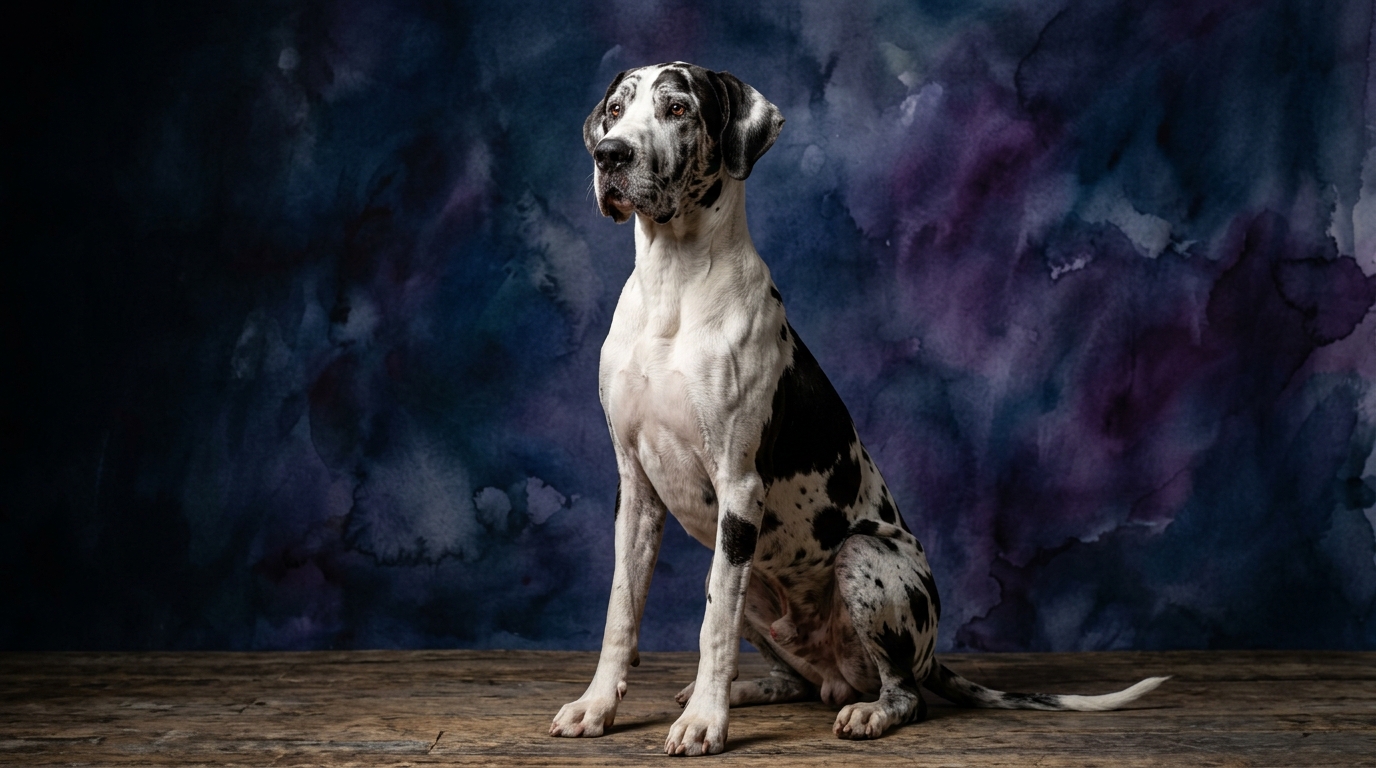
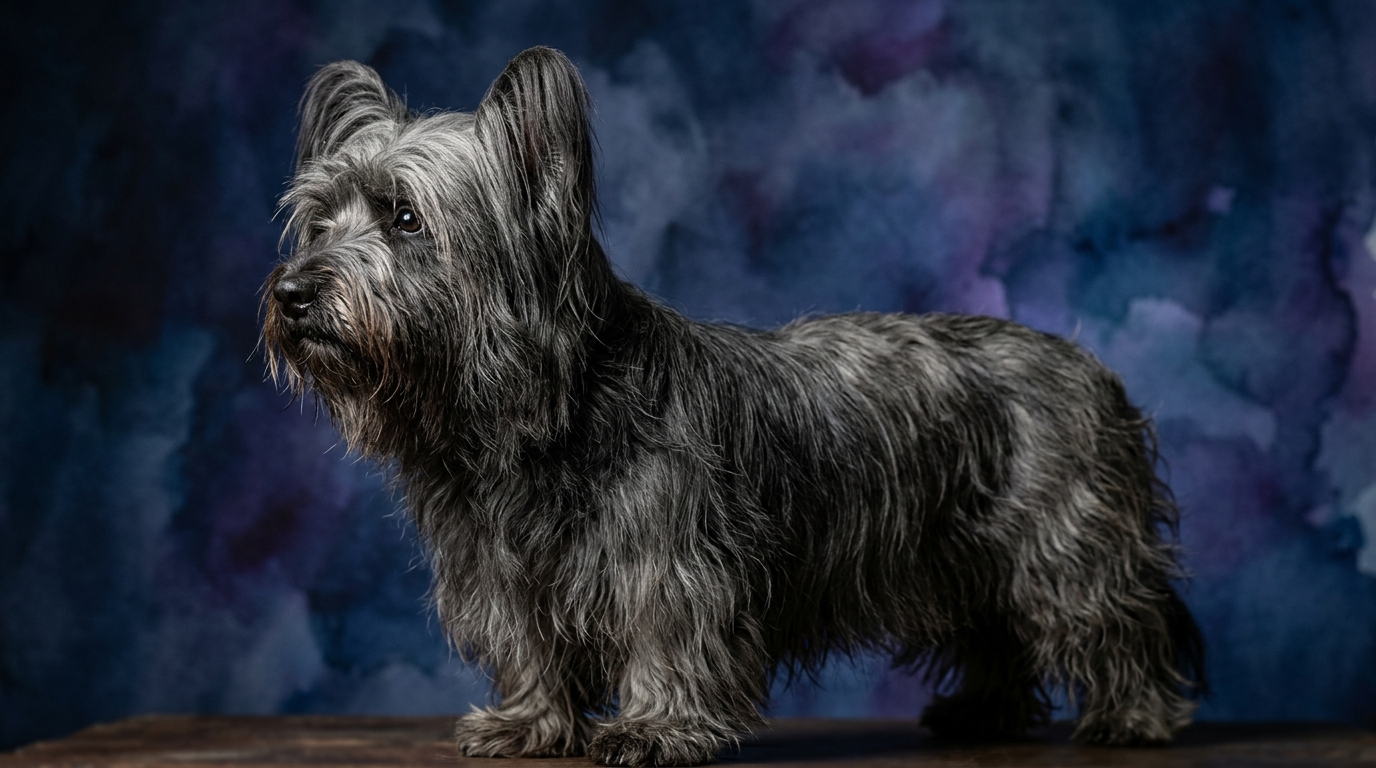
Side-by-Side IQ Profile: Great Dane vs. Skye Terrier
The Cosmic Pet Pet IQ Lab provides a nuanced look at intelligence beyond simple obedience. For the Great Dane, a member of the Working Group, their profile includes Problem Solving (3/5), Training Speed (3/5), Social Intelligence (4/5), Instinctive Drive (3/5), and Memory (3/5). This giant breed often approaches challenges with a thoughtful, often body-oriented strategy, using their sheer size and reach to investigate novel situations. They are capable learners, responding well to consistent, positive reinforcement, largely due to their profound desire for connection and approval. Their social intelligence is a standout, indicating a deep attunement to human emotional states and family dynamics, often anticipating needs. Their instinctive drive is moderate, leaning towards companionship and gentle protection rather than intense prey pursuit. Memory is solid, allowing them to build effectively on past interactions and learned commands.
In contrast, the Skye Terrier, a tenacious member of the Terrier Group, shares several identical scores: Problem Solving (3/5), Training Speed (3/5), Instinctive Drive (3/5), and Memory (3/5), with a slightly lower Social Intelligence (3/5). This breed tackles obstacles with a persistent, independent mindset, frequently employing terrier-typical strategies like digging, persistent investigation, or finding alternative routes. While their training speed matches the Great Dane, their independent spirit means compliance can be selective, requiring engaging and patient methods. Their social intelligence, while strong within their inner circle, means they can be more reserved with strangers, interpreting social cues within a more trusted, limited context. Their instinctive drive, though moderate, is characterized by a focused prey drive, manifesting as a keen interest in small animals and a propensity for digging. Like the Great Dane, their memory is reliable, allowing them to retain learned behaviors and routines, particularly those aligned with their own motivations.
Where the Great Dane Excels Cognitively
The Great Dane's most significant cognitive advantage lies in its superior Social Intelligence, scoring 4/5 compared to the Skye Terrier's 3/5. This higher score translates into a profound ability to interpret human body language, vocal tones, and emotional states, fostering a deeply cooperative and responsive relationship. Great Danes often demonstrate an innate understanding of household routines and social hierarchies, readily adapting their behavior to fit family dynamics. Their capacity for empathy and their inclination to seek out human interaction make them exceptionally attuned companions. This social acumen allows them to seamlessly integrate into family life, often acting as gentle, intuitive protectors who anticipate human needs and respond with remarkable sensitivity. Their cognitive processing is geared towards harmonious social living, making them highly receptive to nuanced human communication and social learning.
Unique Cognitive Strengths of the Skye Terrier
While the Skye Terrier doesn't outscore the Great Dane in any direct category, its cognitive strengths manifest differently, rooted in its terrier heritage and independent nature. Their Problem Solving (3/5) combined with their Instinctive Drive (3/5) results in remarkable tenacity and self-reliance. Where a Great Dane might seek human assistance to solve a problem, a Skye Terrier is more likely to persist independently, devising its own strategies, whether that's digging under a fence to investigate a scent or meticulously working a puzzle toy alone. Their unranked status by Coren highlights that their intelligence isn't easily quantified by standard obedience metrics; instead, it shines in focused, often solitary tasks requiring determination and a robust internal decision-making process. This ability to work autonomously, often out of sight, and remain singularly focused on a goal is a distinct cognitive asset, reflecting a profound self-sufficiency and a problem-solving approach geared towards independent action rather than collaborative effort.
Training Dynamics: Ease and Approach
Both breeds share a Training Speed score of 3/5, suggesting they learn at a comparable pace, but the *ease* of training can differ significantly due to their other cognitive traits. The Great Dane's higher Social Intelligence (4/5) makes them generally perceived as easier to train. They possess a strong desire to please their human companions and are highly responsive to positive reinforcement, understanding the 'why' behind a command in terms of maintaining a cooperative bond. Their large size also necessitates early, consistent training, and their willingness to engage makes this process effective and rewarding. They often absorb new commands and routines with enthusiasm, eager for the approval of their family.
Conversely, while the Skye Terrier learns efficiently, their 3/5 Social Intelligence and pronounced independent streak can make training a more nuanced endeavor. They may learn commands quickly but require consistent, engaging motivation to ensure compliance, especially if their own instincts or motivations conflict with a directive. Training a Skye Terrier demands patience, creativity, and a deep understanding of their terrier nature. Trainers often need to convince them *why* a task is worth doing, making it fun and rewarding to tap into their problem-solving skills rather than relying solely on their desire to please. Consistency and clear boundaries are paramount to channel their independent spirit effectively during training.
Lifestyle Suitability: Active vs. Relaxed Owners
When considering owner lifestyles, the Great Dane often suits those who appreciate a calm, companion-focused presence. Despite their imposing size, Great Danes are not typically high-energy athletes. Their moderate instinctive drive and high social intelligence mean they thrive on close human interaction and are often content with moderate daily exercise, followed by ample indoor lounging time with their family. They are excellent for owners who are frequently home and enjoy a large, gentle presence, as their well-being is deeply tied to their human connections. They can be surprisingly relaxed indoors, fitting well into a more laid-back household that values shared space and quiet companionship.
The Skye Terrier, while not requiring vast amounts of physical exertion, suits owners who understand and can channel their terrier drive and independent mental energy. Their moderate instinctive drive, particularly their prey drive and propensity for digging, means they require consistent mental stimulation and opportunities for exploration. Owners who enjoy engaging in scent work, puzzle toys, or consistent, varied training sessions to satisfy their independent problem-solving and focused drives will find them rewarding. They are not necessarily 'relaxed' in the same way a Great Dane might be; their minds are often active, requiring an owner who can provide consistent engagement and outlets for their natural behaviors, even if it's not sustained running.
The Verdict: When to Choose Each Breed
The Verdict
Choose the Great Dane if you seek a deeply connected, socially perceptive companion who will integrate seamlessly into your home environment and offer a gentle, responsive presence.
Opt for the Skye Terrier if you value a tenacious, independent canine partner, prepared to invest consistent, patient effort in training and providing outlets for their distinct problem-solving and instinctive drives.
🧠 Find Your Pet's IQ Score
Our Pet IQ Lab assessment covers 25+ tests across 5 cognitive dimensions — personalized to your breed.
Take the Full IQ Test →Frequently Asked Questions
How does a Great Dane's social intelligence manifest in daily life?
Their 4/5 social intelligence means Great Danes often pick up on subtle human mood shifts, offer comfort during distress, and adapt their behavior to household routines and social cues. They are highly attuned to their human companions, frequently anticipating needs and responding with gentle affection.
Does the Skye Terrier's independence hinder its learning ability?
Not necessarily. While their 3/5 social intelligence and independent nature mean they might not always be eager to please, they possess a 3/5 problem-solving ability and memory, indicating they can learn efficiently. The primary challenge lies more in consistent motivation and engaging their will rather than an inherent lack of cognitive capacity.
What does 'not Coren-ranked' imply for Skye Terrier intelligence?
Stanley Coren's ranking primarily assesses obedience and working intelligence, which often favors breeds highly motivated to please and perform structured tasks. A breed not being ranked doesn't indicate a lack of intelligence, but rather that their cognitive strengths might lie in areas less emphasized by obedience trials, such as independent problem-solving, tenacity, or specialized instincts relevant to their original working roles, which are harder to standardize.