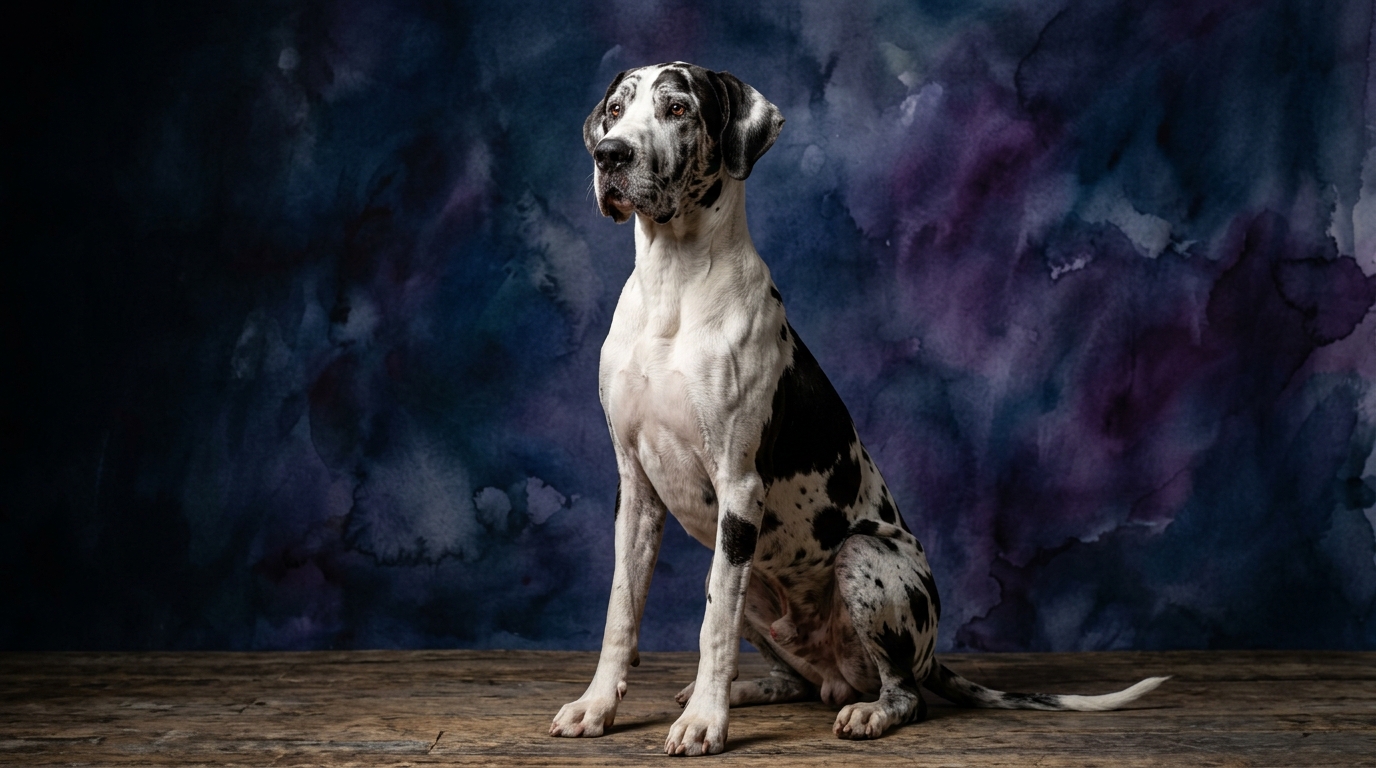
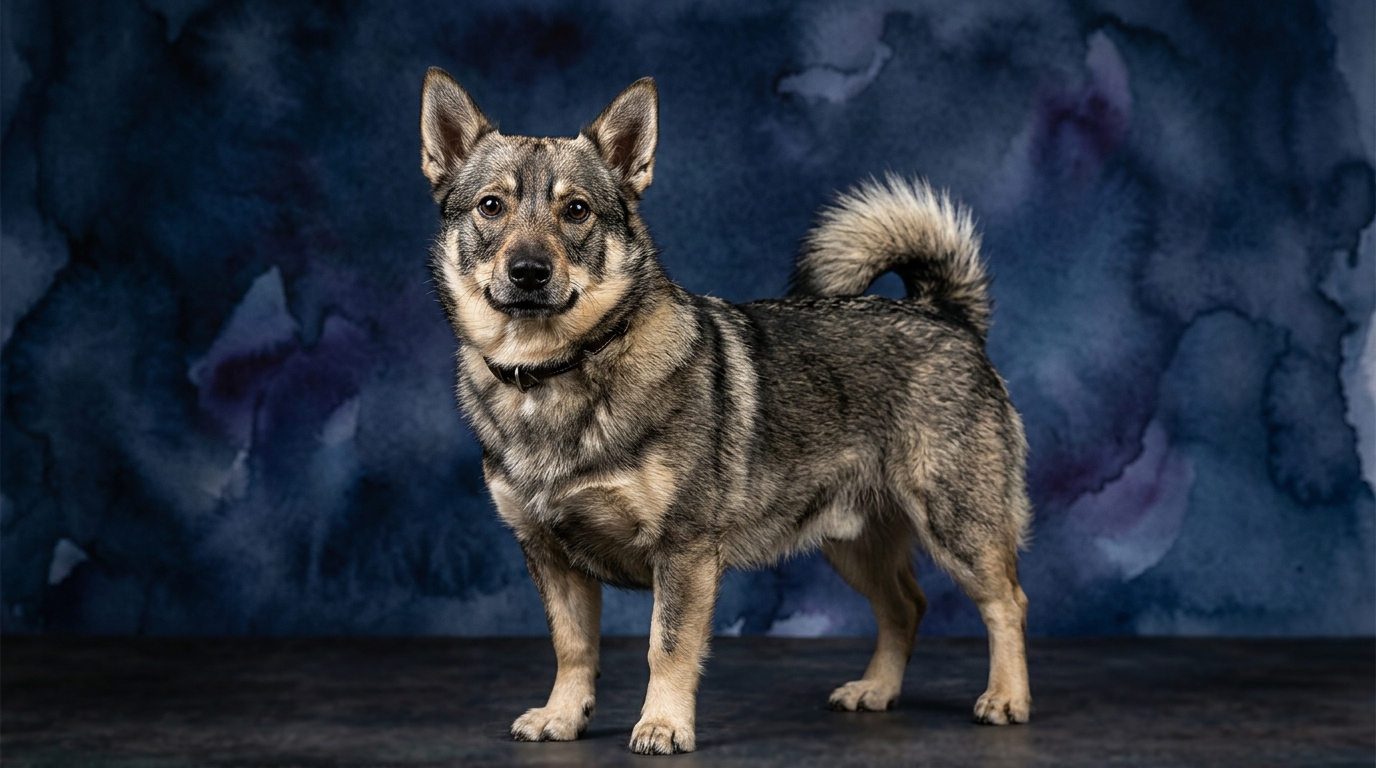
Side-by-Side IQ Profile: Gentle Giant vs. Herding Dynamo
The Cosmic Pet Pet IQ Lab employs a five-dimensional framework to assess canine cognition, offering a granular view beyond general perceptions. For the Great Dane, a Working group dog, we observe a Coren ranking of #48, positioning them as a moderately adaptable and obedient breed. Their Problem Solving is rated at 3/5, indicating a capacity for navigating moderately complex situations but perhaps not consistently seeking out novel challenges. Training Speed also sits at 3/5, suggesting they grasp new commands at a steady, manageable pace. A notable strength is their Social Intelligence at 4/5, reflecting a keen ability to interpret human cues and form strong, empathetic bonds. Instinctive Drive is moderate at 3/5, meaning they possess inherent motivations but are not overwhelmingly driven by primal urges. Memory, at 3/5, implies they retain learned behaviors and associations adequately over time.
In contrast, the Swedish Vallhund, a Herding group dog, does not have a Coren ranking, which means their specific working obedience and adaptive intelligence haven't been formally quantified in that particular hierarchy. However, our IQ metrics paint a detailed picture: their Problem Solving mirrors the Great Dane at 3/5, suggesting a similar capacity for practical solutions, often applied within their herding context. Their Training Speed also matches at 3/5, indicating a comparable rate of learning new tasks. Social Intelligence for the Vallhund is rated 3/5, showing a good connection with humans but perhaps with a slightly more independent streak compared to the Great Dane. Instinctive Drive is 3/5, a critical aspect of their herding heritage, manifesting as a focused desire to 'work' or gather. Their Memory is likewise 3/5, allowing them to recall training and experiences effectively.
Where the Great Dane Excels Cognitively
The Great Dane's primary cognitive advantage lies in their superior Social Intelligence, scoring 4/5 compared to the Vallhund's 3/5. This higher rating indicates an exceptional ability to read and respond to human emotions and intentions. They are often more attuned to the nuances of household dynamics, readily seeking human interaction, and demonstrating a more pronounced desire to please. This social acumen translates into a dog that integrates seamlessly into family life, often acting as a highly empathetic companion who understands unspoken cues. Their moderate Coren ranking also suggests a baseline level of working intelligence and obedience that, while not top-tier, places them above many breeds in terms of trainability and reliability in general obedience.
Furthermore, their large size, while a physical trait, influences their cognitive role; they are often calm observers, processing their environment with a deliberate thoughtfulness. This combination of social awareness and a more measured approach to their surroundings can make them particularly adept at tasks requiring patience and a gentle presence, such as therapy work or being a calm presence in a bustling home. Their cognitive profile leans towards a thoughtful, companion-oriented approach to life.
Where the Swedish Vallhund Shines Cognitively
While direct numerical 'wins' over the Great Dane are not evident in every metric, the Swedish Vallhund's cognitive profile shines brightly through the *application* of its capabilities, particularly within its herding heritage. Their Instinctive Drive, rated 3/5, is specifically channeled towards purposeful activity. This isn't just a general drive; it's a focused desire to manage and control, manifesting as quick decision-making and strategic thinking in dynamic environments. For owners seeking a dog for agility, herding trials, or complex dog sports, this directed drive is a significant cognitive asset, enabling them to excel in tasks requiring quick wit and independent problem-solving.
Their Problem Solving at 3/5, combined with their compact size and agility, allows for a different type of cognitive engagement. They are often adept at navigating intricate spaces and quickly assessing changing situations, a direct reflection of their historical role in managing livestock. This means their problem-solving isn't just about figuring out a puzzle, but about applying their intellect in a physically dynamic and often fast-paced manner. The Vallhund's cognitive strengths are therefore deeply intertwined with their physical prowess and historical working role, making them incredibly adaptable and resourceful in task-oriented scenarios.
Training Ease: The Role of Empathy vs. Purpose
Both the Great Dane and the Swedish Vallhund share a Training Speed score of 3/5, indicating a moderate capacity for learning new commands. However, the *ease* of training can differ significantly due to their other cognitive traits and breed predispositions. The Great Dane's higher Social Intelligence (4/5) often translates into a stronger desire to please their human companions. This empathetic connection means they are typically more responsive to positive reinforcement and correction, making general obedience training feel more intuitive for both dog and owner. Their motivation often stems from maintaining harmony and receiving affection, which can accelerate the adoption of household rules and basic commands.
Conversely, the Swedish Vallhund's 3/5 Social Intelligence and pronounced Instinctive Drive (3/5, focused on herding) mean their motivation might be less about pleasing and more about engaging in purposeful activity. While they learn commands at a steady pace, trainers might need to incorporate more engaging, task-oriented methods to hold their attention. Their independent streak, typical of many herding breeds, might require more consistency and creativity to channel their drive productively. Managing a Great Dane's sheer physical presence necessitates early and consistent training to ensure good manners, while a Vallhund's agility and quickness demand mental stimulation to prevent boredom and redirect their herding instincts constructively.
Suitability: Active Engagement vs. Relaxed Companionship
When considering owner lifestyles, the Great Dane's cognitive profile leans towards a companion who thrives on consistent, relaxed interaction. Their 4/5 Social Intelligence means they deeply value connection and being an integral part of family activities. While they require regular, moderate exercise to maintain their large frame, they are generally not dogs that demand intense, continuous mental or physical exertion. Owners who appreciate a calm, affectionate presence and can provide a stable, loving environment with ample companionship will find the Great Dane's cognitive makeup aligns perfectly. They are content with being near their people, offering quiet companionship and gentle affection, making them suitable for owners seeking a large, low-key presence.
The Swedish Vallhund, despite similar numerical scores in problem-solving and drive, presents a different cognitive demand due to its herding heritage. Their 3/5 Instinctive Drive, when rooted in herding, translates into a need for mental stimulation and purposeful activity. They often seek tasks to perform, and without appropriate outlets, their problem-solving and drive can manifest as boredom or mischievous behavior. Owners with an active lifestyle who enjoy engaging in dog sports, structured training, or providing opportunities for their dog to 'work' (even if it's just advanced obedience or puzzle toys) will find the Vallhund's cognitive needs well-matched. They are best suited for individuals or families who can channel their spirited intellect into productive and engaging activities.
The Verdict
Choose the Great Dane if you desire a highly social, empathetic companion who thrives on close human connection and offers a calm, gentle presence in your home.
Opt for the Swedish Vallhund if you seek an agile, task-oriented partner who flourishes with consistent mental challenges and opportunities to apply their keen working intellect.
🧠 Find Your Pet's IQ Score
Our Pet IQ Lab assessment covers 25+ tests across 5 cognitive dimensions — personalized to your breed.
Take the Full IQ Test →Frequently Asked Questions
Are Great Danes difficult to train due to their size?
While their size demands early and consistent training for manners, Great Danes are generally receptive to training due to their 3/5 Training Speed and 4/5 Social Intelligence. Their desire to please and bond with their human often makes them quite amenable to learning, provided methods are positive and consistent.
Do Swedish Vallhunds need a 'job' to be happy?
Yes, Swedish Vallhunds, with their 3/5 Instinctive Drive rooted in herding, often benefit greatly from having a 'job' or regular mental stimulation. This doesn't necessarily mean herding livestock, but could include dog sports, advanced obedience, puzzle toys, or regular structured training to satisfy their cognitive needs and prevent boredom.
Which breed is better for a first-time dog owner?
The Great Dane might be slightly more forgiving for a first-time owner due to their higher social intelligence and eagerness to please, making general obedience training more straightforward. However, a first-time owner comfortable with providing consistent mental engagement and structure could also succeed with a Swedish Vallhund, provided they are prepared for its active intellect.