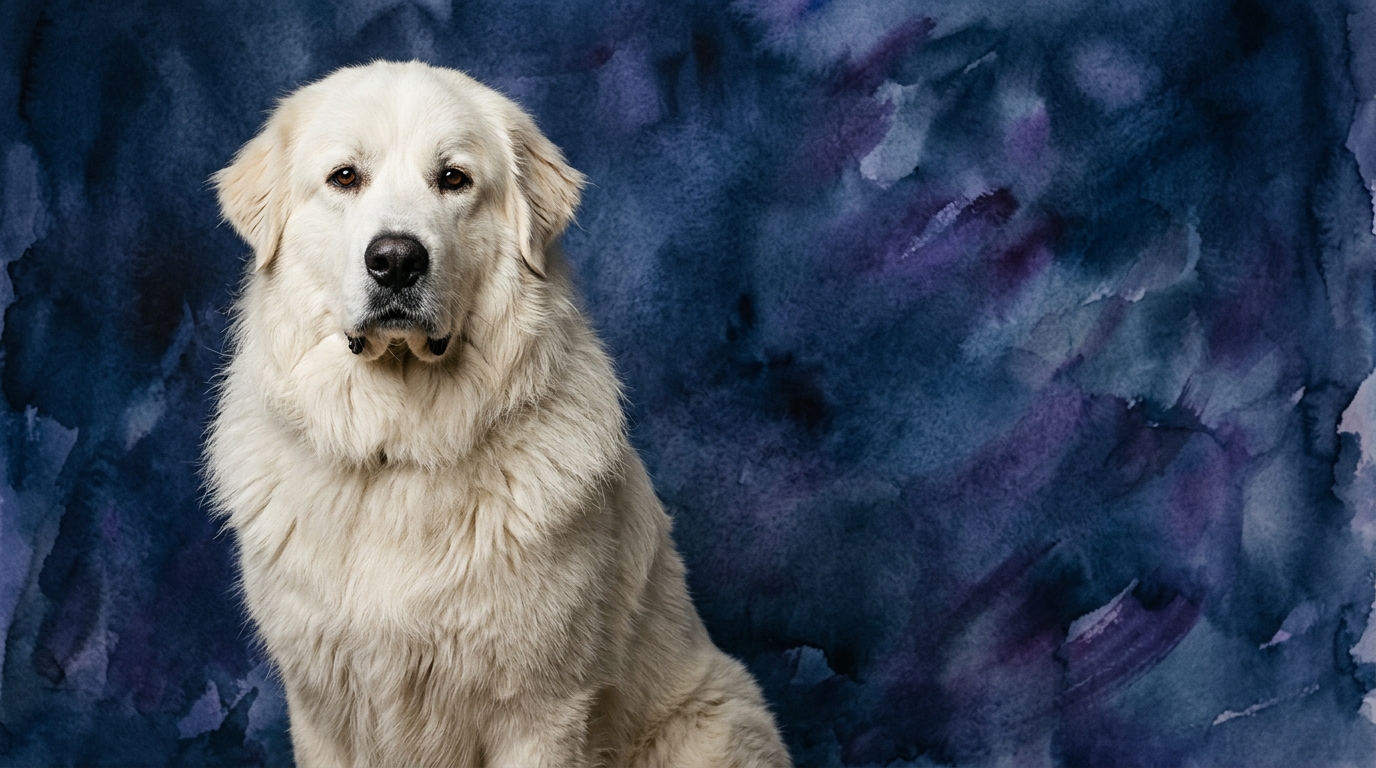
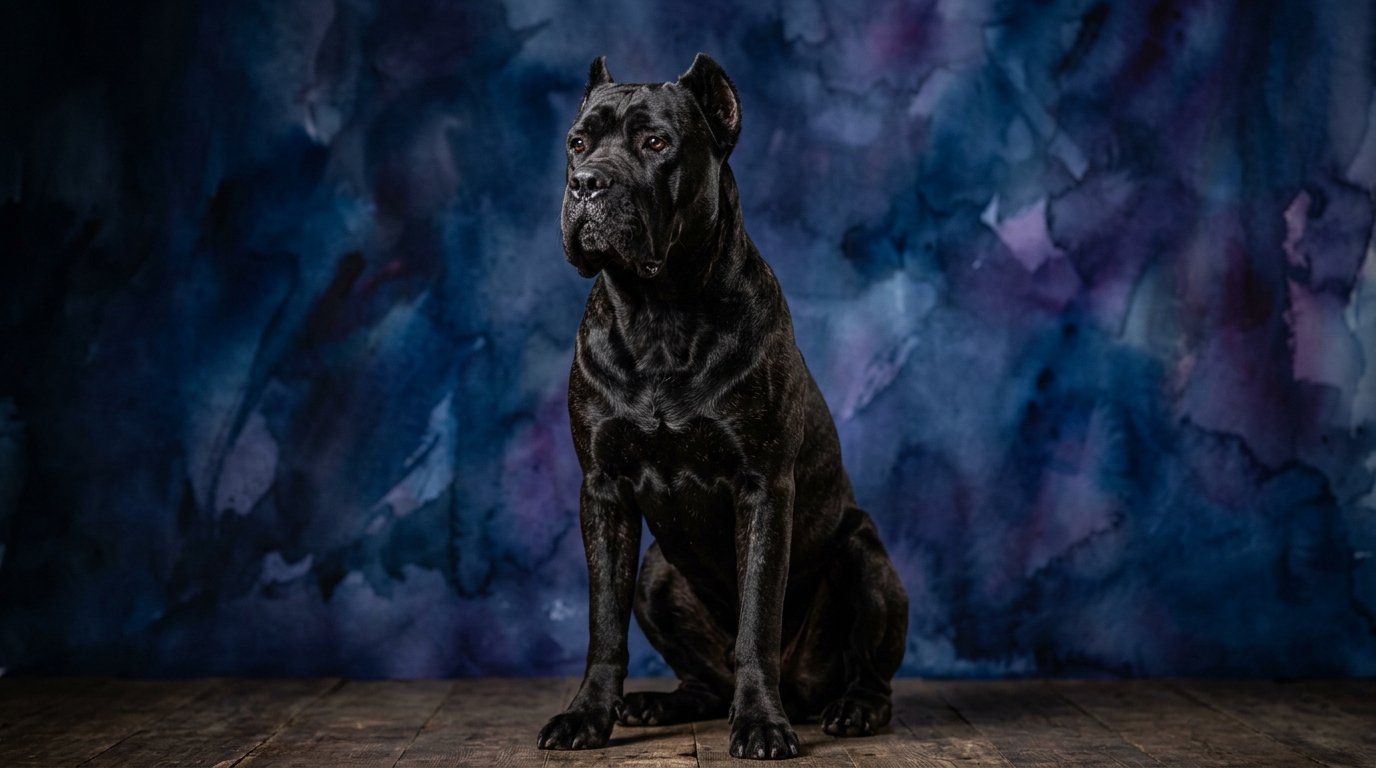
The Cosmic Pet Pet IQ Lab: Side-by-Side Cognitive Profiles
At first glance, the Great Pyrenees and Cane Corso present an intriguing cognitive mirror image according to The Cosmic Pet Pet IQ Lab metrics. Both breeds score a consistent 3/5 across all five measured dimensions: Problem Solving, Training Speed, Social Intelligence, Instinctive Drive, and Memory. This numerical parity suggests that their fundamental cognitive capacities are on a similar plane, yet their historical evolution and breed-specific temperaments dictate how these capacities are expressed and perceived in real-world scenarios. The Great Pyrenees, a majestic livestock guardian, holds a Coren rank of #64, indicating a respectable, albeit not top-tier, standing in obedience and adaptive work. The Cane Corso, a powerful Italian mastiff, is not Coren-ranked, which often points to a different manifestation of intelligence, one less focused on traditional obedience trials and more on independent decision-making in protection roles.
For the Great Pyrenees, a 'Problem Solving' score of 3/5 translates to an aptitude for independent, on-the-spot decisions in protecting its flock, often far from human direction. Its 'Training Speed' at 3/5 reflects a thoughtful, sometimes deliberate, approach to learning, influenced by its innate independence rather than a strong desire for immediate compliance. 'Social Intelligence' at 3/5 is evident in its nuanced interactions with livestock, discerning threats from harmless entities, and its calm demeanor within its 'family' unit, be it sheep or humans. An 'Instinctive Drive' of 3/5 highlights its deep-seated guarding instincts, a core part of its genetic makeup. Finally, 'Memory' at 3/5 supports its ability to recall flock patterns, territory boundaries, and the faces of familiar people and animals.
The Cane Corso, sharing the identical 3/5 scores, applies these cognitive strengths differently. Its 'Problem Solving' at 3/5 manifests as strategic thinking in protecting its family or property, assessing threats and acting decisively. A 'Training Speed' of 3/5 for the Cane Corso speaks to its capacity for learning commands and tasks, though often requiring a strong, consistent leader to channel its formidable will. 'Social Intelligence' at 3/5 is pronounced in its deep bond with its human family, its ability to read their moods, and its discerning nature towards strangers, evaluating intentions. Its 'Instinctive Drive' at 3/5 is a powerful force for personal and property protection, a characteristic honed over centuries. 'Memory' at 3/5 allows it to retain complex routines, recognize specific individuals, and remember past experiences, crucial for its role as a vigilant guardian.
Where the Great Pyrenees Excels Cognitively
The Great Pyrenees' cognitive strengths are deeply rooted in its heritage as an autonomous livestock guardian. Its 3/5 problem-solving ability shines in scenarios demanding independent judgment without direct human intervention. For example, a Pyrenees will instinctively and effectively deter predators from a flock, adapting its strategy based on the specific threat, whether it's barking to ward off a coyote or physically interposing itself between sheep and a perceived danger. This self-reliance is a hallmark of its intelligence, allowing it to function effectively in vast, solitary environments. Its social intelligence, also rated 3/5, is particularly refined in interspecies communication, understanding the subtle cues of its flock and responding appropriately to maintain harmony and safety, a skill vital for its ancient role.
Furthermore, the Pyrenees' memory, at 3/5, is particularly adept at spatial recall and recognizing established patterns within its territory. It remembers safe zones, potential entry points for intruders, and the regular movements of its charges. This consistent, long-term memory for its environment and inhabitants contributes significantly to its reliable vigilance. Its instinctive drive, while shared numerically, is uniquely applied to a tireless, often nocturnal, watchfulness, driven by an inherent need to protect rather than a direct command. This sustained, self-motivated vigilance, requiring constant environmental assessment and threat evaluation, represents a distinct cognitive advantage in its specialized domain.
Where the Cane Corso Demonstrates Cognitive Superiority
The Cane Corso, while sharing the same IQ scores, demonstrates its cognitive prowess in contexts demanding focused, decisive protection and close human partnership. Its 3/5 problem-solving ability excels in threat assessment within a family or property setting. A Cane Corso can quickly evaluate a novel situation, distinguish between a friendly visitor and a potential intruder, and react with appropriate levels of deterrence, often without needing explicit direction. This strategic intelligence, combined with its formidable physical presence, makes it an exceptional personal guardian. Its social intelligence, also 3/5, manifests as a profound ability to bond with and understand its human family, anticipating needs and responding to subtle emotional cues, making it deeply attuned to its household dynamics.
The Cane Corso's memory, at 3/5, is particularly strong in recalling specific individuals, routines, and past interactions, which is crucial for its role as a discerning family protector. It remembers who belongs, who is an occasional visitor, and who poses a potential threat, building a complex mental database of its social environment. Its instinctive drive, numerically identical, is channeled into a fierce, protective loyalty to its immediate family, often resulting in a more direct, confrontational response to perceived danger compared to the Pyrenees' more deterrent-based approach. This focused, intense application of its protective instincts, coupled with its capacity for rapid decision-making in high-stakes situations, highlights its distinct cognitive strengths.
Training Dynamics: Great Pyrenees vs. Cane Corso
When considering trainability, the identical 3/5 'Training Speed' score for both breeds requires a deeper understanding of their underlying motivations and temperaments. The Great Pyrenees, with its history of independent livestock guarding, views commands more as suggestions than absolute directives. Its problem-solving skills are geared towards autonomous action, not necessarily prompt obedience to human instruction. Training a Pyrenees demands immense patience, consistency, and an understanding that its primary drive is to protect its territory and charges, not to perform tricks on command. They respond best to positive reinforcement and clear communication, but an owner must accept that the Pyrenees will always retain a strong sense of self-direction, often taking its time to process and comply, if it deems compliance necessary for its perceived 'job'. Their training requires an appreciation for their deliberate nature and an ability to make training feel like a collaborative effort, not a forced imposition.
The Cane Corso, despite the same 3/5 training speed, approaches training with a different mindset. While strong-willed, they possess a powerful desire to please their primary human, making them generally more responsive to structured obedience training. However, their physical power and strong protective instincts mean that early, consistent, and firm leadership is paramount. A Cane Corso learns quickly when motivated and guided by a confident owner, but any perceived weakness in leadership can lead to them taking charge, leveraging their problem-solving and instinctive drive in ways that may not align with human expectations. Their training success hinges on an owner's ability to be a consistent, fair, and authoritative leader, channeling their intelligence and drive into desired behaviors through positive reinforcement and clear boundaries. The difference lies not in their capacity to learn, but in their willingness to comply and the nature of the relationship they seek with their trainer.
Suitability for Active vs. Relaxed Owners
The nuanced application of their identical IQ scores also dictates their suitability for different owner lifestyles. The Great Pyrenees generally suits more relaxed owners, provided those owners understand and respect the breed's intrinsic needs. While not requiring intense physical exercise like a high-energy sporting breed, a Pyrenees thrives when it has a 'job' – even if that job is simply guarding its yard and family. Owners must be prepared for its independent nature, its tendency towards nocturnal activity (barking at perceived threats), and its deliberate pace. A relaxed owner who appreciates a calm, observant companion and can provide a secure, spacious environment where the Pyrenees feels it has a territory to oversee will find a harmonious match. Their intelligence is best engaged through watchful observation and occasional independent problem-solving, not constant high-intensity activity.
In contrast, the Cane Corso is better suited for active, experienced owners who can provide consistent structure, mental stimulation, and regular physical exercise. While they can be calm indoors, their powerful build and sharp intellect demand an outlet. An active owner who enjoys daily walks, training sessions, and engaging in activities like obedience, scent work, or even protection sports, will find the Cane Corso to be an eager and capable partner. Their cognitive abilities thrive on challenges and a clear purpose, requiring an owner who can consistently engage their problem-solving skills and channel their instinctive drives. Owners who prefer a less hands-on approach or cannot commit to rigorous training and exercise may find the Cane Corso's intensity overwhelming, as their intelligence and drive require consistent direction to prevent boredom or destructive behaviors.
The Verdict
Choose the Great Pyrenees if you seek an independent, watchful guardian for your property or livestock, valuing calm vigilance and accepting a deliberate pace in training and daily interactions.
Opt for the Cane Corso if you are an active, experienced owner ready to provide consistent leadership, structured training, and a dedicated partnership with a formidable, family-focused protector.
🧠 Find Your Pet's IQ Score
Our Pet IQ Lab assessment covers 25+ tests across 5 cognitive dimensions — personalized to your breed.
Take the Full IQ Test →Frequently Asked Questions
Do identical IQ scores mean these breeds are equally 'smart' in every way?
No, identical scores indicate similar cognitive capacity across the measured dimensions, but their application differs significantly due to breed history and temperament. A Pyrenees uses its problem-solving for independent flock protection, while a Cane Corso uses it for strategic family guarding.
Is one breed more prone to barking than the other?
The Great Pyrenees is generally more prone to barking, especially at night, due to its historical role as a nocturnal livestock guardian. The Cane Corso may bark to alert or deter threats, but typically less incessantly than a Pyrenees.
Are both breeds good with children?
Both breeds can be good with children when properly socialized and raised, but supervision is always essential due to their size and protective instincts. The Great Pyrenees tends to be a gentle giant, while the Cane Corso forms deep bonds with its family and can be very tolerant, provided children respect boundaries.