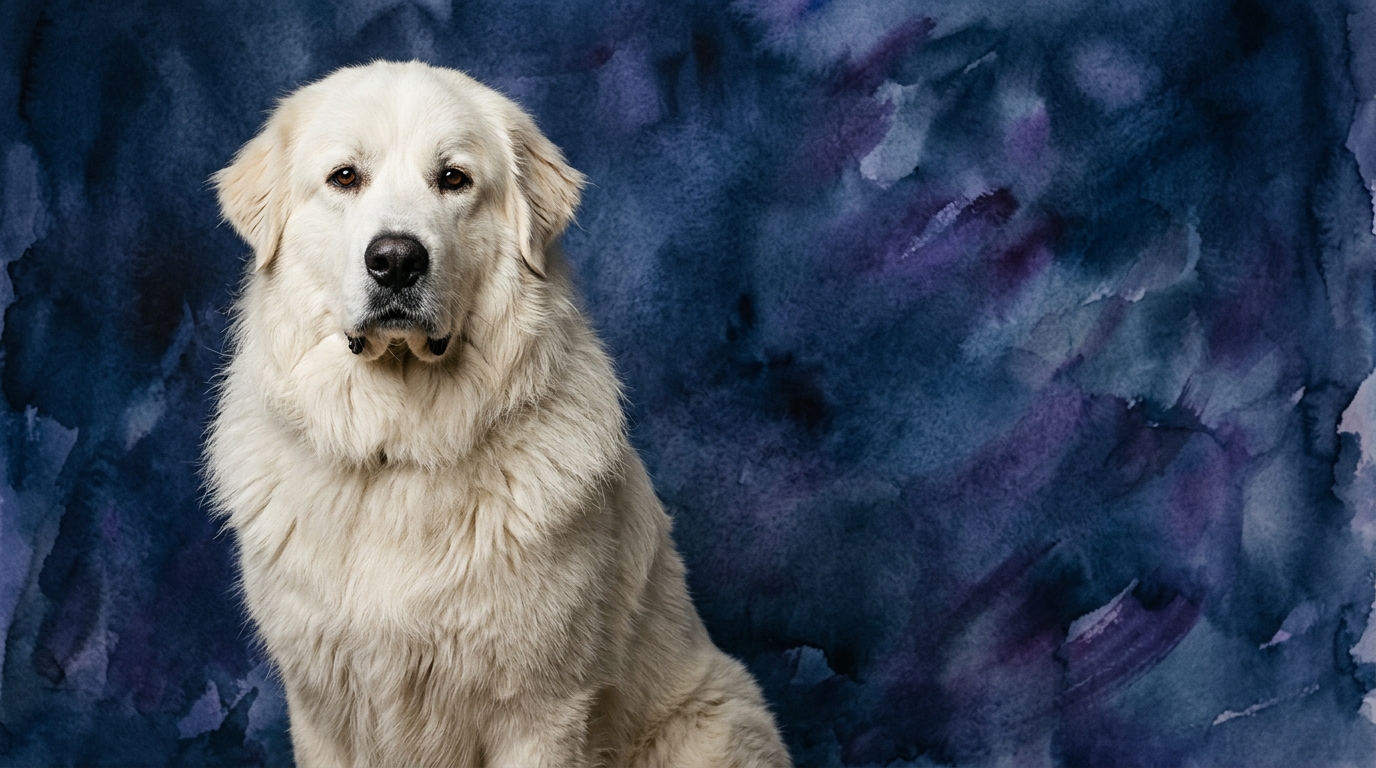
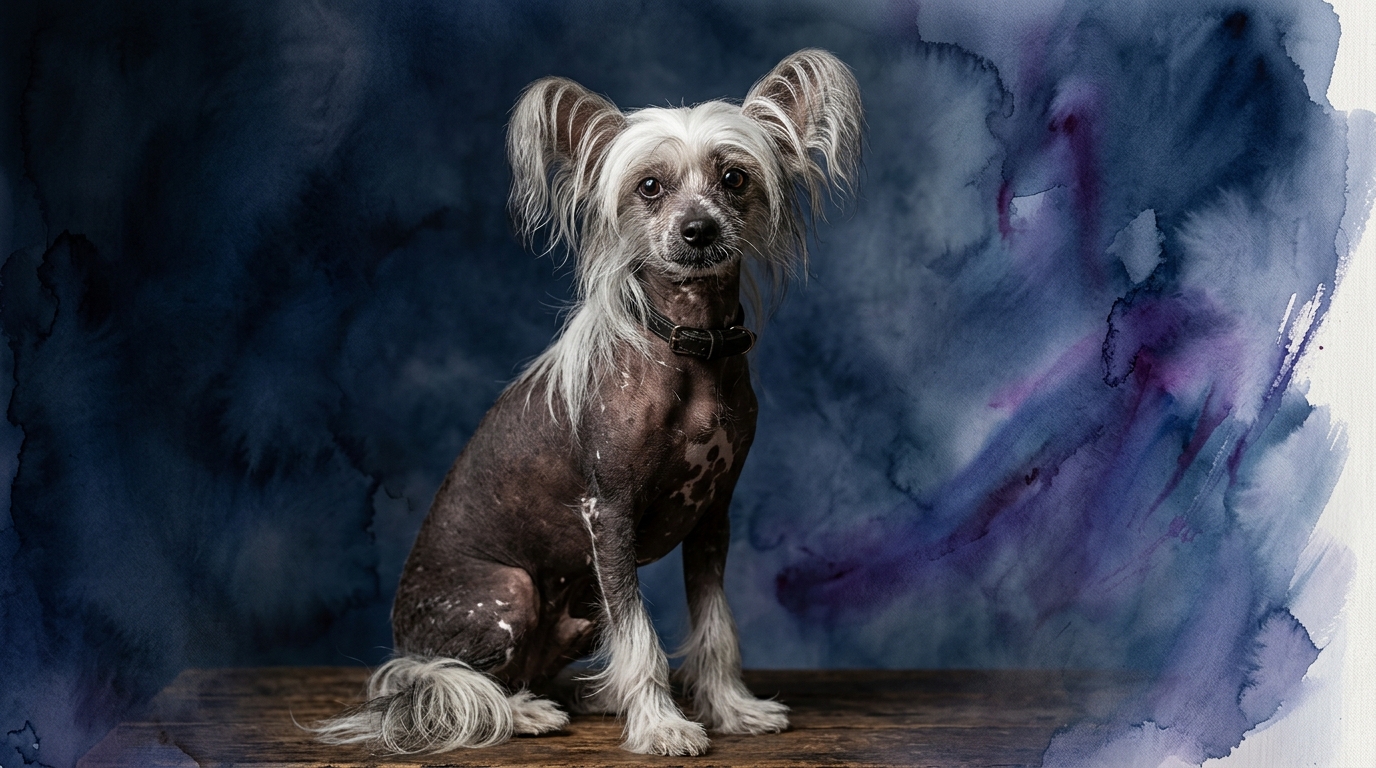
Side-by-Side IQ Profile: Great Pyrenees vs. Chinese Crested
The Great Pyrenees, a majestic Working breed, and the Chinese Crested, a spirited Toy breed, both register a solid 3 out of 5 across all five core IQ dimensions: Problem Solving, Training Speed, Social Intelligence, Instinctive Drive, and Memory. This consistent score suggests a balanced cognitive capacity, but the application and expression of these abilities are tailored to their distinct histories and roles.
For the **Great Pyrenees**, their Problem Solving (3/5) shines in autonomous decision-making within their guardian role, assessing threats and strategizing protection for their flock or family without constant human direction. Their solutions are often practical and independent, focused on maintaining order and safety. Training Speed (3/5) is moderate, influenced by their inherent independence; they learn commands but often choose when and if to execute them based on their own assessment. Social Intelligence (3/5) is geared towards understanding their 'flock,' recognizing individual needs and maintaining harmony, being perceptive regarding their immediate social group but reserved with strangers. Their Instinctive Drive (3/5) is primarily focused on guarding and protection, manifest in vigilance and territorial behavior. Memory (3/5) is robust for their territory, routines, and the individuals they are tasked to protect, recalling specific threats or past events relevant to their guardian duties.
The **Chinese Crested** also demonstrates a Problem Solving (3/5) ability, often related to navigating their environment, finding comfort, or achieving desired interactions with their owners; they can be quite clever in figuring out how to get attention or access forbidden areas. Their Training Speed (3/5) is moderate, often bolstered by their desire for human interaction and positive reinforcement, picking up new tricks and routines effectively when engaged. Social Intelligence (3/5) is highly attuned to human emotions and subtle cues, forming strong bonds and understanding household social dynamics, often acting as sensitive emotional barometers. Their Instinctive Drive (3/5) is typically focused on companionship and interaction, showing a natural inclination for play and close physical contact, with a moderate, manageable prey drive towards small critters. Memory (3/5) is good for routines, favored people, and past experiences, particularly those associated with positive or negative interactions.
Where the Great Pyrenees Excels Cognitively
The Great Pyrenees distinguishes itself cognitively through its profound capacity for independent judgment and strategic defense. Unlike many breeds that look to humans for every command, a Pyrenees' intelligence shines when it assesses a potential threat to its flock or family and autonomously decides the best course of action, whether it's a warning bark, a physical deterrent, or a strategic positioning. Their long-term spatial memory for their territory and its perceived boundaries, combined with an ability to recall specific past encounters, allows them to build a comprehensive mental map of their environment and anticipate future challenges. This breed's specific strength lies in its self-sufficient problem-solving within its defined guardian role, a type of practical wisdom honed over centuries of solitary work.
Where the Chinese Crested Excels Cognitively
Conversely, the Chinese Crested's cognitive strengths are rooted in its exceptional adaptability and nuanced social perception. This breed excels at interpreting subtle human body language and vocal tones, allowing for a remarkably synchronized relationship with their owners. Their problem-solving often manifests in creative ways to engage their human companions, such as figuring out how to initiate play or comfort-seeking behaviors. The agility of their minds makes them quick studies in learning complex sequences of tricks or navigating agility courses, not just for the task itself, but often for the joy of shared activity and the positive reinforcement it brings. Their capacity for intricate communication with owners, often employing a variety of vocalizations and gestures, is a distinct cognitive advantage.
Which is Easier to Train and Why
When considering traditional obedience training, the Chinese Crested generally presents an easier path due to their strong desire for social engagement and positive reinforcement. They thrive on interactive training sessions and are often highly motivated by treats and praise, making them responsive to cues and eager to learn new behaviors. Their smaller size also makes physical guidance less challenging. In contrast, the Great Pyrenees' training speed is moderate because their deep-seated independence means they process commands through the lens of their own judgment and priorities. A Pyrenees might understand a command perfectly but choose not to execute it if they perceive no immediate value or if it conflicts with their inherent guardian responsibilities. Training a Pyrenees requires immense patience, consistency, and an understanding that their primary loyalty is to their perceived duty, not necessarily to immediate human instruction. While they can learn, their self-reliant nature means they are often less interested in performing arbitrary tricks and more focused on tasks that align with their protective instincts.
Which Suits Active Owners vs. Relaxed Owners
The cognitive fit for an owner depends less on physical activity and more on the type of mental engagement desired. Owners who are 'active' in the sense of desiring a highly interactive, responsive companion for varied training, dog sports, or frequent social outings will find the Chinese Crested a fitting match. Their cognitive processes are geared towards interaction, learning new things in partnership, and adapting to diverse social situations. They thrive when their minds are engaged through puzzles, trick training, and consistent communication. For owners who are 'relaxed' in their approach to direct command-and-control, but 'active' in their commitment to managing an independent, self-thinking guardian, the Great Pyrenees is ideal. These owners must be active in understanding and respecting the breed's autonomous decision-making, providing a secure environment, and offering consistent, patient guidance rather than demanding instant obedience. Their cognitive needs revolve around having a clear territory to oversee and a 'flock' to protect, which provides ample mental stimulation.
The Verdict
The Great Pyrenees is the ideal choice for those seeking an independent, thoughtful guardian whose intelligence is expressed through vigilant protection and autonomous decision-making, requiring an owner who values self-reliance over immediate obedience.
Conversely, the Chinese Crested is perfect for individuals desiring a highly interactive, emotionally perceptive companion whose cognitive strengths lie in social engagement, adaptability, and an eagerness to learn alongside their human, thriving on close partnership and varied mental stimulation.
🧠 Find Your Pet's IQ Score
Our Pet IQ Lab assessment covers 25+ tests across 5 cognitive dimensions — personalized to your breed.
Take the Full IQ Test →Frequently Asked Questions
Do Great Pyrenees learn commands quickly?
Great Pyrenees learn commands at a moderate pace, but their deep-seated independence means they often prioritize their own assessment of a situation over immediate obedience. Training requires patience and understanding of their self-reliant nature.
Are Chinese Cresteds good at problem-solving?
Chinese Cresteds are quite capable problem-solvers, often applying their cognitive abilities to navigate their environment, engage with owners, or creatively seek comfort. Their adaptability allows them to figure out effective strategies in various companion-oriented scenarios.
How does Coren rank relate to these breeds?
Coren's ranking primarily assesses 'working and obedience intelligence,' which favors breeds highly responsive to human commands. The Great Pyrenees' independent nature places it lower (#64), while the Chinese Crested, as a toy breed, wasn't included in Coren's original study, making its 3/5 IQ score a more direct assessment of its distinct cognitive profile.