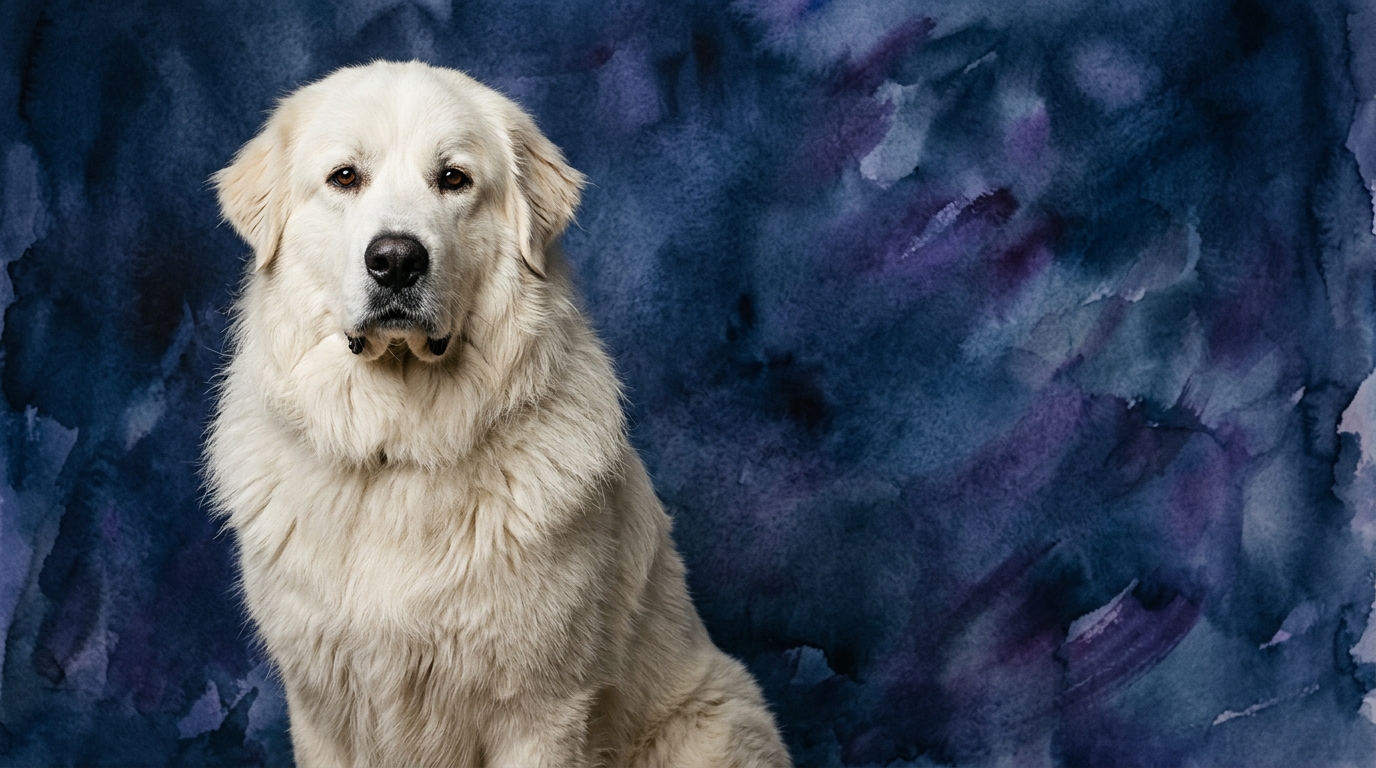

Side-by-Side IQ Profile: Great Pyrenees
The Great Pyrenees, ranked #64 by Coren, demonstrates a distinct cognitive profile shaped by its heritage as a solitary livestock guardian.
Problem Solving (3/5): A 3/5 rating suggests Pyrs can figure out solutions to moderate challenges, often related to their guarding duties, like finding a way to patrol a fence line or deter a perceived threat. They excel in practical, role-specific scenarios rather than abstract puzzles.
Training Speed (3/5): This 3/5 indicates they learn new commands at a moderate pace. Their inherent independence, stemming from centuries of self-reliance in the fields, means they might require more repetition and motivation than breeds traditionally bred for eager obedience.
Social Intelligence (3/5): With a 3/5, Pyrs are aware of social cues from humans and other animals, but their primary focus is often on their "flock." They can read moods and intentions but might prioritize their protective instincts over nuanced social interactions.
Instinctive Drive (3/5): A 3/5 here highlights a strong, yet not overwhelming, drive for their natural behaviors. For Pyrs, this means a pronounced instinct to guard, patrol, and protect, often leading to independent decision-making rather than waiting for human commands.
Memory (3/5): A 3/5 suggests they retain learned behaviors, routes, and experiences fairly well. They remember past interactions and threats, which is crucial for their guarding role, but might not recall complex sequences instantly.
Side-by-Side IQ Profile: Neapolitan Mastiff
The Neapolitan Mastiff, while not Coren-ranked, shares the same 3/5 rating across all cognitive dimensions, yet expresses these traits through a different lens, primarily as an imposing estate guardian.
Problem Solving (3/5): A 3/5 rating for Neos indicates they can navigate common challenges, particularly those involving their family's safety or comfort. Their problem-solving often revolves around assessing threats or finding comfort, rather than complex intellectual tasks.
Training Speed (3/5): Also 3/5, Neos learn at a moderate pace. Their immense size and sometimes stubborn nature mean training requires consistency, patience, and a calm, firm approach. They are not known for lightning-fast comprehension of abstract commands.
Social Intelligence (3/5): A 3/5 suggests they are attuned to their family's emotions and social dynamics within their household. They can be quite sensitive to their owner's mood but might be reserved or wary with strangers, relying on their protective judgment.
Instinctive Drive (3/5): A 3/5 for Neos points to a strong protective instinct and a drive for companionship with their family. They are driven to guard their home and people, often expressed through watchful vigilance and an imposing presence rather than active pursuit.
Memory (3/5): A 3/5 indicates they have a reasonable capacity to remember routines, people, and past experiences. They'll recall who belongs and who doesn't, and remember training cues if consistently reinforced, but aren't noted for exceptional recall of intricate details.
Where the Great Pyrenees Wins Cognitively
Independent Territorial Management: The Great Pyrenees' 3/5 problem-solving and instinctive drive allow them to autonomously manage and protect a large territory. This translates to an innate ability to establish boundaries, identify breaches, and employ deterrents without constant human direction, acting as self-governing security systems honed over centuries of solitary work.
Adaptive Vigilance in Dynamic Environments: With their 3/5 memory and social intelligence, Pyrs excel at monitoring constantly changing outdoor environments. They recall the usual patterns of wildlife, distinguish between familiar and unfamiliar sounds, and adapt their guarding strategies based on real-time observations, making them highly effective in varied and open settings.
Where the Neapolitan Mastiff Wins Cognitively
Focused Family Protection and Social Acuity: The Neapolitan Mastiff's 3/5 social intelligence is intensely focused on its immediate human family. They possess a deep, almost empathetic understanding of their owner's emotional states, often responding with a comforting presence or subtle protective shifts. Their problem-solving (3/5) is frequently directed at ensuring the perceived safety and well-being of their loved ones, making them astute observers of household dynamics and external interactions.
Strategic Deterrence Through Presence: Their instinctive drive and problem-solving (both 3/5) manifest as a highly effective, low-energy form of protection. Neos excel at assessing potential threats and often "solve" them through their sheer, imposing presence and an unwavering, watchful gaze. Their memory (3/5) allows them to categorize individuals as trusted or untrusted, influencing reactions and maintaining vigilance within their territory.
Which is Easier to Train and Why
The Great Pyrenees, with its Coren ranking of #64, reflects a moderate aptitude for obedience, influenced significantly by its historical purpose. Their 3/5 training speed is often perceived as stubbornness, but it's more accurately described as independent thought. Bred to make decisions without human command while guarding livestock in vast, solitary environments, a Pyr's default is to assess and act autonomously. This means training requires immense patience, consistency, and positive reinforcement, as they are likely to "consider" a command rather than execute it instantly, especially if it conflicts with their perceived duty or comfort. For instance, a "stay" might be held until a distant rustle triggers protective instincts, overriding the learned behavior.
The Neapolitan Mastiff also presents a moderate challenge in training, reflected in its 3/5 training speed. While intensely loyal to their families, Neos possess a strong will and can be quite deliberate in their responses. Their imposing size and often calm, unhurried demeanor mean that a handler must be confident, consistent, and understand that force or harsh methods are counterproductive. Their problem-solving (3/5) often prioritizes comfort or perceived safety, meaning they might not see the immediate value in a complex trick or a repetitive drill. A Neo might learn "down" but perform it only if comfortable and seeing a clear benefit, not out of eagerness. Early and consistent socialization is crucial to channel their instinctive drive (3/5) into appropriate protective behaviors rather than wary aggression.
Which Suits Active Owners vs. Relaxed Owners
Neither breed is a suitable companion for high-intensity athletic pursuits like marathon running or agility competitions due to their massive size and potential for joint issues. However, the Great Pyrenees suits owners who are "active" in the sense of managing a large property or enjoying long, exploratory walks where the dog can engage its senses and patrol. Their 3/5 instinctive drive for patrolling means they need a role to feel fulfilled, even if it's observing the yard. They thrive with mental engagement that allows them to exercise their independent decision-making and vigilance, rather than constant physical exertion.
The Neapolitan Mastiff is generally a better fit for owners who lead a more relaxed lifestyle. While they require regular, moderate exercise to maintain their health and physique, they are not dogs that demand constant stimulation or vigorous activity. Their calm and watchful demeanor makes them content with shorter, consistent walks and ample lounging time indoors with their family. Their 3/5 social intelligence means they are deeply content being a present, protective force within the home, requiring less active engagement but thriving on close family companionship.
The Verdict
Choose the Great Pyrenees if you need a steadfast, independent guardian for a large property, capable of making autonomous decisions regarding perceived threats to livestock or family, and you appreciate a dog that thinks for itself rather than merely following commands.
Choose the Neapolitan Mastiff if you desire a deeply devoted, calm, and imposing family protector whose presence alone deters unwanted visitors, and you are prepared for a dog whose affection and loyalty are profoundly expressed within the home environment.
🧠 Find Your Pet's IQ Score
Our Pet IQ Lab assessment covers 25+ tests across 5 cognitive dimensions — personalized to your breed.
Take the Full IQ Test →Frequently Asked Questions
Are Great Pyrenees good family dogs?
Yes, Pyrs are generally gentle and devoted to their families, especially children they consider part of their "flock." Their protective instincts mean they're watchful, but their independence can make them less overtly affectionate than some breeds.
Do Neapolitan Mastiffs need a lot of exercise?
Neapolitan Mastiffs require moderate exercise to maintain health, such as daily walks, but are not high-energy dogs. Over-exercising them, especially as puppies, can harm their developing joints due to their immense size.
How do Great Pyrenees and Neapolitan Mastiffs react to strangers?
Both breeds are naturally reserved and protective towards strangers. A Great Pyrenees might bark and keep a watchful distance, while a Neapolitan Mastiff often displays a more imposing, watchful stillness, assessing the newcomer with quiet intensity.