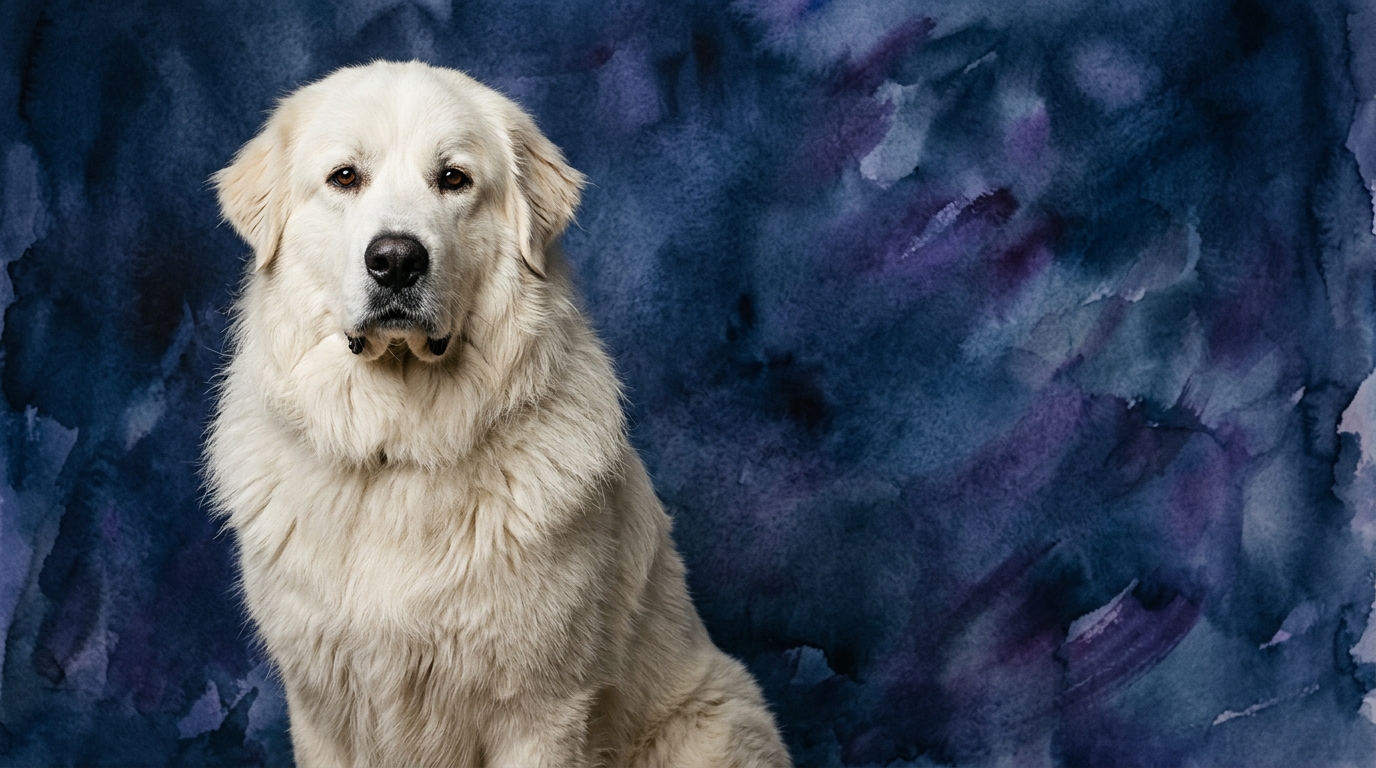

A Side-by-Side Look at Cognitive Profiles
At The Cosmic Pet's Pet IQ Lab, both the Great Pyrenees and the Rhodesian Ridgeback register a consistent 3 out of 5 across all five cognitive dimensions: Problem Solving, Training Speed, Social Intelligence, Instinctive Drive, and Memory. This numerical parity might suggest similar cognitive functioning, but a deeper dive into their breed histories reveals how these scores translate into unique expressions of intelligence in their daily lives.
The Great Pyrenees, a majestic livestock guardian dog, was selectively bred for centuries to operate autonomously, protecting flocks in vast, remote landscapes. Their 3/5 in Problem Solving reflects a capacity for independent decision-making regarding threats, while their 3/5 Training Speed is tempered by an inherent self-reliance that often prioritizes their judgment over human commands. Their Social Intelligence at 3/5 is focused on discerning 'flock' (family) from 'foe' (strangers), and their Instinctive Drive at 3/5 is a profound, intrinsic motivation to protect. Memory at 3/5 supports their long-term vigilance and recall of territorial patterns.
Conversely, the Rhodesian Ridgeback, originating as a multi-purpose hunting dog in Southern Africa, was developed to track and 'bay' large game, including lions, while also serving as a family guardian. Their 3/5 in Problem Solving reflects strategic thinking in tracking and cornering prey, while their 3/5 Training Speed is driven by purpose and reward, though often balanced with an independent streak. Social Intelligence at 3/5 for Ridgebacks translates to deep loyalty to their family unit and a reserved nature with outsiders. Their Instinctive Drive at 3/5 encompasses a powerful prey drive and territorial protectiveness, and Memory at 3/5 is crucial for recalling complex scent trails and learned hunting strategies.
It's crucial to understand that identical numerical scores do not imply identical cognitive application. The historical imperatives of each breed have profoundly shaped how these cognitive dimensions manifest, leading to distinct behavioral patterns and intellectual strengths.
Great Pyrenees: The Deliberate Guardian's Cognitive Edge
The Great Pyrenees' cognitive strengths are deeply rooted in their role as an independent livestock guardian. Their Problem Solving at 3/5 isn't about rapid obedience but about sustained, nuanced assessment of their environment. A Pyrenees will independently evaluate a rustling bush or an unfamiliar scent, deciding whether it poses a threat to their charge without needing human direction, often acting with calm deliberation rather than impulsive reaction.
Their Social Intelligence, also at 3/5, is finely tuned to the dynamics of their 'flock,' be it sheep or their human family. They possess a subtle ability to read the emotional states of those they protect and discern potential intentions from strangers, often displaying a patient watchfulness. This means they are not simply reacting but interpreting social cues and environmental signals to maintain security.
The Pyrenees' Instinctive Drive at 3/5 is a powerful, intrinsic motivation for guardianship. It's not merely a reactive response to danger but a pervasive sense of responsibility that dictates much of their behavior, from patrolling perimeters to positioning themselves strategically for optimal oversight. Their Memory at 3/5 enables them to recall specific threats, safe zones, and the routines of their charges over extended periods, contributing to their remarkable reliability in their protective duties.
Rhodesian Ridgeback: The Strategic Hunter's Mental Acuity
The Rhodesian Ridgeback's cognitive strengths shine in scenarios demanding active engagement and strategic thinking, reflecting their hunting heritage. Their Problem Solving at 3/5 is geared towards dynamic challenges, such as tracking complex scent trails, navigating varied terrain, and strategizing to corner prey. This involves a keen ability to adapt tactics on the fly and learn from past experiences in pursuit.
While their Training Speed is rated 3/5, the Ridgeback generally exhibits a more direct responsiveness to formal commands compared to the Pyrenees, as evidenced by their Coren rank of #52 versus the Pyrenees' #64. This indicates they typically grasp new commands with fewer repetitions, though their independent nature means consistent, motivating training is essential to maintain compliance, especially when their powerful Instinctive Drive (3/5) for prey becomes engaged. They need clear direction and purpose.
Their Memory, also at 3/5, is highly effective for retaining complex sequences of events, such as a hunting route or a series of obedience commands. This capacity allows them to build upon learned behaviors and recall specific environmental cues that are pertinent to their tasks. The Ridgeback’s Social Intelligence at 3/5 manifests as a discerning loyalty to their immediate family, often being reserved and watchful around strangers, assessing new individuals carefully before offering acceptance.
Training Dynamics: Pyrenees' Independence vs. Ridgeback's Resolve
Training a Great Pyrenees requires a profound understanding of their independent spirit. Their 3/5 Training Speed is often interpreted not as a lack of capacity to learn, but as a deliberate choice to comply based on their own assessment of the situation. Bred to make decisions without human oversight, a Pyrenees might understand a command perfectly but choose not to execute it if it conflicts with their perceived duty or comfort. Patience, consistency, and motivation through high-value rewards or by framing tasks as part of their 'guardian' role are paramount. They respond best to a partnership approach rather than strict obedience demands, often requiring a calm, persuasive handler.
The Rhodesian Ridgeback, while possessing a 3/5 Training Speed, often presents a different challenge. They are eager to learn and can pick up commands quickly, but their strong will, powerful prey drive, and problem-solving abilities (3/5) can lead to selective hearing if something more stimulating captures their attention. Their Coren rank suggests a higher general trainability than the Pyrenees, but this comes with the need for clear boundaries, consistent leadership, and early, extensive socialization to manage their confident nature and strong instincts. Training must be engaging, varied, and leverage positive reinforcement to maintain their focus and enthusiasm. Owners must be prepared to channel their mental and physical energy constructively.
Differences in Social Intelligence (both 3/5) also impact training. A Pyrenees' social intelligence allows them to understand human intent, but their deep bond with their family group influences their compliance; they protect, they don't necessarily 'obey' in the traditional sense. A Ridgeback's social intelligence contributes to their loyalty, but their reserved nature with strangers and strong protective instincts mean socialization needs to be a continuous, positive experience to ensure they are well-adjusted and responsive in various environments.
Lifestyle Compatibility: Active Explorers vs. Serene Sentinels
For active owners seeking a true partner in adventure, the Rhodesian Ridgeback often proves a more suitable match. Their inherent energy, powerful Instinctive Drive (3/5) for activity, and Problem Solving (3/5) geared towards dynamic challenges mean they thrive on substantial physical exercise and mental stimulation. Activities such as long-distance running, hiking, lure coursing, agility, and advanced obedience training are ideal for channeling their drive and keeping them mentally content. They are dogs that want to be involved in family activities and require owners who can provide consistent outlets for their robust athleticism and keen intellect.
In contrast, the Great Pyrenees aligns better with owners who appreciate a more self-sufficient and watchful companion. While they benefit from regular, moderate exercise, such as patrolling a securely fenced yard or leisurely walks, they are not typically high-energy dogs. Their Instinctive Drive (3/5) is primarily focused on territorial patrolling and vigilant observation rather than sustained, vigorous activity. They are content to supervise their domain and family, often appearing calm and serene, yet always acutely aware of their surroundings. Owners must be prepared for their independent nature, their significant grooming needs, and their propensity for nocturnal barking as part of their guardian duties, but will find a deeply loyal and protective presence that values a steady, predictable routine.
The Verdict
Choose the Great Pyrenees if you seek an independent, watchful companion for a more self-sufficient lifestyle, valuing a dog that makes its own sound decisions regarding family and home security. They excel when given a clear role as a gentle protector, thriving in environments where their calm, observant nature is appreciated.
Opt for the Rhodesian Ridgeback if you are an active individual or family looking for a strong-willed, athletic, and engaging partner for outdoor adventures and structured training challenges. Their keen intelligence and drive make them excellent companions for those who can provide consistent mental and physical outlets and enjoy a dog that actively participates in their daily life.
🧠 Find Your Pet's IQ Score
Our Pet IQ Lab assessment covers 25+ tests across 5 cognitive dimensions — personalized to your breed.
Take the Full IQ Test →Frequently Asked Questions
Do Great Pyrenees or Rhodesian Ridgebacks bark more?
Great Pyrenees are known for their vigilant barking, especially at night, as part of their guardian duties to deter perceived threats from their territory. Rhodesian Ridgebacks are generally less prone to excessive barking but will alert bark to strangers or unusual events.
Are Great Pyrenees good with other pets?
Great Pyrenees typically integrate well with other livestock or household pets if properly socialized from a young age, viewing them as part of their flock to protect. However, their size and protective instincts mean introductions should be supervised and gradual.
How much exercise does a Rhodesian Ridgeback need?
Rhodesian Ridgebacks require a substantial amount of daily exercise, typically an hour or more of vigorous activity like running, hiking, or structured play, to keep them physically and mentally content. Without adequate outlets, they can become restless or destructive.