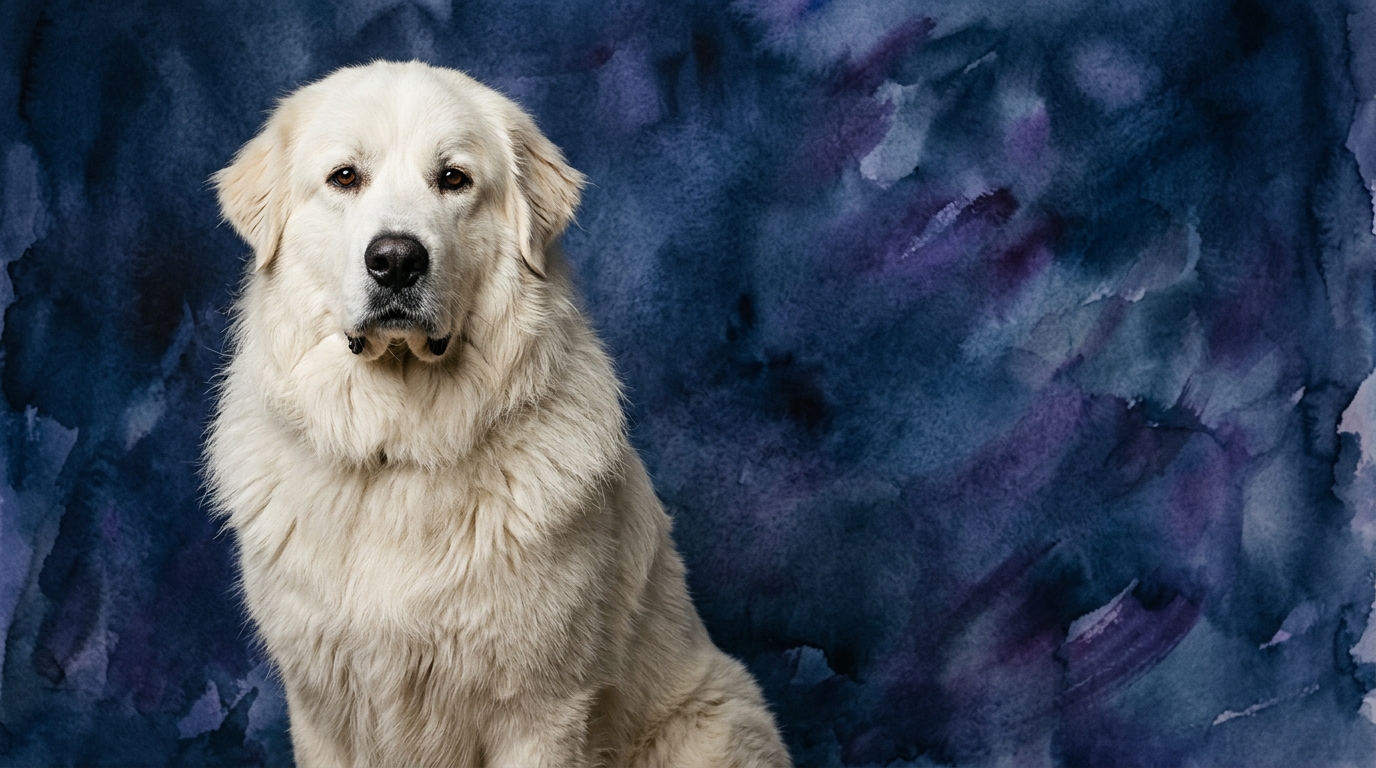
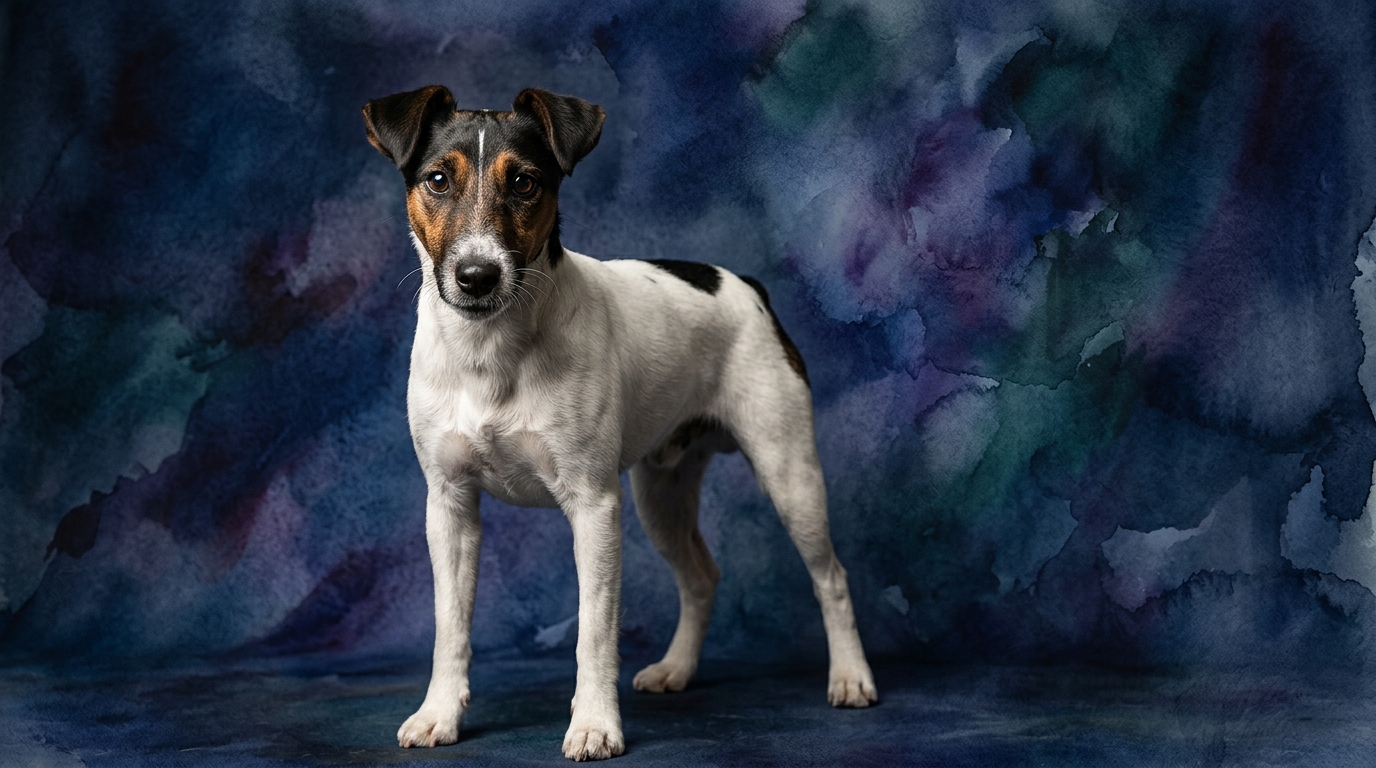
Side-by-Side IQ Profile: Great Pyrenees vs. Smooth Fox Terrier
At The Cosmic Pet Pet IQ Lab, we assess canine intelligence across five key dimensions. Interestingly, both the Great Pyrenees (Working, Coren rank #64) and the Smooth Fox Terrier (Terrier, Not Coren-ranked) score a consistent 3/5 in each category, yet their application of these capacities is profoundly different due to their breed-specific evolutionary paths.
For the **Great Pyrenees**:
**Problem Solving (3/5)**: The Great Pyrenees excels at practical, independent problem-solving related to its historical role as a livestock guardian. This involves autonomously assessing environmental threats, identifying potential dangers to its flock, and making self-directed decisions without direct human command, such as finding the most effective vantage point or responding to a perceived predator in a vast territory.
**Training Speed (3/5)**: While capable of learning commands, the Great Pyrenees often processes instructions through the lens of its self-reliant nature. It learns steadily but might require consistent, patient reinforcement, as its compliance often hinges on whether it perceives the command aligns with its guardian responsibilities or makes logical sense within its established worldview.
**Social Intelligence (3/5)**: This breed demonstrates a nuanced understanding of its family unit and 'flock' dynamics, discerning familiar individuals from strangers and reacting appropriately to perceived threats. Its social cognition is deeply tied to its protective instincts, showing a reserved, watchful demeanor with outsiders while being gentle and devoted to its inner circle.
**Instinctive Drive (3/5)**: The core of the Great Pyrenees' drive is its profound instinct to guard and protect. This manifests as a strong territorial awareness, a propensity to patrol boundaries, and an innate ability to remain vigilant for extended periods, prioritizing the safety of its charges over personal comfort or immediate gratification.
**Memory (3/5)**: The Great Pyrenees possesses a robust memory for routines, specific individuals, and areas it considers its territory. It reliably recalls past encounters, both positive and negative, and applies these learned experiences to future situations, contributing to its consistent performance as a guardian.
For the **Smooth Fox Terrier**:
**Problem Solving (3/5)**: The Smooth Fox Terrier's problem-solving centers on its terrier heritage: efficiently locating and extracting prey. This involves quick environmental assessment, navigating complex spaces like burrows, and persistent, often ingenious, methods to overcome obstacles to reach its objective, whether it's a hidden toy or a perceived quarry.
**Training Speed (3/5)**: This breed generally picks up new commands with enthusiasm and speed, thanks to its alert nature and eagerness to engage. However, its training speed can be offset by a strong independent streak and a tendency to become easily distracted by environmental stimuli, requiring engaging methods and consistent focus from the trainer.
**Social Intelligence (3/5)**: The Smooth Fox Terrier displays a keen understanding of human moods and intentions, often using this awareness to its advantage to solicit attention or play. It thrives on interaction within its family, reading social cues to integrate itself into household activities, though its interactions with unfamiliar animals might be less nuanced due to its inherent prey drive.
**Instinctive Drive (3/5)**: The Smooth Fox Terrier is driven by an intense prey instinct, manifesting as an incessant urge to chase, dig, and explore with boundless energy. This powerful drive fuels its focus and determination when engaged in activities that mimic hunting, making it a highly persistent and active companion.
**Memory (3/5)**: This terrier exhibits a strong memory for locations, especially those associated with past successes in finding interesting scents or objects. It quickly recalls learned sequences and commands, particularly when they are linked to positive reinforcement or the fulfillment of its innate drives, making it adept at remembering complex games or routines.
Where the Great Pyrenees Wins Cognitively
While both breeds score identically across our IQ dimensions, the Great Pyrenees demonstrates unique cognitive strengths rooted in its guardian role. Its problem-solving at a 3/5 level manifests as superior independent judgment in low-supervision, large-scale environmental contexts. Unlike a breed needing constant direction, the Pyrenees autonomously assesses broad territories, discerning subtle shifts in surroundings or distant sounds that could signify a threat to its charges. This requires a sustained, calm vigilance and a capacity for strategic oversight rather than rapid, impulsive action. Its social intelligence, also 3/5, is particularly adept at understanding the dynamics of a 'flock' or family unit, allowing it to act as a self-appointed protector, making nuanced decisions about intervention or observation based on its assessment of a situation's safety without needing explicit commands. This ability to operate effectively and protectively within a vast, dynamic environment, making critical decisions based on its own assessment, is a distinct cognitive advantage.
Where the Smooth Fox Terrier Wins Cognitively
Conversely, the Smooth Fox Terrier's 3/5 cognitive scores highlight a different set of strengths, tailored for its historical purpose. Its problem-solving, though rated the same, is characterized by rapid, highly focused decision-making in immediate, often confined, situations. This terrier excels at quickly assessing a localized environment, such as a dense bush or a small burrow, to locate and pursue a target. Its memory (3/5) is particularly sharp for spatial details and scent trails, allowing it to efficiently navigate complex terrain and recall the precise location of a perceived quarry or a hidden item. The Smooth Fox Terrier's instinctive drive (3/5) propels a tenacious and resourceful approach to overcoming obstacles, demonstrating an unwavering focus on its objective, often involving creative maneuvers and persistent effort. This quick-witted resourcefulness and intense, localized problem-solving differentiate its cognitive application.
Which Is Easier to Train and Why
Evaluating 'easier to train' between these two breeds requires understanding their core motivations. The Great Pyrenees, with its 3/5 training speed, learns at a steady pace but often prioritizes its deeply ingrained independent judgment over strict obedience. A command like 'come' might be weighed against its perception of its guardian duties; if it believes it needs to patrol or stand guard, immediate compliance might be secondary. This isn't a lack of understanding, but rather a self-directed cognitive process where it assesses the utility of the command within its broader role. Training a Pyrenees demands patience, consistency, and an understanding that you are guiding, not commanding, an independent decision-maker.
The Smooth Fox Terrier, also with a 3/5 training speed, can pick up cues quickly due to its alertness and desire for engagement. However, its powerful instinctive drive (3/5) and high energy can make sustained focus challenging. A squirrel or an interesting scent can instantly override a learned command, requiring trainers to be highly engaging, creative, and consistent in managing distractions. While the Pyrenees might be slow to comply due to deliberation, the Fox Terrier might be quick to learn but equally quick to choose its own, more exciting, agenda. Therefore, neither is 'easier' in an absolute sense; the Pyrenees requires respect for its independence, while the Fox Terrier demands constant engagement and management of its intense drives.
Which Suits Active Owners vs. Relaxed Owners
The Great Pyrenees, despite its imposing size, often suits owners who appreciate a more relaxed, yet watchful, presence. Its energy levels are moderate, preferring calm observation and patrolling its territory over constant high-intensity activity. Owners who value a self-sufficient companion that makes independent decisions regarding its protective duties, and who can provide ample space for it to survey its domain, will find a good match. They are not dogs that demand constant vigorous exercise, but rather consistent presence and a clear understanding of their role within the family.
Conversely, the Smooth Fox Terrier is a quintessential companion for highly active owners. Its boundless energy, strong instinctive drive, and need for mental stimulation mean it thrives on consistent engagement, challenging games, and plenty of opportunities for vigorous exercise, such as agility, long hikes, or structured play sessions. A relaxed owner might find themselves overwhelmed by the terrier's persistent demands for activity and its propensity to create its own entertainment if not adequately stimulated, which often involves digging or chasing.
The Verdict
Choose a Great Pyrenees if you seek a calm, independent guardian that makes its own protective decisions and thrives with ample space for observation, offering a watchful, self-sufficient presence rather than demanding constant high-energy engagement.
Opt for a Smooth Fox Terrier if you are a highly active owner prepared to channel its boundless energy and intense instinctive drives into consistent training, engaging activities, and challenging mental stimulation, thriving on a tenacious and quick-witted companion.
🧠 Find Your Pet's IQ Score
Our Pet IQ Lab assessment covers 25+ tests across 5 cognitive dimensions — personalized to your breed.
Take the Full IQ Test →Frequently Asked Questions
Do Great Pyrenees need a lot of exercise despite their calm demeanor?
While not requiring intense, sustained cardio like some breeds, Great Pyrenees benefit from regular, moderate exercise, such as daily walks and ample space to patrol. Their historical role involved long hours of watchful presence rather than constant running, so mental stimulation and territory monitoring are as important as physical exertion.
Is a Smooth Fox Terrier a good choice for first-time dog owners?
A Smooth Fox Terrier can be challenging for first-time owners due to its high energy, strong prey drive, and intelligent, independent nature. They require consistent training, early socialization, and an owner prepared to dedicate significant time to exercise and mental stimulation to prevent boredom and destructive behaviors.
How do the '3/5' IQ scores manifest differently in daily life for these breeds?
For the Great Pyrenees, a 3/5 often means thoughtful, independent decision-making in guarding, potentially appearing stubborn if a command conflicts with its perceived duty. For the Smooth Fox Terrier, 3/5 signifies quick learning and problem-solving focused on its environment, but often paired with a strong drive to follow its instincts, which can lead to selective hearing or chasing distractions.