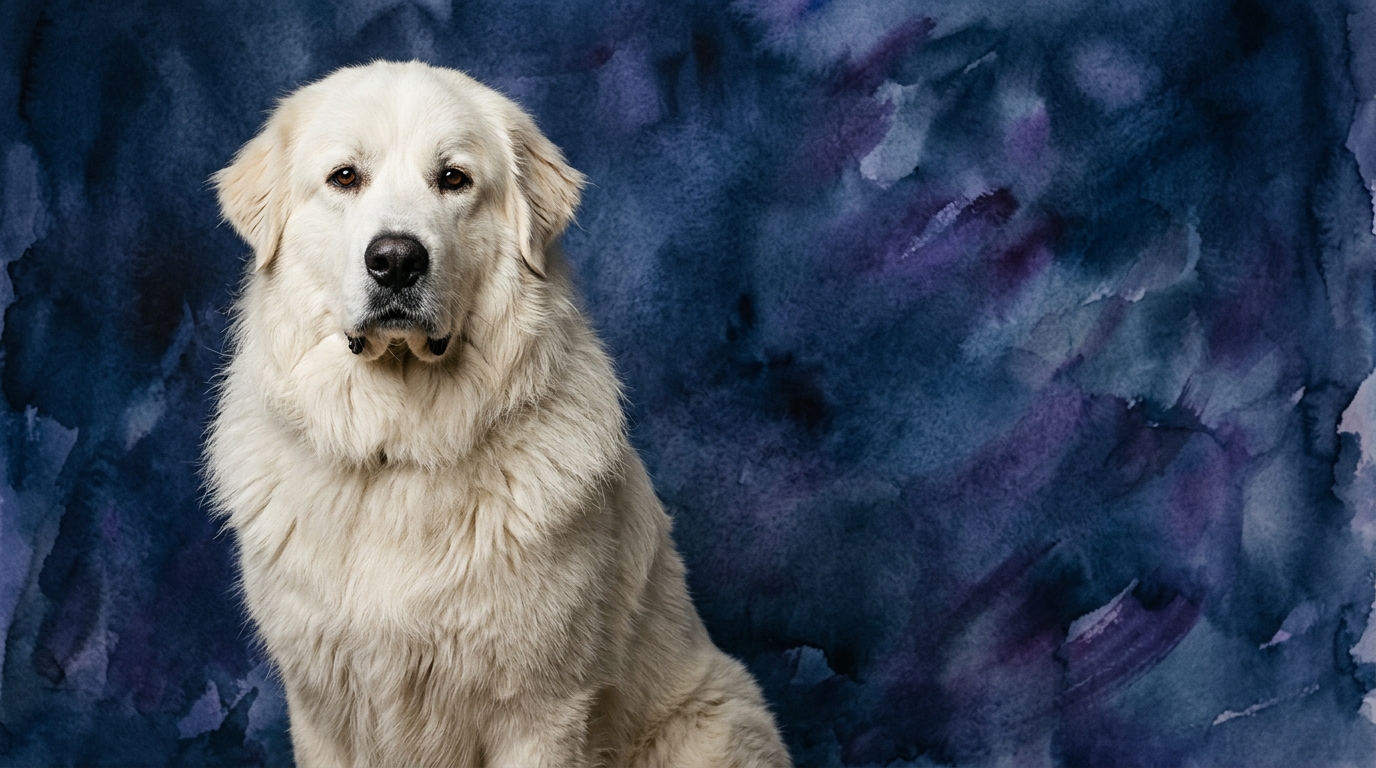
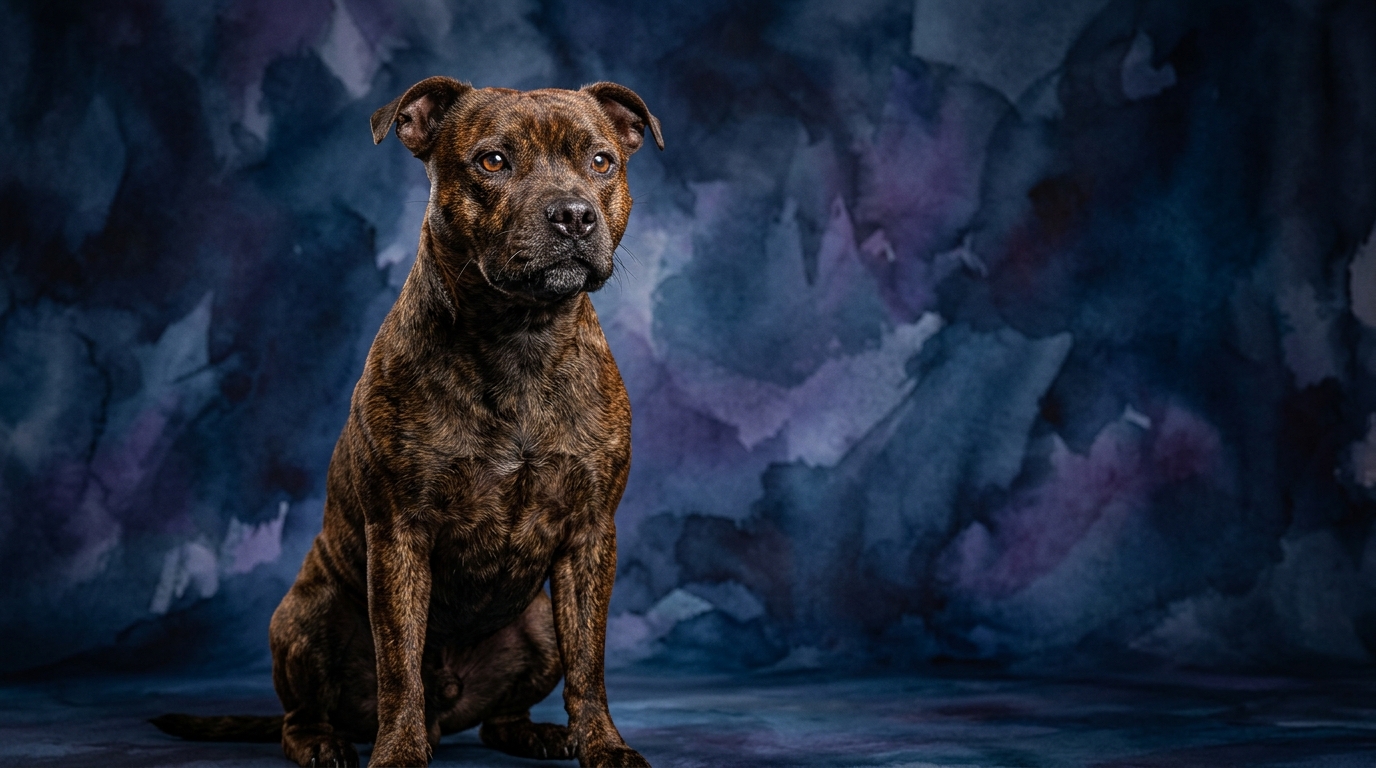
Side-by-Side IQ Profile
The Cosmic Pet Pet IQ Lab assesses canine intelligence across five key dimensions, each rated on a scale of 1 to 5. While both the Great Pyrenees and Staffordshire Bull Terrier achieve a consistent 3/5 across all categories, the practical manifestation of these scores differs significantly due to their distinct breed purposes and inherent temperaments.
**Great Pyrenees (Working Group)**
**Problem Solving (3/5):** This score reflects the Pyrenees' capacity for independent thought, particularly when assessing environmental changes or potential threats within their territory. They are adept at evaluating situations like a new scent or an unfamiliar sound, deciding whether intervention is required, often without direct human command. Their problem-solving isn't about complex puzzles but rather about practical, real-world security scenarios.
**Training Speed (3/5):** A 3/5 in training speed indicates a moderate pace for learning new commands. Great Pyrenees are capable of understanding and retaining instructions, but their independent nature as guardians means they often weigh a command against their own perceived priorities. They learn best with patient, consistent reinforcement and methods that respect their inherent self-reliance, rather than demanding strict obedience.
**Social Intelligence (3/5):** This breed exhibits a moderate understanding of social cues, primarily within their “flock” – be it sheep or their human family. They form deep bonds and can be perceptive to family moods, but their social interactions are often filtered through their protective instincts. They gauge intentions and relationships within their guarded sphere, showing discernment rather than overt eagerness to please every stranger.
**Instinctive Drive (3/5):** The Pyrenees' instinctive drive is moderately high, channeled predominantly into guarding and territorial protection. This includes vigilance, patrolling, and a deep-seated need to keep their charges safe. This drive is a core part of their being, influencing their daily activities and decision-making, compelling them to act as watchful sentinels.
**Memory (3/5):** A 3/5 memory score means Great Pyrenees possess a solid ability to recall past experiences, learned routines, and the identities of familiar individuals or perceived threats. They remember boundaries, the layout of their territory, and the habits of their family, contributing to their effective long-term guardianship.
**Staffordshire Bull Terrier (Terrier Group)**
**Problem Solving (3/5):** Staffordshire Bull Terriers also score 3/5 in problem-solving, indicating a moderate ability to navigate challenges. For a Staffy, this might manifest as creatively figuring out how to retrieve a favored toy from under furniture, or persistently working to get attention from their human. Their problem-solving often has a goal-oriented, determined focus, driven by their desire for interaction or a reward.
**Training Speed (3/5):** With a 3/5 training speed, Staffies learn at a moderate pace. They are generally eager to engage with their human companions and can pick up commands effectively, especially when training is fun, positive, and reward-based. However, their tenacity and potential for distraction mean that consistency and engaging methods are crucial to keep them focused and motivated.
**Social Intelligence (3/5):** Staffies display a moderate level of social intelligence, excelling in their ability to bond deeply with their immediate family. They are often attuned to human emotions, seeking to comfort or engage. Their social understanding is geared towards strong, reciprocal relationships with their “pack,” often expressing affection and reading subtle human cues effectively within their trusted circle.
**Instinctive Drive (3/5):** The instinctive drive in a Staffordshire Bull Terrier, rated 3/5, is often expressed through a strong prey drive for small, fast-moving objects (like toys or squirrels) and a tenacious desire to “work” or play. This drive fuels their enthusiasm for games, tug-of-war, and persistent engagement, reflecting their terrier heritage.
**Memory (3/5):** A 3/5 memory score for Staffies means they have a good capacity to remember commands, routines, and past interactions. They recall familiar faces, places, and training cues, which aids in their ability to participate in consistent daily life and build upon learned behaviors over time.
Where Great Pyrenees Wins Cognitively
The Great Pyrenees' cognitive strengths shine brightest in scenarios demanding independent judgment and expansive spatial awareness. Their problem-solving (3/5) is uniquely tailored for a guardian role, enabling them to evaluate complex environmental cues – a distant sound, a change in wind direction – and make nuanced decisions about potential threats without constant human input. This isn't about solving abstract puzzles, but rather about the practical application of their intellect to secure a large territory and protect their charges. Their instinctive drive (3/5) is less about impulsive action and more about sustained, watchful vigilance, requiring a cognitive framework to manage perceived risks and allocate their attention efficiently across a broad domain. This breed's social intelligence (3/5), while not outwardly effusive, involves a deep, discerning understanding of their family and territory's social dynamics, allowing them to differentiate friend from potential foe with a quiet, observant wisdom.
Where Staffordshire Bull Terrier Wins Cognitively
Conversely, the Staffordshire Bull Terrier demonstrates cognitive superiority in contexts requiring focused, dynamic interaction and tenacious follow-through. Their problem-solving (3/5) often manifests as creative persistence in achieving a goal, whether it's retrieving a hidden toy or figuring out a new game. This is coupled with their training speed (3/5), which, when harnessed by an engaging trainer, allows them to rapidly absorb and apply new skills in structured activities like obedience or agility. The Staffy's social intelligence (3/5) excels in the realm of direct human engagement; they are adept at reading and responding to their family's emotional states, often seeking to participate actively and enthusiastically in shared experiences. Their instinctive drive (3/5) fuels a concentrated, high-energy engagement with tasks and play, allowing them to maintain focus and determination in short, intense bursts, making them exceptionally responsive in interactive settings.
Which is Easier to Train and Why
Evaluating 'easier to train' between these two breeds requires understanding their core motivations and behavioral tendencies. Both have a training speed score of 3/5, indicating a moderate learning curve. The Staffordshire Bull Terrier, with its deep desire to please its human companions and participate in activities, often appears more responsive in initial, positive-reinforcement-based obedience sessions. Their tenacity and focus on interaction can make them eager learners for specific commands and tricks, provided the training is engaging and consistent. However, their moderate instinctive drive, particularly prey drive, can lead to distractions in varied environments, requiring diligent proofing of commands.
The Great Pyrenees, while equally capable of learning, operates with a strong sense of independence. Their role as a guardian means they often prioritize perceived duties over immediate human commands. While they absorb information at a moderate pace, motivating a Pyrenees requires patience, understanding their intrinsic motivations, and making training relevant to their world. They are not difficult to train, but their obedience is often a collaborative effort, respecting their judgment rather than demanding unquestioning adherence. For structured, precise obedience, the Staffy might offer a more direct path, while the Pyrenees requires a trainer who appreciates and works *with* their independent cognitive framework.
Which Suits Active Owners vs. Relaxed Owners
The choice between these breeds for active versus relaxed owners hinges on the nature of their activity. Staffordshire Bull Terriers are an excellent match for active owners who enjoy structured engagement. Their moderate instinctive drive and desire for interaction mean they thrive on regular walks, hikes, energetic play sessions, and even dog sports like agility or flyball. They appreciate having a 'job' to do alongside their human, demanding consistent mental and physical stimulation to prevent boredom.
Conversely, the Great Pyrenees generally suits more relaxed owners. While they need a securely fenced space to patrol and regular, moderate exercise, their energy output is often lower in an indoor setting. Their 'activity' is frequently about observation and territorial management rather than intense physical exertion. They are content with a calm presence once their outdoor duties are fulfilled, making them suitable for owners who appreciate a watchful, independent companion more interested in quiet companionship than constant, high-energy interaction.
The Verdict
When considering a Great Pyrenees, choose this breed if you seek an independent, watchful companion capable of making autonomous decisions regarding territory and family protection, appreciating a calm home environment after their patrols.
Opt for a Staffordshire Bull Terrier if you desire an engaged, tenacious companion who thrives on consistent training, enjoys participating actively in family life, and seeks energetic, interactive play.
🧠 Find Your Pet's IQ Score
Our Pet IQ Lab assessment covers 25+ tests across 5 cognitive dimensions — personalized to your breed.
Take the Full IQ Test →Frequently Asked Questions
Do Great Pyrenees need a lot of exercise?
Great Pyrenees benefit from regular, moderate exercise, often satisfied by patrolling a large, securely fenced yard or taking several leisurely walks. Their energy expenditure is frequently focused on vigilance and observation rather than intense, prolonged physical activity.
Are Staffordshire Bull Terriers good with children?
Staffordshire Bull Terriers are often known for their affectionate nature with their immediate family, including children, earning them the nickname 'nanny dog.' However, like all breeds, early socialization and supervision are crucial to ensure positive interactions and proper behavior around children.
How do their similar IQ scores manifest differently?
Despite identical 3/5 scores, the Great Pyrenees expresses its intelligence through independent problem-solving for territorial security, while the Staffordshire Bull Terrier applies its cognition to focused interaction, tenacious play, and engaging with its human family. Their cognitive strengths are adapted to their distinct historical roles.