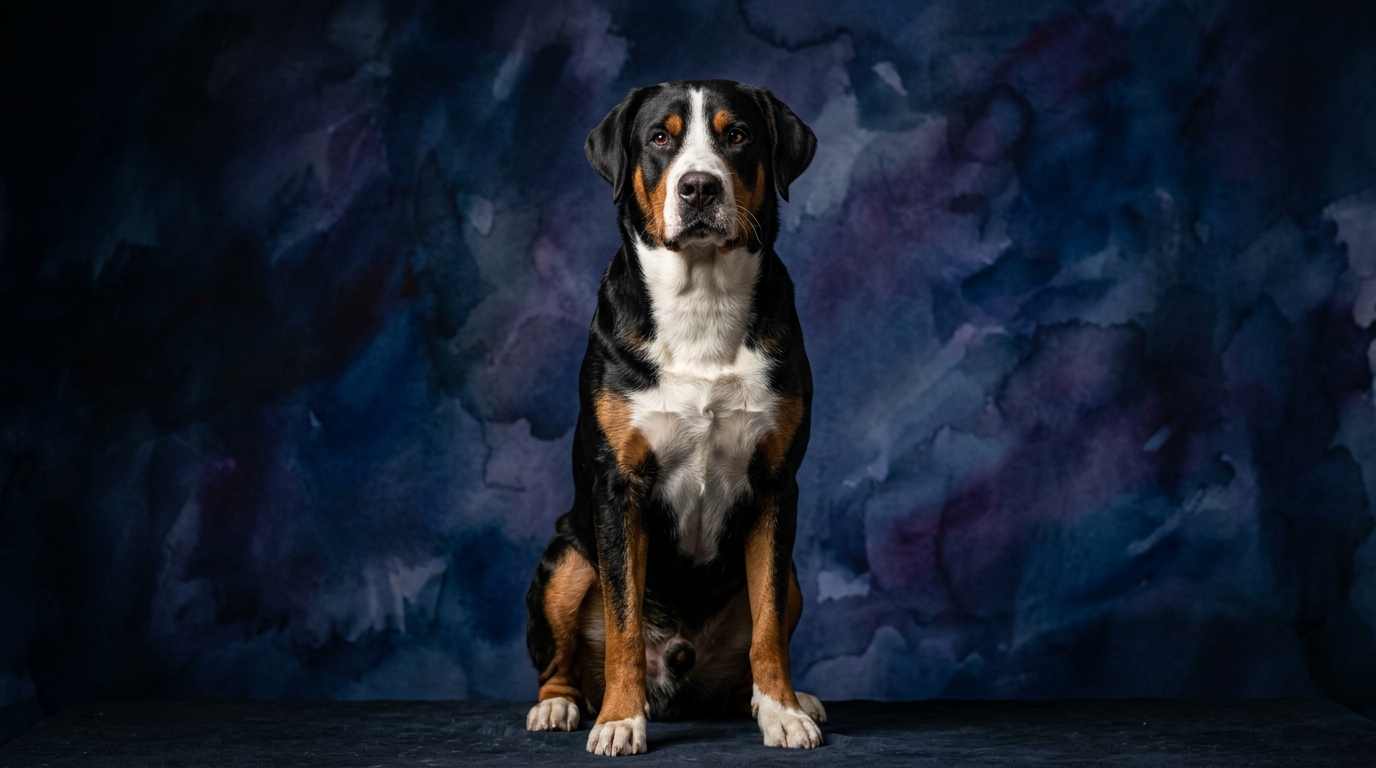
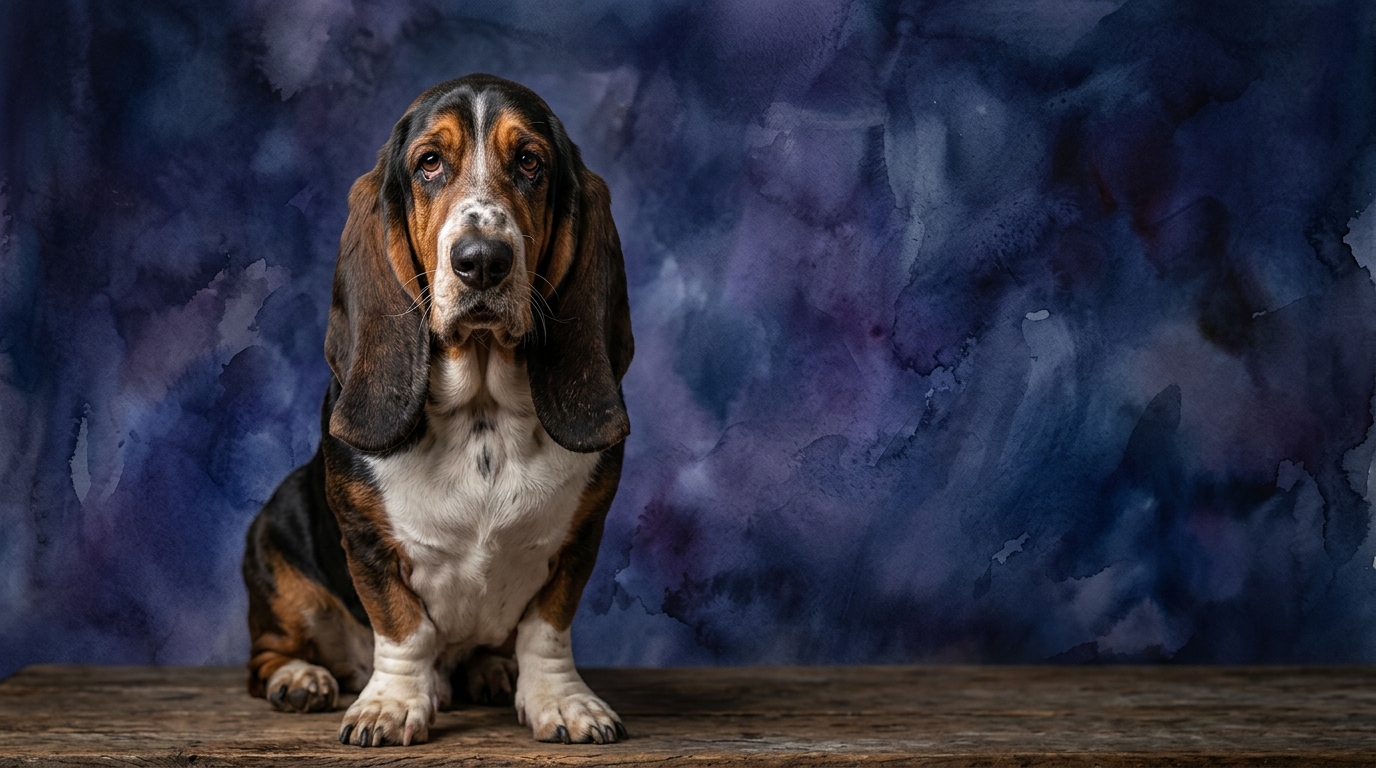
Side-by-Side IQ Profile: Greater Swiss Mountain Dog vs. Basset Hound
At first glance, the Cosmic Pet Pet IQ Lab data presents an intriguing parity between these two breeds: both the Greater Swiss Mountain Dog and the Basset Hound score 3/5 across all five cognitive dimensions – Problem Solving, Training Speed, Social Intelligence, Instinctive Drive, and Memory. However, these identical scores don't imply identical minds; rather, they reflect a similar *level* of cognitive capacity applied through vastly different lenses shaped by their historical purposes.
The **Greater Swiss Mountain Dog**, a member of the working group, historically served as a versatile farm dog, excelling in drafting, herding, and guarding. Its cognitive profile of 3/5 in each category is thus interpreted through the prism of cooperative, task-oriented intelligence. Their Problem Solving is likely practical and physical, focused on navigating obstacles with a cart or managing livestock. Training Speed at 3/5 reflects a willingness to learn and work alongside humans, valuing partnership in tasks. Social Intelligence at 3/5 suggests strong family bonds and an understanding of household dynamics, often with a protective edge. Instinctive Drive at 3/5 is channeled into drafting, guarding, and companionship. Their Memory at 3/5 is probably strong for routines, learned tasks, and family members, essential for their working role.
In contrast, the **Basset Hound**, a hound group member with a Coren rank of #71, boasts the same 3/5 scores, but these are profoundly influenced by its primary purpose: scent tracking. Their Problem Solving (3/5) is highly specialized, focused on deciphering complex scent trails, navigating varied terrain to follow a specific odor, and overcoming physical barriers to reach a scent source. Training Speed at 3/5 indicates they can learn, but their powerful, independent scent drive often dictates the pace and the required motivation. Their Social Intelligence (3/5) makes them generally amiable and friendly with people and other animals, but their focus can be singularly consumed by an enticing scent, making human social cues secondary. Instinctive Drive at 3/5 is overwhelmingly dominated by their persistent, methodical pursuit of a scent trail. Memory (3/5) in a Basset is exceptional for scent profiles, the layout of a good sniffing ground, and routines that lead to comfortable naps or food rewards.
Where the Greater Swiss Mountain Dog Wins Cognitively
While both breeds exhibit robust cognitive abilities, the Greater Swiss Mountain Dog shows a particular aptitude for practical, cooperative problem-solving within a domestic or working partnership context. Their 3/5 Problem Solving manifests as a capacity for strategic thinking in owner-directed tasks, such as figuring out how to maneuver heavy objects or understanding complex multi-step commands. This isn't about finding a hidden treat by scent, but rather understanding a sequence of actions required to achieve a shared goal.
The Greater Swiss's 3/5 Social Intelligence often translates into a more consistent attentiveness to human cues and desires. Their historical role demanded a close working relationship with people, fostering an intelligence that prioritizes understanding and responding to their human companions' intentions. This makes them highly attuned to the social dynamics of a family unit, often anticipating needs or reacting protectively, which can be seen as a 'win' in terms of household integration and reliable companionship. Their memory (3/5) for specific commands, household rules, and the expectations of their human partners often makes them more predictably responsive in varied situations than a scent-driven hound.
Where the Basset Hound Wins Cognitively
The Basset Hound's cognitive strengths lie in its specialized sensory intelligence, particularly its extraordinary ability to process and interpret olfactory information. Their 3/5 Problem Solving, when applied to scent, is arguably unmatched by the Swissy. A Basset can meticulously follow a faint, complex trail over varied terrain, ignoring distractions that would overwhelm other breeds. This involves sophisticated decision-making, memory recall of scent profiles, and persistent focus that few can rival.
Their 3/5 Instinctive Drive for scent work is a clear cognitive triumph in its own domain. This isn't just a physical act; it's a profound mental engagement with the world through smell, requiring deep concentration and an ability to filter myriad sensory inputs to isolate a specific target. Their memory (3/5) is exceptional for storing and recalling vast libraries of scent data, allowing them to differentiate subtle nuances and remember the location of past intriguing odors. For owners fascinated by the intricate world of canine olfaction, the Basset Hound's specialized cognitive 'win' in this area offers a unique and rewarding experience.
Which is Easier to Train and Why
Despite both breeds scoring 3/5 in Training Speed, their inherent motivations and historical roles create distinct training experiences. The Greater Swiss Mountain Dog, with its working heritage, generally approaches training with an eagerness to please and a desire for cooperative engagement. Their 3/5 Social Intelligence helps them understand and respond to human directives, making them typically more receptive to traditional, command-based obedience training. They often learn new tasks readily, viewing training as a shared activity that strengthens their bond with their owner, leading to more reliable and consistent responses in various environments.
The Basset Hound, conversely, presents a different kind of training challenge. Their 3/5 Training Speed is often overshadowed by their profound 3/5 Instinctive Drive for scent. While they are capable of learning, their independence and single-minded focus on a compelling odor can make consistent obedience difficult. Training a Basset requires immense patience, creativity, and a deep understanding of their motivations. Commands must often compete with the irresistible pull of their nose, meaning high-value rewards and scent-based games are crucial. They aren't 'stubborn' in a malicious sense, but rather profoundly driven by their primary cognitive strength. Therefore, for general household obedience and reliability in distracting environments, the Greater Swiss Mountain Dog is typically perceived as easier to train due to its inherent cooperative nature and attentiveness to human direction.
Which Suits Active Owners vs. Relaxed Owners
The choice between these breeds also hinges significantly on an owner's lifestyle and activity level. The Greater Swiss Mountain Dog, as a robust working breed, thrives with active owners. Their strong physique and need for purpose mean they require regular, moderate-to-vigorous exercise, mental stimulation, and opportunities to engage in structured activities or 'jobs.' They are well-suited for owners who enjoy hiking, long walks, carting, or other dog sports, and who can provide consistent training and companionship. An owner who values an engaged, participatory canine partner in their active lifestyle would find a Greater Swiss a fulfilling match.
The Basset Hound, while needing daily walks and opportunities for sniffing expeditions, generally suits more relaxed owners in terms of sheer physical exertion. They are often content with long, leisurely indoor naps and gentle strolls, but their cognitive needs are profound. Relaxed owners must still be prepared to engage their Basset's powerful nose through scent games, 'sniffaris' in safe, enclosed areas, or even formal scent work. They are excellent companions for those who appreciate a calm presence but are willing to indulge their dog's independent, scent-driven explorations, understanding that mental stimulation through their nose is paramount to their well-being. It's less about high-impact activity and more about thoughtful, instinct-driven engagement.
The Verdict
Choose the Greater Swiss Mountain Dog if you seek a robust, cooperative companion eager to participate in an active family life, valuing a dog that is consistently attentive to human direction and thrives on a sense of purpose and partnership. They are a suitable choice for owners who desire a strong, protective presence and are committed to regular training and engagement.
Opt for the Basset Hound if you appreciate a laid-back companion with a unique, independent charm, and are fascinated by the intricate world of canine scent. This breed suits owners who are patient, understand the profound influence of a dog's nose, and are willing to indulge and channel their powerful instinctive drive for tracking in a thoughtful manner.
🧠 Find Your Pet's IQ Score
Our Pet IQ Lab assessment covers 25+ tests across 5 cognitive dimensions — personalized to your breed.
Take the Full IQ Test →Frequently Asked Questions
Are Basset Hounds difficult to train?
Basset Hounds are not inherently difficult to train, but their strong, independent scent drive can make consistent obedience challenging. They require patient, reward-based training methods that are highly motivating and often leverage their love for scent work, understanding that their nose can easily override other commands.
Do Greater Swiss Mountain Dogs need a lot of exercise?
Yes, Greater Swiss Mountain Dogs are a robust working breed that benefits from regular, moderate-to-vigorous exercise and mental challenges to stay content and well-behaved. Daily walks, playtime, and structured activities like carting or hiking are essential for their physical and mental well-being.
How do their social behaviors differ?
The Greater Swiss often displays a protective, family-oriented social intelligence, being very attuned to their human pack and seeking cooperative interaction. The Basset Hound is generally amiable and friendly, but their social interactions can be momentarily overridden by an enticing scent, leading to a more independent social presence when their nose is engaged.