Side-by-side IQ profile
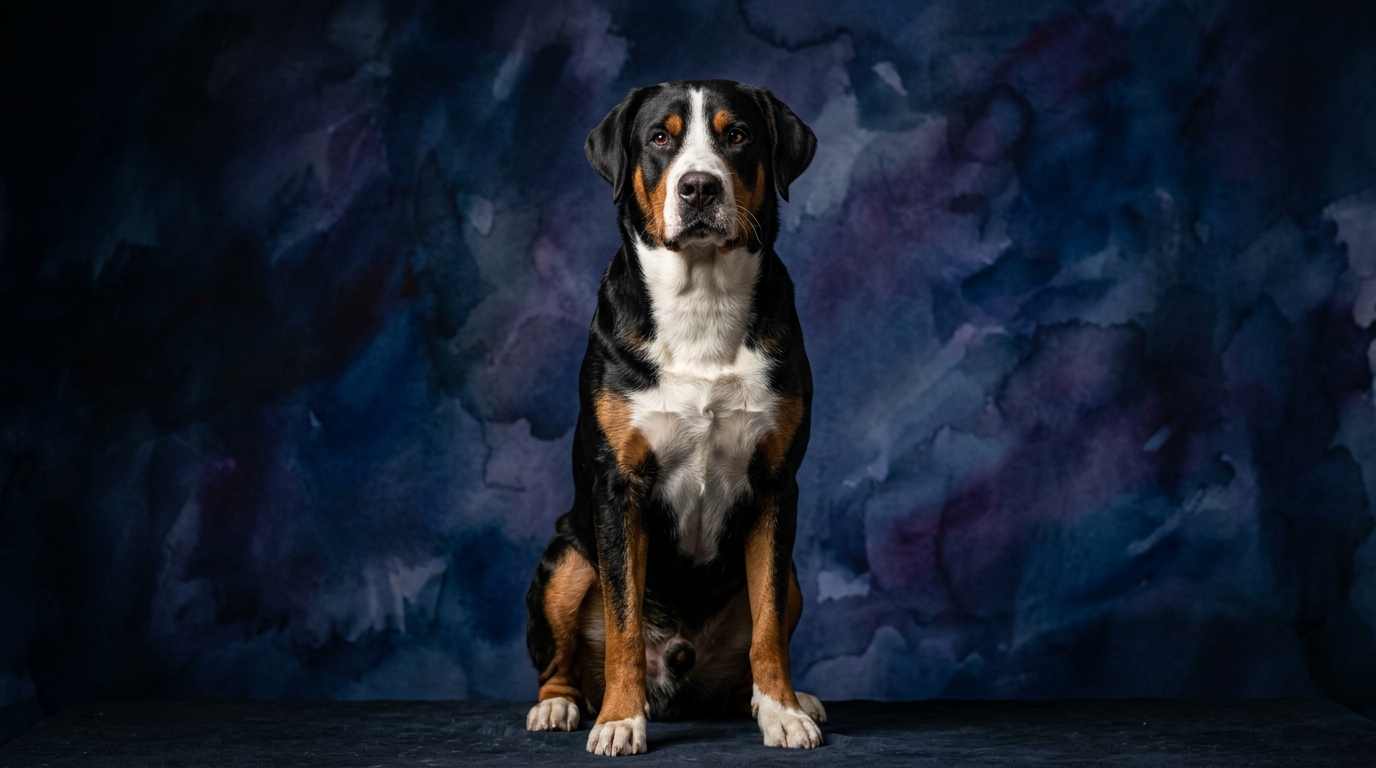
Greater Swiss Mountain Dog: This impressive working dog presents a balanced cognitive profile, scoring a steady 3/5 across all five dimensions. Their problem-solving capacity sits at a solid 3/5, indicating a practical ability to navigate challenges without necessarily seeking the most intricate solutions. Training speed is also a 3/5, suggesting they learn new commands and routines at a moderate, consistent pace. Social intelligence, crucial for their historical roles working alongside humans and livestock, registers at 3/5, reflecting a capacity for understanding cues and maintaining cooperative bonds. Instinctive drive, central to their heritage as farm dogs, is a 3/5, signifying a reliable inclination towards their inherent working behaviors. Finally, their memory is rated at 3/5, suggesting they retain learned information and experiences with good consistency over time.
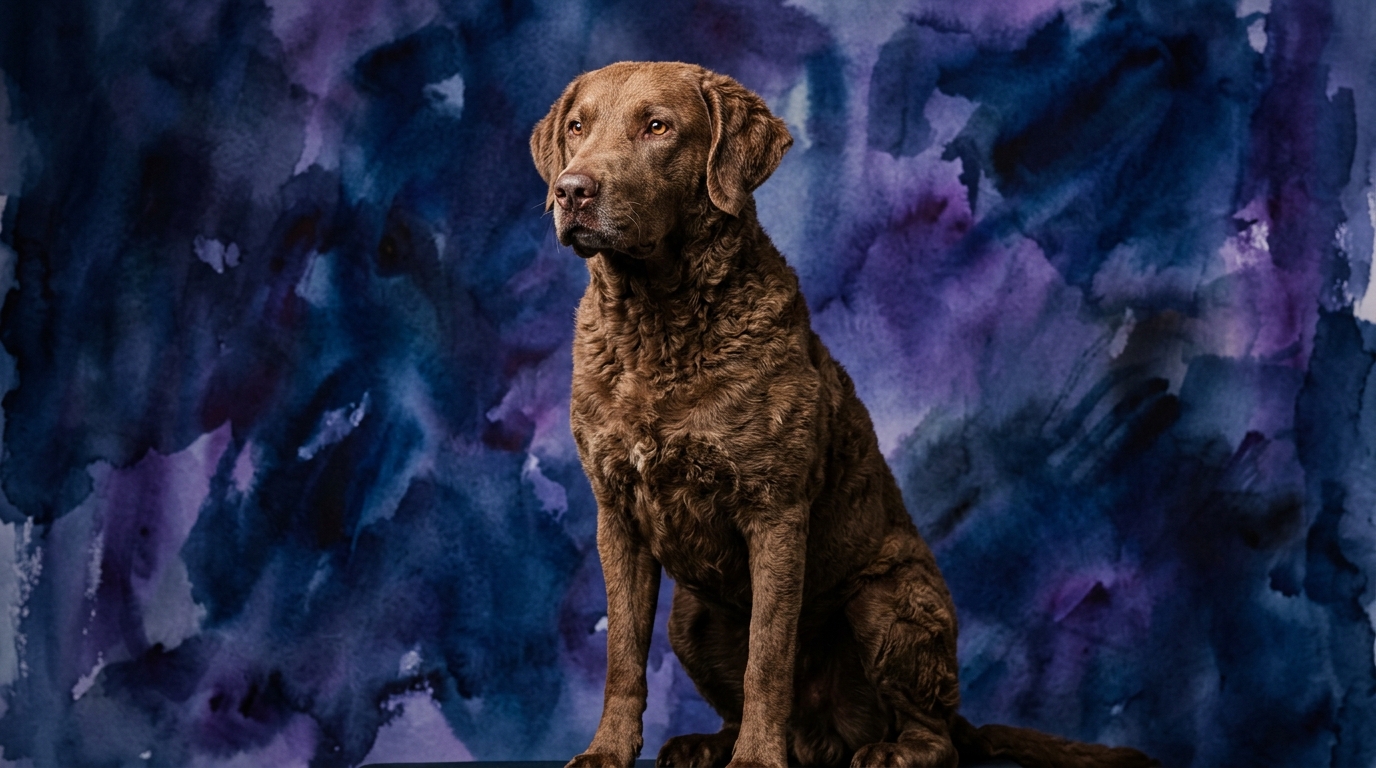
Chesapeake Bay Retriever: Hailing from the Sporting group, the Chesapeake Bay Retriever displays a cognitive profile oriented towards focused tasks and rapid learning. Their problem-solving ability scores a strong 4/5, indicating a capacity for effective, often independent, strategizing in varied scenarios. Training speed is also a notable 4/5, positioning them as quick learners who can grasp and execute new commands efficiently. Social intelligence, essential for their partnership with hunters, is a 3/5, reflecting a capable understanding of human communication and intent. Their instinctive drive, particularly for retrieving, is a 3/5, underscoring their inherent motivation for their specialized work. Memory, vital for remembering marks and complex sequences, is rated at an impressive 4/5, allowing for excellent retention of past lessons and experiences.
Where Greater Swiss Mountain Dog wins cognitively
The Greater Swiss Mountain Dog's cognitive strengths stem from its consistent, robust, and well-rounded intelligence, a reflection of its versatile farm dog heritage. Their uniform 3/5 across all dimensions signals profound reliability. This breed excels in situations demanding steady application of learned behaviors and sound judgment, rather than rapid, specialized bursts of brilliance. For instance, their problem-solving, though not the quickest, is pragmatic and persistent, making them adept at tasks requiring endurance and methodical execution like drafting or livestock management. Their balanced social intelligence means they are stable, dependable companions, capable of forming cooperative relationships without excessive emotional volatility. This steadfastness is a distinct advantage in environments where consistent competence across varied demands is highly valued, allowing them to adapt reliably to a broad range of domestic and working scenarios.
Where Chesapeake Bay Retriever wins cognitively
The Chesapeake Bay Retriever distinguishes itself with superior cognitive scores vital for its specialized retrieving work: problem-solving, training speed, and memory, all rated at 4/5. Their enhanced problem-solving means they quickly assess novel situations and devise effective strategies, whether navigating terrain or solving puzzle toys. This aptitude for independent thought and rapid assessment is invaluable in dynamic outdoor environments. Furthermore, their impressive training speed (4/5) signifies a breed that picks up new commands and complex sequences with remarkable efficiency, requiring fewer repetitions for mastery and allowing for advanced obedience. Complementing this is their exceptional memory (4/5), enabling retention of vast information, from hand signals to the location of multiple fallen birds. This combination of quick learning, effective strategizing, and strong retention makes the Chesapeake particularly adept at complex, multi-stage tasks where precision and recall are paramount.
Which is easier to train and why
The Chesapeake Bay Retriever holds a distinct advantage in ease of training, primarily due to its higher scores in training speed (4/5 vs. 3/5) and problem-solving (4/5 vs. 3/5). Bred for demanding retrieving work, Chesapeakes must learn and execute complex commands quickly and accurately, even in distracting environments. Their inherent drive for purposeful work and rapid information assimilation mean they typically require fewer repetitions to master new behaviors and focus intently during training. Their strong memory further aids retention. In contrast, the Greater Swiss Mountain Dog, though capable, learns at a more moderate pace. Their working heritage involved more independent decision-making and less strict, rapid command-following. A Swissy might take more time to internalize commands and may display thoughtful independence requiring consistent, patient guidance. While both respond well to positive reinforcement, the Chesapeake generally offers a faster, more enthusiastic response to formal obedience training, feeling more fluid for an experienced owner.
Which suits active owners vs relaxed owners
The suitability of these breeds depends on an owner's lifestyle and capacity for consistent mental and physical engagement. The Chesapeake Bay Retriever, a sporting dog with a 3/5 instinctive drive and high cognitive scores, suits active owners who relish outdoor adventures, structured training, and a dog thriving on a "job." They demand significant daily exercise—retrieving, swimming, vigorous hikes—and consistent mental stimulation through advanced obedience or dog sports. A Chesapeake lacking sufficient outlets can become bored and destructive. Conversely, the Greater Swiss Mountain Dog, a robust working breed, has a more balanced, less frantic energy. With a 3/5 instinctive drive, they need regular exercise and mental engagement, but their needs are often met with consistent walks, purposeful work like carting, and family activities. They are generally more amenable to relaxation after exercise, fitting owners who enjoy a steady, active routine but don't require a constant, high-octane companion, appreciating a calm indoor presence once their foundational needs are met.
The Verdict
Opt for a Greater Swiss Mountain Dog if you seek a steadfast, reliable companion with a balanced cognitive profile and a methodical approach to life, valuing steady consistency and good judgment over lightning-fast responses in a dog that is active but also appreciates calm.
Select a Chesapeake Bay Retriever if you are an active individual or family who can provide consistent, high-level mental and physical stimulation, and you desire a quick-witted, tenacious partner excelling in rapid learning, focused problem-solving, and exceptional memory for complex tasks.
🧠 Find Your Pet's IQ Score
Our Pet IQ Lab assessment covers 25+ tests across 5 cognitive dimensions — personalized to your breed.
Take the Full IQ Test →Frequently Asked Questions
Are Greater Swiss Mountain Dogs good at problem-solving?
Greater Swiss Mountain Dogs have a practical problem-solving ability, rated at 3/5. They approach challenges with a methodical and persistent mindset, excelling in tasks that require endurance and steady application rather than quick, intricate solutions.
How quickly do Chesapeake Bay Retrievers learn new commands?
Chesapeake Bay Retrievers are quick learners, scoring 4/5 in training speed. They typically grasp new commands and complex sequences with remarkable efficiency, often requiring fewer repetitions than many other breeds to achieve mastery.
Which breed has better memory for tasks?
The Chesapeake Bay Retriever has a superior memory for tasks, rated at 4/5, compared to the Greater Swiss Mountain Dog's 3/5. This allows Chesapeakes to retain a vast amount of learned information and recall specific details over extended periods, crucial for their specialized work.