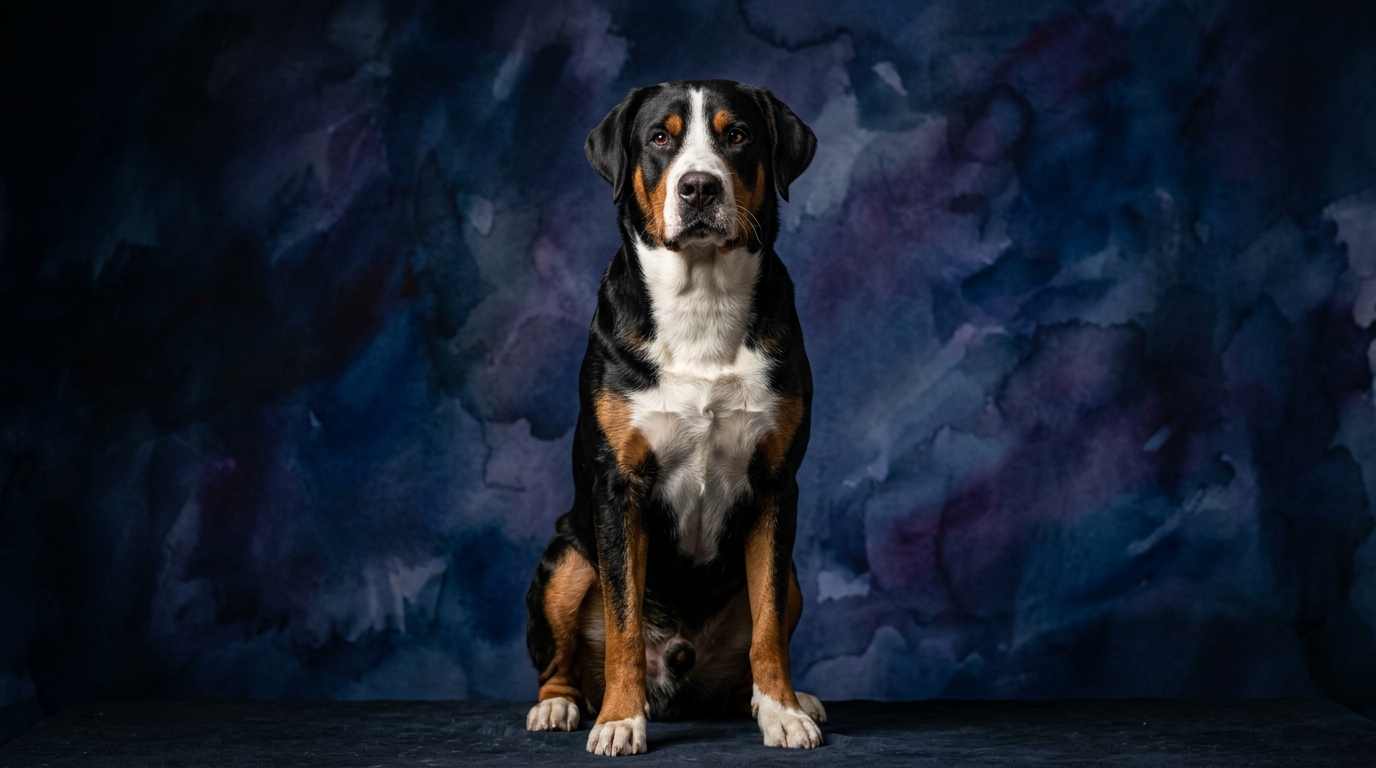
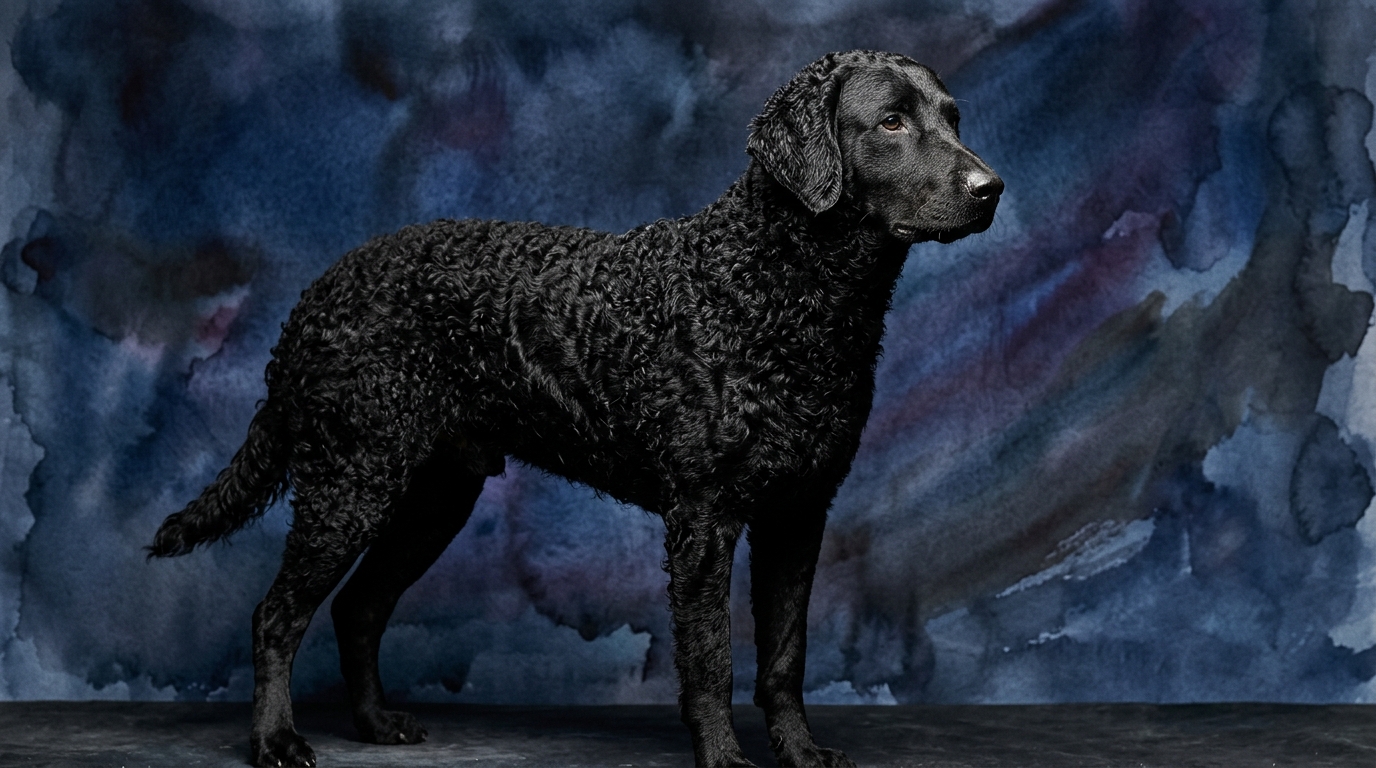
Side-by-Side Cognitive Profiles
The Cosmic Pet Pet IQ Lab assesses five key dimensions of canine cognition: Problem Solving, Training Speed, Social Intelligence, Instinctive Drive, and Memory. Understanding these scores provides a nuanced view beyond general perceptions.
For the **Greater Swiss Mountain Dog (GSMD)**, a member of the Working Group, all five dimensions register a solid 3/5. A 3/5 in Problem Solving indicates they possess practical intelligence, capable of navigating routine environmental challenges and learning from direct experience, such as figuring out how to open a gate or finding a dropped toy. Their 3/5 Training Speed suggests they absorb new commands at a steady, moderate pace, responding well to consistent, positive reinforcement without being exceptionally quick or slow to grasp concepts. Social Intelligence at 3/5 means they are generally adept at understanding human cues and interacting appropriately within their established social circle, though they may exhibit a reserved demeanor with strangers, characteristic of their guardian heritage. An Instinctive Drive of 3/5 reflects a moderate but present inclination towards their historical tasks of drafting and guarding, providing a foundational motivation that can be channeled in training. Finally, a 3/5 in Memory signifies they retain learned information and routines reasonably well, but might benefit from occasional refreshers for less frequently practiced commands.
The **Curly-Coated Retriever (CCR)**, classified in the Sporting Group, shares many of the GSMD's cognitive scores, with a critical difference in memory. Like the GSMD, the CCR scores 3/5 in Problem Solving, indicating they can effectively solve practical, task-oriented problems, such as locating a hidden object or navigating a complex retrieve path. Their Training Speed also stands at 3/5, meaning they learn new tasks and commands at a moderate, consistent rate, thriving on clear instructions and reward-based methods. Social Intelligence at 3/5 shows they are generally cooperative and responsive to human interaction, typically forming strong bonds with their families and exhibiting appropriate social behaviors, albeit sometimes with an independent streak. Their Instinctive Drive, also 3/5, is geared towards their retrieving heritage, manifesting as a moderate but persistent desire to fetch, carry, and work alongside a handler. The standout difference is their Memory, which is rated 4/5. This indicates a superior capacity for retaining learned commands, routines, and experiences, allowing for more consistent recall and less need for repetition over time compared to breeds with lower memory scores.
Where the Greater Swiss Mountain Dog Wins Cognitively
While the GSMD doesn't boast a higher score in any single dimension compared to the CCR, its cognitive profile is uniquely suited to its working heritage. The GSMD's balanced 3/5 across all categories points to a robust, self-reliant intelligence that is less dependent on constant handler direction than some sporting breeds. Their Problem Solving at 3/5, coupled with their Instinctive Drive, means they are capable of making independent judgments in situations related to their guardian role. For instance, a GSMD might independently assess a new visitor's demeanor, relying on its moderate social intelligence to decide if a watchful presence is required. This self-assuredness, rather than a specific higher score, represents a cognitive advantage for owners seeking a companion with a discerning mind and a steady, independent approach to daily life. Their moderate memory and training speed align with a breed that learns and performs tasks reliably over time, rather than with lightning-fast acquisition or recall, fitting a role where deliberate action is often more critical than immediate, high-speed response.
Where the Curly-Coated Retriever Wins Cognitively
The Curly-Coated Retriever's distinct advantage lies in its Memory, rated at 4/5, which directly impacts its Coren rank of #41 among dog breeds for obedience and working intelligence. This superior memory means CCRs are more efficient at storing and recalling learned behaviors and commands. For an owner, this translates into fewer repetitions required to solidify a new trick or command, and greater consistency in performance over extended periods. A CCR will likely remember complex sequences of commands or retrieve patterns with remarkable accuracy, even after a break from training. This enhanced memory works synergistically with its 3/5 Training Speed and Instinctive Drive, making the training process more streamlined and the retention of skills more robust. Their Problem Solving at 3/5, when combined with their excellent memory, means they can effectively learn from past solutions to similar problems, applying remembered strategies efficiently. This cognitive strength makes the CCR particularly adept at advanced obedience, dog sports, and intricate working tasks where consistent recall and application of learned skills are paramount.
Which is Easier to Train and Why
Based on their cognitive profiles, the Curly-Coated Retriever is generally easier to train, primarily due to its superior Memory score of 4/5 compared to the Greater Swiss Mountain Dog's 3/5. While both breeds share a 3/5 in Training Speed, meaning they learn new commands at a moderate pace, the CCR's enhanced memory ensures that once a command is learned, it is retained more effectively and requires fewer refreshers. For example, teaching a 'stay' command might take a similar initial effort for both, but a CCR will likely demonstrate more consistent and reliable 'stays' over weeks or months without frequent practice. The GSMD, with its 3/5 memory, might need more consistent reinforcement to maintain the same level of precision and reliability over time. Furthermore, the CCR's Sporting Group background instills a moderate Instinctive Drive geared towards cooperative work with a handler, often making them more eager to please and follow instructions during training sessions. The GSMD, while trainable, possesses an independent streak aligned with its Working Group heritage, sometimes requiring more patience and creative motivation to maintain focus, as their decision-making can be more self-directed.
Which Suits Active Owners vs. Relaxed Owners
The **Curly-Coated Retriever** is a better fit for active owners who enjoy engaging in structured activities and want a highly participatory companion. Their 4/5 Memory and Coren ranking indicate a dog that thrives on mental stimulation and consistent training challenges, such as advanced obedience, agility, or field work. Owners who appreciate a dog eager to learn and perform, and who can provide ample opportunities for exercise and mental engagement, will find the CCR an incredibly rewarding partner. Their moderate instinctive drive for retrieving means they will happily engage in games of fetch or learn to carry items, aligning well with an active lifestyle.
The **Greater Swiss Mountain Dog**, with its balanced 3/5 scores across the board, is more suited for owners who are active but also appreciate a companion with a more independent and steady presence. While they require regular exercise to maintain physical health and mental well-being, their cognitive profile suggests they don't demand the same intensity of structured mental engagement as a CCR. Owners who enjoy hiking, pulling carts, or simply having a watchful and robust companion by their side, rather than a dog constantly seeking the next training challenge, will find the GSMD to be an excellent match. Their social intelligence and moderate problem-solving abilities make them adaptable family members, but their independence means they are less likely to be constantly 'on' for handler-initiated activities, fitting well with a lifestyle that balances activity with periods of calm and self-directed exploration.
The Verdict
Choose the Greater Swiss Mountain Dog if you value a robust, independent companion with a steady temperament, capable of practical problem-solving and moderate training retention, fitting an active yet self-reliant lifestyle.
Opt for the Curly-Coated Retriever if you seek a highly trainable, engaged partner for structured activities, benefiting from superior memory and a strong desire to work cooperatively with their owner.
🧠 Find Your Pet's IQ Score
Our Pet IQ Lab assessment covers 25+ tests across 5 cognitive dimensions — personalized to your breed.
Take the Full IQ Test →Frequently Asked Questions
Does the Greater Swiss Mountain Dog's 3/5 memory make it difficult to train?
A 3/5 memory score indicates the Greater Swiss Mountain Dog learns and retains information adequately, but not with the exceptional efficiency of breeds scoring higher. It means they will learn, but consistent practice and refreshers will be more important to solidify and maintain complex behaviors over time, requiring patience and dedication from the owner.
How does the Curly-Coated Retriever's Coren rank of #41 relate to its IQ scores?
The Coren rank primarily assesses a breed's ability to learn and obey commands quickly, often correlating strongly with 'working intelligence.' The Curly-Coated Retriever's #41 rank aligns well with its 4/5 Memory score, as superior memory directly contributes to faster and more consistent command acquisition and retention, making them responsive and proficient in obedience tasks.
Are Greater Swiss Mountain Dogs and Curly-Coated Retrievers suitable for first-time dog owners?
Both breeds can be suitable for first-time owners who are committed to consistent training and socialization. The Curly-Coated Retriever's memory and desire to work with a handler might make the training process feel more rewarding, while the Greater Swiss Mountain Dog's independence requires a confident owner who can provide clear boundaries and consistent leadership, understanding their more self-reliant nature.