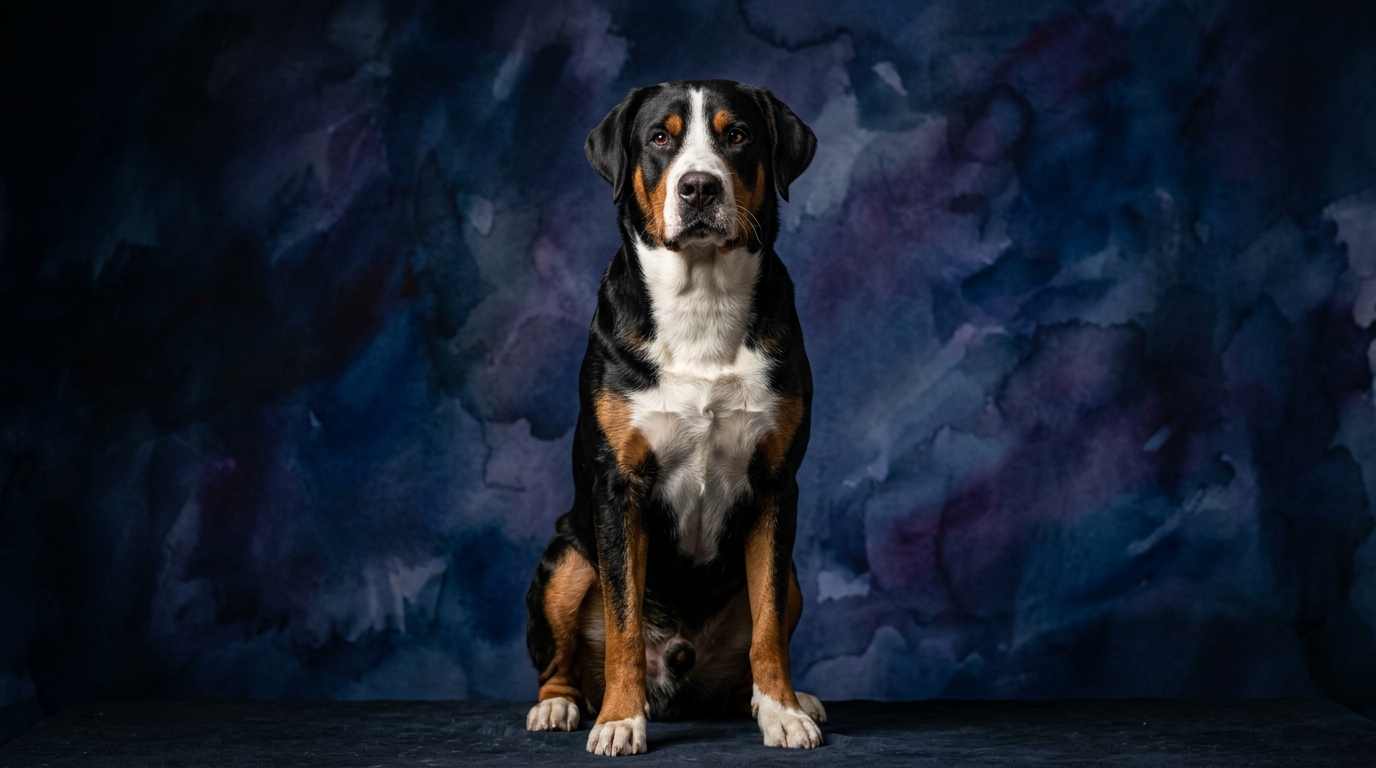
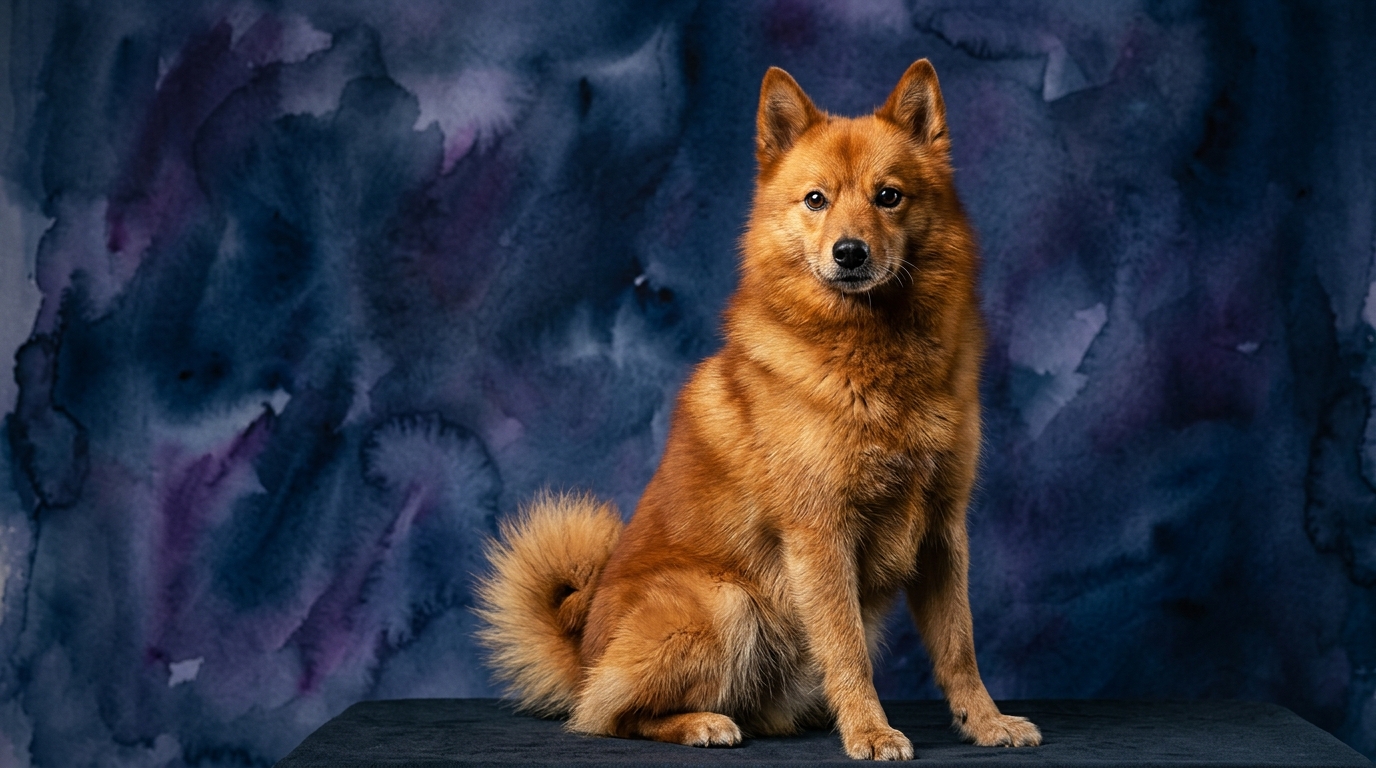
Side-by-Side IQ Profile: GSMD vs. Finnish Spitz
The Greater Swiss Mountain Dog (GSMD), originating as versatile farm dogs in the Swiss Alps, were tasked with guarding property, herding livestock, and hauling carts. Their Problem Solving (3/5) manifests as a practical ingenuity, often involving spatial reasoning for navigating varied terrain with a load or strategizing how to move a flock. Their Training Speed (3/5) reflects a capacity for learning complex multi-step commands, especially when tasks involve collaboration with their human companions, though their sturdy independence means they aren't always quick to comply if they don't perceive a clear purpose. Social Intelligence (3/5) in a GSMD is often expressed through their calm, watchful demeanor around family and a reserved, discerning approach to strangers, reading human cues for work directives or companionship. Their Instinctive Drive (3/5) is rooted in their working heritage, showing moderate protective instincts, a sensible herding inclination, and a generally manageable prey drive. Finally, their Memory (3/5) is robust, allowing them to retain training, remember routines, and recognize individuals over long periods, crucial for a dog with varied responsibilities.
The Finnish Spitz (FS), hailing from Finland, these “barking bird dogs” were developed to hunt small game and forest birds, using their distinctive vocalizations to alert hunters. Their Problem Solving (3/5) is highly attuned to their environment, demonstrating cunning in tracking prey, navigating dense woods, and strategically using their bark to “point” game. For Training Speed (3/5), Finnish Spitz are capable learners, yet their independent spirit and strong natural instincts mean they often require consistent, patient, and highly motivating methods; they learn quickly what benefits them directly but can be selective in their obedience if a more compelling instinct arises. Their Social Intelligence (3/5) is characterized by an affectionate and devoted bond with their immediate family, often expressing their feelings through various vocalizations, but they tend to be more aloof or wary with unfamiliar people, relying on their keen senses to assess new situations. The Instinctive Drive (3/5) of a Finnish Spitz is profoundly shaped by their hunting heritage, featuring an intense prey drive and an innate, powerful vocalization drive used for locating and holding game. Their Memory (3/5) is excellent for remembering hunting grounds, tracking patterns, and learned commands, but this memory is often intertwined with their strong instincts, meaning a remembered command might be momentarily overridden by the sudden scent of game.
Where Greater Swiss Mountain Dog Wins Cognitively
The Greater Swiss Mountain Dog excels in areas requiring cooperative problem-solving and reliable execution within a structured environment. Their cognitive strengths are evident in their ability to consistently perform complex, multi-step tasks alongside a human partner, such as drafting or herding. A GSMD's stable temperament and desire to be a contributing member of the "pack" allow them to maintain focus on a given task even amidst distractions, leveraging their memory for established routines and their social intelligence to interpret human directives effectively. They demonstrate a practical, grounded form of intelligence, particularly when asked to apply learned behaviors to real-world, purposeful work, showing a steady, dependable cognitive output.
Where Finnish Spitz Wins Cognitively
The Finnish Spitz shines in scenarios demanding independent problem-solving and acute sensory interpretation, particularly in natural, dynamic environments. Their cognitive prowess is geared towards autonomous work, such as locating and "pointing" game through their unique vocalizations, requiring them to constantly analyze auditory and olfactory cues. A Finnish Spitz uses its problem-solving abilities to navigate complex terrains, strategize the pursuit of elusive prey, and make independent decisions without constant human oversight. Their social intelligence, while family-focused, also involves a heightened awareness of their surroundings, and their memory is exceptionally good for recalling specific locations or successful hunting strategies, making them adept at self-directed exploration and action.
Which is Easier to Train and Why
Despite both breeds registering a 3/5 in Training Speed, the Greater Swiss Mountain Dog is generally perceived as easier to train for obedience and domestic life due to fundamental behavioral differences. GSMDs possess a strong intrinsic desire to work cooperatively with their human companions, a trait deeply ingrained from centuries of farm work where partnership was key. They tend to be more eager to please and find satisfaction in performing tasks given by their owners, which translates into a more receptive attitude during training sessions. Their social intelligence helps them to quickly understand and respond to human cues and expectations, making them more amenable to consistent instruction and less likely to be swayed by external stimuli when focused on a task.
The Finnish Spitz, conversely, presents a greater challenge in traditional obedience training, not due to a lack of learning ability, but because of their profound independence and strong instinctive drives. Their historical role as solitary hunting dogs required them to make decisions autonomously, and this self-reliance often translates into a "what's in it for me?" attitude during training. While they can learn commands quickly, their strong prey drive and innate vocalization tendencies can easily override learned behaviors if not managed with exceptional consistency and high-value motivation. Training a Finnish Spitz requires immense patience, creativity, and an understanding of their deep-seated hunting instincts, often feeling more like a negotiation than a direct instruction.
Which Suits Active Owners vs. Relaxed Owners
For owners leading a more relaxed lifestyle, neither breed is truly a perfect fit without significant commitment, but the Greater Swiss Mountain Dog might be marginally more adaptable to a less intensely active home, provided their cognitive and physical needs are met through purposeful engagement. They require regular exercise to maintain their powerful physique and mental stimulation to prevent boredom, but their activity can be structured around family life, such as long walks, hiking, or participation in dog sports like drafting or obedience. They thrive on having a "job," even if it's just being a vigilant companion, and their steady temperament allows for periods of calm relaxation once their needs are satisfied.
The Finnish Spitz, with its boundless energy and intense hunting instincts, unequivocally suits highly active owners who embrace outdoor adventures and can provide consistent outlets for their breed-specific drives. These dogs are not content with short strolls; they require extensive daily exercise, often involving off-leash exploration in secure areas where they can engage their senses. Owners who enjoy hiking, running, or participate in scent work or agility will find a willing and enthusiastic partner. A relaxed owner who cannot provide the necessary physical and mental stimulation will likely find a Finnish Spitz to be a challenging companion, potentially leading to destructive behaviors or incessant barking due to unfulfilled instinctive needs.
The Verdict
Choose a Greater Swiss Mountain Dog if you seek a steadfast, cooperative companion eager to be a working partner in a family setting, valuing reliability and a calm, protective presence.
Choose a Finnish Spitz if you are an active, outdoors-oriented individual or family prepared to channel intense natural instincts into engaging activities, appreciating an independent, vocal, and spirited companion.
🧠 Find Your Pet's IQ Score
Our Pet IQ Lab assessment covers 25+ tests across 5 cognitive dimensions — personalized to your breed.
Take the Full IQ Test →Frequently Asked Questions
Do identical IQ scores mean these breeds are equally easy to train for a novice owner?
No, identical scores indicate similar potential but not identical ease of training. The Greater Swiss Mountain Dog's cooperative nature generally makes them more forgiving for novice trainers, while the Finnish Spitz's independence and strong instincts demand more experience and patience.
How does the "Instinctive Drive" score of 3/5 manifest differently in each breed?
For the Greater Swiss Mountain Dog, 3/5 instinctive drive means a moderate protective instinct and a desire for purposeful work, often expressed calmly. For the Finnish Spitz, a 3/5 means a strong, persistent prey drive and an inherent, intense vocalization tendency crucial for their hunting method, requiring specific outlets.
Can a Greater Swiss Mountain Dog live in an apartment, and how does that affect their cognitive needs?
A Greater Swiss Mountain Dog can adapt to apartment living if their significant exercise and mental stimulation needs are consistently met daily. Without sufficient physical activity and purposeful cognitive engagement, their moderate problem-solving and memory skills might lead to boredom and potentially destructive behaviors in a confined space.