Side-by-Side IQ Profile: Greyhound vs. American Eskimo Dog
At The Cosmic Pet Pet IQ Lab, we delve beyond superficial observations to understand the specific cognitive dimensions of each breed. Comparing the Greyhound and the American Eskimo Dog reveals distinct mental landscapes shaped by their histories and inherent drives.
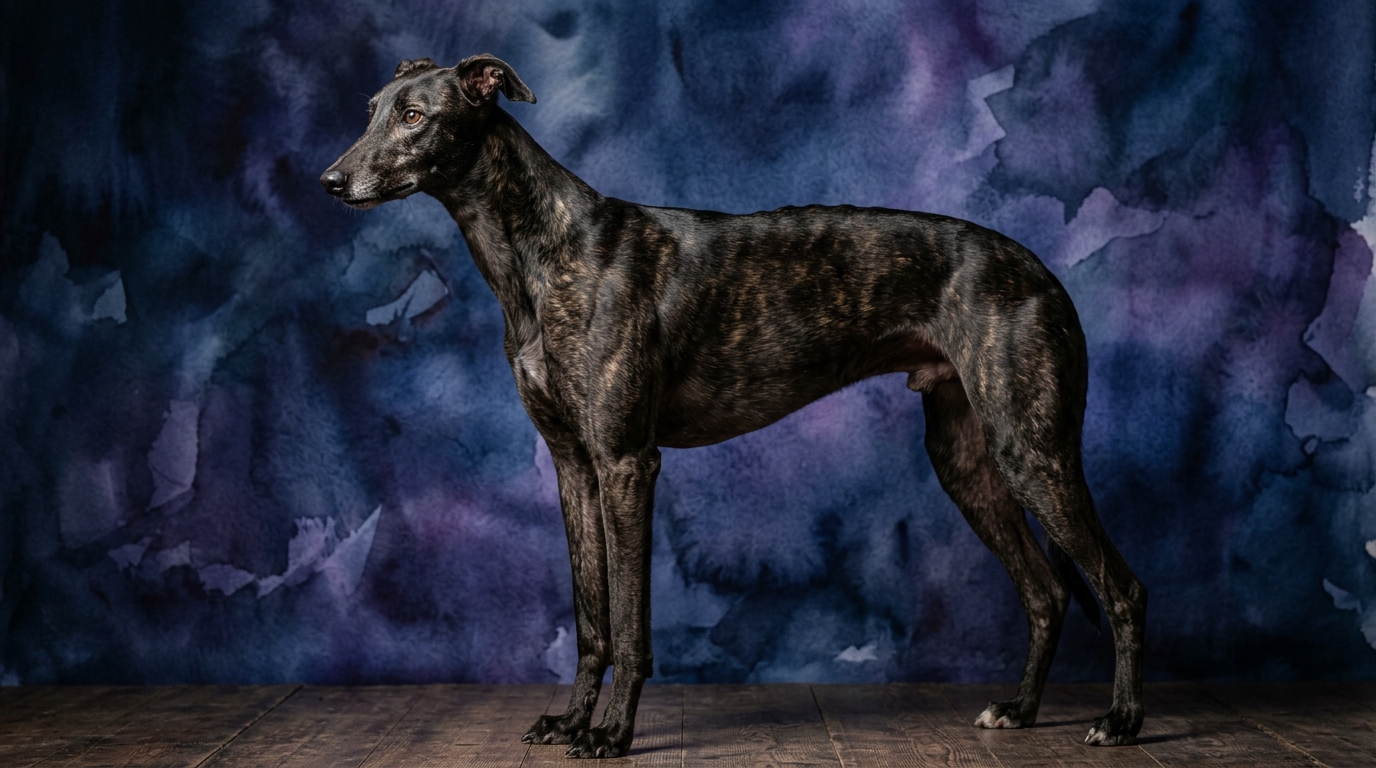
The Greyhound, a sighthound developed for speed and pursuit, holds a Coren ranking of #46, indicating a solid capacity for understanding and obeying commands in a structured environment. Their Problem Solving is rated at 3/5, suggesting they can navigate moderately complex situations, often favoring direct and efficient solutions when motivated. Training Speed for Greyhounds is 2/5, meaning they may require more repetition and patience to solidify new commands, though they certainly grasp concepts. Their Social Intelligence scores 3/5, reflecting an observant nature of human cues and a general comfort in familiar social settings, often expressed with a quiet dignity rather than overt displays. A standout characteristic is their Instinctive Drive, rated at a powerful 5/5, which underscores their profound inherent inclination to chase. Finally, their Memory is 3/5, retaining learned behaviors and routines effectively.
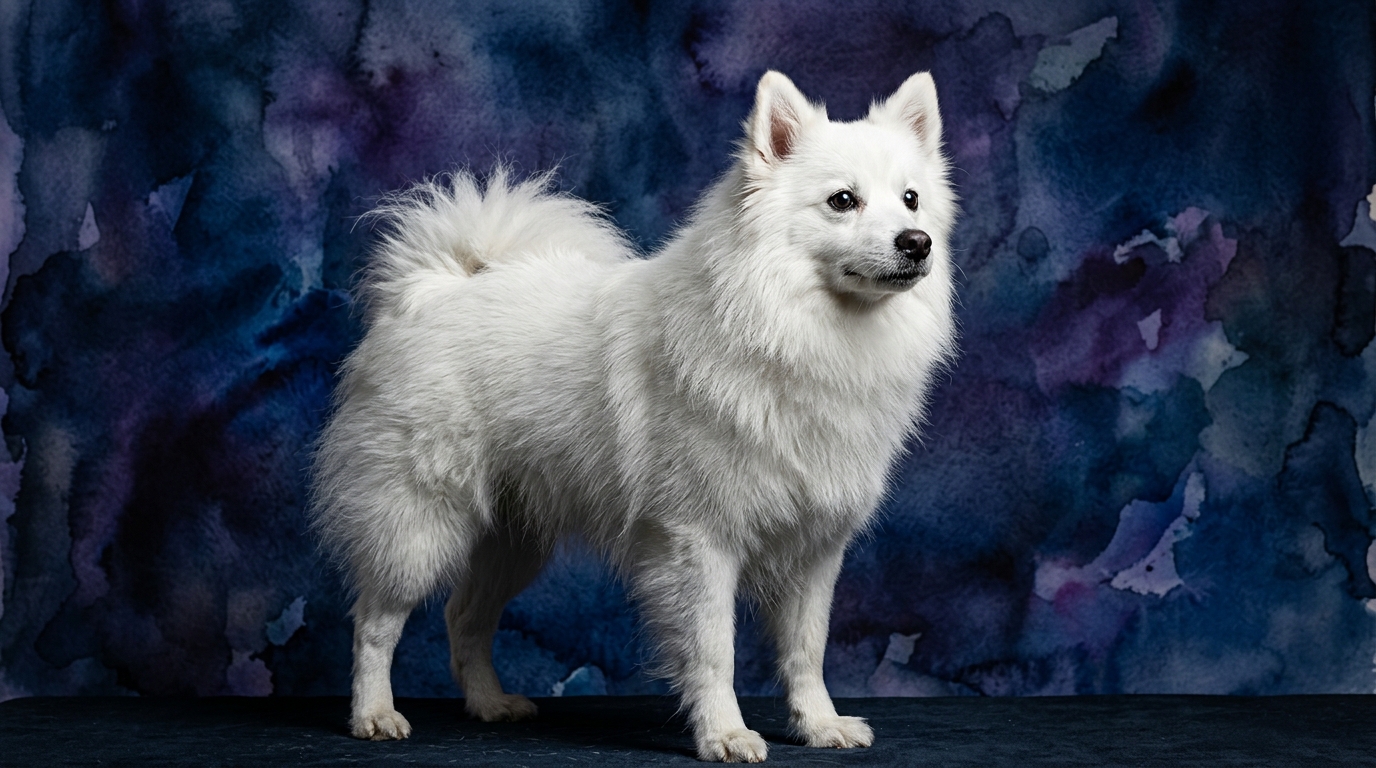
The American Eskimo Dog, a Spitz-type companion originating from Germany, is not Coren-ranked, which merely indicates they don't fit neatly into Coren's specific obedience-focused criteria, not a lack of cognitive capacity. Their Problem Solving is also 3/5, demonstrating an ability to work through moderate challenges, often employing clever or vocal strategies. Notably, their Training Speed is 3/5, suggesting they tend to pick up new commands at a moderate pace, showing good responsiveness to positive reinforcement. Social Intelligence for the Eskie is 3/5, where they engage readily with their family, often using vocalizations and body language to communicate, while sometimes displaying wariness towards strangers. Their Instinctive Drive is 3/5, displaying a moderate drive for activities like barking at perceived threats, digging, or even a playful herding instinct. Their Memory is 3/5, indicating a reliable recall for routines, people, and specific locations, which contributes to their adaptability within a family unit.
Where the Greyhound Wins Cognitively
The Greyhound's primary cognitive advantage lies in its exceptionally high Instinctive Drive, rated at 5/5 compared to the American Eskimo Dog's 3/5. This isn't merely a physical attribute; it's a cognitive predisposition for intense focus and singular determination when a chase stimulus is present. In scenarios like lure coursing, Greyhounds exhibit an unparalleled mental absorption in the task, demonstrating a cognitive specialization for pursuit that is difficult for most breeds to match. This focused drive translates into an efficient, almost minimalist problem-solving approach in contexts related to their original purpose: identify, pursue, capture. They don't typically overthink; they act with swift, decisive intention.
While both breeds share a 3/5 rating in Problem Solving, the Greyhound's problem-solving often manifests differently. Paired with their profound instinctive drive, their solutions are frequently direct and energy-efficient. For example, if a gate is open, a Greyhound's solution is often to simply run through it, leveraging speed and directness rather than intricate manipulation or vocal attempts to gain attention. This cognitive efficiency, when aligned with their natural inclinations, allows them to excel in specific, high-speed tasks, showcasing a mental economy geared towards immediate, effective action in their domain.
Where the American Eskimo Dog Wins Cognitively
The American Eskimo Dog shows a subtle but significant advantage in Training Speed, scoring 3/5 compared to the Greyhound's 2/5. This indicates a quicker processing of new information in a structured learning environment and a generally higher amenability to picking up a variety of commands. Their responsiveness to positive reinforcement often makes initial training sessions more fluid and rewarding, as they tend to grasp concepts with fewer repetitions. This quicker uptake makes them versatile candidates for various dog sports and trick training, where consistent learning of new sequences is key.
Furthermore, the Eskie's moderate Instinctive Drive (3/5) offers a cognitive versatility not centered around a singular, overwhelming focus. While their social intelligence is rated the same as a Greyhound's (3/5), the Eskie's often manifests as a more overt desire to engage and communicate within their family unit, sometimes acting as a watchful guardian. Their inherent wariness of strangers and vocal nature can be seen as a cognitive advantage in alerting their owners to novel stimuli, functioning as an integrated alert system. This blend of moderate drive and communicative social intelligence allows them to adapt to a broader range of 'work' or companion roles, from agility to therapy work, requiring a more generalized cognitive flexibility.
Which is Easier to Train and Why
Considering the provided IQ metrics, the American Eskimo Dog generally presents as the easier breed to train. Their Training Speed of 3/5, a notch above the Greyhound's 2/5, indicates a quicker assimilation of new commands and concepts. Eskies are often eager to please their human companions and respond positively to reward-based methods, making them more amenable to learning a wide repertoire of behaviors and tricks. Their moderate instinctive drive means fewer powerful, singular distractions that can derail a training session. For instance, an Eskie might bark at a passing squirrel but can typically be redirected back to the task with a treat or verbal cue.
Greyhounds, while perfectly capable of learning, often require more patience and consistency in their training approach due to their 2/5 Training Speed. Their profound Instinctive Drive (5/5) means that if something triggers their prey drive—a small animal, a plastic bag blowing in the wind—their attention can become singularly fixated, making redirection exceptionally challenging. This strong instinct is a real behavioral difference; a Greyhound might ignore commands and bolt to pursue, demanding specific, intensive training for reliable recall and impulse control, especially in open environments. Their learning process is steady, but it might take more repetitions to solidify behaviors, particularly under distracting circumstances.
Which Suits Active Owners vs. Relaxed Owners
The Greyhound is surprisingly well-suited for owners who appreciate a more relaxed indoor lifestyle, punctuated by intense, brief bursts of activity. Despite their athletic prowess, Greyhounds are often described as '45 mph couch potatoes.' They require a secure, fenced area for their exhilarating 'zoomies' and regular, moderate-length walks, but are typically content to spend significant portions of the day napping comfortably indoors. Their exercise needs are intense but short-lived, making them ideal for individuals who enjoy a quiet home environment but can provide an outlet for their inherent speed in a controlled setting. They are not the breed for an owner seeking a long-distance running partner.
Conversely, the American Eskimo Dog thrives with more active owners who can provide consistent mental and physical engagement. Their moderate energy level (reflected in their 3/5 instinctive drive, which can manifest as a need for 'work') and higher training speed mean they flourish with regular interaction, varied walks, and opportunities for mental stimulation through puzzle toys, obedience training, or dog sports like agility. They are not content to lounge indefinitely; they require sustained engagement to prevent boredom and potential behavioral issues. An Eskie is an excellent choice for an owner who enjoys daily activities with their dog and values a responsive, interactive companion.
The Cosmic Pet Verdict
Choosing between a Greyhound and an American Eskimo Dog ultimately depends on an owner's lifestyle, expectations, and capacity to cater to specific cognitive and behavioral traits. Both offer deep companionship, but their mental blueprints guide them towards different forms of interaction and fulfillment.
The Verdict
Choose a Greyhound when seeking a calm, affectionate companion for quiet indoor living, interspersed with intense, short bursts of outdoor activity, especially if you appreciate a dog with a profound chase instinct.
Choose an American Eskimo Dog when an owner desires a responsive, engaging companion who thrives on consistent interaction, mental challenges, and moderate physical activity, and can appreciate a watchful, vocal family member.
🧠 Find Your Pet's IQ Score
Our Pet IQ Lab assessment covers 25+ tests across 5 cognitive dimensions — personalized to your breed.
Take the Full IQ Test →Frequently Asked Questions
Are Greyhounds good apartment dogs?
Yes, despite their speed, Greyhounds are surprisingly well-suited for apartment living. They are often calm indoors, requiring only brief, intense exercise sessions and a comfortable place to nap, making them excellent companions for smaller spaces.
Do American Eskimo Dogs bark a lot?
American Eskimo Dogs are known for their vocal nature and can be prone to barking, especially as an alert to perceived threats or novel stimuli. Consistent training, early socialization, and ample mental stimulation can help manage excessive barking tendencies.
Can either breed live with cats?
It depends on the individual dog and early socialization. Greyhounds, with their high prey drive, often require careful introduction and supervision with cats. American Eskimo Dogs can typically coexist with cats, particularly if raised together, though their moderate instinctive drive might sometimes lead to playful chasing.