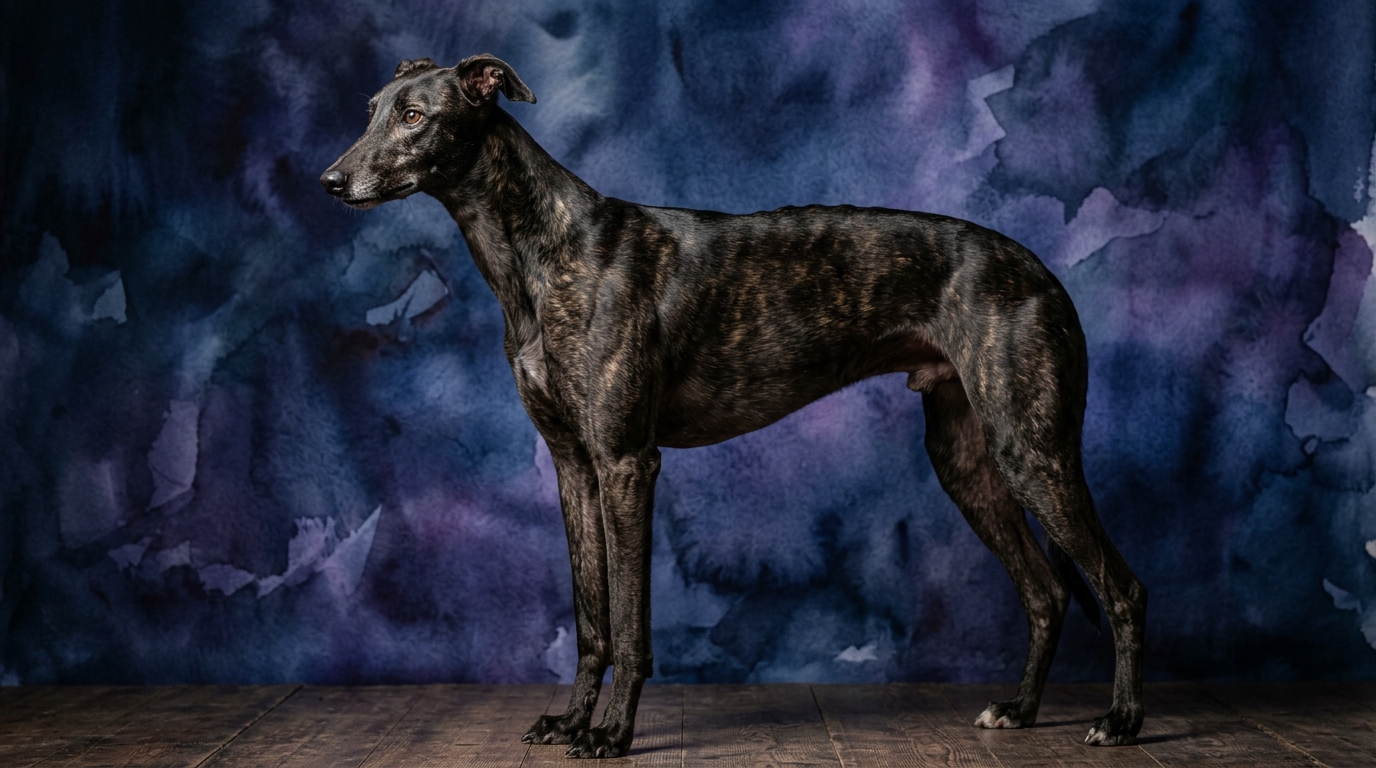
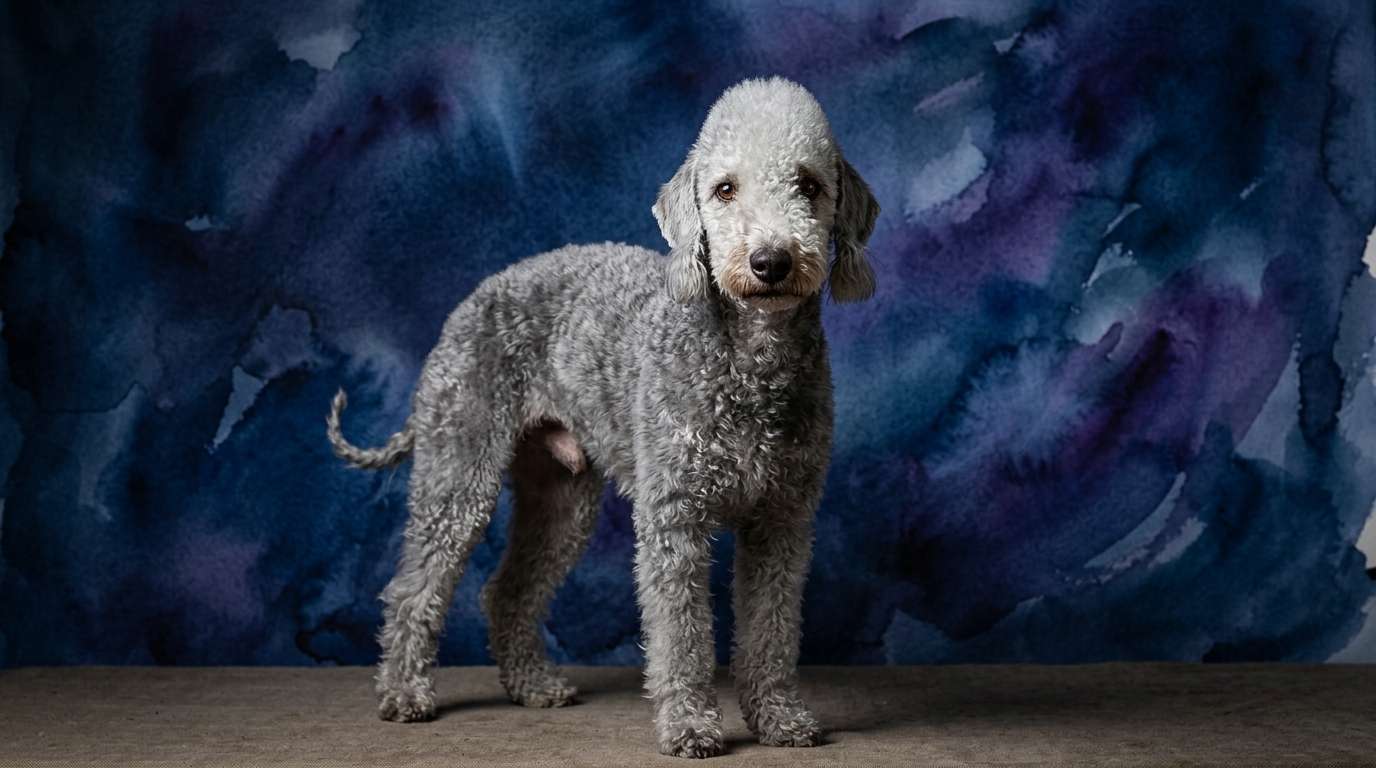
Side-by-Side IQ Profile: Greyhound vs. Bedlington Terrier
At The Cosmic Pet Pet IQ Lab, we evaluate canine intelligence across five key dimensions, offering a nuanced understanding beyond simple obedience. For the Greyhound, a breed Coren-ranked at #46, its Problem Solving ability registers at 3/5, indicating a moderate capacity for navigating novel challenges or figuring out complex tasks. Its Training Speed is rated 2/5, suggesting it may require more repetition and patience to grasp new commands. Social Intelligence, at 3/5, points to a reasonable ability to understand human cues and interact appropriately within a social context. The Greyhound's Instinctive Drive is a notable 5/5, reflecting a powerful innate urge to chase and pursue, deeply embedded in its sighthound heritage. Finally, its Memory stands at 3/5, indicating an average retention of experiences and learned behaviors.
The Bedlington Terrier, while not appearing on Coren's ranking, presents a different cognitive blueprint. Its Problem Solving capability also scores 3/5, matching the Greyhound in its capacity for independent thought in new situations. Where it diverges significantly is in Training Speed, earning a 3/5, suggesting it picks up new instructions with slightly greater alacrity than the Greyhound. Its Social Intelligence is also rated 3/5, indicating a similar aptitude for reading and responding to social cues. The Bedlington Terrier's Instinctive Drive is 3/5, a strong but more generalized drive compared to the Greyhound's specialized pursuit instinct. Its Memory, like the Greyhound, is assessed at 3/5, reflecting a moderate ability to recall past events and lessons.
Where the Greyhound Excels Cognitively
The Greyhound's primary cognitive advantage lies in its unparalleled Instinctive Drive, scoring a perfect 5/5. This isn't merely a physical attribute but a deeply ingrained cognitive program for pursuit. Their brains are wired for rapid processing of visual stimuli related to movement, making them exceptionally adept at spotting, tracking, and reacting to fast-moving objects. This superior visual processing and immediate, powerful response mechanism is a testament to their specialized intelligence, honed over centuries for coursing. While this might not translate to complex puzzle-solving, it signifies a highly specialized form of cognitive function that is critical for their breed purpose and remains a dominant aspect of their mental landscape even in a companion setting. Their ability to switch from calm repose to explosive, focused action in milliseconds demonstrates a unique mental agility tied directly to this drive.
Where the Bedlington Terrier Shines Cognitively
The Bedlington Terrier's cognitive edge is most apparent in its Training Speed, rated 3/5, which surpasses the Greyhound's 2/5. This indicates a greater willingness and capacity to absorb and respond to new commands and routines more readily. While its Problem Solving at 3/5 is on par with the Greyhound, its slightly higher receptiveness to structured learning means it can often be guided through new challenges more efficiently. This breed's terrier tenacity, combined with its moderate instinctive drive, allows for a more focused approach to learning tasks presented by humans. They tend to engage with training as a cooperative venture, often showing a keenness to understand what is expected of them, making the initial stages of obedience training potentially smoother and more rewarding for their handlers.
Training Dynamics: Greyhound vs. Bedlington Terrier
When considering ease of training, the Bedlington Terrier holds a distinct advantage. Its Training Speed of 3/5, coupled with an Instinctive Drive of 3/5, means it generally exhibits a more balanced approach to learning. Bedlingtons are often described as having a 'will to please' coupled with their inherent terrier determination, which translates to a more receptive student in a training session. They are less likely to be overwhelmed by a singular, powerful innate urge, allowing them to concentrate more effectively on handler instructions. For instance, teaching a Bedlington to 'stay' in the presence of minor distractions might be quicker, as their drive to chase is present but not as all-consuming as in a Greyhound.
The Greyhound, with a Training Speed of 2/5 and a dominant Instinctive Drive of 5/5, presents different training challenges. Their powerful chase instinct can easily override learned commands, especially in environments with tempting moving objects. A Greyhound might perfectly execute a 'recall' command indoors, but outdoors, the sight of a squirrel can trigger an immediate, hardwired pursuit response, making consistent recall a lifelong training commitment. Their moderate training speed suggests that new behaviors require more patient repetition to solidify, and handlers must always be mindful of managing their profound prey drive to ensure safety and compliance. This isn't a lack of cognitive capacity, but rather a strong internal programming that requires careful and consistent management.
Lifestyle Suitability: Active vs. Relaxed Owners
For the truly active owner who appreciates specialized drive and robust physical output, the Greyhound, despite its '45 mph couch potato' reputation, can be a surprisingly fitting choice, provided their activity aligns with its core instincts. These dogs require opportunities for safe, off-leash sprinting in secure areas to satisfy their profound instinctive drive. Owners who enjoy brisk walks, are prepared for strict leash protocols in open spaces, and can provide a safe, fenced environment for bursts of speed will find the Greyhound's cognitive profile aligns well. Their moderate problem-solving and social intelligence allow them to integrate into a routine, but their powerful chase instinct necessitates an owner attentive to environmental management.
The Bedlington Terrier, with its balanced cognitive scores, suits a wider range of owners, including those who prefer a more moderately active but engaged lifestyle. Their higher training speed and moderate instinctive drive make them adaptable to various activities, from agility to trick training, providing mental stimulation. They thrive with owners who enjoy consistent, positive reinforcement training and can channel their terrier energy into structured play and walks, rather than requiring intense, specialized physical outlets. For relaxed owners who still want a responsive and trainable companion capable of engaging in varied activities, the Bedlington's cognitive makeup offers a more versatile and less demanding partnership.
The Verdict
Choose the Greyhound if you appreciate a dog with a profoundly specialized instinctive drive and are prepared to manage a powerful chase instinct, offering secure environments for their explosive sprints.
Opt for the Bedlington Terrier if you seek a more generally trainable companion with a balanced cognitive profile, capable of adapting to various activities and enjoying consistent, engaging mental stimulation.
🧠 Find Your Pet's IQ Score
Our Pet IQ Lab assessment covers 25+ tests across 5 cognitive dimensions — personalized to your breed.
Take the Full IQ Test →Frequently Asked Questions
Does a lower Coren rank mean a dog is less intelligent overall?
Not necessarily. Coren's rankings primarily measure 'working and obedience intelligence,' which reflects training speed and ability to follow commands. A lower rank or absence from the list doesn't diminish other forms of cognitive strength, like the Greyhound's specialized instinctive drive or a breed's problem-solving skills.
How does 'instinctive drive' differ between these two breeds?
The Greyhound's 5/5 instinctive drive is a highly specialized, intense urge to visually track and chase, crucial for sighthounds. The Bedlington Terrier's 3/5 drive is more generalized, encompassing a terrier's typical prey drive and determination, but less singularly focused or explosive in its manifestation compared to the Greyhound.
Can a Greyhound's training speed be improved with specific methods?
While a Greyhound's inherent training speed is 2/5, consistent, positive reinforcement training, combined with high-value rewards and short, engaging sessions, can significantly improve their responsiveness. Understanding their motivation (often food or toys) and managing environmental distractions are key to successful training, especially with their strong prey drive.