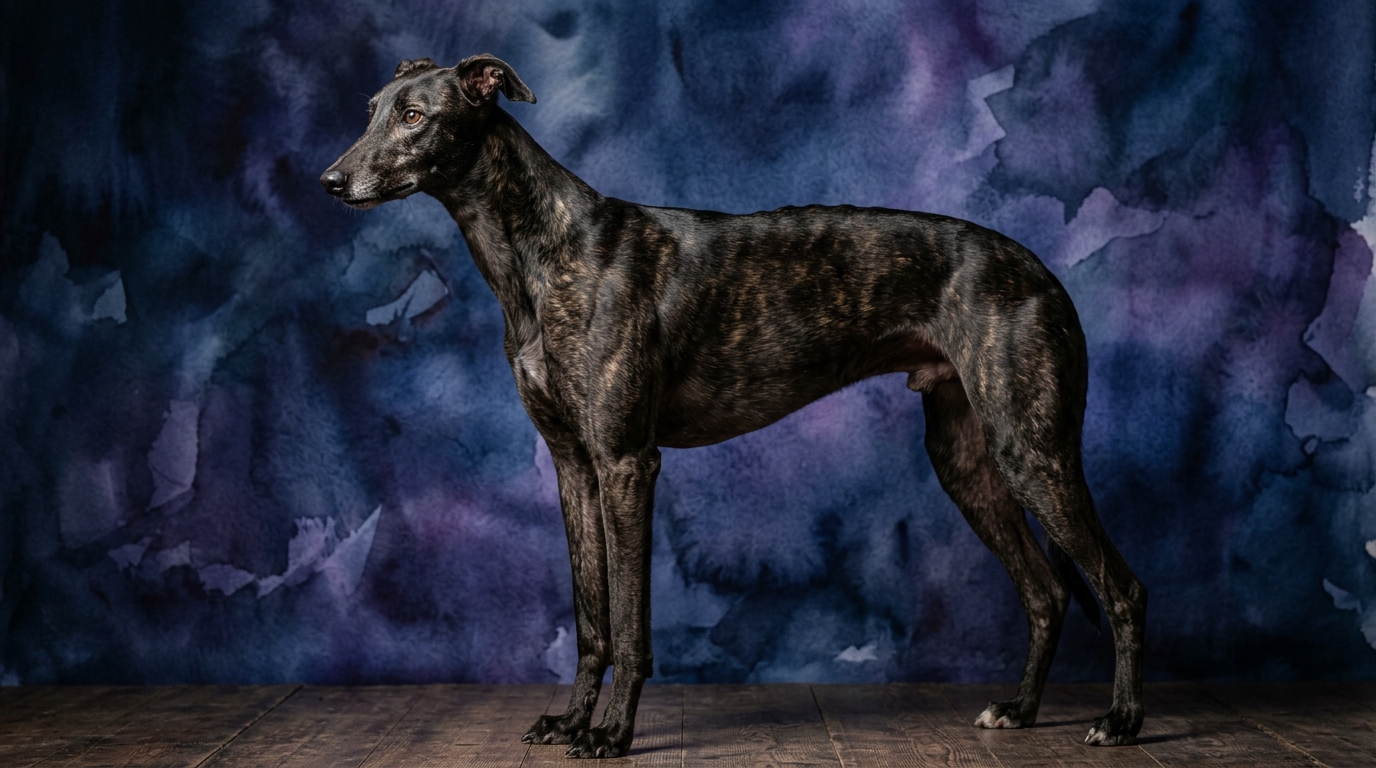
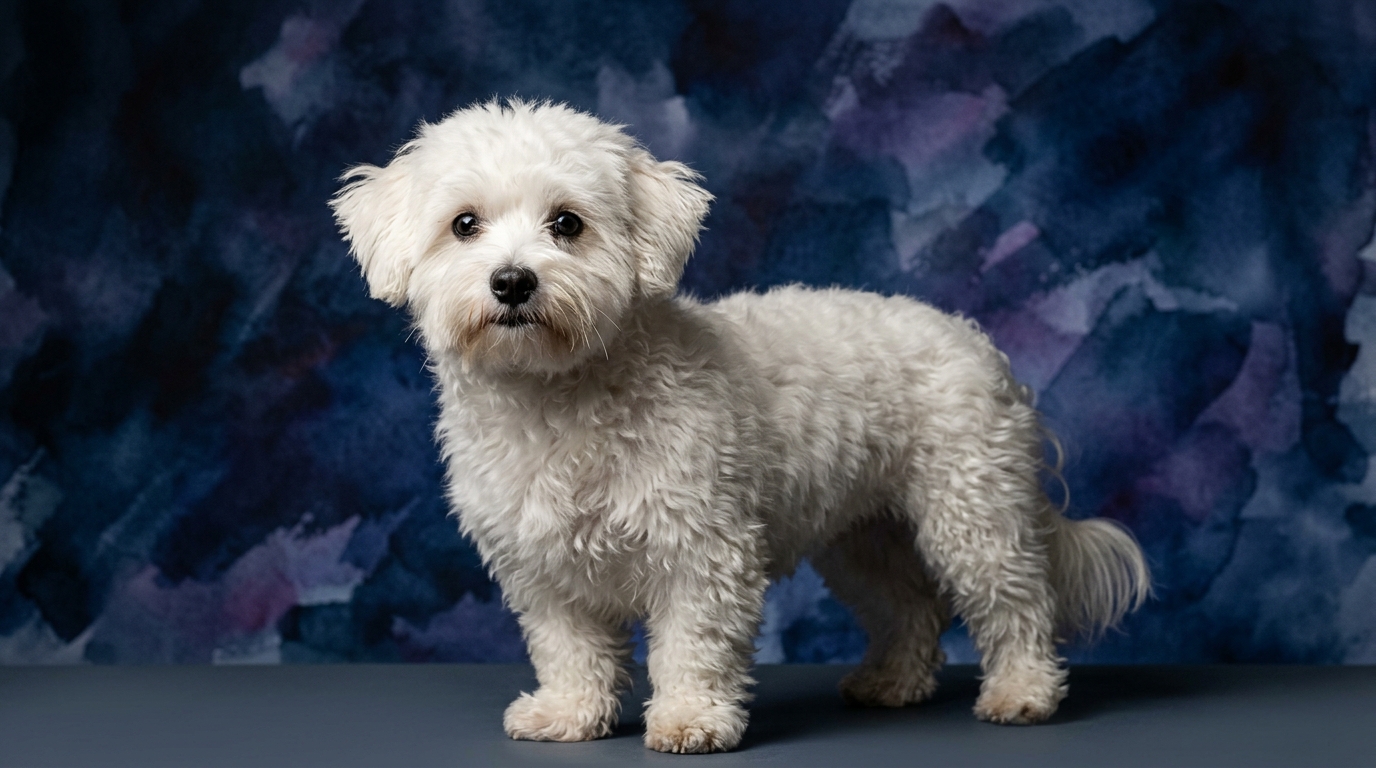
Side-by-Side Cognitive Profiles: Greyhound vs. Coton de Tuléar
The Cosmic Pet Pet IQ Lab employs a five-dimensional framework to assess canine intelligence, offering a nuanced view beyond simple rankings. For the Greyhound, a breed often associated with speed and grace, its profile reveals specific strengths and areas where its unique nature influences its cognitive approach. Problem Solving is rated at 3/5, indicating a capacity to navigate challenges, particularly those related to its primary drive. Training Speed registers 2/5, suggesting that while capable, Greyhounds may require a more patient and tailored approach. Social Intelligence sits at 3/5, reflecting their ability to form bonds and understand subtle cues within their chosen circle. Instinctive Drive is a robust 5/5, clearly highlighting their powerful prey drive and visual hunting capabilities. Memory is scored at 3/5, indicating a solid ability to retain learned behaviors and experiences.
In contrast, the Coton de Tuléar, a charming companion dog, presents a balanced but distinct cognitive makeup. Its Problem Solving ability is also rated 3/5, demonstrating a competent capacity to figure out puzzles, often in service of social interaction or comfort. Training Speed is a respectable 3/5, suggesting a more eager and responsive learner compared to the Greyhound. Social Intelligence matches the Greyhound at 3/5, underscoring their inherent ability to connect with humans and other animals. Their Instinctive Drive is a moderate 3/5, reflecting a playful nature but without the intense, focused drive of a sighthound. Memory, like the Greyhound, is rated 3/5, indicating they reliably recall commands and routines. While not Coren-ranked, the Coton de Tuléar’s profile paints a picture of an adaptable and socially attuned companion.
Where the Greyhound Excels Cognitively
The Greyhound’s cognitive prowess shines brightest in domains directly linked to its primary function: the chase. Its 5/5 Instinctive Drive isn't just about speed; it's a sophisticated cognitive system for visual hunting. This breed possesses an extraordinary ability to process visual stimuli rapidly, identifying and tracking moving objects with unparalleled focus. Their problem-solving (3/5) in this context involves intricate calculations of speed, trajectory, and evasive maneuvers during a pursuit, a form of dynamic, real-time spatial reasoning that few other breeds can match. This isn't abstract puzzle-solving, but an acute, instinct-driven intelligence honed over centuries for effective pursuit.
Furthermore, their memory (3/5) is particularly strong for routes, familiar territories, and the location of prey or perceived prey. A Greyhound might not remember a complex sequence of tricks as readily as some other breeds, but it will remember the fastest way to get to the back fence where squirrels are often spotted, or the precise contours of a running path. Their social intelligence (3/5), while not outwardly effusive, is deeply attuned to the dynamics within their chosen human and canine family, allowing them to understand subtle non-verbal cues from those they trust, often communicating their needs and comfort levels with a quiet dignity.
Where the Coton de Tuléar Takes the Cognitive Lead
The Coton de Tuléar's cognitive strengths are rooted in its role as a devoted companion. Its Training Speed of 3/5, a point higher than the Greyhound, suggests a greater eagerness to engage in cooperative learning and a quicker grasp of new commands and routines. This breed often thrives on positive reinforcement and human interaction, making them highly responsive to training efforts aimed at household manners or even performing playful tricks. Their problem-solving (3/5) frequently manifests in their ability to manipulate their environment or their owners to achieve desired social outcomes, such as getting attention or preferred treats, demonstrating a charmingly intelligent adaptability.
Crucially, the Coton de Tuléar’s social intelligence (3/5) is exceptionally well-suited for domestic life. They exhibit a keen ability to read human emotions and adjust their behavior accordingly, often offering comfort or initiating play at opportune moments. This nuanced understanding of social cues allows them to integrate seamlessly into family life, making them adept at navigating complex household dynamics. Their moderate instinctive drive (3/5) means they are less distracted by external stimuli like fast-moving objects, allowing their cognitive focus to remain more consistently on their human companions and indoor activities, fostering a stronger, more consistent bond.
Training Aptitude: Greyhound vs. Coton de Tuléar
When it comes to training, the Coton de Tuléar generally offers a smoother experience for the average owner. Their Training Speed of 3/5 indicates they pick up new commands with relative ease and often enjoy the process of learning with their human. They are typically motivated by praise, treats, and the desire to please, making them highly receptive to positive reinforcement methods. Their moderate instinctive drive (3/5) means they are less likely to be suddenly distracted by a squirrel darting across the yard or a distant movement, allowing for more focused training sessions in various environments. This makes them adaptable to different training styles and suitable for beginners.
The Greyhound, with its 2/5 Training Speed, requires a more understanding and patient approach. While capable of learning, their powerful 5/5 Instinctive Drive means that if something triggers their prey drive, all conventional training can temporarily become secondary. A Greyhound might perfectly execute a 'stay' command indoors, but a rabbit bolting past outdoors could instantly override it. Their independence, a trait bred for solitary hunting, means they respond best to short, engaging sessions and positive reinforcement, but often need clear boundaries and secure environments to prevent their natural instincts from leading them astray. Owners must understand that a Greyhound's 'stubbornness' is often a manifestation of its deeply ingrained drive, not a lack of understanding.
Matching Breeds to Lifestyles: Active vs. Relaxed Owners
For the truly active owner, especially one who enjoys structured physical activities beyond simple walks, the Greyhound might seem like a natural fit due to its athleticism, but there's a nuance. While they possess incredible bursts of speed, Greyhounds are often '45 mph couch potatoes' indoors. Their mental stimulation comes more from observing their environment and having opportunities for short, intense sprints in a secure area, rather than endurance activities. An active owner who values quiet companionship at home but can provide daily opportunities for safe, off-leash running will appreciate the Greyhound. They thrive with owners who understand their need for both explosive exercise and extensive relaxation, often preferring a calm, predictable home environment where they can decompress after a burst of activity.
The Coton de Tuléar, with its moderate instinctive drive and higher training speed, is an excellent match for owners who desire a more consistently engaged and adaptable companion. While they enjoy play and regular walks, their needs are more focused on social interaction and mental enrichment through training and companionship rather than intense physical exertion. Relaxed owners, or those with varied schedules who can provide consistent attention, interactive play, and opportunities for social outings, will find the Coton to be a delightful fit. They are content participating in family activities, whether it's a stroll in the park or quiet time on the sofa, making them suitable for apartment living or homes with less expansive outdoor space, as long as their social and moderate exercise needs are met.
The Verdict
Choose a Greyhound if you admire independent spirits, appreciate their quiet companionship, and can provide secure spaces for their instinctive need to sprint.
Opt for a Coton de Tuléar if you seek a highly adaptable, socially responsive companion eager for consistent interaction and cooperative learning.
🧠 Find Your Pet's IQ Score
Our Pet IQ Lab assessment covers 25+ tests across 5 cognitive dimensions — personalized to your breed.
Take the Full IQ Test →Frequently Asked Questions
Is the Greyhound difficult to train?
Greyhounds are not necessarily difficult, but their training requires patience and an understanding of their deep-seated prey drive. They respond best to positive reinforcement and short, engaging sessions, recognizing that their instincts can sometimes override learned commands, especially outdoors.
Do Coton de Tuléars require a lot of exercise?
Coton de Tuléars have moderate exercise needs; daily walks and playtime are sufficient. Their primary need is consistent social interaction and mental stimulation through training and companionship, rather than intense physical exertion.
Which breed is better with children?
Both breeds can be good with children, but the Coton de Tuléar's adaptable social intelligence and moderate drive often make it a slightly more naturally patient and playful companion for families with younger children, provided interactions are supervised.