Side-by-Side Cognitive Profile: Greyhound vs. Greater Swiss Mountain Dog
The Cosmic Pet Pet IQ Lab provides a detailed lens through which to examine the cognitive strengths of these two distinct breeds. While both score similarly in several areas, their nuanced application of these abilities truly sets them apart.
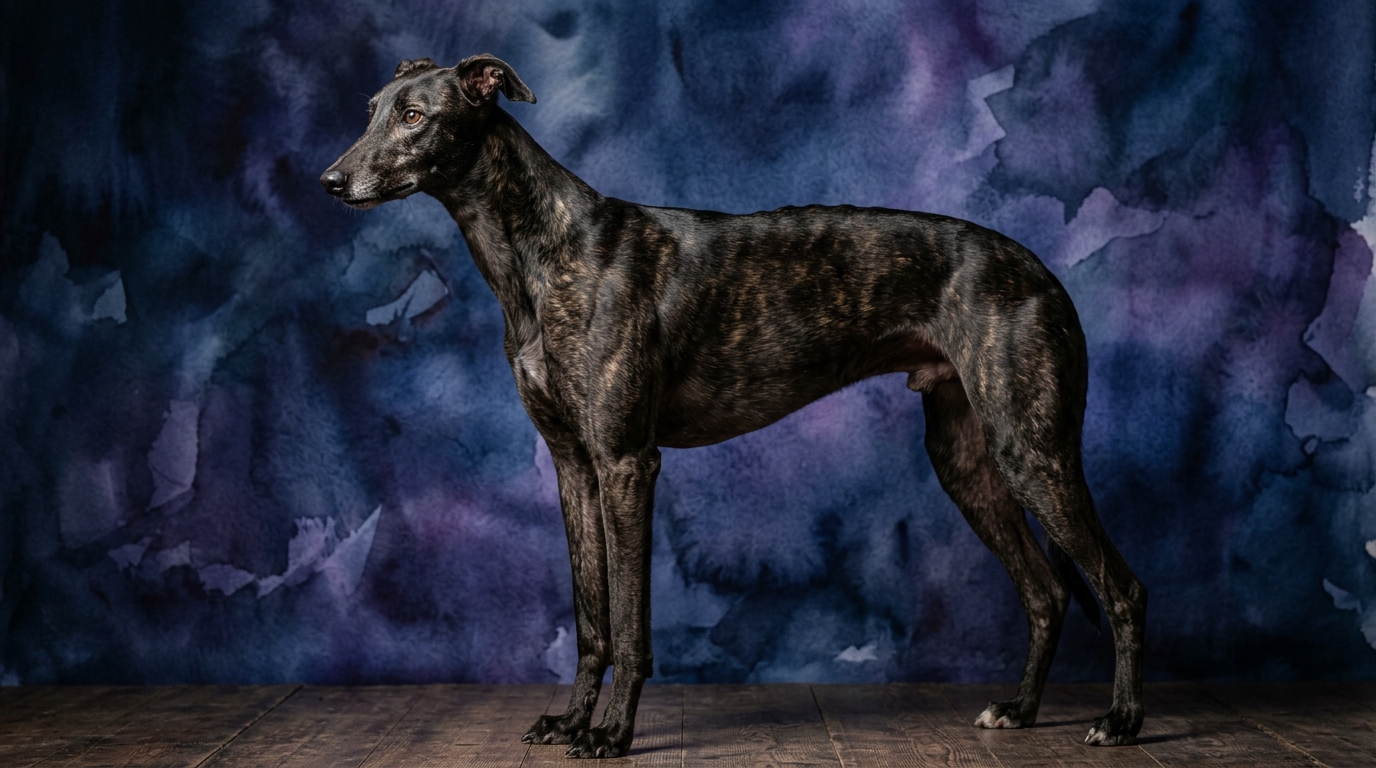
For the **Greyhound**, a Hound breed ranked #46 by Coren, their cognitive profile reveals a moderate Problem Solving ability at 3/5, often focused on efficient navigation and direct solutions. Their Training Speed is 2/5, influenced by an independent nature and strong environmental focus. Social Intelligence stands at 3/5, indicating deep bonds with close companions but often a reserved demeanor with strangers. Their Instinctive Drive is an exceptional 5/5, dominated by their powerful chase instinct, and Memory is a moderate 3/5, retaining routines and learned behaviors.
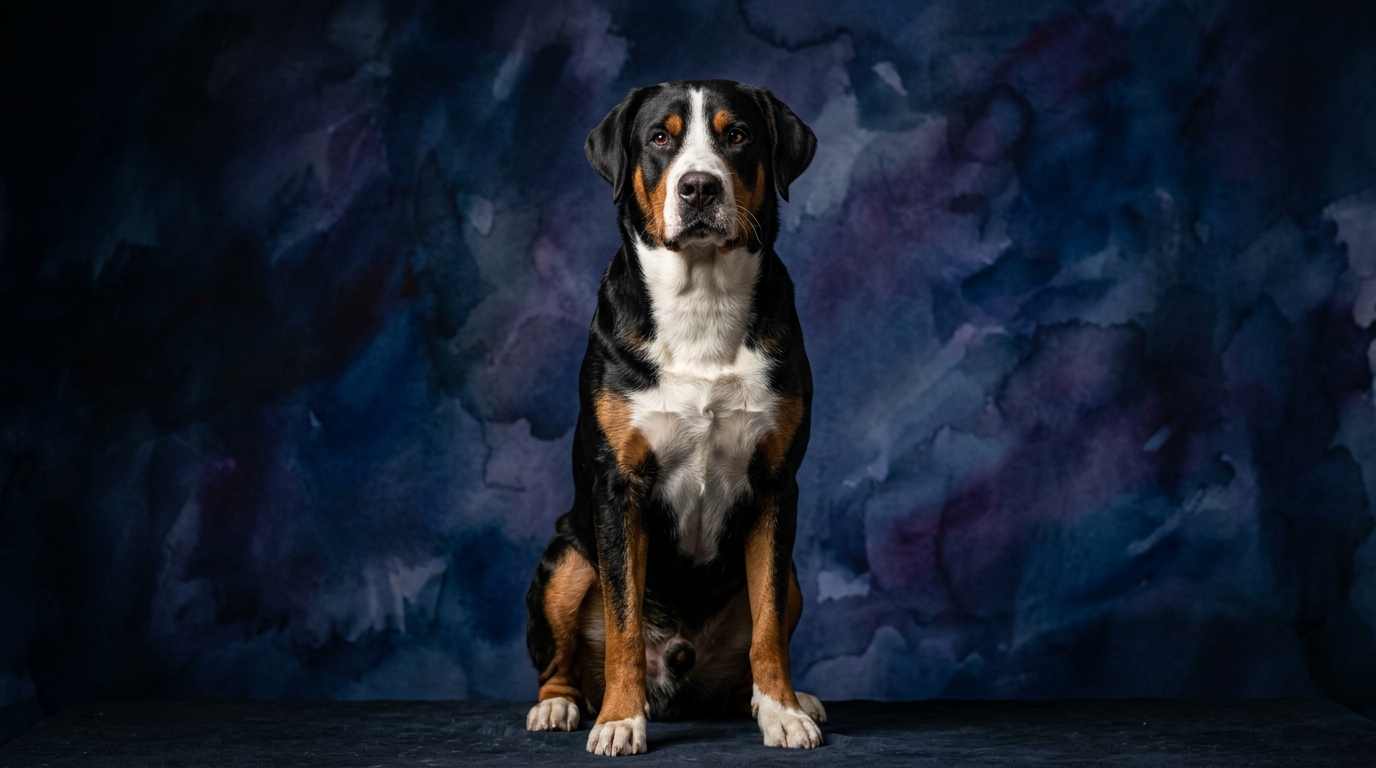
The **Greater Swiss Mountain Dog** (GSMD), a Working breed without a Coren ranking, presents a balanced cognitive landscape. They share a 3/5 for Problem Solving, demonstrating practical intelligence in their environment and a logical approach to tasks. Their Training Speed is a slightly higher 3/5, reflecting a cooperative spirit and eagerness to engage. Social Intelligence is also 3/5, allowing for strong family integration and a confident, amiable disposition. Their Instinctive Drive is a moderate 3/5, encompassing a blend of guarding and working desires, and their Memory is a solid 3/5, supporting their reliability in various roles.
Where the Greyhound Excels Cognitively
The Greyhound's undeniable cognitive triumph lies in its unparalleled instinctive drive, scoring a perfect 5/5. This isn't merely about physical speed, but a deeply ingrained mental architecture dedicated to visual hunting and pursuit. Their brains are wired for rapid processing of movement across vast distances, making them masters of pattern recognition related to fleeing objects. This manifests as an extraordinary focus and single-minded determination when their sighthound instincts are engaged, allowing them to make split-second decisions based on visual cues, a cognitive feat distinct from breeds relying on scent or intricate problem-solving. While their problem-solving and memory scores are on par with the Greater Swiss, their cognitive 'win' is in the specialization of their intellect towards this specific, high-velocity task, demonstrating a form of operational intelligence that few breeds can match. This acute sensory processing and immediate action-response loop is a unique cognitive strength, shaping how they perceive and interact with the world around them.
This specialized cognitive function means Greyhounds possess an exceptional ability to learn and refine strategies related to chasing and navigating open spaces. They can quickly assess trajectories, anticipate movements, and execute precise maneuvers, all driven by this powerful innate urge. This isn't just about raw speed; it's about a sophisticated cognitive system that integrates visual input, spatial awareness, and motor planning into a seamless, highly efficient package. Owners will observe this not just in a chase, but in their keen observation of distant movements and their immediate, focused reaction, highlighting a distinct intellectual specialization for their ancestral purpose.
Where the Greater Swiss Mountain Dog Excels Cognitively
The Greater Swiss Mountain Dog distinguishes itself with a superior training speed, rating 3/5 compared to the Greyhound's 2/5. This difference isn't about raw intellectual capacity, but rather a greater inherent willingness to engage in cooperative learning and a more direct responsiveness to handler instruction. Their historical role as farm dogs, hauling carts and guarding livestock, required them to be attentive and amenable to direction, fostering a cognitive disposition that values collaboration. This translates to a quicker grasp of new commands and a more consistent application of learned behaviors in various contexts. While their problem-solving and social intelligence scores mirror the Greyhound's, their cognitive edge lies in this greater receptivity to structured learning and a perhaps more generalized adaptability to diverse tasks.
Their moderate instinctive drive, at 3/5, also means their focus is less singularly channeled than a sighthound's, allowing for a broader application of their cognitive resources towards human-directed activities and a more versatile understanding of tasks presented to them. This cognitive flexibility, combined with their cooperative nature, makes them proficient in a wider array of obedience and working disciplines. They tend to approach new challenges with a steady, thoughtful demeanor, processing information in a way that prioritizes understanding and compliance, making them reliable partners for various tasks beyond their initial training. This capacity for generalist learning and application of cognitive skills across different contexts is a clear strength.
Training Dynamics: Greyhound Independence vs. GSMD Cooperation
When considering which breed presents an easier training journey, the Greater Swiss Mountain Dog (GSMD) holds a distinct advantage with its 3/5 training speed compared to the Greyhound's 2/5. This isn't to say Greyhounds are untrainable, but their cognitive makeup often necessitates a more patient, nuanced approach. Greyhounds, as sighthounds, are inherently independent thinkers whose primary cognitive focus is often directed towards their environment, particularly moving objects, rather than immediate handler cues. Their strong instinctive drive (5/5) means that once something catches their eye, their entire cognitive process locks onto pursuit, making recall or obedience a secondary consideration. Training a Greyhound often requires significant effort to override or redirect this powerful innate impulse, making initial obedience slower to solidify and requiring consistent reinforcement in highly distracting environments. Their problem-solving abilities, while effective in their niche, are less often applied to solving 'how to please my human' puzzles.
In contrast, the Greater Swiss Mountain Dog's historical role as a farm dog, working closely with humans, has fostered a more cooperative cognitive disposition. They are generally more eager to please and find satisfaction in engaging with their handlers, which translates to a quicker uptake of commands and a more reliable execution of learned behaviors. While they too possess instincts, their moderate 3/5 drive means they are less likely to become singularly fixated, allowing their attention to be more consistently directed towards training exercises. Their problem-solving abilities, while similar on paper, are often applied in a context of working *with* a human, making them more receptive to structured learning environments and less prone to the independent decision-making that can make Greyhound training more challenging. This difference in intrinsic motivation and focus significantly impacts the ease and speed of their training.
Matching Canine Cognition to Owner Lifestyle
The choice between a Greyhound and a Greater Swiss Mountain Dog (GSMD) depends significantly on an owner's lifestyle and their definition of 'active' or 'relaxed.' For owners who appreciate structured activity and purposeful engagement, the Greater Swiss Mountain Dog often makes an ideal companion. Their moderate instinctive drive (3/5) and historical working background mean they thrive on having a job to do, whether it's obedience training, carting, hiking, or even competitive dog sports. They possess a robust stamina and a cognitive need for regular mental and physical stimulation that goes beyond a simple stroll. An owner who enjoys consistent outdoor adventures, has the time for regular training sessions, and can provide a sense of purpose will find the GSMD to be a fulfilling, active partner, as their problem-solving and social intelligence are geared towards cooperative activity.
Conversely, the Greyhound, despite its legendary speed, often suits a more relaxed indoor lifestyle punctuated by intense, but relatively short, bursts of activity. Their powerful instinctive drive (5/5) means they require opportunities to run and chase safely, but once that drive is satisfied, they are remarkably calm and content indoors, often referred to as '45 mph couch potatoes.' A relaxed owner who enjoys quiet evenings, but is committed to providing a secure, fenced area for daily sprints, or regular leashed walks focused on sniffing and moderate exercise, would find a Greyhound's cognitive demand for intense but brief outdoor fulfillment aligns well. They don't typically require hours of continuous activity but do need an outlet for their unique physical and cognitive need to run, making them surprisingly good fits for apartment living if their exercise needs are met in a controlled environment and their independent nature is respected.
The Verdict
Choose a Greyhound if you appreciate an independent, quiet companion who thrives on brief, intense bursts of running and then settles into a remarkably calm indoor existence, provided their powerful chase instinct is managed safely.
Opt for a Greater Swiss Mountain Dog if you seek a robust, cooperative partner eager for consistent engagement in structured activities, willing to learn, and requiring a purposeful role in an active household.
🧠 Find Your Pet's IQ Score
Our Pet IQ Lab assessment covers 25+ tests across 5 cognitive dimensions — personalized to your breed.
Take the Full IQ Test →Frequently Asked Questions
Are Greyhounds difficult to train because of their low training speed?
Greyhounds aren't inherently difficult, but their 2/5 training speed reflects an independent nature and strong prey drive that requires patience and consistent, positive reinforcement. They learn best when training accommodates their unique motivations, often preferring brief, engaging sessions over repetitive drills.
Does 'not Coren-ranked' mean the Greater Swiss Mountain Dog is less capable?
Not at all. Coren's rankings primarily assess obedience intelligence. The Greater Swiss Mountain Dog's lack of ranking simply means it wasn't included in that specific study, not that it lacks problem-solving, social, or memory capabilities, which are rated at a moderate 3/5.
How do their social intelligence scores (3/5) manifest differently?
While both score 3/5, Greyhounds tend to be more reserved, forming deep bonds with family but often aloof with strangers, reflecting their sighthound independence. Greater Swiss Mountain Dogs are generally more overtly confident and amiable, integrating readily into family life and often displaying a watchful but friendly demeanor towards newcomers due to their guarding instincts.