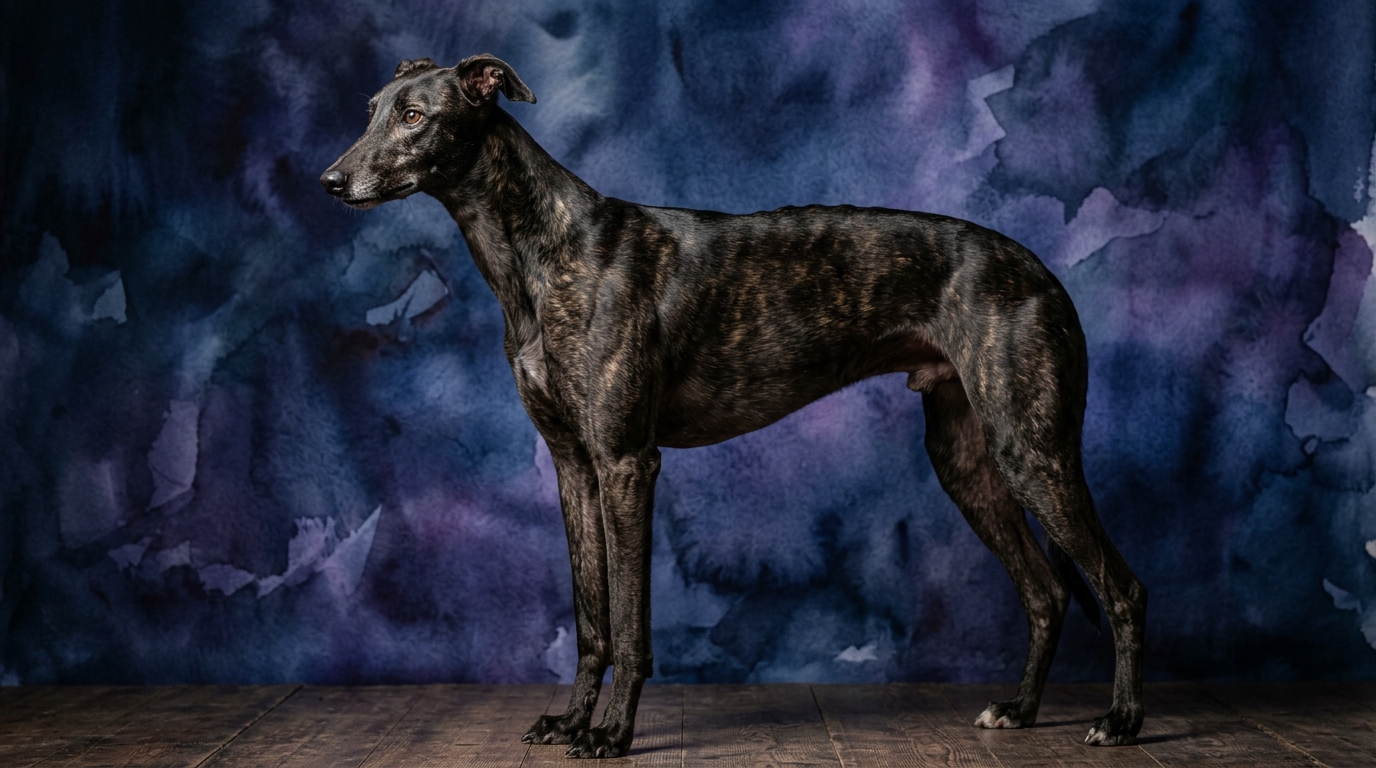
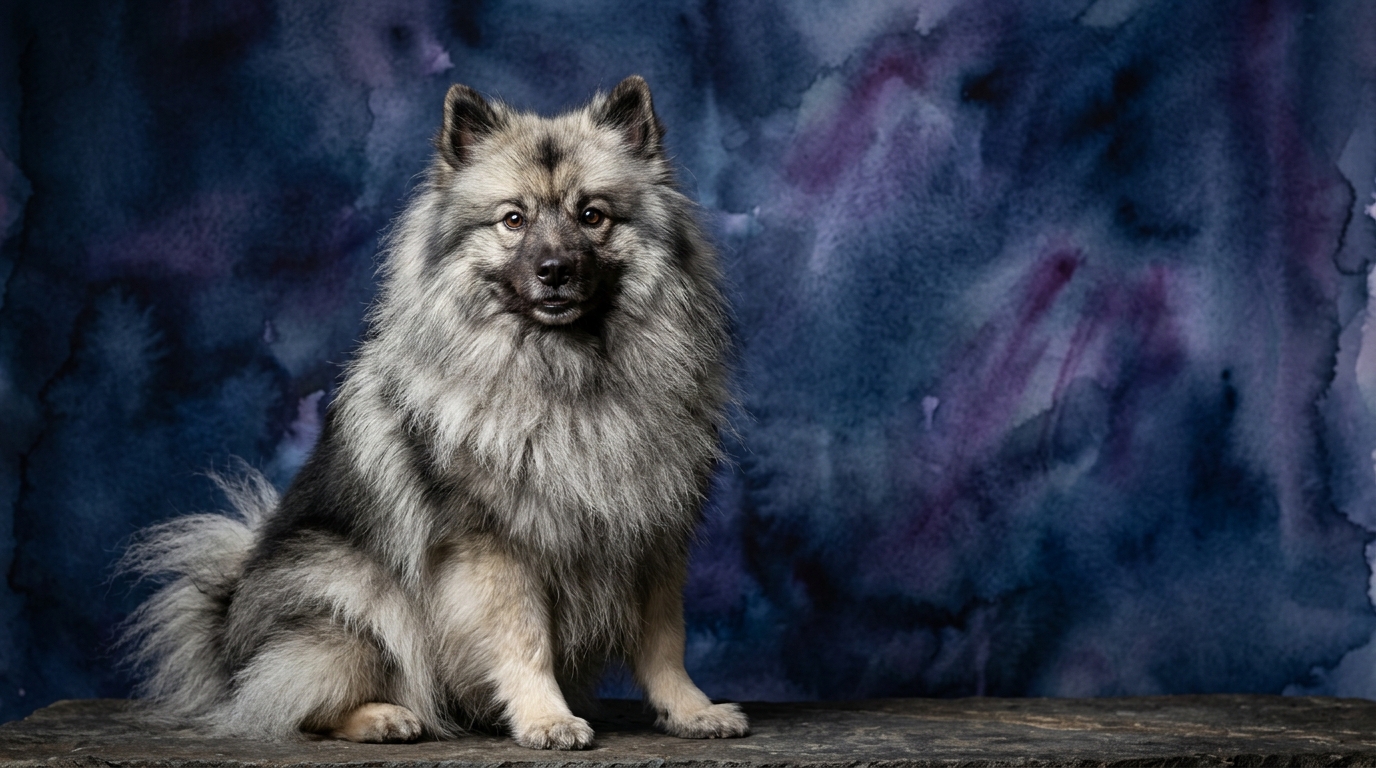
Side-by-Side Cognitive Profiles
The Greyhound, with a Coren rank of #46, falls into the 'average working/obedience intelligence' category, indicating they typically grasp new commands after 25-40 repetitions. Their problem-solving ability is rated 3/5, often manifesting in direct, efficient solutions to environmental challenges rather than complex abstract thought. Training speed for Greyhounds is 2/5; their independent nature, a legacy of their hunting role, means they may not always find human-initiated tasks immediately compelling. Social intelligence is 3/5, denoting a capacity for deep bonds and sensitivity to human moods, though often expressed with a reserved demeanor. Their instinctive drive is a remarkable 5/5, defining their profound focus on visual identification, explosive acceleration, and unwavering pursuit of moving targets. Memory for Greyhounds is 3/5, functional for routines and known environments but less exceptional for intricate sequences.
Conversely, the Keeshond, ranking #16 in Coren's hierarchy, belongs to the 'excellent working dogs' category, typically understanding new commands within 5-15 repetitions. Their problem-solving scores 4/5, reflecting a higher aptitude for independent thought and resourcefulness, such as manipulating objects or navigating complex situations. Training speed is 4/5, indicating a rapid acquisition of new commands and routines, fueled by an eagerness to engage. Social intelligence matches the Greyhound at 3/5; Keeshonds are attuned to family emotions and thrive on companionship. Their instinctive drive is a more moderate 3/5, primarily expressed through vigilance and a desire to be involved, rather than intense physical pursuit. A standout cognitive strength for the Keeshond is their 5/5 memory, enabling excellent recall of commands, sequences, and environmental cues over extended periods, which significantly aids their trainability.
Where the Greyhound Wins Cognitively
The Greyhound's cognitive architecture is a testament to specialized efficiency, particularly in its profound instinctive drive (5/5). This isn't just about physical speed; it represents a finely tuned mental system for visual processing of motion, rapid assessment of pursuit opportunities, and the seamless integration of physical response. A Greyhound's brain excels at identifying subtle movement patterns, calculating optimal trajectories, and executing coordinated, lightning-fast actions. While their general problem-solving is rated 3/5, within the specific context of the chase, they are incredibly effective at adapting and reacting to dynamic environments. Their cognitive strength lies in the elegant simplicity and profound effectiveness of their predatory sequence, honed over millennia for unparalleled performance in sight-hunting.
Where the Keeshond Wins Cognitively
The Keeshond's cognitive advantages are most evident in their adaptability and superior retention. Their 4/5 problem-solving ability suggests a greater capacity for independent strategic thinking, allowing them to figure out how to access desired items or navigate complex household scenarios. This resourcefulness aligns with their historical role as vigilant watchdogs who needed to be observant and clever. Moreover, their exceptional 5/5 memory is a significant cognitive asset, enabling them to retain a vast array of commands, routines, and experiences over time. This superior recall facilitates the learning of intricate sequences and a nuanced understanding of their environment, making them adept at tasks requiring multiple steps or long-term behavioral consistency. Combined with their rapid training speed, this memory allows for a broad and deep comprehension of human expectations and complex cues.
Which is Easier to Train and Why
The Keeshond is demonstrably the easier breed to train, primarily due to their superior training speed (4/5) and exceptional memory (5/5). Their Coren rank of #16 directly reflects this, indicating a quick grasp of new commands and a strong intrinsic motivation for compliance. A Keeshond learns rapidly because they retain information effectively and are often eager to engage in interactive learning sessions with their human companions. In contrast, the Greyhound, with a training speed of 2/5 and memory of 3/5, typically requires more patience and consistent repetition. Their independent nature, a product of their history as solitary hunters, means they may not always perceive commands as immediately relevant or rewarding. While Greyhounds are capable of learning, their powerful instinctive drive (5/5) can sometimes overshadow other motivations, making consistent recall a greater challenge when faced with a compelling visual stimulus.
Matching Breeds to Owner Lifestyles
The choice between these breeds often hinges on an owner's preferred activity level and engagement style. The Keeshond, with its moderate instinctive drive (3/5) and strong desire for companionship, generally suits a wide spectrum of owners, including those with a more relaxed daily pace. They thrive on consistent mental engagement, daily walks, and opportunities for mental enrichment like puzzle toys or learning new tricks, but do not typically demand intense, high-impact exercise. Their social intelligence (3/5) ensures they enjoy being an integral part of family activities without requiring constant strenuous physical exertion. The Greyhound, conversely, despite their reputation as "45 mph couch potatoes" indoors, requires owners who understand and can safely accommodate their profound instinctive drive (5/5). While they relish lounging, they need regular, secure opportunities to run and express their innate urge to chase, making them suitable for active owners who can provide access to securely fenced areas for sprinting or participate in activities like lure coursing. Their problem-solving (3/5) and social intelligence (3/5) are more geared towards practical comfort and quiet, affectionate companionship rather than highly interactive, high-energy play.
The Verdict
Opt for a Greyhound if you appreciate a serene, independent companion who will thrive with safe, secure opportunities to unleash their incredible speed and express their profound instinctive drive.
Select a Keeshond if you desire an alert, highly trainable companion eager to learn, remember, and engage in varied mental challenges and family activities.
🧠 Find Your Pet's IQ Score
Our Pet IQ Lab assessment covers 25+ tests across 5 cognitive dimensions — personalized to your breed.
Take the Full IQ Test →Frequently Asked Questions
Is a Greyhound hard to train?
Greyhounds are not inherently "hard" to train, but they do require patience and understanding due to their independent nature and strong prey drive. They learn at a slower pace (2/5 training speed) and benefit greatly from positive reinforcement and consistent training methods that make tasks rewarding.
Do Keeshonds need a lot of exercise?
Keeshonds have moderate exercise needs; regular daily walks and interactive playtime are usually sufficient to keep them physically content. Their cognitive needs are often higher, requiring consistent mental stimulation to prevent boredom, which can be satisfied through training sessions and engaging puzzle toys.
Which breed is better with children?
Both breeds can be wonderful with children, depending on individual temperament, socialization, and proper introductions. Greyhounds are often gentle and tolerant, though sometimes reserved, while Keeshonds are typically playful and devoted, thriving on active family interaction and supervision.