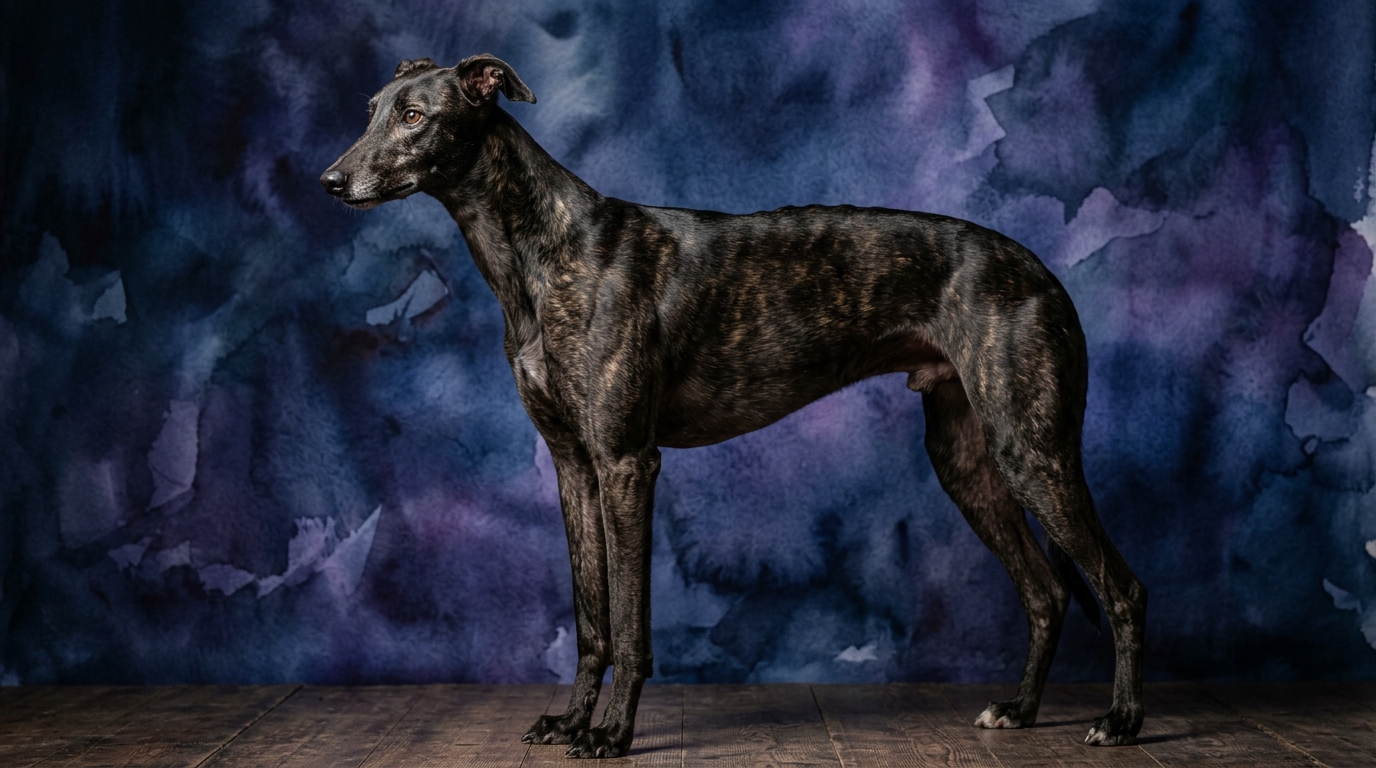
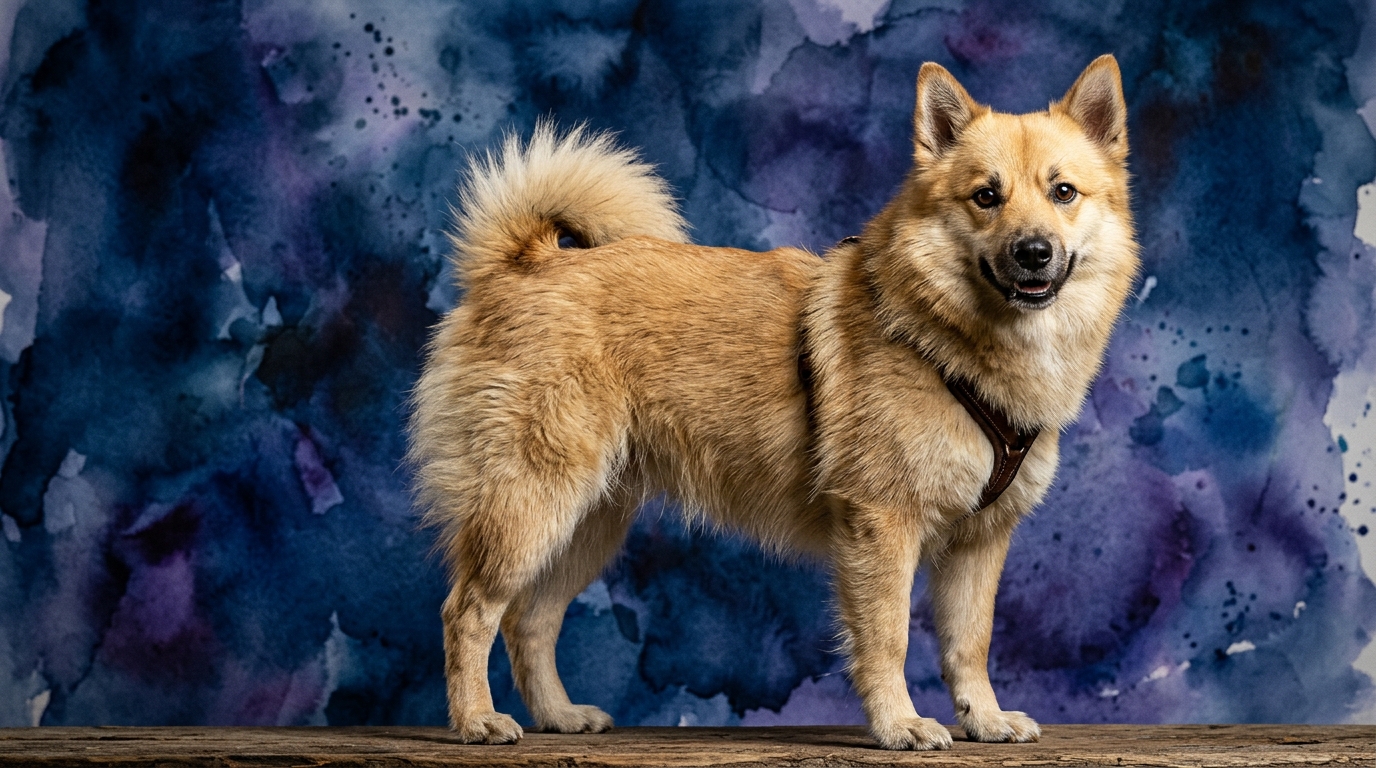
Side-by-Side Cognitive Profiles: Greyhound vs. Norwegian Buhund
The Cosmic Pet Pet IQ Lab employs a five-dimensional framework to assess canine intelligence, moving beyond simplistic notions to explore specific cognitive strengths. This allows for a granular comparison between breeds like the Greyhound, a Hound, and the Norwegian Buhund, a Herding dog, highlighting where their mental capacities diverge and align.
For the **Greyhound**, a breed Coren-ranked at #46, their cognitive profile is distinct. Their **Problem Solving** is rated 3/5, indicating an ability to efficiently navigate direct routes, particularly towards a chase object or a desired comfortable spot, but they are not typically inclined towards complex, multi-step puzzles. **Training Speed** stands at 2/5; while they learn, it often requires consistent, positive reinforcement and patience, given their independent nature and focus on immediate gratification. Their **Social Intelligence** is 3/5, meaning they form strong bonds with their human companions and can read cues well within their established social circle, though they are often reserved with strangers. The Greyhound's **Instinctive Drive** is a robust 5/5, centered almost entirely on their powerful prey drive, which dictates much of their behavior and decision-making. Finally, their **Memory** is 3/5, allowing them to retain learned routines, commands, and familiar faces reliably.
The **Norwegian Buhund**, a Herding breed not currently Coren-ranked, presents a slightly different cognitive landscape. Their **Problem Solving** is also 3/5, often manifesting in practical ways like maneuvering livestock or figuring out how to retrieve a desired toy from a tricky spot, demonstrating adaptability in dynamic situations. Their **Training Speed** is 3/5, suggesting they pick up new commands with relative ease and often enjoy the engagement of learning. **Social Intelligence** is rated 3/5, reflecting their strong family orientation and ability to understand human emotions and intentions, often using vocalizations to communicate. The Buhund's **Instinctive Drive** is 3/5, primarily expressed as a moderate herding instinct, which can involve 'gathering' family members or toys, but is less intense and more manageable than a strong prey drive. Their **Memory** is 3/5, enabling them to remember commands, routines, and experiences consistently over time.
Where the Greyhound Excels Cognitively
The Greyhound's primary cognitive advantage lies in its exceptional instinctive drive, rated 5/5, and the specific problem-solving skills that accompany it. While their general problem-solving is 3/5, within the context of pursuit, it becomes extraordinarily efficient. A Greyhound's brain is wired for immediate, decisive action in a chase scenario; they can rapidly assess the fastest, most efficient route to intercept a moving target, demonstrating superior spatial reasoning and quick decision-making under high-speed conditions. This isn't about complex logic, but about unparalleled efficiency in a very specific, evolutionary context. Their memory, while 3/5 overall, is particularly sharp for recalling optimal running lines, familiar chase paths, and the routines associated with their exercise, allowing them to perform their athletic feats with precision and grace. This specialized cognitive strength, honed over centuries for coursing, makes them masters of rapid, instinct-driven execution.
Where the Norwegian Buhund Excels Cognitively
The Norwegian Buhund's cognitive strengths lean towards adaptability and communicative intelligence, despite similar ratings in some areas. Their 3/5 problem-solving, coupled with a 3/5 training speed, indicates a flexible mind eager to engage with new challenges. A Buhund can quickly learn complex sequences in agility or adapt to different herding scenarios, showcasing a practical intelligence that applies to varied tasks. Unlike the Greyhound's specialized chase focus, the Buhund's problem-solving is more broadly applicable, allowing them to excel in diverse training environments. Their social intelligence, while rated 3/5, often manifests through distinct vocalizations, a form of communication that suggests a nuanced understanding of their environment and family's needs. They might use specific barks to alert to different situations or express desires, demonstrating a more active and engaged social cognition compared to the often-reserved Greyhound. This active engagement makes them responsive and capable partners in a wider range of activities.
Training Ease and Real Behavioral Differences
When it comes to training, the subtle differences in their cognitive profiles translate into tangible behavioral distinctions. The **Greyhound**, with a training speed of 2/5, generally requires more patience and a highly consistent approach. Their independent streak and powerful prey drive mean they can be easily distracted by movement and may not always see the immediate value in performing a command if something more interesting (like a squirrel) is present. Off-leash reliability, particularly in unfenced areas, is a significant challenge due to their inherent drive to chase. They respond best to positive reinforcement but are not typically driven by an overwhelming desire to 'please' in the same way some other breeds are. They are also generally quiet dogs, less prone to nuisance barking, which simplifies managing noise levels.
The **Norwegian Buhund**, with a training speed of 3/5, tends to be more eager to engage in training and pick up commands more quickly. Their herding background means they often thrive on having a 'job' and enjoy interactive learning sessions. This eagerness to participate makes them generally more responsive to cues and less likely to be distracted by environmental stimuli unrelated to their task. However, Buhunds are known for their vocal nature, a trait stemming from their herding roots where barking was used to manage livestock. This means training often needs to include managing their propensity for barking, which can be a significant behavioral difference from the typically quiet Greyhound. While both breeds benefit from positive reinforcement, the Buhund's inherent desire for engagement often makes the training process feel more collaborative and less like a negotiation.
Suited Owners: Active Engagement vs. Relaxed Companionship
The distinct cognitive and behavioral traits of these breeds mean they thrive with different types of owners. The **Greyhound** is often described as a '45 mph couch potato.' While they need bursts of intense exercise, typically a good sprint in a securely fenced area, they are remarkably calm and quiet indoors. They are not built for endurance running or demanding constant mental tasks. They suit owners who appreciate a peaceful, affectionate companion, are comfortable with a dog that enjoys long naps, and can provide safe, off-leash opportunities for them to stretch their legs. They are not ideal for owners seeking a jogging partner or a dog to participate in complex dog sports, but rather for those who value quiet companionship and gentle walks.
The **Norwegian Buhund**, by contrast, requires more consistent mental and physical engagement. Their herding background and relatively higher training speed mean they thrive on having a purpose. They need regular, varied exercise that goes beyond simple walks, often enjoying activities like agility, obedience, or trick training. They are interactive dogs who enjoy being involved in family activities and appreciate owners who are committed to ongoing training and mental stimulation. Buhunds are well-suited for active owners who enjoy outdoor adventures, are prepared for a vocal companion, and are willing to dedicate time to channeling their energy and intelligence into productive outlets. They are less suited for owners seeking a purely relaxed companion and more for those who want an engaged, working partner.
The Verdict
Choose the Greyhound if you seek a quiet, elegant companion who enjoys short, exhilarating sprints followed by long, peaceful naps, and you appreciate their independent, gentle nature.
Opt for the Norwegian Buhund if you desire an engaged, versatile, and vocal partner who thrives on interactive training, enjoys a 'job,' and will enthusiastically join you in various active pursuits.
🧠 Find Your Pet's IQ Score
Our Pet IQ Lab assessment covers 25+ tests across 5 cognitive dimensions — personalized to your breed.
Take the Full IQ Test →Frequently Asked Questions
Are Greyhounds difficult to train due to their high prey drive?
Greyhounds can present training challenges due to their intense instinctive drive to chase, making off-leash reliability difficult in unsecured areas. However, with consistent, positive reinforcement and understanding their specific motivations, they learn commands and routines well, particularly when rewards are highly valued by them.
Do Norwegian Buhunds bark a lot?
Norwegian Buhunds are known for being vocal, often using barks, yips, and howls to communicate or alert their owners. This trait stems from their herding background where vocalization was used to manage livestock, so early and consistent training is crucial to manage and appropriately channel their natural tendency to bark.
Which breed is better for a first-time dog owner?
Both breeds have unique needs. A Greyhound might suit a first-time owner who values a calm indoor presence and can manage their specific exercise requirements in secure areas. A Norwegian Buhund, while eager to please, requires more consistent and varied mental stimulation and training engagement, making them better for an owner prepared for an active and involved partnership.