Side-by-Side Cognitive Profiles
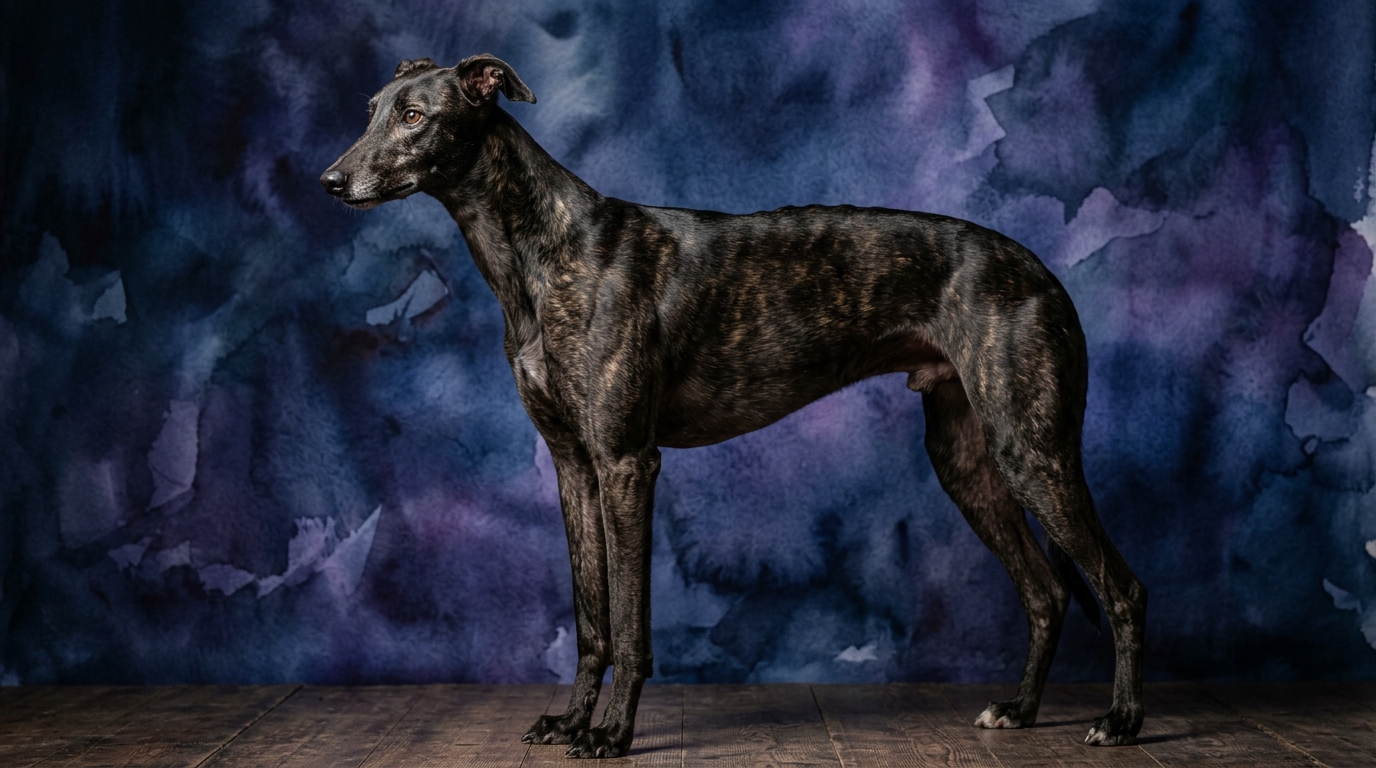
At first glance, the cognitive scores for Greyhounds and Otterhounds present some interesting parallels and subtle distinctions, reflecting their specialized roles. The Greyhound, a sighthound refined for explosive speed, registers a Problem Solving score of 3/5. This suggests an aptitude for practical, immediate solutions, often visually driven, but perhaps less inclined towards complex, abstract puzzles. Its Training Speed is rated 2/5, indicating a more independent learning curve where motivation must align closely with natural instincts. Social Intelligence stands at 3/5, signifying a capacity for connection but perhaps a more reserved social demeanor. Crucially, its Instinctive Drive is a commanding 5/5, reflecting an unparalleled focus on visual pursuit and high-speed chase. Memory for the Greyhound is 3/5, adequate for retaining essential skills and experiences.
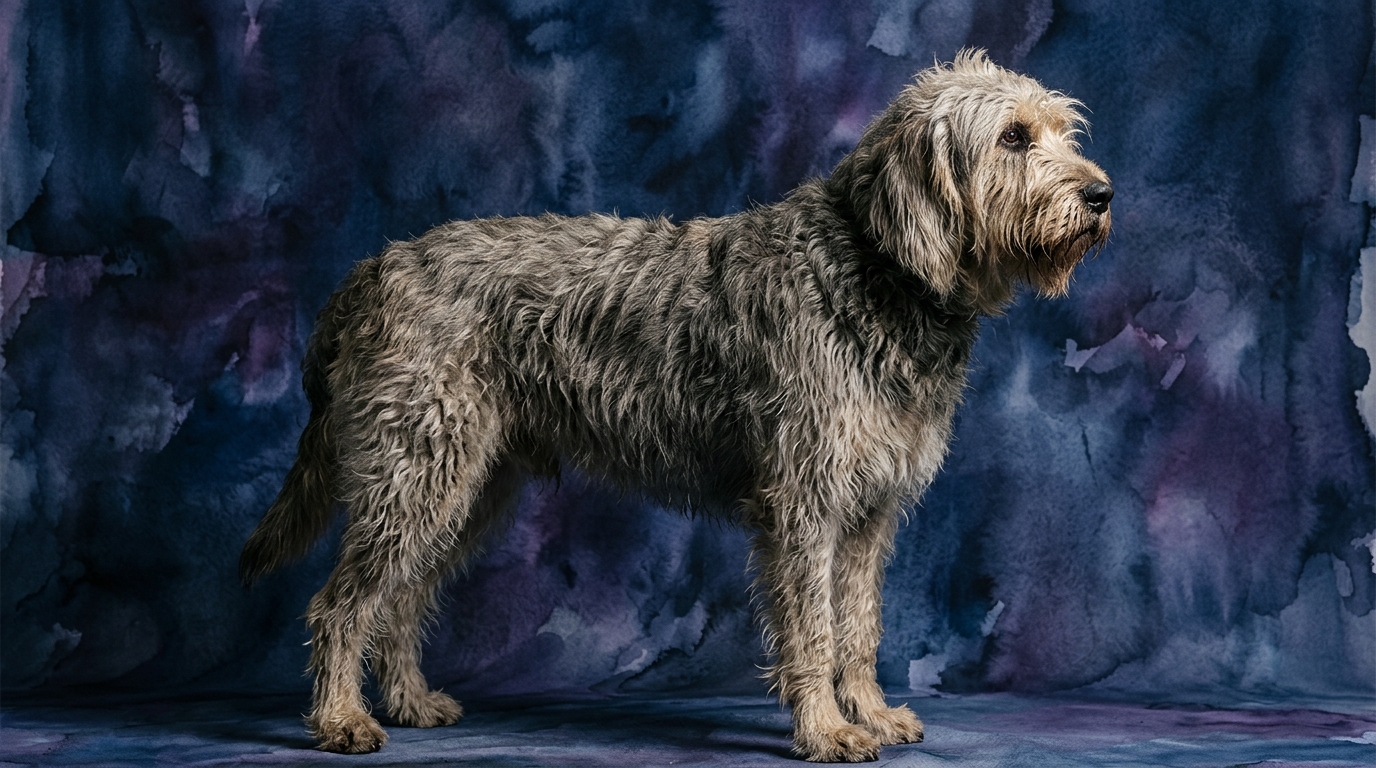
The Otterhound, a scent hound developed for tenacious water pursuit, shares the Greyhound's 3/5 in Problem Solving, though its application leans heavily into deciphering complex olfactory information over extended periods. It shows a slightly improved Training Speed at 3/5, hinting at a greater cooperative spirit in learning new tasks. Social Intelligence matches the Greyhound's 3/5, but likely manifests as a more gregarious, pack-oriented disposition. Its Instinctive Drive is 3/5, powerful and persistent for scenting, yet not as singularly focused on speed as the Greyhound. Memory for the Otterhound is also 3/5, proficient for recalling scent trails and learned routines.
Where the Greyhound Excels Cognitively
The Greyhound's cognitive strengths are deeply intertwined with its legacy as a pursuit athlete. Its most prominent cognitive advantage lies in its Instinctive Drive, scoring a perfect 5/5. This isn't just about raw speed; it's a cognitive architecture optimized for rapid threat assessment and target acquisition over vast distances, driven by visual cues. A Greyhound's brain is wired for split-second decisions related to movement, trajectory, and evasion, allowing it to process visual information at incredible speeds and react with unparalleled agility. This manifests as exceptional spatial awareness and an acute ability to track and predict the movement of fast-moving objects, a highly specialized form of problem-solving within its domain. While its general problem-solving is 3/5, its specific problem-solving related to chase dynamics—calculating intercepts, adjusting for terrain, and maintaining focus on a fleeting target—is a testament to its highly evolved sighthound cognition. They demonstrate a unique form of 'flow state' when engaged in a chase, where all cognitive resources are dedicated to the pursuit, making them incredibly efficient and single-minded in that context.
Where the Otterhound Shows Cognitive Advantages
The Otterhound's cognitive prowess shines in areas demanding persistence, cooperation, and sophisticated sensory processing. Its slightly higher Training Speed (3/5 vs. Greyhound's 2/5) indicates a more eager and cooperative disposition towards learning from humans. This likely stems from centuries of working in tandem with hunters, requiring them to follow complex instructions and maintain focus on a shared objective over long periods. More profoundly, while its Problem Solving score is also 3/5, the *nature* of this problem-solving is distinct and arguably more intricate in certain contexts. An Otterhound excels at sustained, multi-layered problem-solving related to scent. This involves not merely detecting a scent, but interpreting its age, direction, and intensity, differentiating it from myriad other odors, and navigating challenging environments—water, dense undergrowth, varied terrain—all based on olfactory data. This requires tremendous cognitive stamina, a detailed mental mapping of scent information, and an ability to hold a complex 'scent picture' in memory while actively pursuing it. This sustained focus and intricate sensory processing represent a unique cognitive strength, demanding a different kind of mental agility than the Greyhound's visual-speed processing.
Trainability: Which Breed is Easier to Guide?
When it comes to trainability, the Otterhound generally presents a smoother path for the average owner compared to the Greyhound, primarily due to their respective Training Speed scores and inherent behavioral differences. The Otterhound's 3/5 Training Speed reflects a history of cooperative work; they were bred to collaborate with humans on a scent trail, requiring them to be attentive and responsive to commands. This often translates into a more agreeable temperament and a greater willingness to engage in structured training sessions. While their powerful scent drive can be a distraction, they are typically motivated by positive reinforcement and enjoy the mental engagement of learning. In contrast, the Greyhound's 2/5 Training Speed highlights its more independent nature. As sighthounds, their primary drive is the visual chase, and they are less inherently wired to consistently seek human direction or find repetitive obedience drills intrinsically rewarding. They learn best when training is short, engaging, and directly taps into their natural motivations or offers immediate, high-value rewards. Their intense prey drive means that an unexpected visual stimulus can instantly override any learned command, requiring consistent, patient training and careful management in varied environments. While both breeds are capable of learning, the Otterhound's historical role fostered a greater predisposition for human-directed tasks, making them generally perceived as more tractable in traditional training scenarios.
Matching Breeds to Owner Lifestyles
The lifestyle compatibility of these two breeds diverges significantly, despite both being hounds. The Greyhound, often dubbed a '45 mph couch potato,' is surprisingly well-suited for more relaxed owners once its specific exercise needs are met. These elegant athletes require intense, short bursts of activity—think a 15-20 minute sprint in a securely fenced area—to satisfy their physiological and cognitive need for speed. However, for the vast majority of the day, they are content to lounge, often seeking soft beds and quiet corners. They are not typically high-energy house dogs that demand constant engagement, making them ideal for owners who appreciate a calm indoor companion but can provide dedicated, safe opportunities for them to run. The Otterhound, on the other hand, is a breed for genuinely active owners. Bred for long, arduous days of tracking game through water and varied terrain, they possess immense stamina and a relentless work ethic. An Otterhound thrives on extended walks, hikes, and mentally stimulating activities that engage their powerful nose, such as scent work or tracking. They are not content with short backyard romps; they require consistent, vigorous daily exercise and mental challenges to prevent boredom and destructive behaviors. Their boisterous nature and love for the outdoors make them perfect companions for owners who enjoy an adventurous, active lifestyle and are prepared to embrace a dog that revels in mud, water, and exploring every scent.
The Verdict
When considering a Greyhound, choose this breed if you seek a quiet, elegant companion who finds immense joy in short bursts of intense running, followed by extensive, peaceful lounging at home. They fit owners who understand and are prepared to manage a high prey drive with secure environments, appreciating a dog that is generally calm and independent indoors.
Conversely, opt for an Otterhound if you lead an active, outdoors-oriented lifestyle and desire a boisterous, scent-driven companion that thrives on consistent physical and mental engagement, often involving water and long explorations. They are ideal for owners who are ready for a dog with incredible stamina and a keen nose, willing to embrace their adventurous and sometimes muddy nature.
🧠 Find Your Pet's IQ Score
Our Pet IQ Lab assessment covers 25+ tests across 5 cognitive dimensions — personalized to your breed.
Take the Full IQ Test →Frequently Asked Questions
Are Greyhounds truly couch potatoes?
Yes, despite their racing prowess, Greyhounds are well-known for their calm indoor demeanor, often preferring to nap for many hours a day. They require short, intense sprints in a secure area to satisfy their exercise needs, but are generally quiet house companions.
What kind of mental stimulation do Otterhounds need?
Otterhounds thrive on activities that engage their powerful sense of smell, such as scent work, tracking games, or long walks where they can explore a variety of odors. They also benefit from puzzle toys and training that challenges their problem-solving related to scent.
How do their social needs differ?
Greyhounds, while capable of forming strong bonds, can sometimes be reserved with strangers and other dogs, often preferring the company of their immediate family. Otterhounds, historically pack hunters, tend to be more gregarious and enjoy the company of both humans and other canines, often displaying a boisterous, friendly nature.