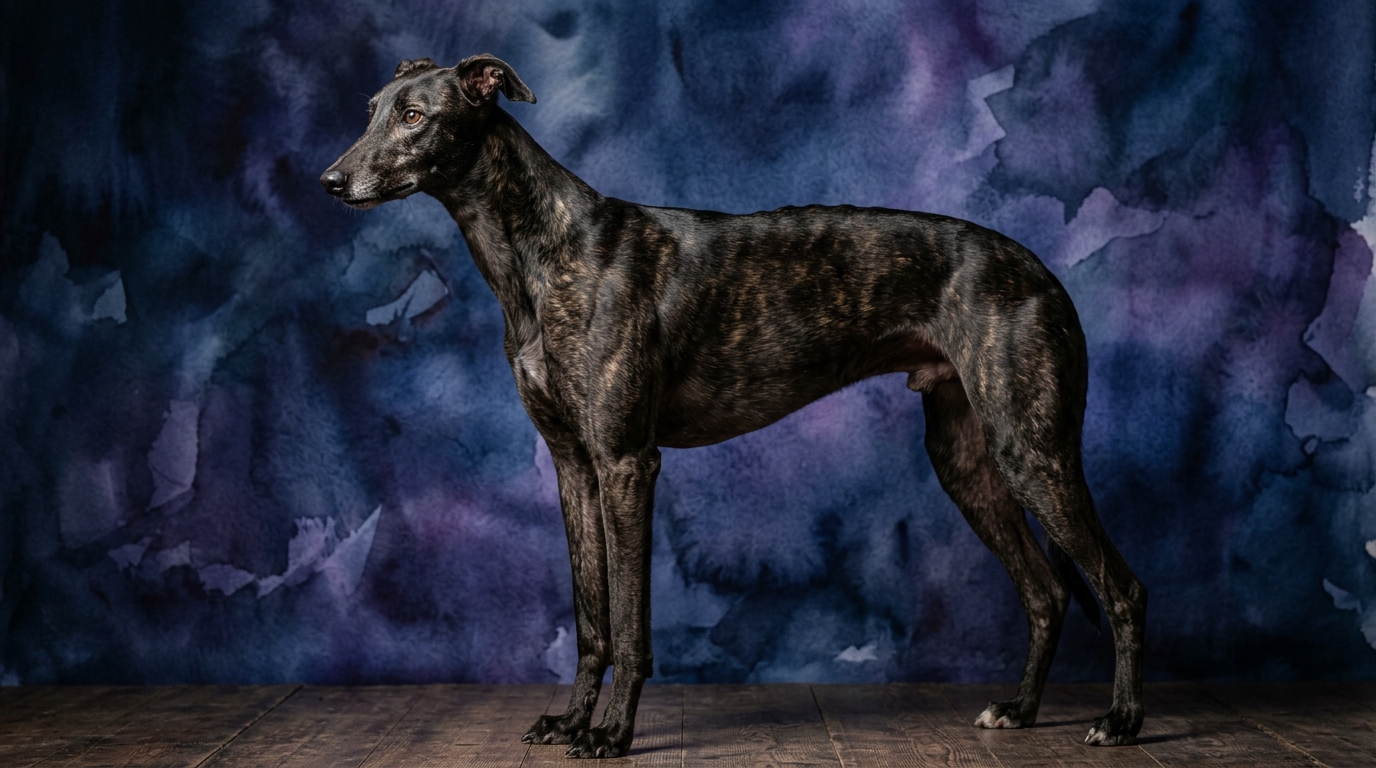
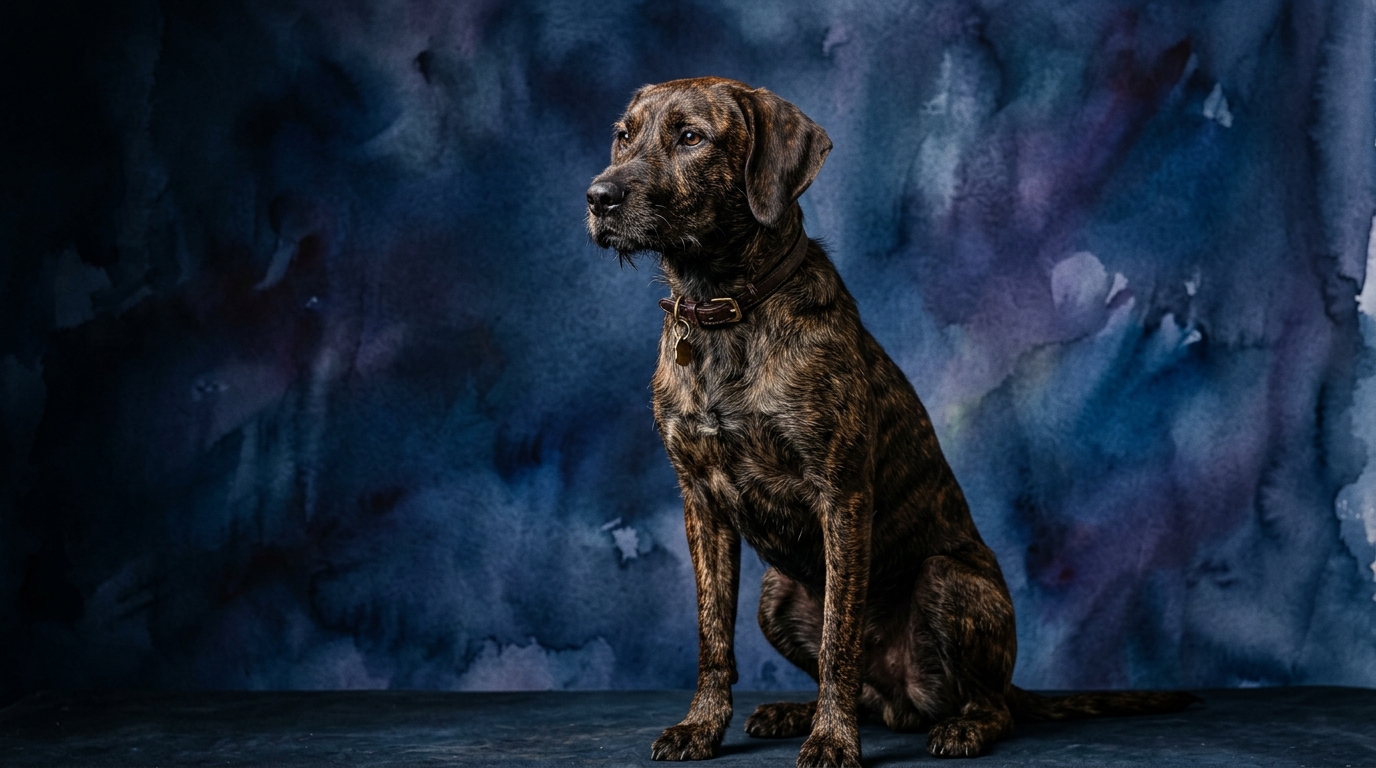
Side-by-Side Cognitive Profile: Greyhound vs. Plott Hound
The Cosmic Pet Pet IQ Lab employs five dimensions to assess canine intelligence, offering a nuanced look beyond simple obedience. For the Greyhound, ranked #46 by Coren, its profile reflects a breed honed for visual pursuit: Problem Solving (3/5), Training Speed (2/5), Social Intelligence (3/5), Instinctive Drive (5/5), and Memory (3/5). Greyhounds demonstrate moderate capacity for navigating novel challenges, often preferring to follow established routines or their strong prey drive rather than independent strategizing. Their independent spirit and sensitivity mean they can be slower to grasp new commands, requiring patience and positive reinforcement to build reliable responses. They possess a moderate understanding of human cues and pack dynamics, typically forming deep bonds with their immediate family but often reserved with strangers. This breed truly excels in Instinctive Drive, exhibiting an extremely powerful prey drive and an innate understanding of pursuit, making them highly attuned to visual stimuli and movement. Greyhounds also have a moderate recall for learned behaviors and associations, though their immediate focus can sometimes override past training if a strong instinctual trigger is present.
The Plott Hound, while not Coren-ranked, presents a different cognitive blueprint shaped by its tenacious hunting heritage: Problem Solving (3/5), Training Speed (3/5), Social Intelligence (3/5), Instinctive Drive (3/5), and Memory (3/5). Plott Hounds show a moderate ability to work through obstacles, often employing their keen scenting abilities to solve environmental puzzles related to tracking. With a slightly higher training speed than Greyhounds, Plott Hounds are generally receptive to learning, especially when tasks align with their natural scenting and working drives. They too exhibit moderate social awareness, typically forming strong attachments to their families and often displaying a more outgoing, though sometimes boisterous, demeanor. While possessing a strong hunting instinct, the Plott Hound's Instinctive Drive (3/5) is primarily focused on scent tracking and stamina, less on the explosive visual pursuit seen in sighthounds. Plott Hounds also have a moderate memory capacity, particularly effective at recalling scent trails and associated outcomes, which is crucial for their working heritage.
Where the Greyhound Wins Cognitively
The Greyhound's cognitive strengths are deeply rooted in its sighthound lineage, optimized for rapid visual processing and explosive pursuit. Their instinctive drive, rated 5/5, is unparalleled; they can detect the slightest movement at impressive distances and react with immediate, focused intensity. This isn't merely physical speed but a cognitive advantage in visual pattern recognition and predictive trajectory, allowing them to anticipate and intercept moving targets with remarkable precision. While their problem-solving is rated 3/5, within the context of their primary function – the chase – they display an intuitive grasp of physics and spatial reasoning, calculating angles and speeds in real-time. This specialized cognitive mapping for high-speed engagement gives them a distinct edge in tasks requiring visual acuity, quick decision-making in dynamic environments, and the sheer mental focus to maintain pursuit over varying terrains. Their reserved social intelligence, while not winning in typical 'people-pleaser' metrics, allows for a focused, independent pursuit that isn't easily distracted by external social cues, a cognitive benefit for their original purpose.
Where the Plott Hound Wins Cognitively
The Plott Hound's cognitive superiority lies in its robust instinctive drive for scent work and its capacity for sustained, independent problem-solving related to tracking. While its instinctive drive is rated 3/5 overall, this score doesn't fully capture the qualitative difference in its application; the Plott Hound's drive is about relentless, methodical investigation and perseverance. They excel at intricate scent discrimination, mentally mapping complex trails, and holding onto a scent even when faced with environmental distractions or prolonged effort. Their problem-solving, also rated 3/5, is often demonstrated through their ability to overcome obstacles in a pursuit, finding alternative routes or strategies to maintain a track. This involves a different kind of cognitive flexibility – one that prioritizes persistence, auditory processing (interpreting barks and echoes), and a deep, multi-layered memory for scent profiles. Plott Hounds can process and recall a vast library of olfactory information, a cognitive feat that Greyhounds, with their visual focus, do not emphasize. Their slightly higher training speed (3/5 vs. 2/5 for Greyhounds) also suggests a greater openness to structured learning, particularly when that learning is framed around tasks that engage their natural drives, making them more adaptable to complex, multi-step working commands.
Training Trajectories: Which is Easier to Train?
When considering ease of training, the Plott Hound generally presents a more straightforward path than the Greyhound, primarily due to their respective scores in training speed and the nature of their instinctive drives. The Plott Hound's training speed rating of 3/5 indicates a higher receptivity to learning new commands and behaviors. Their inherent desire to work alongside a handler, even if sometimes stubborn, means they are more inclined to engage in structured training sessions. Their instinctive drive, while strong, is often channeled into scent work and cooperation, making them more amenable to learning tasks that leverage their tracking abilities. This breed often responds well to positive reinforcement methods, especially when the reward involves a continuation of their scenting activity or handler praise.
Conversely, the Greyhound's training speed of 2/5 highlights a more independent and sensitive disposition. They can be easily discouraged by harsh methods and may find repetitive training tedious. Their extremely high instinctive drive (5/5) for visual pursuit means that once a moving object triggers this instinct, all learned commands can become secondary, making recall in open spaces a significant challenge. This powerful, innate drive is difficult to override with training alone, requiring extensive management and environmental control, such as a long line or a secure, fenced area. While both breeds require patient, positive reinforcement, the Plott Hound's slightly more cooperative nature and adaptable drive make them generally more pliable for a wider range of obedience and working tasks, whereas Greyhound training often focuses on managing their specific sighthound instincts.
Lifestyle Match: Active Owners vs. Relaxed Owners
The choice between a Greyhound and a Plott Hound hinges significantly on an owner's lifestyle, particularly regarding activity levels and environmental management. A Greyhound, despite its reputation as a couch potato indoors, requires an owner who can manage its explosive bursts of energy and extreme prey drive. Owners must be prepared for short, intense exercise sessions, such as secure off-leash running in a fully fenced area, followed by long periods of rest. Their ideal owner is relaxed in terms of daily activity but hyper-vigilant about safety, understanding that a Greyhound cannot typically be trusted off-leash in unfenced areas due to their 5/5 instinctive drive for chasing. Their independent social intelligence means they are content to lounge beside their owner rather than demanding constant interaction, making them suitable for quieter households that can still provide safe outlets for their speed.
In contrast, a Plott Hound is better suited for active owners who relish outdoor adventures and can provide consistent mental and physical stimulation. Their moderate instinctive drive (3/5), focused on scenting and stamina, means they thrive on long hikes, engaging in scent work, or participating in dog sports like tracking. They require an owner who understands their need for purpose and who can channel their energy into productive activities, preventing boredom-induced behaviors like excessive barking or destructive chewing. While they enjoy family time, their social intelligence often comes with a boisterous energy that demands an owner capable of firm, consistent guidance and engagement. Therefore, the Greyhound fits a relaxed owner who prioritizes safety and comfortable indoor living, while the Plott Hound suits an active, outdoors-oriented owner who enjoys collaborative activities and has the time to dedicate to their working dog's needs.
The Verdict
For those seeking a calm, elegant companion content with bursts of speed in secure environments and long periods of quiet companionship, the Greyhound is the ideal choice.
If your lifestyle involves consistent outdoor activity, a love for scent work, and a dog eager to engage in collaborative, purposeful tasks, the tenacious Plott Hound will be a rewarding partner.
🧠 Find Your Pet's IQ Score
Our Pet IQ Lab assessment covers 25+ tests across 5 cognitive dimensions — personalized to your breed.
Take the Full IQ Test →Frequently Asked Questions
Are Greyhounds good off-leash?
Due to their extreme instinctive drive (5/5) for visual pursuit, Greyhounds are generally not safe off-leash in unsecured areas. Their instinct to chase moving objects is powerful and can override even the most reliable recall, making secure, fenced environments essential for their exercise.
Do Plott Hounds bark a lot?
Plott Hounds are vocal dogs, true to their hound heritage. They use their voices to communicate while tracking and can be prone to baying or barking when bored, lonely, or detecting interesting scents, requiring consistent training to manage their vocalizations.
Which breed is better for apartment living?
The Greyhound, despite its size, can adapt well to apartment living if its exercise needs (short, intense sprints in secure areas) are met. They are generally calm indoors. The Plott Hound, with its higher energy and vocal nature, would find apartment living more challenging without significant daily outdoor activity and mental engagement.