A Side-by-Side Look at Cognitive Profiles
To truly understand a dog's intelligence, we look beyond a single metric, analyzing five key dimensions: Problem Solving, Training Speed, Social Intelligence, Instinctive Drive, and Memory. These scores paint a nuanced picture of how each breed perceives, processes, and interacts with their world, offering insights into their natural aptitudes and learning styles.
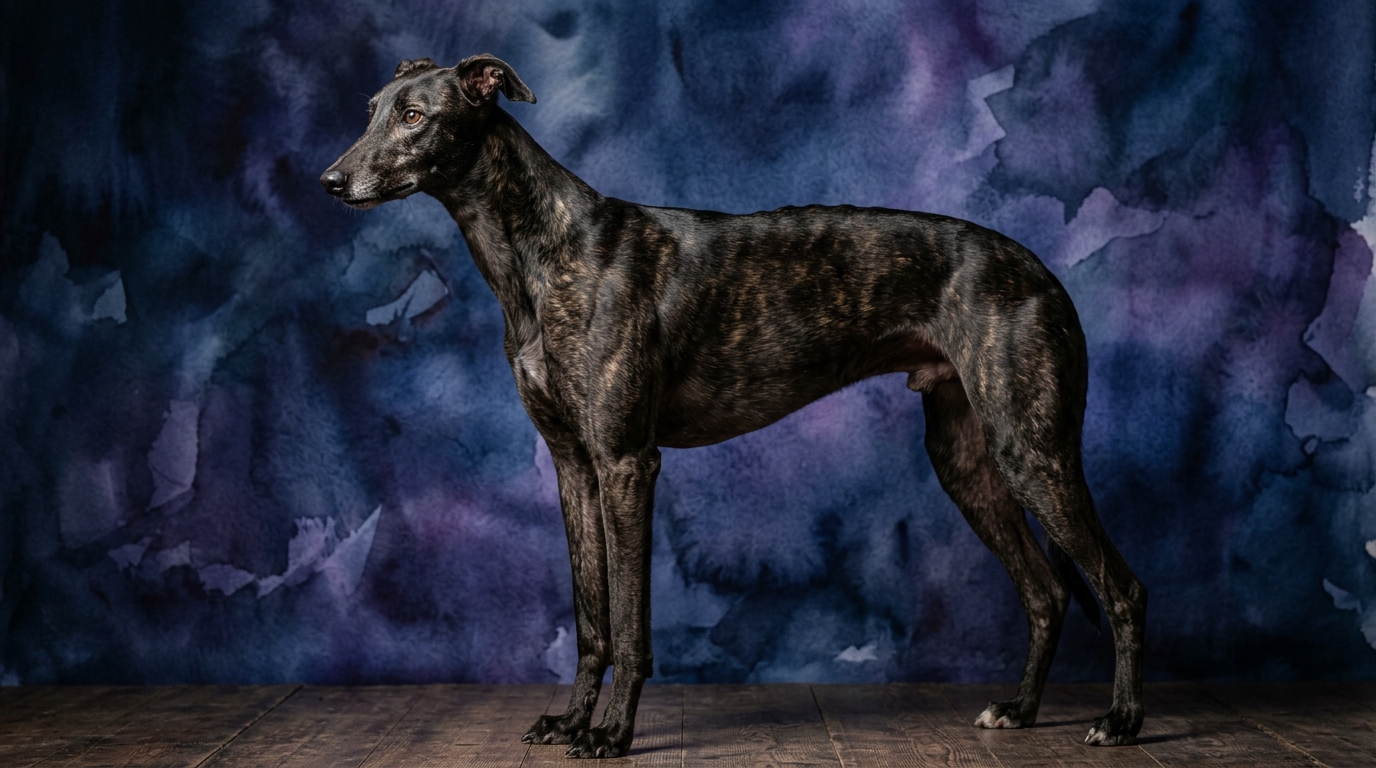
The Greyhound, a sighthound breed, holds a Coren rank of #46, placing it squarely in the 'above average working/obedience intelligence' category. Its Cosmic Pet IQ profile shows Problem Solving at 3/5, Training Speed at 2/5, Social Intelligence at 3/5, an impressive Instinctive Drive at 5/5, and Memory at 3/5. This profile suggests a highly specialized mind, deeply attuned to its primary, ancient purpose.
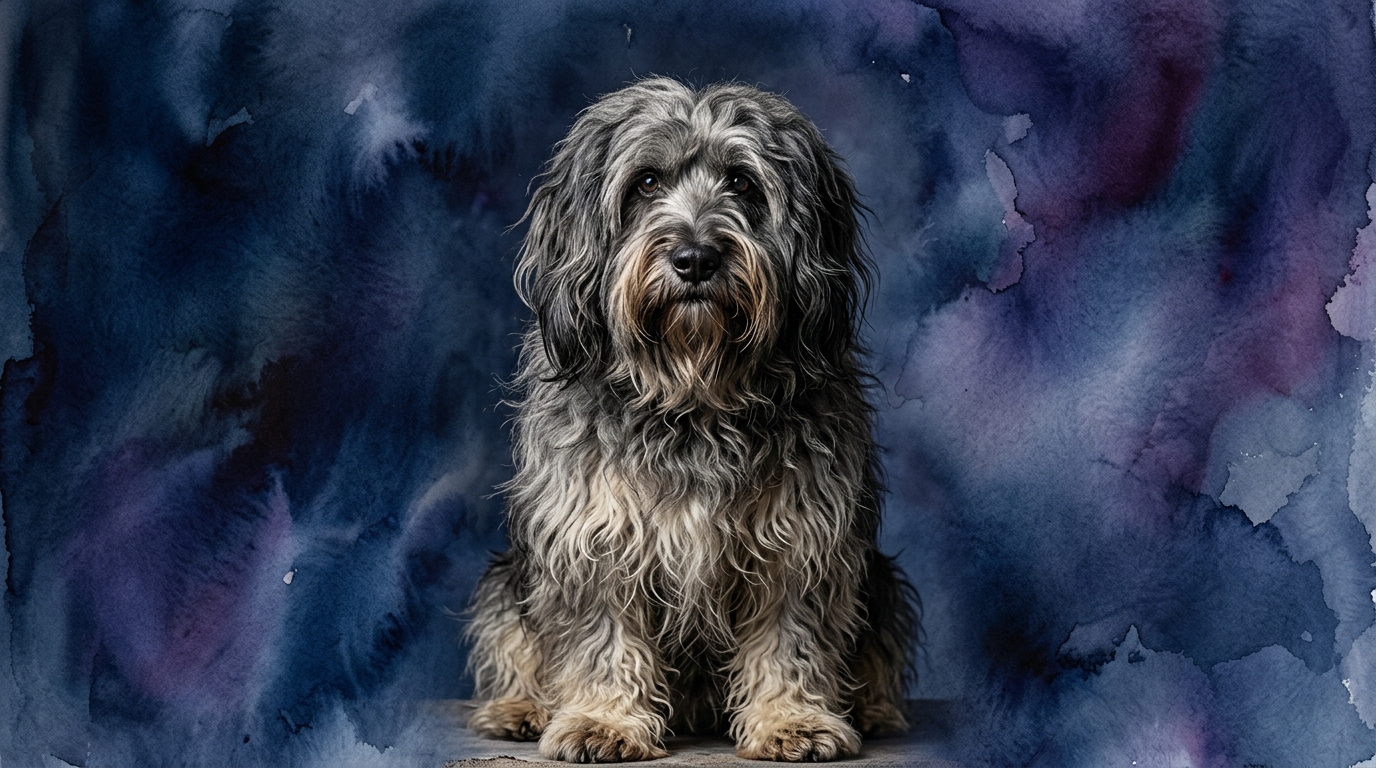
In contrast, the Polish Lowland Sheepdog, a robust herding breed, does not have a Coren ranking, which is common for less globally prevalent breeds and doesn't diminish its cognitive capabilities. Its IQ breakdown reveals Problem Solving at 3/5, Training Speed at 3/5, Social Intelligence at 3/5, Instinctive Drive at 3/5, and Memory at 3/5. This suggests a more balanced, versatile cognitive approach, characteristic of many working herding dogs.
Where the Greyhound's Mind Excels
The Greyhound's standout cognitive strength lies unequivocally in its Instinctive Drive, scoring a perfect 5/5. This isn't merely a strong urge; it's a finely honed, ancient mental program for detection and pursuit. Their minds are wired to instantly register movement, calculate trajectories, and execute lightning-fast, independent decisions to intercept a target. This manifests as an extraordinary focus and efficiency when engaged in a chase, making them unparalleled in tasks requiring rapid visual processing and explosive physical execution.
This exceptional drive also influences their Problem Solving (3/5), particularly in contexts related to spatial awareness for pursuit. A Greyhound can quickly assess the fastest route to an object or a perceived 'prey' target, demonstrating a unique form of practical, instinct-driven problem-solving that prioritizes speed and directness over complex, multi-step solutions. Their memory (3/5) serves this drive well, allowing them to recall locations of past 'chase' opportunities or preferred running paths, enhancing their efficiency in their environment.
The Polish Lowland Sheepdog's Cognitive Strengths
The Polish Lowland Sheepdog (PON) demonstrates a more balanced yet robust cognitive profile, with its strengths rooted in its herding heritage. While its Instinctive Drive is a solid 3/5, it's a drive geared towards control and cooperation rather than pure pursuit. This translates into Problem Solving (3/5) that is often more strategic and adaptable, focused on managing dynamics within a group or responding to environmental changes while working alongside a human.
Their slightly higher Training Speed (3/5 compared to the Greyhound's 2/5) underscores their inherent willingness to engage with human directives. This is crucial for a herding dog, which must learn complex commands and adjust its behavior based on subtle cues from a handler. Their social intelligence (3/5) and memory (3/5) work in concert to facilitate this, enabling them to recall past lessons and interpret human intentions with a nuanced understanding, making them effective partners in a working relationship.
Training Dynamics: A Tale of Two Temperaments
The difference in Training Speed (Greyhound 2/5, PON 3/5) is a critical distinction for prospective owners. Greyhounds, with their powerful 5/5 Instinctive Drive, are often independent learners; they quickly grasp what benefits them or satisfies their chase instinct, but may show less enthusiasm for repetitive obedience drills that lack intrinsic motivation. Their sighthound nature means they are generally less biddable in a traditional sense, requiring training methods that respect their independent spirit and high prey drive, often focusing on positive reinforcement for tasks *they* find rewarding.
The Polish Lowland Sheepdog, by contrast, typically approaches training with a greater eagerness to please and cooperate, characteristic of herding breeds. Their 3/5 Training Speed reflects their capacity to quickly learn and retain commands, particularly when they understand the purpose or 'job' behind the instruction. While they can be strong-willed and possess their own opinions, their inherent desire to work with a handler makes them generally more responsive to structured training and more inclined to integrate human-directed tasks into their routine, especially if those tasks offer mental engagement.
Matching Minds to Lifestyles: Active vs. Relaxed Owners
For truly active owners seeking a canine partner for demanding sports or long, sustained physical output, neither breed is a perfect fit in the traditional sense. However, owners who enjoy intense bursts of activity followed by long periods of rest will find the Greyhound an excellent companion. They need secure, fenced areas where they can unleash their speed, but are often content to be '45 mph couch potatoes' indoors, making them surprisingly suitable for a relaxed home *after* their brief, intense exercise requirements are met.
The Polish Lowland Sheepdog, while not an endurance runner, requires an owner committed to consistent mental and moderate physical engagement. They thrive on having a 'job,' whether it's participating in dog sports like agility, obedience, or herding trials, or simply engaging in regular, varied walks with opportunities for scent work and problem-solving. A PON owner should be prepared for a dog that needs daily interaction and intellectual stimulation to prevent boredom and potential undesirable behaviors.
For owners leaning towards a more relaxed lifestyle without much structured activity, the Greyhound can be a surprisingly good match, provided their specific, short bursts of exercise are non-negotiably met. Their calm indoor demeanor is a hallmark. The PON, conversely, would likely struggle in a consistently relaxed, low-engagement environment. Their herding intelligence and drive necessitate an owner who is present, engaged, and willing to provide outlets for their active minds and bodies, making them less suited for a truly 'hands-off' relaxed owner.
The Verdict
Choose a Greyhound if you admire an independent spirit, appreciate bursts of intense activity followed by calm repose, and can provide a secure environment for their powerful chase instinct.
Opt for a Polish Lowland Sheepdog if you seek a vigilant, biddable companion for engaging training, enjoy consistent mental and physical challenges, and desire a dog with a strong cooperative drive.
🧠 Find Your Pet's IQ Score
Our Pet IQ Lab assessment covers 25+ tests across 5 cognitive dimensions — personalized to your breed.
Take the Full IQ Test →Frequently Asked Questions
Are Greyhounds difficult to train because of their low training speed score?
The Greyhound's 2/5 Training Speed score doesn't mean they are incapable of learning, but rather that they prioritize their innate drives, like chasing, over human-directed tasks. Training a Greyhound requires understanding their sighthound nature and using highly motivating, positive reinforcement techniques that appeal to their instincts, making it a different training approach, not necessarily a 'difficult' one.
Does the Polish Lowland Sheepdog's lack of Coren ranking mean it's less intelligent?
No, the absence of a Coren ranking for the Polish Lowland Sheepdog does not indicate lower intelligence. Stanley Coren's ranking primarily assesses 'working and obedience intelligence' based on specific criteria and sample sizes, and many breeds, especially less common ones or those with different working styles, simply haven't been extensively tested or fit neatly into his methodology.
How do their social intelligence scores (both 3/5) manifest differently?
While both breeds score 3/5 for Social Intelligence, its manifestation differs due to their breed types. A Greyhound's 3/5 often translates to a polite, observant aloofness, preferring to assess situations from a slight distance. A Polish Lowland Sheepdog's 3/5, rooted in its herding background, typically means a more nuanced reading of human cues for cooperative tasks, coupled with a vigilant, sometimes reserved, approach towards strangers that stems from a guardian instinct.