A Side-by-Side Cognitive Profile
To understand the cognitive landscape of these two breeds, we turn to The Cosmic Pet Pet IQ Lab’s comprehensive ranking system, which evaluates five critical dimensions of intelligence. The Greyhound, a member of the Hound group, ranks #46 on the Coren scale, while the Toy Poodle, from the Toy group, holds an impressive #2. This significant difference in Coren rank primarily reflects variations in their obedience and working intelligence, which is just one facet of their overall cognitive makeup.
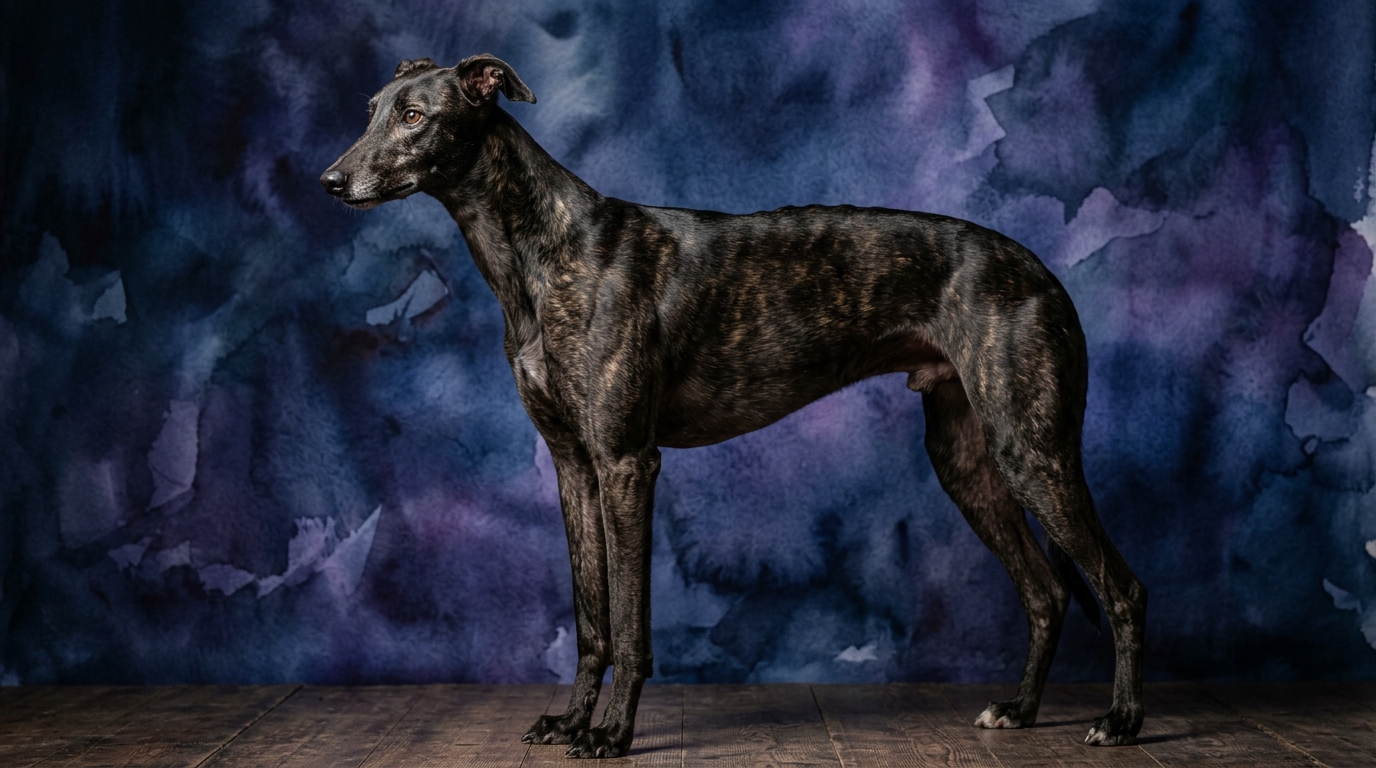
Let's break down the Greyhound’s cognitive scores: Problem Solving (3/5), Training Speed (2/5), Social Intelligence (3/5), Instinctive Drive (5/5), and Memory (3/5). Greyhounds are not primarily driven by complex puzzle-solving; their intelligence is geared towards efficiency in their natural role. Their lower training speed score indicates they require patience and positive reinforcement, as they often exhibit an independent streak. While socially intelligent to their chosen family, they can be reserved with strangers. Their instinctive drive, however, is exceptionally high, focused intently on chase and capture, a hardwired and powerful motivation. Their memory is adequate for routines and learned commands but may not retain intricate sequences with the same ease as other breeds.
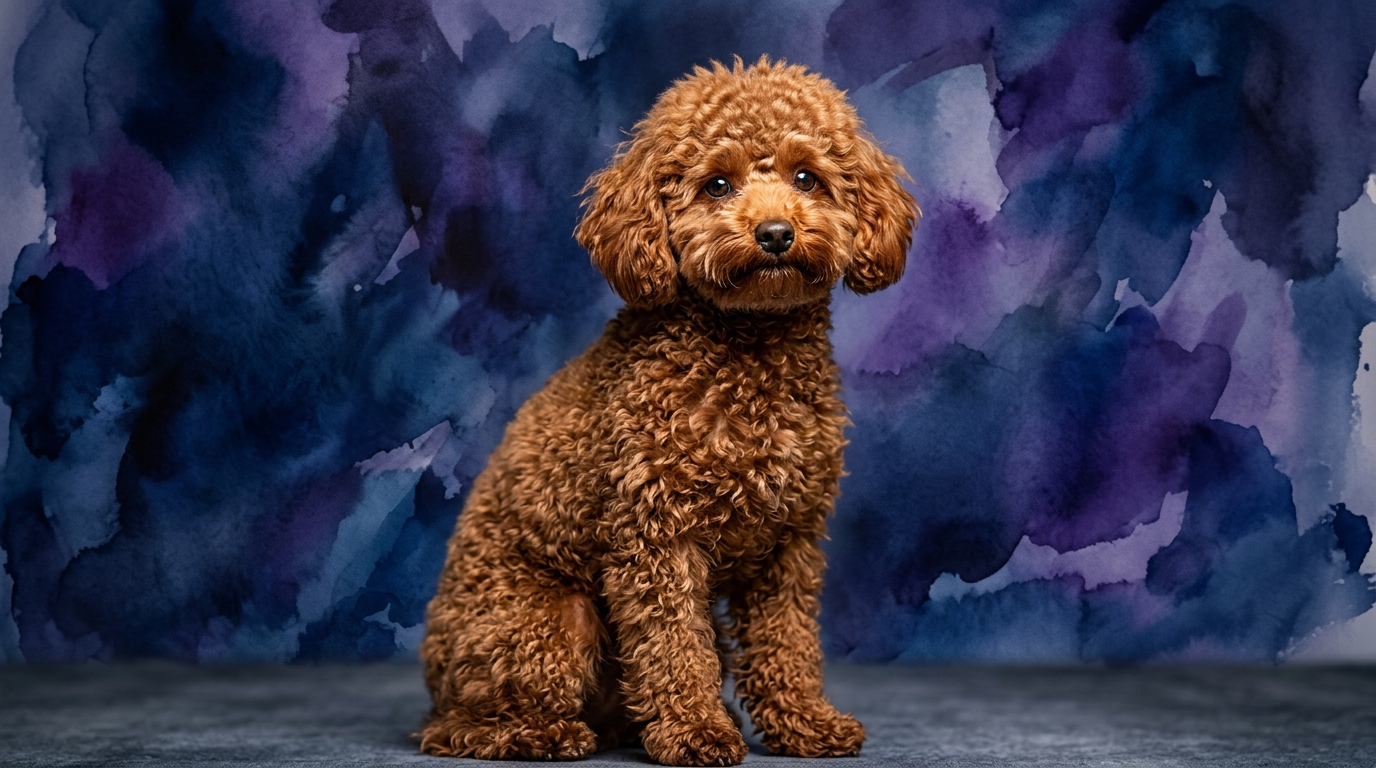
Now, consider the Toy Poodle’s cognitive profile: Problem Solving (5/5), Training Speed (5/5), Social Intelligence (3/5), Instinctive Drive (3/5), and Memory (5/5). Toy Poodles excel at figuring out new situations and understanding cause-and-effect, making them highly adaptable and curious. Their training speed is top-tier, meaning they pick up new commands with remarkable swiftness and minimal repetition, thriving on mental engagement. Like Greyhounds, their social intelligence is rated 3/5, indicating they are generally people-oriented and attuned to human emotions within their family unit, but perhaps not uniquely so. Their instinctive drive, while present, is more moderated than a Greyhound's, enjoying play and retrieving without the same intense, single-minded focus. Crucially, their exceptional memory underpins their rapid learning, allowing them to store and retrieve information with impressive efficiency.
Where the Greyhound's Cognition Shines
The Greyhound’s cognitive strength lies unequivocally in its Instinctive Drive, rated a perfect 5/5. This isn't merely about physical speed; it represents a highly specialized cognitive architecture built for purpose. They possess an unparalleled ability to process visual stimuli rapidly, predict prey movement, and execute precise, high-speed maneuvers with split-second timing. This dynamic, real-time cognitive processing for a singular goal—the chase—is their true intellectual superpower, far removed from the static problem-solving of a puzzle toy.
While their Problem Solving is rated 3/5, it manifests differently in their natural environment. A Greyhound's intelligence in a chase involves intricate spatial reasoning and immediate environmental assessment, a practical form of problem-solving that traditional obedience training might not fully capture. Their Memory (3/5) is optimized for remembering established routines, familiar territories, and the location of comfortable resting spots, serving their lifestyle as a sighthound and companion effectively.
Where the Toy Poodle's Cognition Excels
The Toy Poodle's cognitive prowess is evident in its exceptional Problem Solving (5/5) and Training Speed (5/5). They demonstrate a profound capacity for abstract thought, quickly grasping new concepts, understanding complex sequences, and applying learned behaviors to novel situations. This makes them highly adept at learning intricate tricks, excelling in dog sports like agility, and engaging with interactive puzzle toys, actively seeking mental challenges.
Their superior Memory (5/5) is a cornerstone of their rapid learning ability, enabling them to build a vast repertoire of commands and retain information over long periods. This cognitive flexibility and strong recall mean they can adapt to diverse training environments and consistently perform learned tasks, making them incredibly versatile and rewarding companions for those who enjoy active mental engagement with their dog.
Training Dynamics: Greyhound vs. Toy Poodle
When it comes to ease of training, the Toy Poodle generally offers a more straightforward experience. With a Training Speed of 5/5, they are eager to please and pick up new commands with remarkable speed and enthusiasm. Their high problem-solving ability and excellent memory mean they quickly understand what is being asked of them and retain that information, making training sessions productive and enjoyable for both dog and owner. They thrive on positive reinforcement and consistent, engaging mental stimulation.
The Greyhound, with a Training Speed of 2/5, presents a different training dynamic. They are independent thinkers, often less motivated by pleasing their human and more by their innate drives or personal comfort. Training a Greyhound requires significant patience, consistency, and a strong reliance on positive reinforcement methods, often involving high-value treats or linking commands to activities they genuinely enjoy, like a short sprint. They are not “stubborn” but rather have different cognitive priorities; success comes from understanding their motivations and making training a rewarding, low-pressure experience, focusing on short, frequent sessions.
Matching Breeds to Lifestyles
For active owners who relish engaging their dog's mind, the Toy Poodle is an excellent fit. Despite their small stature, their high problem-solving and memory scores mean they thrive on mental challenges and varied activities. Owners who enjoy teaching new tricks, participating in dog sports like obedience or rally, or simply engaging in interactive play that stimulates their sharp minds will find the Toy Poodle a fulfilling and eager partner. They need consistent mental stimulation to prevent boredom and channel their considerable cognitive energy constructively.
Conversely, the Greyhound often suits more relaxed owners. While they are renowned for bursts of incredible speed and require safe opportunities for a full sprint (often in a securely fenced area), their daily cognitive needs are less about constant mental puzzles and more about comfort, routine, and quiet companionship. Owners who appreciate a calm, independent presence, can provide brief, intense exercise, and offer a soft couch for napping will find a Greyhound to be a deeply rewarding and low-maintenance companion in terms of continuous mental demands. Their social intelligence (3/5) means they bond profoundly with their chosen family but are not typically demanding of constant interaction.
The Verdict: When to Choose Each Breed
The Verdict
Choose a Greyhound if you seek a calm, independent companion who enjoys comfort and routine, and you can provide safe, intermittent outlets for their powerful instinctive drive.
Opt for a Toy Poodle if you desire an eager-to-learn, mentally agile companion who thrives on consistent training, problem-solving activities, and varied mental engagement.
🧠 Find Your Pet's IQ Score
Our Pet IQ Lab assessment covers 25+ tests across 5 cognitive dimensions — personalized to your breed.
Take the Full IQ Test →Frequently Asked Questions
Are Greyhounds difficult to train?
Greyhounds are not inherently difficult, but their training speed of 2/5 means they require more patient, consistent, and positive reinforcement-based methods than many other breeds. They respond best to short, engaging sessions that appeal to their natural motivations rather than strict obedience.
Do Toy Poodles need a lot of mental stimulation?
Yes, with a problem-solving score of 5/5 and high memory, Toy Poodles thrive on mental challenges. They need regular opportunities to learn new commands, solve puzzles, or engage in interactive play to prevent boredom and channel their cognitive energy constructively.
How does 'instinctive drive' differ between these breeds?
A Greyhound's 5/5 instinctive drive focuses intensely on pursuit and visual tracking, making them highly motivated by chase. A Toy Poodle's 3/5 drive is more generalized, enjoying play and some retrieving, but without the single-minded, high-speed focus characteristic of a sighthound.