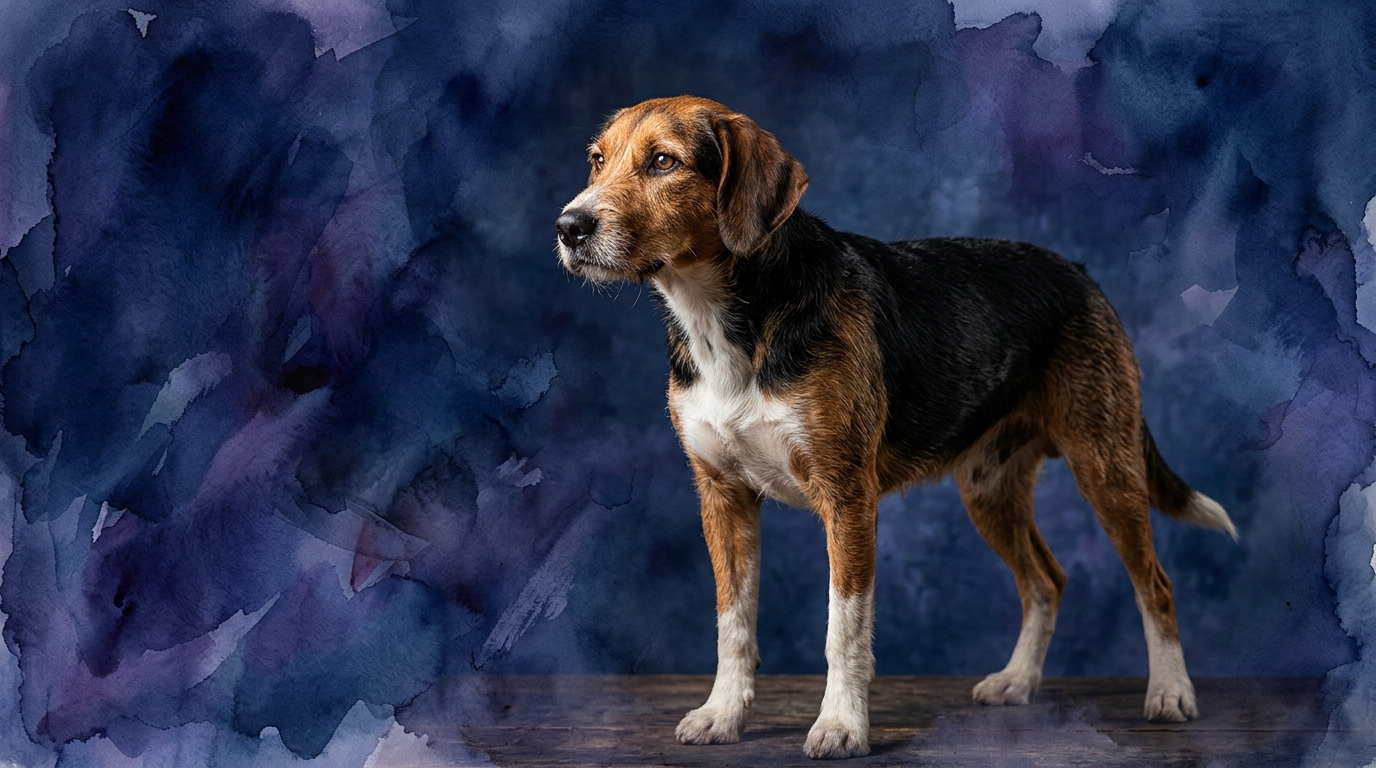
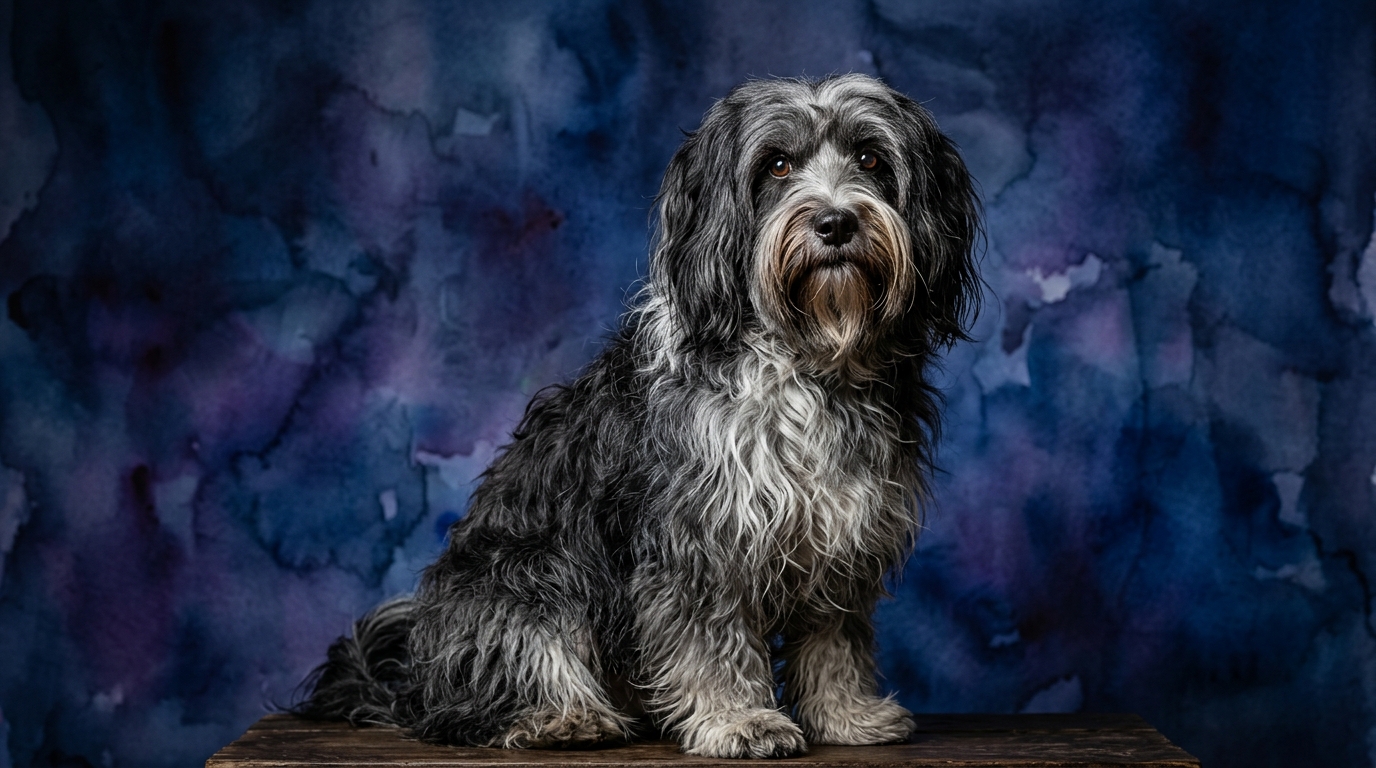
Side-by-Side IQ Profile: Harrier vs. Tibetan Terrier
At first glance, the Harrier and Tibetan Terrier share identical scores across our five cognitive dimensions, each registering a solid 3 out of 5. This score indicates a capable level of intelligence, suggesting neither breed is at the extreme ends of the cognitive spectrum. However, understanding what a '3/5' means within the context of their distinct breed groups—Hound and Non-Sporting, respectively—is crucial for a deeper appreciation of their mental makeup. For the Harrier, a 3/5 in Problem Solving typically refers to their adeptness at unraveling complex scent trails and navigating varied terrain to locate quarry, often requiring independent decision-making far from human guidance. Their 3/5 Training Speed reflects their capacity to learn commands, but often with the caveat of strong independent thought and a scent-driven focus that can compete with human instruction. Social Intelligence at 3/5 suggests they thrive in a pack environment, understanding canine communication well, but might be less attuned to the subtle emotional shifts of individual humans compared to breeds bred solely for companionship. Their Instinctive Drive at 3/5 is undeniably geared towards hunting, chase, and scent work, a powerful intrinsic motivation. Memory at 3/5 is robust for recalling scent patterns, hunting routes, and established routines.
The Tibetan Terrier, while also scoring 3/5 across the board, interprets these metrics through a different lens. Their Problem Solving at 3/5 often manifests as cleverness within the home environment, figuring out how to open cabinets or manipulate situations to their advantage, rather than tracking prey. Training Speed at 3/5, combined with their Coren ranking of #63, indicates they are capable of learning new commands with fair consistency, typically grasping new tasks within 40-80 repetitions, but can exhibit a 'what's in it for me?' attitude or a streak of independence. Their Social Intelligence at 3/5 means they are generally perceptive to their family's moods and dynamics, forming strong bonds, yet often maintain a reserved or watchful demeanor with strangers, reflecting their historical role as guardians and companions in monasteries. Instinctive Drive at 3/5 for a Tibetan Terrier leans towards alertness, guarding their territory, and navigating challenging environments, rather than a strong prey drive. Memory at 3/5 is strong for family members, household routines, and preferred comfort spots.
Where the Harrier Excels Cognitively
The Harrier's cognitive strengths are deeply rooted in their heritage as a scent hound, making them unparalleled in specific domains. Their Problem Solving at 3/5 shines brightest when presented with a challenge that involves following a complex scent trail over diverse terrain. They possess a remarkable ability to filter out distracting environmental odors and maintain focus on a specific target scent, demonstrating a singular-minded persistence that few other breeds can match. This isn't just about speed; it's about the intricate mental mapping and pattern recognition required to interpret olfactory information. Their Instinctive Drive, also at 3/5, fuels this cognitive strength, providing an unwavering motivation to pursue and resolve scent-based puzzles. In scenarios demanding sustained, independent focus on an environmental task, the Harrier’s specialized intelligence truly comes into its own, proving that a 3/5 score can translate to exceptional capability within its niche.
Where the Tibetan Terrier Shines Cognitively
The Tibetan Terrier's cognitive prowess, while also rated 3/5, reveals itself in a different context, emphasizing adaptability and a keen awareness of their social environment. Their Social Intelligence at 3/5 means they are often more attuned to human emotional states and household dynamics than the more independently-minded Harrier. They excel at 'reading' their family members, understanding routines, and even anticipating needs or desires, often using their Problem Solving (3/5) to creatively navigate social situations to their benefit—like figuring out how to get an extra treat or more attention. Their Coren ranking of #63, while not top-tier, places them in a category of 'fair working/obedience intelligence,' indicating a greater amenability to human-centric training and communication compared to many unranked hound breeds. This allows them to integrate complex human rules and expectations into their problem-solving repertoire, making them particularly adept at thriving within a human family structure and understanding the nuances of domestic life.
Training Dynamics: Harrier vs. Tibetan Terrier
When it comes to training, the identical 3/5 score for Training Speed can be deceptive due to the underlying motivations and cognitive frameworks of each breed. The Harrier, a hound, often presents a unique challenge. While capable of learning commands, their independent Problem Solving and powerful Instinctive Drive (scent-focused) mean they can quickly become deaf to commands if a compelling scent or chase opportunity arises. Training a Harrier requires immense patience, consistency, and a deep understanding of their primary motivators, often food or the opportunity to 'hunt' in a controlled environment. They learn, but their compliance is frequently conditional on their internal hound priorities. Real behavioral differences include their tendency to 'go deaf' when on a scent, making recall particularly difficult without extensive, high-value reinforcement in distracting environments.
The Tibetan Terrier, despite also scoring 3/5 in Training Speed and exhibiting an independent streak, is generally perceived as more amenable to training for the average owner. Their Coren ranking of #63 indicates a baseline of 'fair working intelligence,' suggesting they are more likely to respond to commands, even if not with immediate precision. Their problem-solving skills are often applied to understanding human expectations and finding ways to comply that also benefit them. While they can be stubborn, especially if bored or unmotivated, their lack of an overwhelming, single-minded drive like the Harrier's scent compulsion means they are often more receptive to varied training methods, positive reinforcement, and making training a game. Their social intelligence also plays a role; they often enjoy the interaction and mental stimulation that training provides, fostering a stronger partnership in the learning process.
Matching Breeds to Lifestyles: Active vs. Relaxed Owners
The Harrier's cognitive profile strongly aligns with the needs of an active owner who embraces outdoor adventures and can provide ample mental and physical stimulation. Their 3/5 Instinctive Drive translates into a robust need for exercise, ideally involving scent work or long, vigorous walks and runs. Owners must be prepared to engage their Harrier’s problem-solving mind with scent games, tracking, or participation in dog sports that satisfy their innate drive. A relaxed owner will quickly find a Harrier's unfulfilled energy manifesting as destructive behaviors or incessant vocalization, as their keen senses and active mind demand an outlet. They thrive when their physical and mental capacities are consistently challenged in ways that honor their hound heritage.
The Tibetan Terrier, with its balanced cognitive scores, offers greater versatility for owners across the activity spectrum, though they are far from couch potatoes. While they possess an Instinctive Drive (3/5) for exploration and guarding, it's typically less intense and all-consuming than a Harrier's. They are adaptable; a Tibetan Terrier will happily join an active owner on hikes or agility courses, utilizing their problem-solving and memory skills in new environments. However, they are equally content to be a relaxed companion indoors, provided they receive regular walks and mental engagement through puzzle toys or interactive play. Their social intelligence makes them excellent family dogs who enjoy being involved in household activities. They are best suited for owners who are present and can offer consistent companionship and varied engagement, whether that's an energetic romp or a quiet evening of cuddles and brain games.
The Verdict
Choose the Harrier if you are an active, experienced owner eager to engage a dog's profound scenting abilities and independent problem-solving in outdoor pursuits, understanding their training requires patience and specific motivation.
Opt for the Tibetan Terrier if you seek a clever, adaptable companion who thrives on social interaction and varied mental challenges, offering a balance of playful energy and calm companionship suitable for a moderately active lifestyle.
🧠 Find Your Pet's IQ Score
Our Pet IQ Lab assessment covers 25+ tests across 5 cognitive dimensions — personalized to your breed.
Take the Full IQ Test →Frequently Asked Questions
Are Harriers good family dogs?
Harriers can be affectionate and loyal family members, particularly if raised with children and other pets. Their strong prey drive and independent nature mean they require consistent training and supervision, especially around smaller animals, but they generally enjoy being part of a 'pack'.
Do Tibetan Terriers bark a lot?
Tibetan Terriers can be quite vocal, using their barks to alert their owners to new sights, sounds, or visitors, a trait stemming from their historical role as watchdogs. Consistent training from a young age can help manage excessive barking, but some level of vocalization is inherent to the breed.
Which breed is better for first-time dog owners?
Given their strong independent drive and specialized cognitive focus, Harriers are generally better suited for experienced dog owners who understand hound behavior. The Tibetan Terrier, while still requiring consistent training, is often a more manageable and adaptable choice for dedicated first-time owners due to their higher social intelligence and more balanced energy levels.