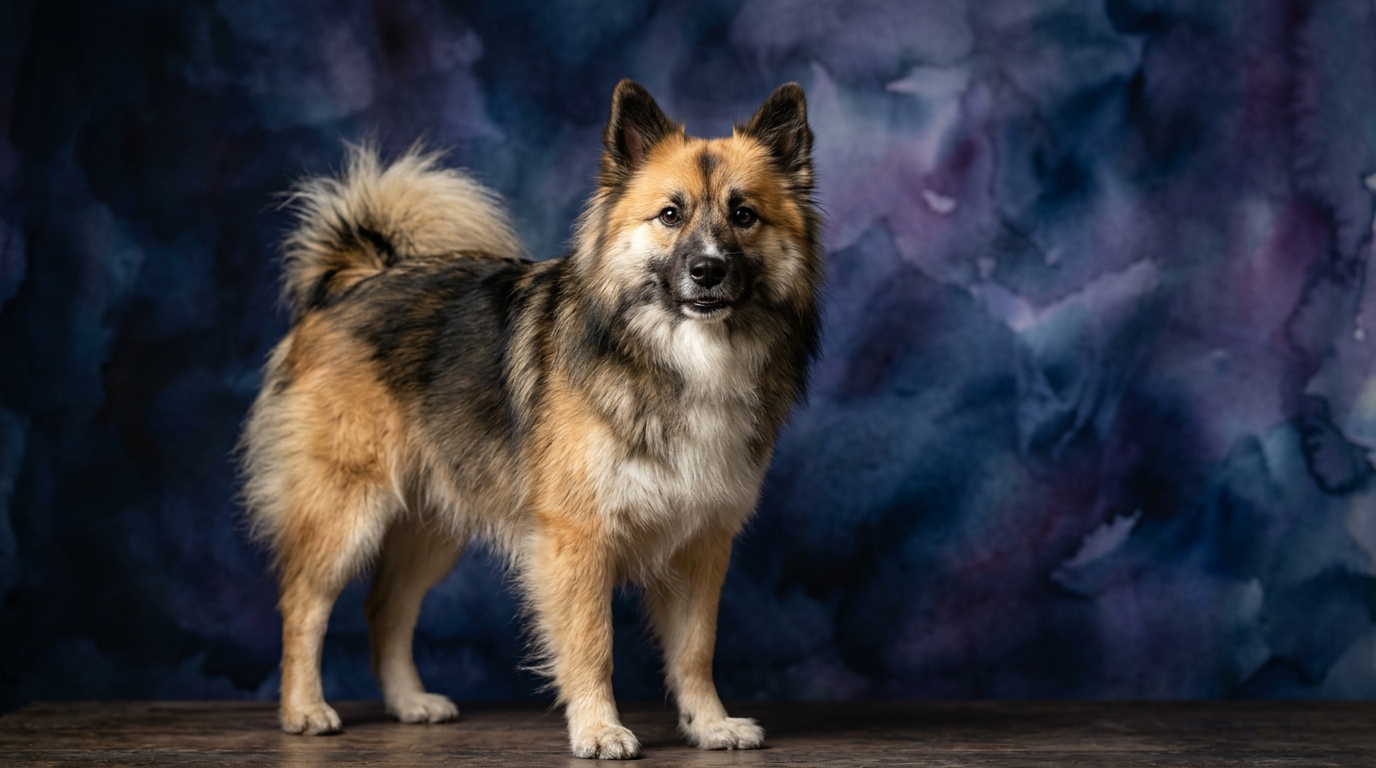
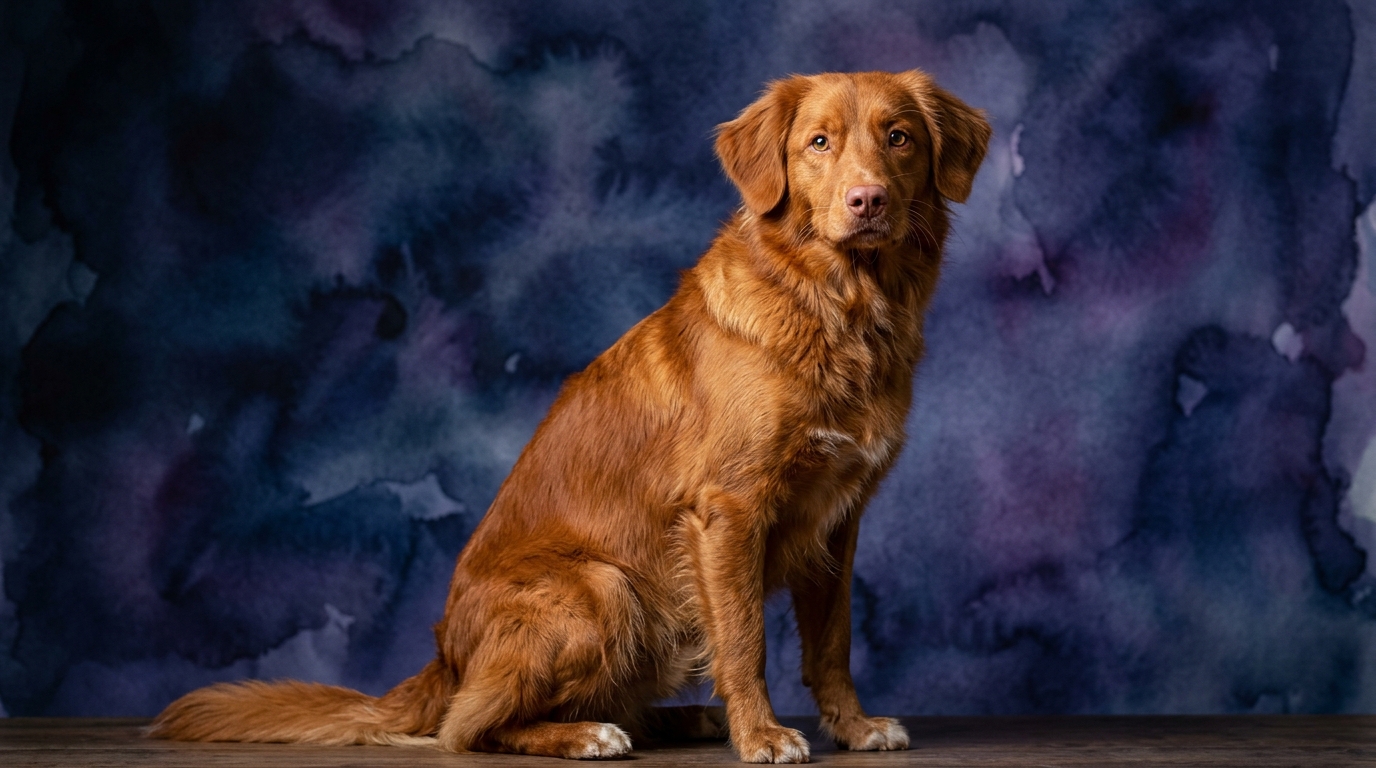
Side-by-Side Cognitive Profiles
The Cosmic Pet Pet IQ Lab provides a framework to understand canine intelligence across five key dimensions, each rated on a scale of 1 to 5. For both the Icelandic Sheepdog and the Nova Scotia Duck Tolling Retriever, a consistent 3/5 score across all categories suggests a baseline of competent and adaptable canine cognition, but the practical manifestation of these scores differs significantly due to their distinct historical roles.
The Icelandic Sheepdog, rated 3/5 in Problem Solving, demonstrates an ability to navigate the challenges of herding, such as finding lost lambs or guiding a flock over varied terrain. Their Training Speed, also 3/5, indicates they learn new commands at a moderate pace, often requiring consistent, positive reinforcement to solidify behaviors. Social Intelligence at 3/5 means they are generally adept at reading human cues and interacting with their family, while their Instinctive Drive (3/5) is primarily focused on herding, exhibiting a natural inclination to gather and manage. Their Memory (3/5) allows them to recall routines and learned tasks, crucial for their pastoral duties.
Conversely, the Nova Scotia Duck Tolling Retriever, also scoring 3/5 in Problem Solving, applies this capacity to retrieving tasks, figuring out how to access a dropped toy or navigate obstacles to retrieve a dummy. Their Training Speed (3/5) is often bolstered by a strong desire to please and a high food drive, making them responsive to reward-based methods. Social Intelligence at 3/5 means they are generally responsive to their handler's moods and intentions, particularly during training and retrieving activities. Their Instinctive Drive (3/5) is strongly oriented towards retrieving, often involving water, and the unique 'tolling' behavior of luring waterfowl. Their Memory (3/5) is effective for remembering specific retrieve locations and complex sequences of commands related to their sporting work.
Where the Icelandic Sheepdog Cognitively Excels
The Icelandic Sheepdog's cognitive strengths are deeply rooted in their herding heritage. Their 3/5 Problem Solving, while not top-tier for abstract puzzles, shines in dynamic, real-world scenarios. They excel at making independent decisions within a herding context, such as deciding the best route to move sheep or identifying a straggler without constant human direction. This isn't about solving a geometric puzzle, but rather adapting to a fluid, living environment.
Their 3/5 Social Intelligence is particularly tuned to managing a flock, where they must interpret the movements and intentions of multiple animals, not just humans. This manifests as a nuanced understanding of group dynamics, allowing them to exert subtle control and influence. Their Instinctive Drive, specifically for herding, means they are perpetually scanning their environment for 'flock' opportunities, making them highly aware of their surroundings and any potential 'disorder' that needs their attention. This persistent, independent vigilance is a key cognitive advantage for their role.
Where the Nova Scotia Duck Tolling Retriever Cognitively Excels
The Toller's cognitive advantages are tailored for their specific retrieving and luring tasks. Their 3/5 Problem Solving ability is demonstrated in their capacity to strategize a retrieve, such as remembering where a bird fell in dense cover or navigating complex water environments to reach a target. This involves spatial reasoning and a focused determination to complete a task, even when faced with minor obstacles.
Their 3/5 Training Speed benefits from their strong motivation for play and retrieving, often making them quick to pick up complex sequences of commands related to field work. They excel at repetitive tasks, building strong neural pathways for specific actions like sitting, staying, and delivering on command. The Toller's 3/5 Instinctive Drive for 'tolling' – a unique luring behavior that involves playful, fox-like movements to attract waterfowl – showcases a specific, nuanced cognitive ability to understand and execute a multi-step hunting strategy, often involving independent action to draw birds closer for the hunter.
Training Dynamics: Which is Easier and Why?
When considering ease of training, the Nova Scotia Duck Tolling Retriever often presents a slightly smoother path for the average owner, primarily due to their intrinsic motivations and social intelligence. Tollers typically possess a strong 'desire to please' coupled with high prey drive and food motivation, making them highly receptive to reward-based training. Their 3/5 Training Speed is efficiently harnessed by their focus on retrieving and their willingness to engage in repetitive, task-oriented learning, often for extended periods.
The Icelandic Sheepdog, while also scoring 3/5 in Training Speed, can sometimes present more of a challenge due to their inherent independence and problem-solving approach. Their herding instinct encourages them to make their own decisions, which can translate into a charming stubbornness if they don't see the immediate purpose of a command. Training an Icelandic Sheepdog often requires more patience, creativity, and a consistent demonstration of why a command is beneficial, rather than just expecting compliance for its own sake. Their 3/5 Social Intelligence is present, but it's often balanced by their independent thought process, meaning they might question 'why' before 'doing'.
Matching Breeds to Lifestyles: Active vs. Relaxed Owners
For active owners seeking a canine partner for outdoor adventures, both breeds offer compelling qualities, but with different focuses. The Nova Scotia Duck Tolling Retriever is an excellent match for owners who enjoy high-energy activities like running, hiking, swimming, and especially dog sports such as agility, flyball, or advanced retrieving. Their 3/5 Instinctive Drive for retrieving means they thrive on purposeful work that involves fetching, problem-solving within a task, and mental engagement. They need consistent physical and mental outlets to channel their energy and prevent boredom.
The Icelandic Sheepdog, with its 3/5 Instinctive Drive for herding, also requires an active lifestyle, but their exercise needs often lean towards purposeful engagement rather than just endless running. They benefit from activities that simulate their herding work, such as herding trials, nose work, or even long walks where they can 'supervise' their environment. While they enjoy play, their cognitive fulfillment comes from feeling useful and having a 'job' to do, even if it's just patrolling the yard or accompanying their owner on daily tasks. Neither breed is suited for truly relaxed, sedentary owners; both require significant daily engagement, but the *type* of engagement differs.
The Verdict
Choose the Icelandic Sheepdog if you appreciate an independent thinker with a strong sense of purpose, are prepared for consistent, patient training, and can provide outlets for their unique herding instincts and environmental awareness.
Opt for the Nova Scotia Duck Tolling Retriever if you desire an energetic, task-oriented companion eager to engage in retrieving games and dog sports, and who thrives on consistent physical and mental challenges, especially involving water.
🧠 Find Your Pet's IQ Score
Our Pet IQ Lab assessment covers 25+ tests across 5 cognitive dimensions — personalized to your breed.
Take the Full IQ Test →Frequently Asked Questions
Do Icelandic Sheepdogs bark more than Tollers?
Icelandic Sheepdogs are known to be quite vocal, using barks to communicate and direct their flock, which can carry over into their home life. Tollers are generally less prone to excessive barking unless bored or unexercised, though individual temperament varies.
Which breed is better with children?
Both breeds can be good with children when properly socialized and trained, but their approaches differ. Icelandic Sheepdogs are often gentle and patient, viewing children as part of their 'flock,' while Tollers are playful and energetic, enjoying interactive games with older, respectful children.
Do these breeds require extensive grooming?
Both breeds have double coats that require regular grooming, especially during shedding seasons. Icelandic Sheepdogs have a thick, medium-length coat needing weekly brushing, while Tollers have a water-repellent double coat that also benefits from regular brushing to prevent matting and maintain skin health.