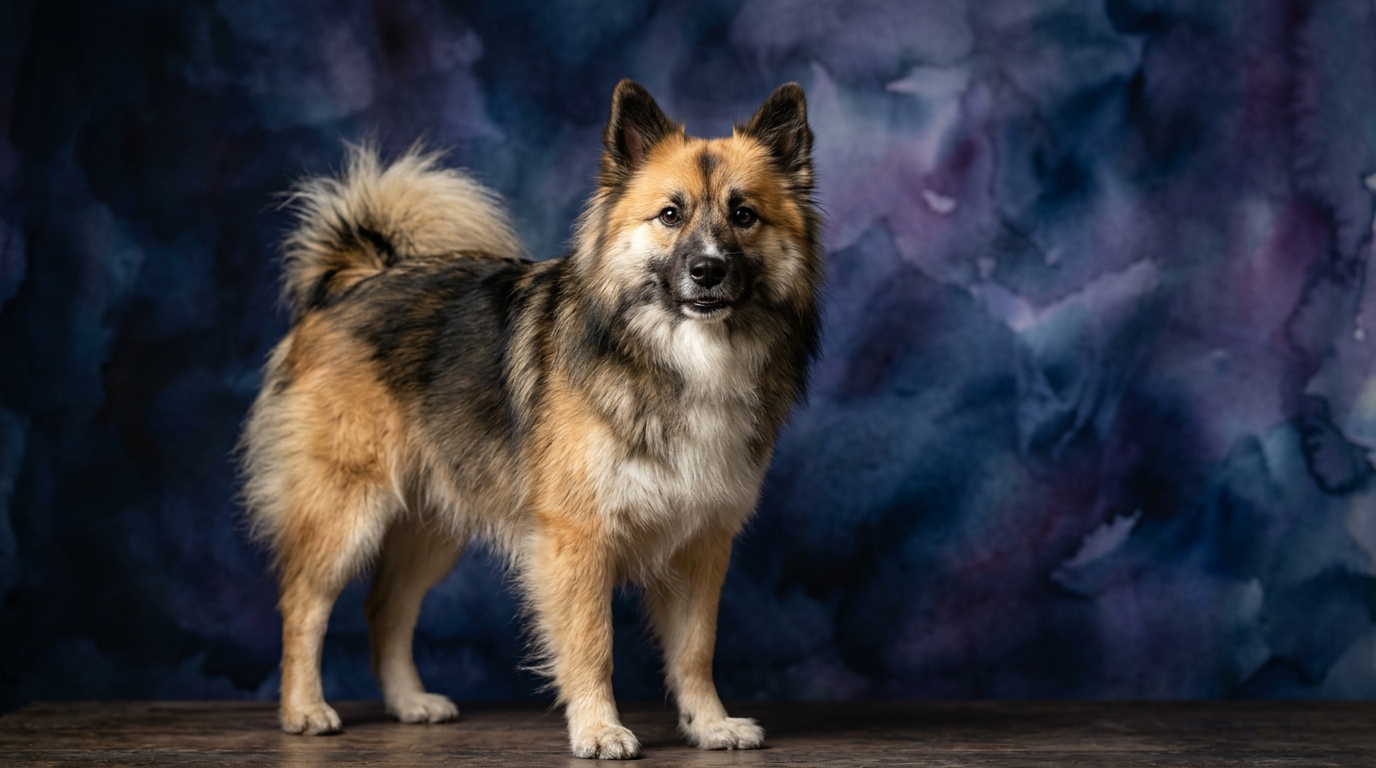
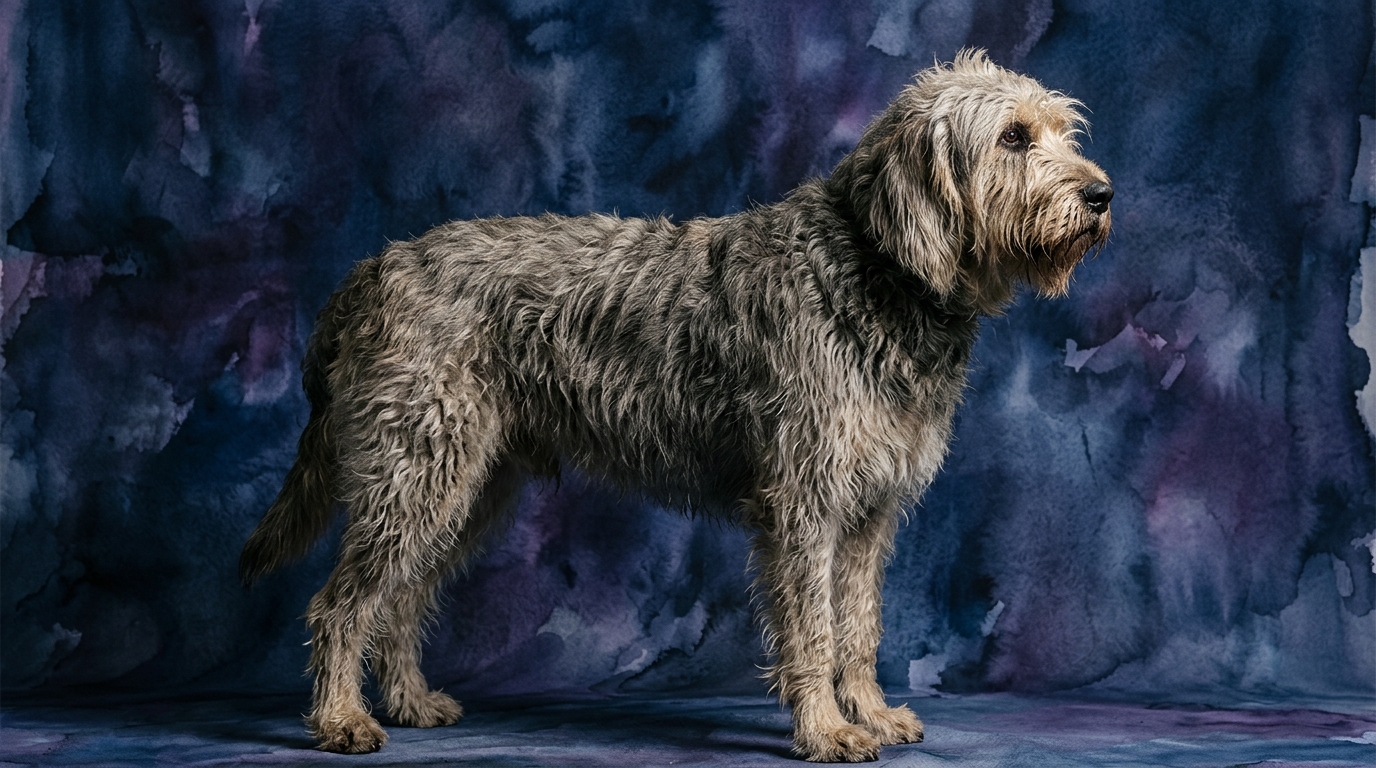
Side-by-Side Cognitive Profile: Unpacking Identical Scores
The Pet IQ Lab assesses canine intelligence across five key dimensions: Problem Solving, Training Speed, Social Intelligence, Instinctive Drive, and Memory. Interestingly, both the Icelandic Sheepdog and the Otterhound register a consistent 3 out of 5 across all these categories. This identical numerical ranking, however, masks a fascinating divergence in how these capabilities manifest, stemming directly from their ancestral vocations.
For the Icelandic Sheepdog, Problem Solving (3/5) often involves dynamic challenges within a pastoral setting. This breed excels at figuring out how to gather stray lambs, guide a flock through varied terrain, or anticipate the movements of livestock, often requiring proactive decision-making in real-time. The Otterhound's Problem Solving (3/5), conversely, is deeply rooted in scent work; they demonstrate a tenacious ability to untangle complex scent trails, overcome environmental obstacles to stay on a track, and decipher faint clues, relying heavily on their olfactory prowess to achieve their goal.
Training Speed (3/5) for the Icelandic Sheepdog reflects their capacity to learn and internalize commands efficiently, particularly those that facilitate cooperative work with a human partner. They are generally responsive and eager to engage in structured learning, valuing the partnership aspect of training. The Otterhound's Training Speed (3/5) also indicates a steady learning pace, but their formidable instinctive drive, particularly their nose, often introduces a significant competing motivation. While capable of learning, the challenge lies in consistently redirecting their focus from an enticing scent to a human command, demanding a more patient and creative training approach.
Social Intelligence (3/5) in the Icelandic Sheepdog highlights their adeptness at reading human cues, understanding family dynamics, and forming strong, interactive bonds. They are communicative, often using barks and body language to express needs or gather attention, making them highly attuned companions. The Otterhound's Social Intelligence (3/5) is more geared towards pack cooperation and interaction with other canines, historically vital for group hunting. While amiable with humans, their social focus during tasks often prioritizes the hunt or the pack over direct human direction, though they can be affectionate family members when off duty.
The Instinctive Drive (3/5) of the Icelandic Sheepdog is predominantly their herding impulse – a natural inclination to gather, bark at, and manage livestock, often with a protective edge. This drive provides a clear framework for their actions and can be readily channeled into various dog sports or tasks. For the Otterhound, Instinctive Drive (3/5) is overwhelmingly dominated by their scenting ability and an unwavering persistence to follow a trail. This deep-seated drive means they are compelled to track, often to the exclusion of other stimuli, and their baying serves as an integral part of this instinctive communication during a hunt.
Memory (3/5) in the Icelandic Sheepdog manifests as the ability to recall specific commands, daily routines, and the intricate patterns of their flock or environment. They are good at remembering where things belong and anticipating sequences of events. The Otterhound's Memory (3/5) is profoundly linked to their olfactory experiences; they possess an impressive recall for scent trails, the locations of previous finds, and the specific characteristics of various quarry. This specialized memory allows them to build a complex internal map of scents and terrains over time.
Where the Icelandic Sheepdog Excels Cognitively
Despite their identical raw scores, the Icelandic Sheepdog often demonstrates a cognitive advantage in areas requiring cooperative problem-solving and adaptable social engagement with humans. Their herding background has honed a proactive intelligence geared towards anticipating human needs and responding swiftly to changing directives. For instance, an Icelandic Sheepdog might independently decide to round up children who are straying too far during a walk, demonstrating an initiative rooted in their protective herding instinct that aligns seamlessly with a family's safety concerns. Their barking is not just noise, but a nuanced communication tool, often indicating a perceived issue or seeking interaction.
They also exhibit a nuanced understanding of social dynamics, quickly integrating into family structures and demonstrating a keen awareness of individual temperaments. This makes them particularly adept at navigating complex household rules and adjusting their behavior based on who is giving the command, a flexibility less pronounced in breeds whose primary work is independent.
Where the Otterhound Excels Cognitively
The Otterhound's cognitive strengths shine brightest in realms demanding independent, persistent problem-solving, particularly when driven by scent. Their intelligence allows them to meticulously follow a trail for hours, ignoring distractions and overcoming physical barriers with an unwavering resolve. This isn't just brute persistence; it involves complex cognitive mapping of scents, remembering where a trail was lost and found again, and an inherent ability to 'read' the environment through their nose. An Otterhound might navigate a dense thicket or cross a stream, not by human instruction, but by processing subtle olfactory cues to reconstruct the quarry's path.
Their memory for specific scent profiles and geographical features related to tracking is exceptionally deep and specialized, allowing them to build a comprehensive internal database over their lifetime. This breed excels when given a specific, instinct-driven task, demonstrating an impressive capacity for sustained, focused work where human intervention is minimal.
Training Dynamics: Cooperation vs. Independence
When evaluating ease of training, the Icelandic Sheepdog generally presents a more straightforward experience. Their herding lineage has instilled a strong desire for partnership and a willingness to work collaboratively with their human. This means their 3/5 training speed is often amplified by their innate desire to please and their social intelligence, making them responsive to positive reinforcement and clear, consistent instruction. They thrive on having a 'job' and readily channel their energy and focus into learning new commands and tricks, seeing it as an extension of their cooperative nature.
The Otterhound, despite also scoring 3/5 in training speed, typically requires a more dedicated and patient approach. Their overwhelming scent drive means that their nose often dictates their priorities, making recall and focus challenging in stimulating environments. While they are capable of learning, their independence and single-minded pursuit of a scent can make consistency difficult. Training an Otterhound demands creative strategies to make commands more compelling than the allure of a captivating odor, and understanding that their definition of 'work' is often self-directed tracking, rather than human-centric obedience.
Matching Canine Companions to Lifestyles
Both breeds require active owners, but their activity needs differ significantly in type. The Icelandic Sheepdog thrives with owners who can provide consistent mental engagement alongside physical exercise. They enjoy structured activities like agility, obedience, or even mock herding games, which tap into their problem-solving and cooperative nature. Daily walks are essential, but equally important are interactive play sessions, puzzle toys, and opportunities to 'work' their brains. They suit owners who enjoy teaching new things and engaging in dog sports, or those with a busy family life that provides ample social interaction and 'tasks'.
The Otterhound, on the other hand, demands extensive physical exercise, ideally in environments where their powerful nose can be indulged. Long, rambling hikes, off-leash exploration in safe, fenced areas, and swimming are excellent outlets for their energy and instinctive drive. They suit owners who are avid outdoors enthusiasts, perhaps hikers or those with access to large, secure properties where the dog can follow scents to their heart's content. A relaxed owner will quickly find an Otterhound bored and potentially destructive, as their need to explore and track is profound and non-negotiable.
The Verdict
Choose the Icelandic Sheepdog if you seek a highly cooperative, socially attuned canine partner who thrives on mental engagement, structured activities, and being an active, communicative member of the family. They are ideal for owners who enjoy teaching, participating in dog sports, and appreciate a dog that is always 'checking in' with them.
Opt for the Otterhound if you are an adventurous, patient owner who can provide vast opportunities for physical exercise, particularly scent-driven exploration, and appreciate a dog with an independent, tenacious spirit. They are best for those who understand and can accommodate a powerful, singular instinctive drive, even if it means training requires more creative persistence.
🧠 Find Your Pet's IQ Score
Our Pet IQ Lab assessment covers 25+ tests across 5 cognitive dimensions — personalized to your breed.
Take the Full IQ Test →Frequently Asked Questions
Are Icelandic Sheepdogs good family dogs?
Yes, Icelandic Sheepdogs are generally social, affectionate, and adapt well to family life, often forming strong bonds with children. However, their herding instinct means they might try to 'herd' children, so supervision and training are important, and they need mental stimulation to prevent boredom.
Do Otterhounds bark a lot?
Otterhounds are known for their distinctive, loud baying voice, which they historically used to signal a successful track during a hunt. While not constant barkers in the traditional sense, their baying can be quite resonant and is a natural expression of their breed, so potential owners should be prepared for this vocalization.
Can an Otterhound live in an apartment?
Living in an apartment with an Otterhound is challenging due to their large size, high energy levels, and profound need for scent-driven exercise. They require significant outdoor time to prevent boredom and destructive behaviors, making a home with a secure yard and access to open spaces more suitable for their well-being.